Gloria Estefan: The Definitive Biography of a Cuban American Cultural Icon

Gloria Estefan is a multi-Grammy-winning singer, songwriter, and businesswoman who revolutionized the music industry by successfully crossing over from Latin to mainstream English-language pop. As a Cuban immigrant who rose to global stardom, she remains a primary symbol of the American Dream and a pioneer for Hispanic artists in the global market.
The Foundations of an Icon: From Havana to Miami
To understand Gloria Estefan’s status as a cultural icon in 2026, one must look back at her origins in Havana, Cuba. Born Gloria María Milagrosa Fajardo García on September 1, 1957, her early life was defined by the political upheaval of the Cuban Revolution. Her family fled to Miami, Florida, in 1959 following the rise of Fidel Castro. This displacement was not merely a change of geography; it was the catalyst for a life defined by resilience and the preservation of heritage within a new cultural framework.
Her father, José Fajardo, was a soldier who participated in the Bay of Pigs invasion and later served in the U.S. Army during the Vietnam War. His long absences and eventual illness—diagnosed as multiple sclerosis likely caused by Agent Orange exposure—placed a significant burden on the young Gloria. She became a primary caregiver, a role that forced her to find solace in music. During these years, she used her guitar and her voice as a private emotional outlet, unknowingly honing the skills that would eventually speak to millions. This period established her "why"—music was never just about fame; it was a tool for survival and emotional expression.
The Miami Sound Machine and the Evolution of Sound
In the mid-1970s, Gloria’s life took a professional and personal turn when she met Emilio Estefan. Emilio was leading a band called the Miami Latin Boys, which performed at local weddings and parties. After hearing Gloria sing, he invited her to join the group, which was subsequently renamed the Miami Sound Machine.
The group’s early trajectory was focused on the Latin American market. They recorded several albums in Spanish for CBS International, building a solid foundation in Central and South America. However, the group’s sound was unique—a fusion of traditional Cuban rhythms (like the son and bolero) with contemporary American disco and pop. This hybridity was the blueprint for the "Miami Sound."
By the early 1980s, the band began experimenting with English-language tracks. The 1984 release of "Dr. Beat" became a surprise hit in Europe, signaling that their rhythmic infectiousness could transcend language barriers. This success set the stage for their breakthrough album, Primitive Love (1985), which featured the iconic track "Conga."
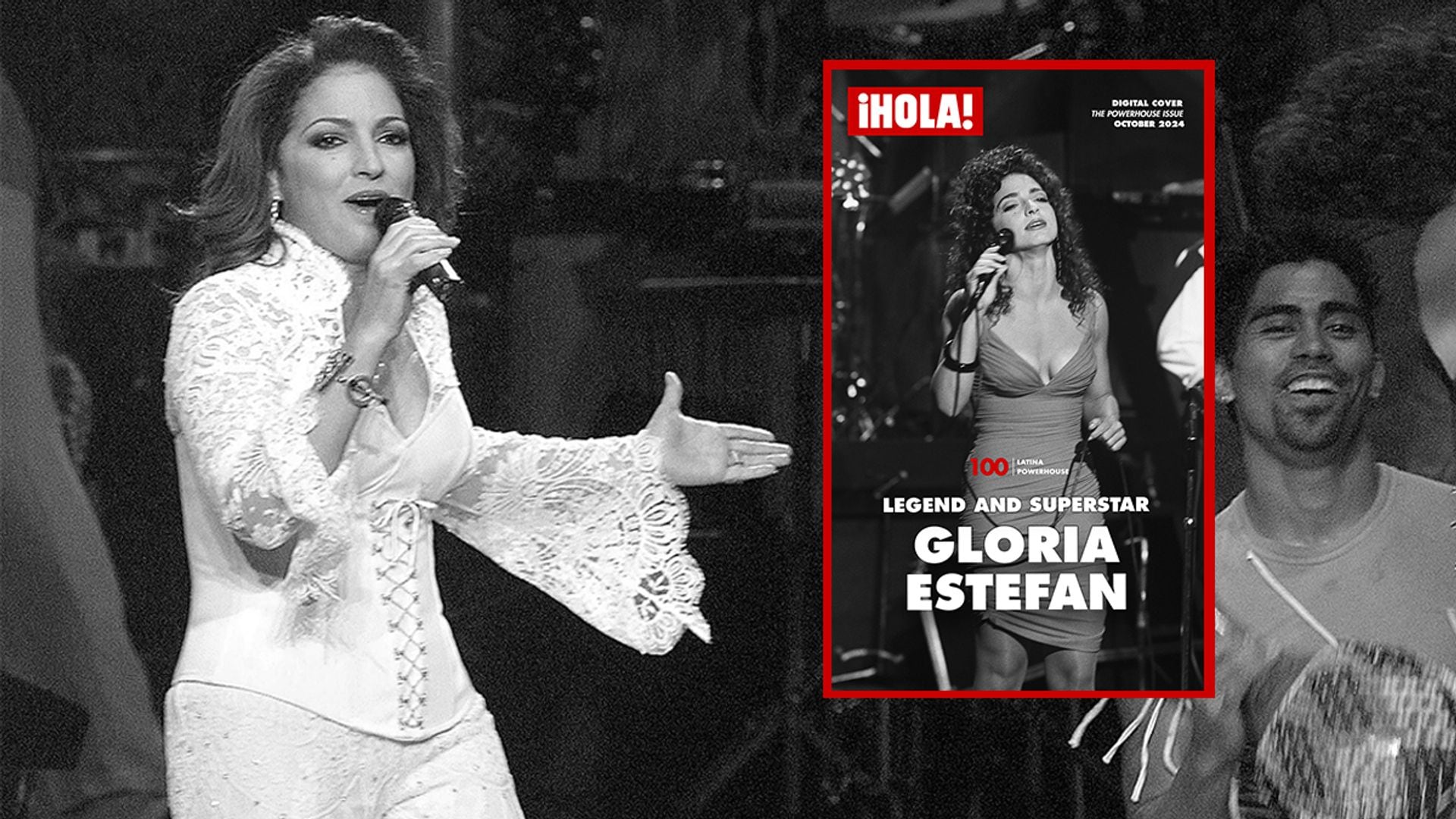
Breaking the Crossover Barrier: The "Conga" Phenomenon
The success of "Conga" is often cited as a pivotal moment in American music history. At the time, mainstream U.S. radio was highly segregated by genre and language. Pop stations were hesitant to play music that sounded "too Latin." Emilio and Gloria Estefan famously fought against record executives who suggested they should change their name or soften their percussion to fit the "American" mold.
They refused, insisting that their identity was their greatest asset. "Conga" became the first single to chart on the Billboard Pop, Dance, Black, and Latin charts simultaneously. This was more than a commercial victory; it was a cultural validation. It proved that the American public was ready for a multicultural sound, paving the way for the "Latin Explosion" of the late 1990s that would later benefit artists like Shakira, Ricky Martin, and Jennifer Lopez. Gloria’s ability to maintain her Cuban roots while achieving mainstream pop dominance redefined what it meant to be a "crossover" artist.
Tragedy and Resilience: The 1990 Bus Accident
In 1990, at the height of her solo fame following the success of the album Cuts Both Ways, Gloria Estefan faced a life-altering tragedy. On March 20, while traveling on a snow-covered highway in Pennsylvania during her "Into the Light" world tour, her tour bus was struck by a semi-truck. The impact broke her back, and doctors feared she might never walk again, let alone perform.
The subsequent year was a masterclass in public resilience. Estefan underwent an intensive surgery where two titanium rods were implanted to stabilize her spine. Her recovery involved grueling physical therapy, much of which was shared with a public that sent her thousands of letters of support. Her return to the stage at the 1991 American Music Awards, where she performed "Coming Out of the Dark," remains one of the most emotional moments in televised music history. The song, co-written with Emilio and Jon Secada, was a literal and metaphorical anthem for her journey through the "darkness" of her injury. This event cemented her status as more than a singer; she became a symbol of hope and the human spirit’s capacity to overcome physical limitations.
Cultural Iconography and the "Estefan Effect"
Gloria Estefan’s impact extends far beyond the recording studio. As a cultural icon, she has served as a bridge between the immigrant experience and the American mainstream. She did not assimilate by erasing her past; she integrated her past into the American present.
The Preservation of Spanish-Language Music
Even as she topped the English charts, Estefan never abandoned her linguistic roots. Her 1993 album, Mi Tierra, was a tribute to her Cuban heritage. It became a global phenomenon, winning the Grammy for Best Tropical Latin Album. By releasing a high-production, critically acclaimed Spanish album at the peak of her pop career, she signaled to the industry that Spanish-language music was commercially viable and artistically significant on a global scale.
The Business Powerhouse
Alongside Emilio, Gloria built Estefan Enterprises, a conglomerate that includes restaurants (Estefan Kitchen), hotels (Cardozo Hotel in South Beach), and music production. In 2026, their business model is still studied as a prime example of "vertical integration" within the entertainment industry. They didn't just sell music; they sold a lifestyle and a culture, turning Miami into a global hub for Latin entertainment.
Awards, Honors, and Historical Significance
Gloria Estefan’s career is decorated with nearly every major award available to an artist. However, her honors often reflect her impact on society rather than just her record sales.
| Award/Honor | Year(s) | Significance |
|---|---|---|
| Grammy Awards | Multiple | 3 Wins (including Best Tropical Latin Album for Mi Tierra) |
| Latin Grammy Awards | Multiple | 4 Wins, including Person of the Year (2008) |
| Presidential Medal of Freedom | 2015 | The highest civilian honor in the US, awarded for contributions to culture. |
| Kennedy Center Honors | 2017 | Recognized for lifetime contributions to American culture through performing arts. |
| Gershwin Prize | 2019 | First couple (with Emilio) to receive the Library of Congress award for popular song. |
| Songwriters Hall of Fame | 2023 | First Hispanic woman to be inducted into this prestigious institution. |
These accolades serve as official verification of her role as a pillar of American music. In 2026, her presence in the Songwriters Hall of Fame is particularly noted by historians as the moment the American musical canon officially expanded to include the Latin-American perspective as a core component of the national identity.
Gloria Estefan in 2026: A Living Legend
As we look at the landscape of 2026, Gloria Estefan remains an active and influential figure. While she may not tour as extensively as she did in the 1980s, her influence is felt through mentorship and legacy projects.
Her Broadway musical, On Your Feet!, continues to be a staple for regional theaters and international tours, introducing her life story to new generations. Furthermore, her involvement in film—most notably her role in the 2022 reimagining of Father of the Bride—has showcased her range as an actress and her commitment to representing modern, multifaceted Latino families.
She has also become a prominent voice in the "Red Table Talk: The Estefans" series, where she discusses mental health, family dynamics, and social issues. This shift toward long-form dialogue has allowed her to connect with younger audiences who value authenticity and vulnerability over the polished image of traditional pop stardom.
Philanthropy and the Gloria Estefan Foundation
No discussion of her status as an icon is complete without mentioning the Gloria Estefan Foundation. Established to support charitable programs for disadvantaged children and to empower those with spinal cord injuries, the foundation reflects her personal history.
Her advocacy for spinal cord research stems directly from her 1990 accident. By funding research at the Miami Project to Cure Paralysis, she has turned a personal tragedy into a source of funding for medical breakthroughs. In 2026, the foundation remains a key player in South Florida’s philanthropic landscape, addressing issues of education, health, and animal welfare.
FAQ: Understanding the Legacy of Gloria Estefan
What is Gloria Estefan's most famous song?
While "Conga" is arguably her most culturally significant hit due to its crossover success, "Anything for You" was her first Number 1 single on the Billboard Hot 100. Other essential tracks include "Rhythm Is Gonna Get You," "Words Get in the Way," and "Coming Out of the Dark." Each represents a different facet of her career, from dance-pop to emotive balladry.
How many albums has Gloria Estefan sold?
Gloria Estefan has sold an estimated 100 million records worldwide. This makes her one of the best-selling female singers of all time and the most successful crossover artist in Latin music history. Her sales are split between her work with the Miami Sound Machine and her extensive solo career.
Is Gloria Estefan still married to Emilio Estefan?
Yes, Gloria and Emilio Estefan have been married since 1978. Their partnership is often cited as one of the most successful and enduring in the entertainment industry. Beyond their marriage, they are lifelong business partners, having co-founded Estefan Enterprises and collaborated on nearly all of Gloria’s musical projects.
What happened to Gloria Estefan’s back?
In 1990, Gloria suffered a fractured vertebra in a tour bus accident. She underwent a specialized surgical procedure to stabilize her spine with two titanium rods. Her recovery was considered miraculous at the time, and she returned to performing less than a year later, becoming a high-profile advocate for spinal cord injury survivors.
Did Gloria Estefan write her own songs?
Gloria Estefan is a prolific songwriter and was the first Hispanic woman inducted into the Songwriters Hall of Fame. She has written or co-written many of her biggest hits, including "Anything for You," "Don't Wanna Lose You," and "Coming Out of the Dark." Her songwriting often blends personal storytelling with universal themes of love and resilience.
Summary and Next Steps
Gloria Estefan's journey from a young refugee in Miami to a global cultural icon is a testament to the power of authenticity and perseverance. She did not just enter the music industry; she changed its architecture, proving that Latin rhythms and the English language could coexist to create a new, vibrant American sound.
For those looking to explore her legacy further:
- Listen to the "Mi Tierra" Album: To understand her cultural roots and musical complexity, this album is essential listening.
- Watch "On Your Feet!": If the musical is playing near you or available via streaming, it provides a deep dive into her and Emilio's struggle against industry gatekeepers.
- Support Spinal Cord Research: In honor of her recovery, consider looking into the Miami Project to Cure Paralysis, an organization she has supported for decades.
Gloria Estefan is not merely a singer from the past; she is a blueprint for the future of multicultural artistry in the United States and beyond.
Image Gallery
Select an image to open it in a new tab.



Mateo Castillo
Decentralized Finance and E-Payments Strategist
