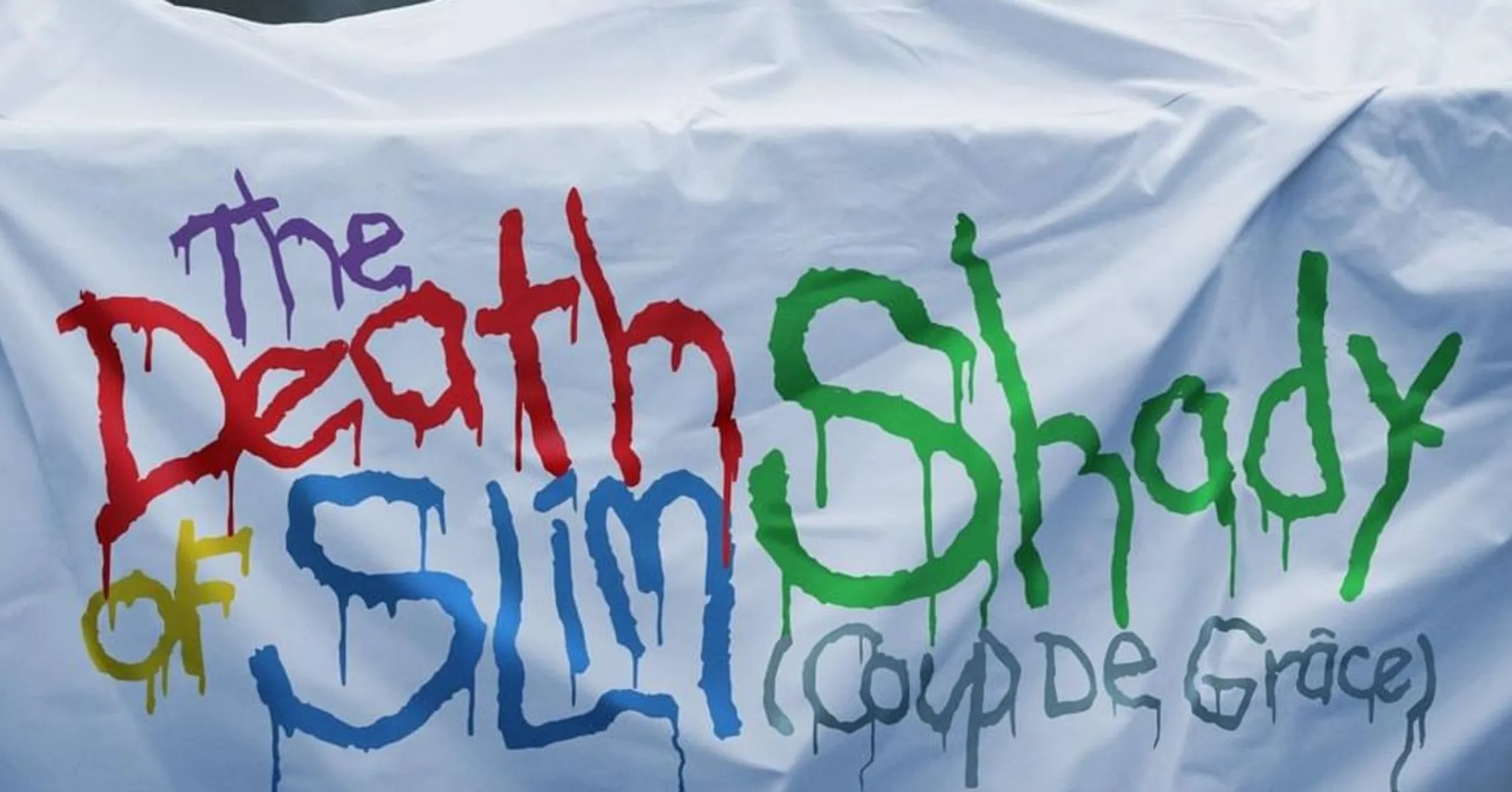
Marshall Mathers introduced Slim Shady not merely as a stage name, but as an unfiltered, hyper-violent, and cartoonishly exaggerated manifestation of his id, creating a complex dynamic between the artist, his alter ego, and satirical performance art. This cultural construct weaponized shock value, subverted celebrity worship, and raised profound questions about where the real person ends and the satirical caricature begins.
The Genesis of an Alter Ego: Marshall Mathers vs. Slim Shady
The birth of Slim Shady in the late 1990s marked a pivotal turning point in hip-hop history. Before adopting this platinum-haired persona, Marshall Mathers struggled to find mainstream commercial success with his 1996 debut album, Infinite. That project faced criticism for sounding too similar to other underground East Coast rappers, failing to capture the raw desperation and unique worldview of its creator.
Slim Shady emerged as a psychological defense mechanism and a creative breakthrough. Mathers realized that if he leaned into his darkest impulses, societal anxieties, and personal traumas through a hyper-stylized comedic lens, audiences would process the material differently. The alter ego functioned as an armor of irony. When critics accused Mathers of promoting violence, misogyny, or substance abuse, he could retreat behind the boundary of the persona, framing the lyrics as the deranged musings of a fictional cartoon character rather than autobiographical confessions.
This duality established a tension that would define his entire catalog. The character of Slim Shady was explicitly designed to provoke, utilizing extreme hyperbole to mock censorship, middle-class suburban hypocrisy, and the sanitized pop culture of the turn of the millennium. Yet, the brilliance of the construction lay in its self-awareness; it was self-aware trash culture delivered with technical virtuosity.
The Mechanics of Parody: Subverting Celebrity and Taboo
To understand how Slim Shady operates as parody, one must examine the specific targets of his satire. Mathers did not merely insult public figures; he dismantled the entire machinery of American celebrity worship. Tracks like "The Real Slim Shady" targeted pop idols, television executives, and cultural gatekeepers, exposing the manufactured nature of mainstream entertainment.
| Target of Satire | Method of Subversion | Representative Track / Moment |
|---|---|---|
| Pop Superstars | Exposing manufacturing and inauthenticity | "The Real Slim Shady" (mocking boy bands and bubblegum pop) |
| Tabloid Media | Parodying sensationalist reporting and moral panic | "The Way I Am" (critiquing media scrutiny and fan entitlement) |
| Domestic Trauma | Exaggerating family dysfunction into dark comedy | "My Name Is" / "Cleanin' Out My Closet" |
| The Legal/Censorship System | Mocking parental advisory boards and politicians | "Without Me" (targeting Dick and Lynne Cheney, FCC regulations) |
By positioning himself as the ultimate corrupting influence, Mathers held up a mirror to a society obsessed with moral policing. The parody functioned by taking the suppressed fears of conservative America—that youth culture was rotting from within—and manifesting them literally as a bleach-blonde menace who refused to apologize.
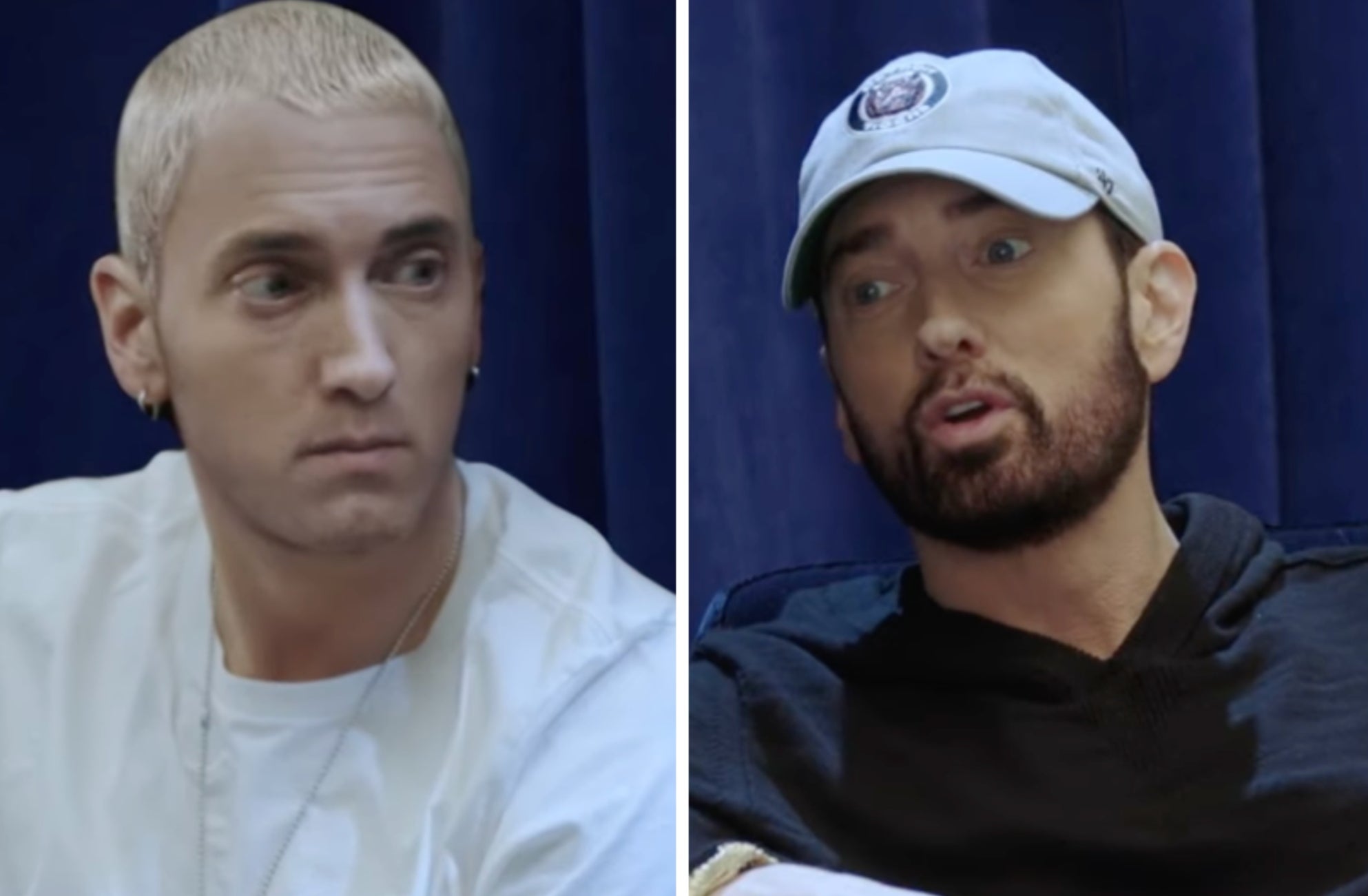
The Blurring Boundaries: When the Persona Consumes the Creator
Over successive album cycles, the line separating Marshall Mathers the private citizen from Slim Shady the cartoon villain began to blur dangerously. As global fame intensified, the insulation provided by the alter ego wore thin. Fans and detractors alike struggled to separate the man who walked the red carpets from the phantom who rapped about grotesque violence and personal vendettas.
This friction forms the emotional core of introspective tracks like "Stan," "Marshall Mathers," and "Arose." In these songs, Mathers wrestles with the collateral damage of his creation. The persona that granted him absolute creative freedom also trapped him in a cage of perpetual provocation. Every public appearance, legal battle, and relationship struggle was viewed through the lens of the Slim Shady mythos.
The complexity deepens when examining how Mathers utilized the persona to process genuine trauma. While songs like "Kim" or "Cleanin' Out My Closet" present visceral emotional confrontations, they are delivered through the heightened cadence of theatrical horror-core. Listeners are left suspended in a permanent state of ambiguity: Are these the genuine psychological scars of an abused child and troubled husband, or are they high-production-value shock theater designed to elicit gasps? The genius—and the tragedy—of the project is that it is simultaneously both.
Evolution and Meta-Commentary in the Later Catalog
As hip-hop matured and Mathers transitioned into elder-statesman status, the function of Slim Shady evolved. The innocent, anarchic rage of 1999 gave way to calculated self-reference and exhaustion. In later works, Mathers began treating Slim Shady not just as a living entity, but as a historical artifact, examining his own legacy with a critical eye.
Albums like The Death of Slim Shady (Coup de Grâce) confront the concept of the alter ego head-on, serving as a meta-narrative trial where the creator attempts to dismantle his most famous creation once and for all. This ongoing battle reflects a broader cultural shift. Language and acceptable boundaries of public discourse shifted dramatically between 1999 and the mid-2020s. Content that once read as boundary-pushing campus satire or anti-establishment punk energy faced modern evaluations regarding harm, identity, and social responsibility.
By interrogating his own past through new albums and interviews, Mathers demonstrates that the line between persona and parody is not fixed; it moves depending on the cultural climate and the psychological state of the artist. The alter ego became a vehicle for generational dialogue, forcing listeners to reckon with how pop culture consumes, digests, and ultimately discards controversy.
Frequently Asked Questions
What was the original purpose of creating the Slim Shady persona?
Marshall Mathers created Slim Shady to separate his real-life struggles and vulnerabilities from a shocking, cartoonish caricature. This allowed him to write aggressively satirical, dark material without taking literal ownership of the violent impulses, providing both creative liberation and a shield against moral critics.
How did Slim Shady function as a form of satire?
The persona satirized American moral panic, tabloid journalism, and the artifice of pop stardom. By playing into the worst fears of conservative cultural gatekeepers, Mathers exposed hypocrisy and forced mainstream media to confront its own obsession with sensationalism.
Did Marshall Mathers ever struggle to separate himself from the alter ego?
Yes. Throughout his career, particularly during peaks of intense media scrutiny in the early 2000s, Mathers expressed frustration that the public and press refused to see him as an ordinary person separate from the chaotic, offensive character he performed on record.
How has the public perception of the Slim Shady character changed over time?
What was originally perceived as shocking underground counter-culture in the late 1990s evolved into a nostalgic touchstone of millennial pop culture. Modern evaluations often analyze the character through a critical lens, examining how shock rap reflects the shifting standards of acceptable public discourse.
Is Slim Shady considered horror-core rap?
While Slim Shady shares stylistic DNA with horror-core—featuring graphic, cinematic violence and macabre humor—it transcends strict genre boundaries by incorporating pop culture satire, deeply personal autobiography, and high-speed technical lyricism.
Conclusion
The creation of Slim Shady remains one of the most ambitious and disruptive experiments in modern popular music. By constructing a hyper-violent, unapologetic alter ego, Marshall Mathers forged a unique space where profound personal vulnerability coexisted with gleeful, boundary-pushing parody. Tracing the line between the man and the myth reveals an ongoing negotiation with fame, artistic freedom, and the power of satire to both challenge and reflect a fractured culture.
Image Gallery
Select an image to open it in a new tab.

Vivian Cho
Executive IT and Emerging Technologies Reporter
