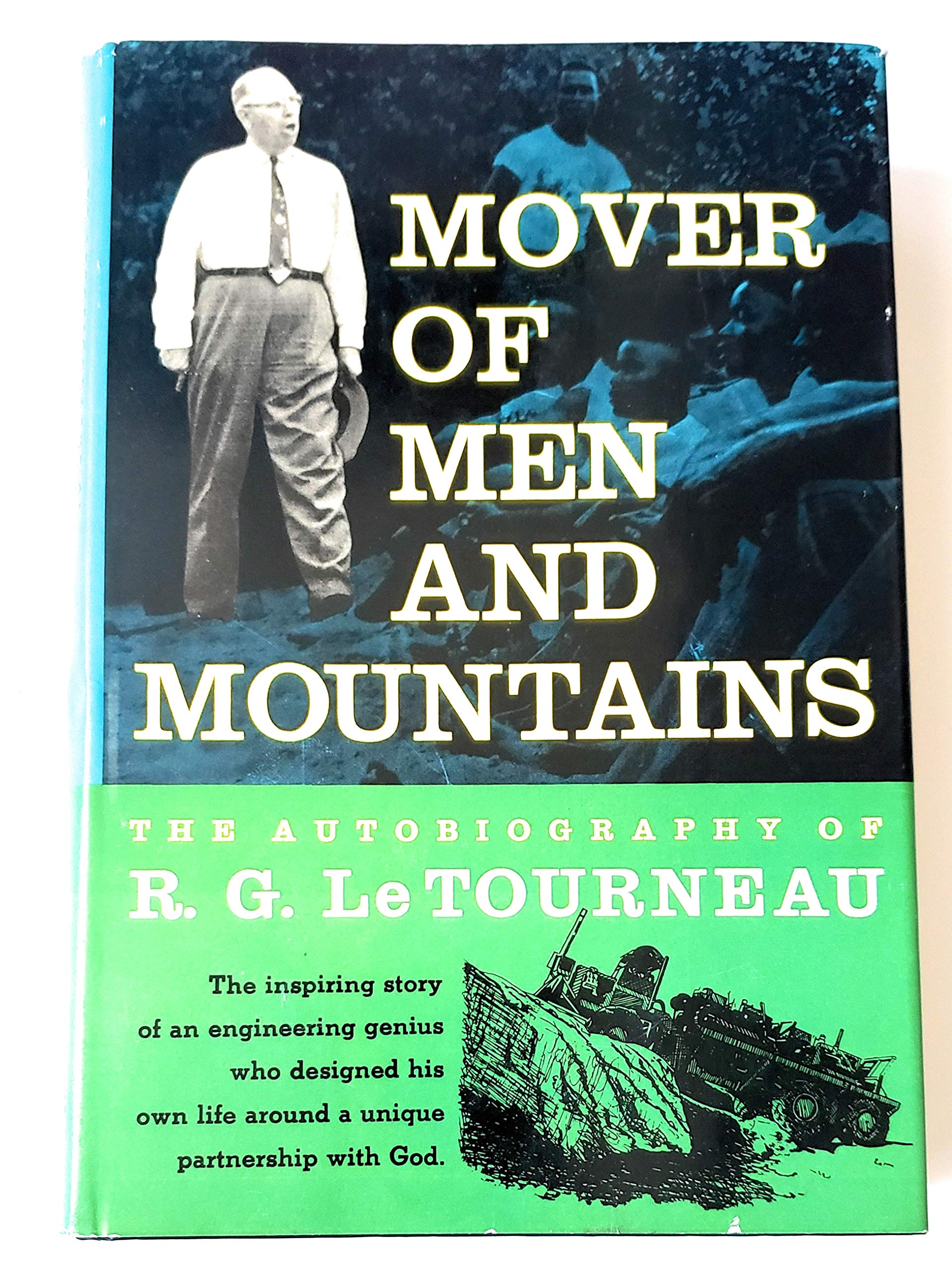
The legacy of LeTourneau engineering represents a transformative chapter in industrial history, defined by the transition from mechanical to diesel-electric drive systems in heavy machinery. Established by Robert Gilmour LeTourneau, this legacy persists in 2026 through the global application of high-capacity earthmoving technology and the continued academic prestige of LeTourneau University.
The Foundations of LeTourneau Engineering
The history of LeTourneau engineering is inseparable from the biography of its founder, R.G. LeTourneau (1888–1969). Often referred to as the "Dean of Earthmoving," LeTourneau was a prolific inventor who held nearly 300 patents. His approach to engineering was characterized by a radical departure from the prevailing mechanical standards of the early 20th century. While his contemporaries focused on incremental improvements to steam and early internal combustion tractors, LeTourneau sought to solve the fundamental problem of moving massive amounts of earth efficiently and quickly.
In the 1920s and 30s, earthmoving was a labor-intensive process reliant on mule-drawn scrapers or rudimentary motorized units that lacked the power for large-scale infrastructure projects. LeTourneau’s early innovations in Stockton, California, focused on the scraper—a machine that could dig, haul, and spread earth in a single cycle. His introduction of the "Carryall" scraper changed the economics of road building and dam construction by significantly reducing the cost per cubic yard of earth moved.
By the mid-1930s, LeTourneau had partnered with Caterpillar to provide attachments for their tractors, but his vision eventually outpaced the capabilities of tracked vehicles. This friction led to the development of the Tournapull, the world's first high-speed, rubber-tired tractor-scraper. This machine was revolutionary because it replaced slow steel tracks with massive rubber tires, allowing for speeds of up to 15 miles per hour—a blistering pace for heavy equipment at the time.
The Diesel-Electric Revolution: The Electric Wheel
The most significant technical hallmark of LeTourneau engineering is the development of the Electric Wheel. In the late 1940s and early 1950s, LeTourneau moved away from traditional mechanical transmissions, which were prone to failure under the extreme torque required for heavy loads. Instead, he pioneered a system where a central diesel engine turned a generator to produce electricity, which was then sent through cables to high-torque DC motors located inside the hub of every wheel.
This diesel-electric drive system offered several engineering advantages that remain relevant in 2026:
- Infinite Gear Ratios: Unlike mechanical transmissions with fixed gears, electric drives provide smooth, stepless acceleration and maximum torque from a standstill.
- Reduced Maintenance: By eliminating driveshafts, universals, and complex multi-speed transmissions, the "Electric Wheel" reduced the number of moving parts subject to wear.
- All-Wheel Drive Capability: It allowed for the creation of massive multi-wheel vehicles, such as the Overland Trains, where every single wheel was a powered unit.
- Dynamic Braking: The system used the electric motors to slow the vehicle, converting kinetic energy into heat through resistor grids, which preserved the life of mechanical service brakes.
This technology allowed LeTourneau to build machines of unprecedented scale. The L-2350 wheel loader, which entered the Guinness World Records as the largest of its kind, is a direct descendant of this engineering philosophy. Even as the brand transitioned through ownership by Marathon, Joy Global, and eventually Komatsu, the core principles of the LeTourneau electric drive continue to power the world’s largest surface mining loaders.

Global Impact and World War II Contributions
The legacy of LeTourneau engineering is also a legacy of global defense and infrastructure. During World War II, R.G. LeTourneau’s factories in Peoria, Illinois, and Toccoa, Georgia, produced approximately 70 percent of all heavy earthmoving equipment used by the Allied forces.
The "LeTourneau scrapers" and bulldozers were critical to the "island-hopping" campaign in the Pacific, where engineers needed to build runways overnight to maintain air superiority. The durability and simplicity of these machines meant they could be maintained in rugged environments with minimal specialized tools. General George S. Patton and other military leaders frequently cited the bulldozer—often a LeTourneau-designed unit—as one of the four most essential tools for winning the war, alongside the Jeep, the C-47 transport plane, and the 2-ton truck.
Following the war, LeTourneau's focus shifted to massive "land clearing" projects and offshore drilling. In 1955, his company developed the first mobile offshore drilling platform with an electro-mechanical "jack-up" system. This allowed the platform to lower legs to the ocean floor and lift the hull out of the water, a design that remains the industry standard for shallow-water exploration in 2026.
Technical Specifications of Historical LeTourneau Innovations
To understand the scale of LeTourneau engineering, it is helpful to compare the specifications of his most influential designs.
| Machine Model | Year Introduced | Primary Innovation | Significance |
|---|---|---|---|
| Model G Scraper | 1922 | All-welded construction | First large-scale scraper to use electric motors for control instead of hydraulics. |
| Tournapull (Model A) | 1938 | High-speed rubber tires | Transitioned earthmoving from "crawler speed" to high-speed transport. |
| Sno-Buggy | 1954 | Ultra-low pressure tires | Designed for the Arctic; featured 10-foot tall tires for traversing deep snow. |
| TC-497 Overland Train | 1962 | 572-foot total length | The longest off-road vehicle ever built; utilized 54 powered electric wheels. |
| L-2350 Loader | 1990s | 72-ton payload capacity | The world's largest wheel loader, utilizing the evolved LeTourneau electric drive. |
The Educational and Ethical Legacy
The legacy of LeTourneau engineering is not confined to steel and rubber; it is also institutional. In 1946, R.G. LeTourneau and his wife, Evelyn, founded the LeTourneau Technical Institute in Longview, Texas, on the site of a former military hospital. His goal was to create a "polytechnic" environment where students would spend half their day in the classroom and the other half working in the manufacturing plant.
In 2026, LeTourneau University (LETU) stands as a premier polytechnic institution, recognized for its rigorous engineering programs. The school continues to emphasize the "LeTourneau Method" of hands-on, experiential learning. This educational philosophy ensures that graduates are not merely theoreticians but are capable of applying engineering principles to solve practical, real-world problems.
Furthermore, R.G. LeTourneau’s personal philosophy of "The Big Partner"—referring to his Christian faith—shaped the corporate culture of his enterprises. He was famous for his "90/10" tithing rule, where he lived on 10% of his income and gave 90% to religious and humanitarian causes. This ethical framework has left a lasting impact on the concept of "Business as Mission," influencing generations of engineers to view their technical labor as a form of service.
Modern Successors and Industry Integration
While R.G. LeTourneau, Inc. no longer exists as an independent entity, its DNA is woven into the fabric of modern industrial giants. In 2026, the primary repositories of LeTourneau's mechanical legacy are:
- Komatsu Mining: After acquiring Joy Global (which had previously acquired LeTourneau Technologies), Komatsu continues to manufacture and support the high-capacity electric loaders that bear the LeTourneau heritage. These machines are essential for global copper, gold, and iron ore mining operations.
- The Offshore Industry: The jack-up rig technology pioneered by LeTourneau remains a staple of the energy sector. Companies like Keppel and Sembcorp continue to build upon the electro-mechanical jacking systems first designed in the 1950s.
- Historical Preservation: Sites like the LeTourneau University Museum and various heavy equipment archives preserve original machines, including the famous "Overland Train" components located at the Yuma Proving Ground and in Fairbanks, Alaska.
Key Considerations for Engineering Historians and Professionals
For those exploring the legacy of LeTourneau engineering today, it is essential to recognize the interplay between audacity and mechanical simplicity.
- Materials Science: LeTourneau was a pioneer in using all-welded construction at a time when most manufacturers relied on rivets and bolts. This allowed for lighter, stronger frames that could withstand the stresses of massive loads.
- Tire Technology: The development of massive, low-pressure tires was a prerequisite for his machines' success. LeTourneau worked closely with Firestone to create tires that could provide traction in environments where traditional vehicles would sink.
- Scale vs. Complexity: While the machines were huge, their electric drive systems were designed for field repairability. The modular nature of the electric wheel meant that a failed motor could be swapped out more easily than a buried transmission.
Frequently Asked Questions
Is LeTourneau engineering still used in 2026? Yes. While the original company was acquired, the diesel-electric drive technology for ultra-class wheel loaders is still manufactured by Komatsu. These machines are the direct technical descendants of LeTourneau's 1950s innovations. Additionally, LeTourneau University continues to produce engineers trained in his practical, hands-on methodology.
What happened to the LeTourneau Overland Train? The Overland Train (TC-497) was developed for the U.S. Army to transport supplies across remote areas without roads. With the advent of heavy-lift helicopters like the S-64 Skycrane, the need for land-based trains diminished. Most of the cars were scrapped, but the control cab remains on display at the Yuma Proving Ground in Arizona, and parts of the earlier "Sno-Freighter" are located near Fairbanks, Alaska.
How did R.G. LeTourneau's faith influence his engineering? LeTourneau viewed engineering as a God-given talent to be used for the benefit of humanity. This led him to invest heavily in missionary work and education. He established manufacturing plants in Liberia and Peru that served as hubs for both industrial production and community development, aiming to provide local populations with skills and infrastructure.
Why did LeTourneau prefer electric drive over hydraulic systems? In the mid-20th century, hydraulic systems were not yet capable of handling the extreme pressures required for the world’s largest machines without significant leakage and heat issues. Electric drives provided a more reliable way to distribute power across dozens of wheels or huge loader arms with greater precision and less maintenance.
What is the "Dean of Earthmoving" title? This was a nickname given to R.G. LeTourneau by his peers and the press. It acknowledged his role in inventing nearly every category of modern earthmoving equipment, including the specialized scrapers, bulldozers, and log-stackers that defined the industry.
Practical Recommendation for Further Exploration
To fully appreciate the legacy of LeTourneau engineering, individuals should focus on the intersection of his mechanical patents and his educational philosophy. Professionals in the heavy equipment industry should study the evolution of the SR (Switched Reluctance) drive systems now used in modern Komatsu loaders, as these represent the current pinnacle of the electric wheel technology LeTourneau introduced. For those interested in the historical impact, a visit to the LeTourneau University campus in Longview, Texas, provides access to archives and original machinery that demonstrate the sheer scale of his 20th-century contributions.
Image Gallery
Select an image to open it in a new tab.

Vivian Cho
Executive IT and Emerging Technologies Reporter
