California Workers Compensation Assigned Risk Pool Explained: A Complete Guide for 2026
In California, the "assigned risk pool" for workers' compensation is technically fulfilled by the State Compensation Insurance Fund (State Fund). As the state's insurer of last resort, State Fund is legally mandated to provide workers' compensation coverage to any California employer who cannot obtain it through the private voluntary market, regardless of the business's risk profile or claims history.
For many California business owners, the "assigned risk pool" is a term that surfaces only when private insurance carriers issue a declination or non-renewal notice. Because California law requires almost every employer—even those with just one employee—to carry workers' compensation insurance, the state must provide a mechanism to ensure that high-risk industries or businesses with poor safety records remain compliant. In 2026, navigating this "pool" requires an understanding of how the State Compensation Insurance Fund (State Fund) functions, why a business might be sent there, and how the costs differ from the voluntary market.
The Role of the State Compensation Insurance Fund (State Fund)
California does not operate a traditional "assigned risk" plan where high-risk policies are randomly assigned to private insurers. Instead, the California Legislature established the State Fund in 1914 as a public enterprise fund. While it competes with private insurers for "standard" business, its primary social mission is to serve as the safety net for the California economy.
As of 2026, State Fund remains a self-supporting entity. It is not a state agency in the traditional sense; it does not receive taxpayer dollars and is funded entirely by the premiums it collects and the investments it makes. However, its unique mandate means it cannot turn away an employer who is willing to pay the required premium and comply with safety regulations, provided they are operating legally within the state.
The "Insurer of Last Resort" Mandate
The primary function of the assigned risk mechanism is to prevent a "coverage gap." Without an insurer of last resort, a roofing contractor with a history of falls or a logging company in a high-fire-danger zone might find it impossible to secure coverage. Without coverage, these businesses could not legally operate, leading to economic stagnation and leaving workers unprotected in the event of an injury. State Fund’s presence ensures that the "right to work" is supported by a "guaranteed right to insurance."
Why Employers Are Directed to the Assigned Risk Pool
Private insurance companies are profit-driven entities that use "underwriting" to determine which risks they are willing to accept. If a business's risk profile exceeds a carrier's appetite, they will decline to quote. Several factors typically trigger a move into the State Fund’s "assigned risk" capacity.
1. High-Hazard Industry Classification
Certain industries are inherently more dangerous. In the 2026 California market, businesses involved in heavy construction, high-rise window washing, underground mining, or chemical manufacturing often face limited options in the voluntary market. If no private carrier is willing to take on the exposure, State Fund becomes the only viable path for compliance.
2. High Experience Modification (Ex-Mod) Scores
The Experience Modification Rate (Ex-Mod) is a numerical representation of a company's claims history compared to other businesses in the same industry. An Ex-Mod of 1.0 is average. If a business has a frequency or severity of claims that pushes its Ex-Mod significantly above 1.0 (e.g., 1.5 or 2.0), private carriers view them as a "distressed risk." State Fund frequently absorbs these high Ex-Mod risks.
3. Lack of Prior Coverage or New Ventures
New businesses often lack a "loss run" history. Without at least three years of documented safety performance, some private insurers are hesitant to offer a policy. Additionally, businesses that have had a gap in coverage—whether due to financial issues or administrative oversight—are often flagged as high-risk by private underwriters.
4. Non-Payment or Non-Compliance History
If a business has been canceled by a previous carrier for failing to complete an audit or failing to pay premiums, they may find the voluntary market closed to them. State Fund will provide coverage, though they may require stricter payment terms, such as a higher initial deposit or more frequent reporting.

How Costs and Premiums Are Determined in 2026
It is a common misconception that the assigned risk pool is always the most expensive option. While premiums in the State Fund’s high-risk tiers are generally higher than the "preferred" rates of private carriers, State Fund’s pricing is strictly regulated by the California Department of Insurance (CDI).
Tiered Rating Systems
State Fund utilizes various rating tiers. A business with a clean record might actually find State Fund competitive. However, the "assigned risk" portion of their business—those accounts that are forced there because they were rejected elsewhere—is typically placed in a higher-rated tier. In 2026, these tiers are adjusted based on the Workers' Compensation Insurance Rating Bureau (WCIRB)'s annual pure premium rate filings.
Surcharges and Credits
Employers in the assigned risk pool may be subject to surcharges based on their industry or specific loss history. Conversely, State Fund offers safety credits for businesses that implement formal illness and injury prevention programs (IIPP) or utilize State Fund's extensive library of safety resources.
| Feature | Private Voluntary Market | State Fund (Assigned Risk Capacity) |
|---|---|---|
| Eligibility | Selective; based on underwriting appetite. | Guaranteed; insurer of last resort. |
| Pricing | Often lower for "clean" risks; highly competitive. | Regulated; can be higher for distressed risks. |
| Safety Requirements | May require specific protocols to maintain coverage. | Provides extensive safety training to reduce risk. |
| Payment Options | Flexible (Pay-as-you-go, installments). | Often requires higher deposits for high-risk accounts. |
| Broker Access | Restricted by carrier appointments. | Accessible to all California licensed brokers. |
The Application Process for 2026
In 2026, the process for applying for California workers' compensation through the State Fund is primarily digital. While an employer can apply directly, most use a licensed insurance broker to ensure the classifications and payroll estimates are accurate.
Step 1: Verification of Declination
Before moving to the "assigned risk" mindset, a broker will typically approach multiple private carriers. If these carriers return "declinations" (refusals to quote), it serves as the justification for seeking a State Fund policy under its last-resort mandate.
Step 2: Submission of Data
The application requires several key pieces of information:
- Federal Employer Identification Number (FEIN).
- Detailed Description of Operations: The nature of the work performed by all employees.
- Estimated Annual Payroll: Broken down by WCIRB class codes.
- Ownership Information: Identifying all officers, partners, or members.
- Loss Runs: Usually the last 3–5 years of claims history (if applicable).
Step 3: Quote and Bind
State Fund reviews the application and issues a quote. To "bind" the coverage (make it active), the employer must pay the required deposit. In 2026, many small businesses utilize a "Pay-as-you-Go" system where premiums are calculated and paid in real-time based on actual payroll cycles, reducing the risk of large audit surprises at the end of the year.
Transitioning Out of the Assigned Risk Pool
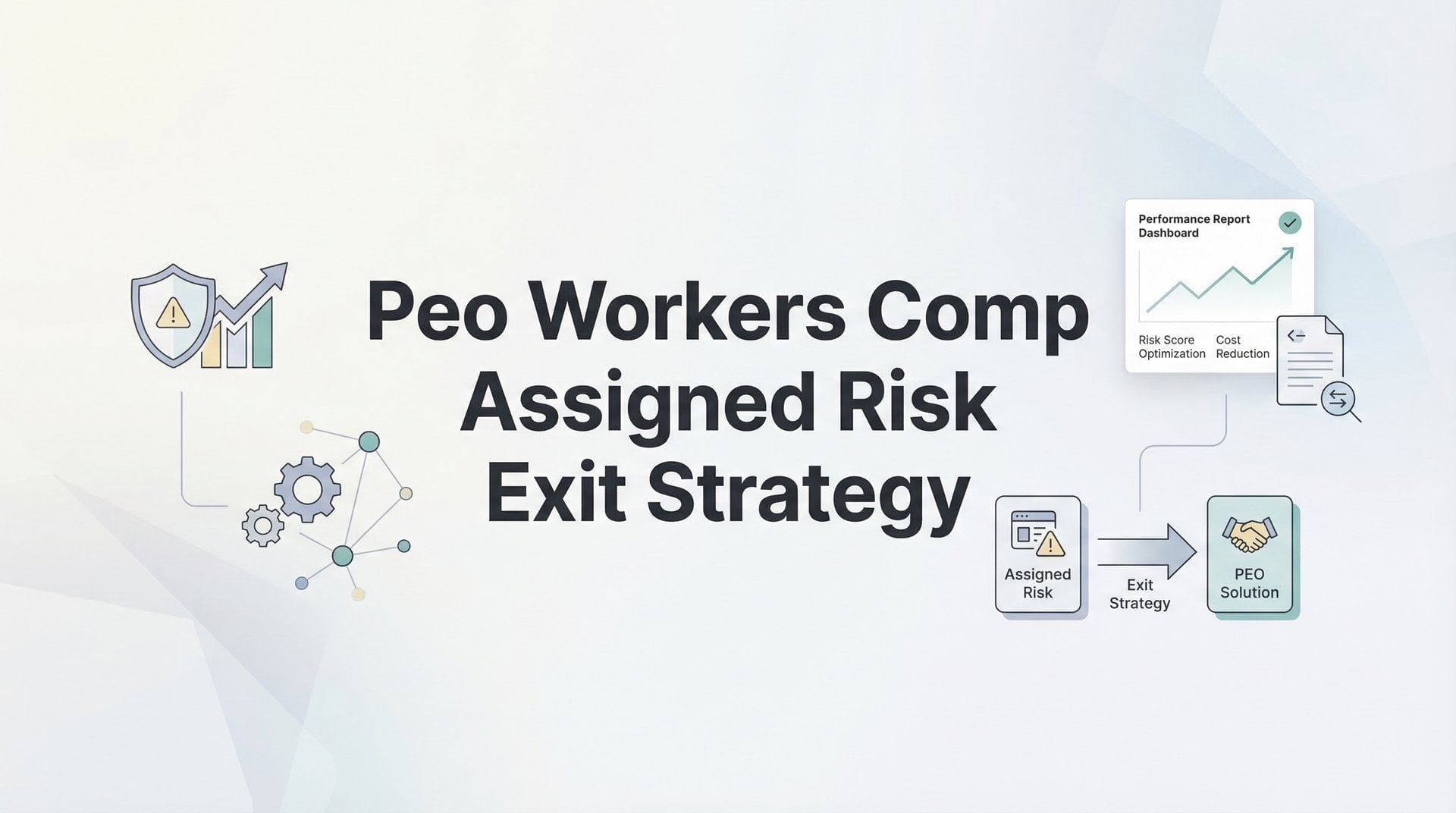
The assigned risk pool should ideally be a temporary solution for distressed risks. The goal for any business owner in this position is to "clean up" their risk profile so they can return to the more competitive private market.
Improving the Experience Modification Rate (Ex-Mod)
The most effective way to exit the assigned risk pool is to lower your Ex-Mod. This is achieved through:
- Safety Training: Reducing the frequency of accidents.
- Return-to-Work Programs: Providing light-duty work to injured employees to reduce the "indemnity" (lost wage) portion of a claim.
- Claims Management: Actively working with the adjuster to ensure claims are closed promptly and reserves are accurate.
Strategic Safety Investments
In 2026, the State Fund provides policyholders with access to specialized safety consultants and online learning management systems. Utilizing these resources not only helps prevent injuries but also builds a "paper trail" of safety culture that private underwriters want to see before offering a quote.
The Legal Landscape and Compliance
It is critical to remember that in California, failing to carry workers' compensation insurance is a criminal offense—a misdemeanor punishable by fines up to $10,000 or imprisonment in the county jail for up to a year, or both. Furthermore, the Division of Labor Standards Enforcement (DLSE) can issue "Stop Orders," effectively shutting down a business until coverage is secured.
The State Fund's existence removes the "I couldn't find insurance" excuse. Because a guaranteed market exists, the state enforces strict penalties for non-compliance. Employers who feel they cannot afford the premiums in the assigned risk pool must nevertheless maintain coverage or cease operations.
Frequently Asked Questions
1. Is the California State Fund the same as the Assigned Risk Pool? Yes, for practical purposes. While some states have a "Plan" managed by a group of insurers, California uses the State Compensation Insurance Fund to handle the assigned risk market. It serves as the guaranteed provider for any employer who cannot find coverage elsewhere.
2. Can I be fired from State Fund for having too many claims? No. As the insurer of last resort, State Fund cannot cancel your policy due to a high volume of claims or a high-risk industry. However, they can cancel a policy for non-payment of premiums, failure to report payroll, or refusing to allow an audit of your records.
3. Why is my premium so much higher in the assigned risk pool? Premiums in the assigned risk capacity are higher because the pool is composed of "adverse selection" risks. Because these businesses have higher-than-average probabilities of loss, the rates must be sufficient to cover the projected claims costs without relying on state subsidies.
4. How long do I have to stay in the State Fund? There is no mandatory duration. You can move your coverage to a private carrier at any time (usually at your policy's annual renewal) if a private carrier is willing to offer you a quote. Most businesses aim to move back to the voluntary market after 3–4 years of "clean" loss history.
5. Does State Fund cover out-of-state employees? State Fund is primarily designed for California-based risk. While they can sometimes provide limited coverage for California employees working temporarily in other states (extraterritorial coverage), businesses with permanent locations in other states usually need to secure separate policies in those jurisdictions or through a carrier with multi-state capabilities.
6. Can any insurance broker help me get into the State Fund? Yes. Any broker with a valid California Fire & Casualty license can submit an application to State Fund on your behalf. Unlike many private carriers, State Fund does not require a specific "appointment" or contract for a broker to access their standard and assigned risk tiers.
Practical Recommendation for California Employers
If you find your business in the California assigned risk pool in 2026, the best course of action is to treat the State Fund as a strategic partner rather than just a biller. Immediately engage with their Safety and Health Services department to perform a risk assessment of your workplace. By aggressively documenting your safety improvements and maintaining a strict return-to-work policy, you can lower your Experience Modification Rate. Once your Ex-Mod drops below 1.0, have your broker market your account to private carriers at least 90 days before your renewal date. This proactive approach ensures you spend the minimum amount of time necessary in the higher-cost assigned risk market.
Disclaimer: This article provides general information and is not legal or financial advice. Workers' compensation laws and rates are subject to change. Consult with a licensed insurance professional or legal counsel regarding your specific business requirements and California Department of Insurance regulations.
Image Gallery
Select an image to open it in a new tab.

Mateo Castillo
Decentralized Finance and E-Payments Strategist
