Determining the biggest boxing match in history depends on whether you measure success by total revenue, pay-per-view (PPV) buys, live attendance, or cultural impact. While Floyd Mayweather vs. Manny Pacquiao (2015) holds the financial record with over $600 million in revenue, Muhammad Ali vs. Joe Frazier I (1971) remains the most culturally significant "Fight of the Century."
The sport of boxing has always been defined by its "super-fights"—moments where the world stops to watch two athletes settle a rivalry in the ring. As of 2026, despite the rise of influencer boxing and cross-platform spectacles, the historical benchmarks set by legendary heavyweights and mid-weight technicians remain the standard by which all modern bouts are measured. To understand what makes a fight the "biggest," we must analyze the data across four distinct categories: financial earnings, global viewership, live crowd size, and historical legacy.
The Financial Titan: Floyd Mayweather vs. Manny Pacquiao (2015)
When discussing the "biggest" fight in terms of raw numbers, the May 2, 2015, clash between Floyd "Money" Mayweather and Manny "Pac-Man" Pacquiao stands in a league of its own. Often referred to as "The Battle for Greatness," this welterweight unification bout took over five years of negotiations to finalize.
Revenue and Pay-Per-View Records
The financial statistics for this event are staggering. It generated a record-breaking 4.6 million PPV buys in the United States alone, nearly doubling the previous record held by Mayweather’s 2007 fight against Oscar De La Hoya. With a PPV price tag of approximately $100 for high-definition viewing, the domestic television revenue exceeded $400 million.
When including the live gate at the MGM Grand Garden Arena—which pulled in roughly $72 million—and international broadcasting rights, sponsorships, and closed-circuit screenings, the total revenue surpassed $600 million. Mayweather, who won by unanimous decision, reportedly earned between $240 million and $280 million, while Pacquiao took home roughly $150 million. Even in 2026, these figures remain the high-water mark for a single sporting event’s individual earnings.
The Buildup and Expectations
The "bigness" of this match was amplified by the unprecedented delay. Boxing fans had clamored for the fight since 2009, when both men were at the absolute peak of their powers. The long wait created a "pressure cooker" effect on the market. By the time the contracts were signed in early 2015, the event had transcended the sports world, becoming a mandatory cultural event for celebrities, business moguls, and casual viewers alike.
The Cultural Pinnacle: Muhammad Ali vs. Joe Frazier I (1971)
While Mayweather vs. Pacquiao won the battle of the bank accounts, many historians argue that the "biggest" fight in the context of human history was the first meeting between Muhammad Ali and Joe Frazier at Madison Square Garden.
A Divided World
In 1971, the fight was more than a heavyweight title match; it was a microcosm of the social and political upheaval in the United States. Ali, who had been stripped of his titles and exiled from boxing for three and a half years due to his refusal to be drafted into the Vietnam War, represented the anti-establishment, the counterculture, and the civil rights movement. Joe Frazier, though a quiet and hardworking champion, was cast (perhaps unfairly) as the representative of the conservative establishment.
Undefeated Champions
Technically, it was the first time in history that two undefeated heavyweight champions met to decide the undisputed crown. The atmosphere was so electric that Frank Sinatra was famously forced to take photos for Life magazine just to get a ringside seat. The fight lived up to the hype, concluding with Frazier dropping Ali in the 15th round to secure a unanimous decision victory. The global reach was estimated at 300 million viewers via closed-circuit television and satellite, an astronomical number for the era.

The Rumble in the Jungle: Ali vs. Foreman (1974)
In terms of global spectacle and innovative promotion, the "Rumble in the Jungle" between Muhammad Ali and George Foreman is a primary contender for the biggest fight ever. Held in Kinshasa, Zaire (now the Democratic Republic of the Congo), it was the first major sports event to be hosted in Africa by an American promoter, Don King.
Innovation in Strategy and Media
The fight is legendary for Ali’s "Rope-a-Dope" strategy, where he leaned against the ropes and allowed the younger, more powerful Foreman to exhaust himself. Beyond the technicalities of the ring, the event was a massive undertaking. It was paired with a three-day music festival, "Zaire 74," featuring James Brown and B.B. King, making it a precursor to the modern multi-day sports entertainment "weekends" we see today.
The Rumble in the Jungle demonstrated that a boxing match could be a tool for national branding and international diplomacy. The estimated global television audience was 1 billion people, though these historical figures are often debated by modern analysts. Regardless of the exact count, the fight remains a foundational pillar of 20th-century pop culture.
Historical Attendance Leaders
Sometimes "biggest" simply means the most people in one place. While modern Las Vegas fights are held in arenas seating 15,000 to 20,000, boxing has a long history of massive outdoor stadium events.
- Julio César Chávez vs. Greg Haugen (1993): Held at the Estadio Azteca in Mexico City, this fight holds the record for the largest paid attendance in boxing history, with 132,247 spectators. The sheer scale of the crowd remains a testament to Chávez’s status as a national hero in Mexico.
- Jack Dempsey vs. Gene Tunney (1927): Known as "The Long Count Fight," this heavyweight rematch at Soldier Field in Chicago drew an estimated 104,000 to 120,000 people. It was a landmark event that helped cement boxing as a mainstream American sport in the 1920s.
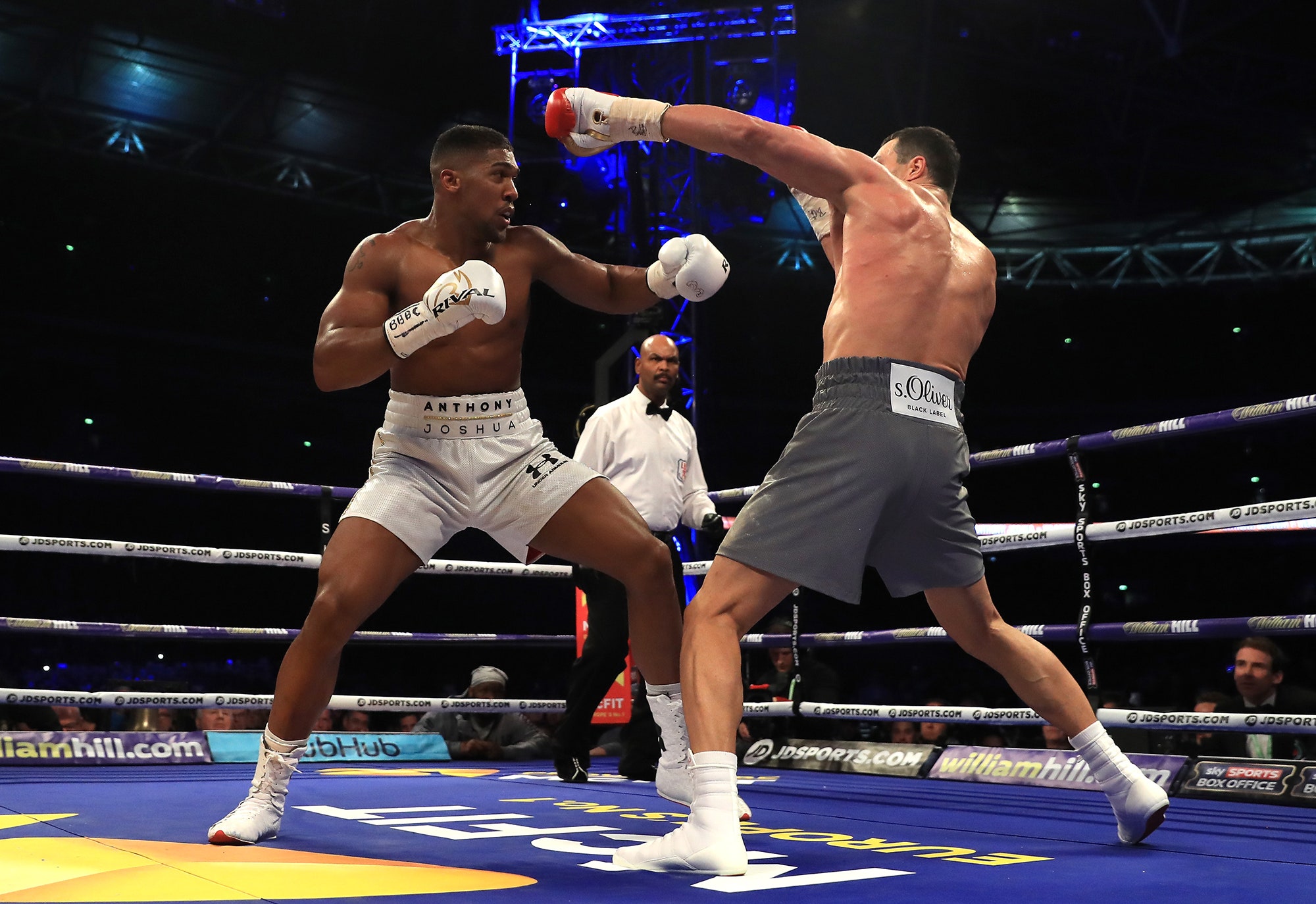
- Anthony Joshua vs. Wladimir Klitschko (2017): In the modern era, the heavyweight resurgence in the UK led to 90,000 fans packing Wembley Stadium. This match signaled the return of the heavyweight division to the forefront of global sports.
Comparison of Major Boxing Events
The following table compares the top matches based on their primary "claim to fame" in terms of size and impact.
| Match | Year | Primary Metric | Significance |
|---|---|---|---|
| Mayweather vs. Pacquiao | 2015 | $600M+ Revenue | Highest-grossing combat sports event in history. |
| Ali vs. Frazier I | 1971 | Cultural Impact | Defined the 1970s social landscape; 300M viewers. |
| Chávez vs. Haugen | 1993 | 132,247 Attendance | Largest live paid audience for any boxing match. |
| Ali vs. Foreman | 1974 | Global Reach | First major "mega-event" held on the African continent. |
| Mayweather vs. McGregor | 2017 | 4.3M PPV Buys | Largest cross-disciplinary (MMA vs. Boxing) event. |
| Louis vs. Schmeling II | 1938 | Political Weight | Symbolized the struggle between Democracy and Nazism. |
The Symbolic Weight: Joe Louis vs. Max Schmeling II (1938)
While revenue and attendance are quantifiable, the biggest match in terms of geopolitical stakes was the 1938 rematch between Joe Louis and Max Schmeling.
As World War II loomed, this fight at Yankee Stadium became a symbolic battle between the United States and Nazi Germany. Schmeling had won the first fight and was held up by the Nazi regime as proof of "Aryan superiority." Louis, an African American, became an unlikely symbol of American democracy and freedom for people of all races.
Louis won by technical knockout in the first round (2 minutes and 4 seconds). The fight was broadcast via radio to millions around the globe and is widely considered the most important sporting event of the 20th century due to its impact on national morale and international relations.
Modern Successors: The Streaming and Influencer Era
By 2026, the landscape of "big" fights has shifted. While traditional championship bouts like those involving Tyson Fury or Canelo Álvarez continue to draw massive crowds, a new category of "event" boxing has emerged.
The Rise of Hybrid Events
The 2017 match between Floyd Mayweather and UFC star Conor McGregor proved that brand recognition could rival championship prestige. Generating 4.3 million PPV buys, it remains the second-highest-grossing fight in history. This opened the door for influencer-led events that, while often criticized by purists for their lack of technical depth, consistently reach younger audiences that traditional boxing had struggled to capture.
The "bigness" of these modern events is often measured in social media impressions and digital engagement rather than just ticket sales. However, as we have seen with historical data from The Ring Magazine and ESPN Boxing, the financial and cultural records set by the legends of the 20th and early 21st centuries still provide the foundation for the sport's commercial structure.
FAQ: Understanding Boxing’s Biggest Moments
Which boxing match had the highest viewership in history?
While exact historical numbers are often disputed, the "Rumble in the Jungle" (1974) and Muhammad Ali vs. Antonio Inoki (1976) are frequently cited as having reached upwards of 1 billion viewers through a combination of live satellite broadcasts and delayed free-to-air transmissions globally. In the PPV era, Mayweather vs. Pacquiao holds the confirmed record for paid home viewership.
What is the difference between "The Fight of the Century" and other big matches?
"The Fight of the Century" is a specific promotional title used several times, most famously for Ali vs. Frazier I (1971) and Jack Johnson vs. James J. Jeffries (1910). It usually denotes a fight where two champions—one current and one former—meet while both are considered to be in their prime, carrying significant social or racial weight.
Has any fight surpassed Mayweather vs. Pacquiao’s revenue by 2026?
As of 2026, no single traditional boxing match has officially surpassed the $600 million total revenue generated by Mayweather vs. Pacquiao. While inflation and rising ticket prices have allowed some bouts to approach these figures, the 4.6 million PPV buy record remains unbroken in the traditional linear television market.
Why was Joe Louis vs. Max Schmeling II so important?
It is considered the "biggest" fight for its political implications. It was one of the few times a sporting event carried the weight of impending global conflict. A win for Schmeling would have been used as propaganda for the Nazi party, while Louis's victory provided a massive psychological boost to the Allied nations and the American Civil Rights movement.
How do modern heavyweight fights compare to the classics?
Modern fights, such as those held in Saudi Arabia (e.g., the "Day of Reckoning" or undisputed heavyweight clashes), often have higher production values and larger site fees. However, they frequently struggle to capture the same universal "monoculture" attention that Ali, Tyson, or Louis commanded, largely due to the fragmentation of media and the move from free-to-air to subscription-based streaming.
Practical Recommendation for Boxing Fans
To truly appreciate what made these matches "the biggest," viewers should seek out remastered broadcasts or documentaries such as When We Were Kings (covering the Rumble in the Jungle). Understanding the technical context—such as the 15-round limit of the past versus the 12-round limit of today—provides deeper insight into the physical feats performed by these athletes. For real-time statistics and historical archives, BoxRec remains the most authoritative database for verifying the records of these historic events.
Image Gallery
Select an image to open it in a new tab.
Declan O'Connor
Higher Education and Campus Culture Reporter
