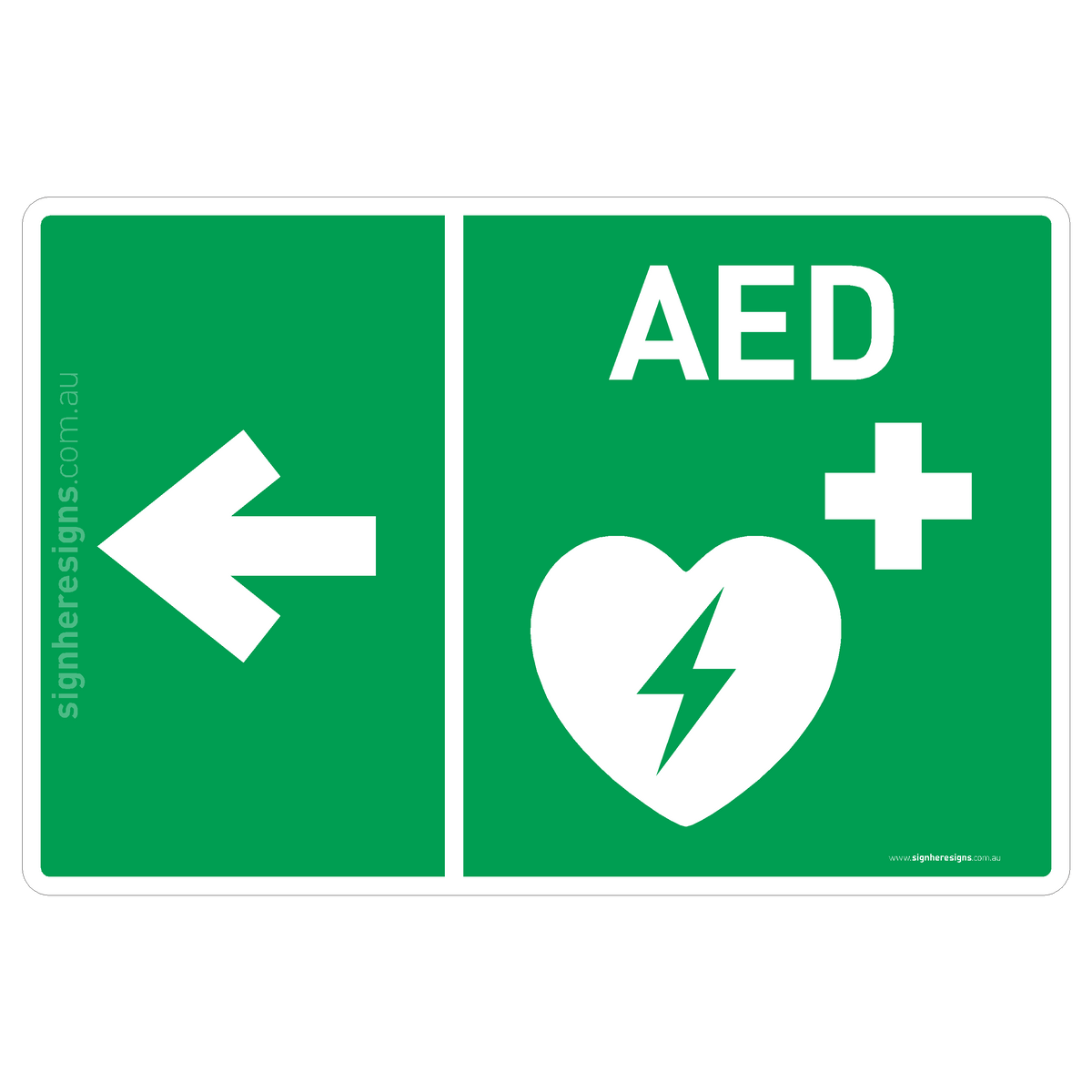
Effective Automated External Defibrillator (AED) signage is a critical component of emergency preparedness that ensures life-saving technology can be located instantly during a sudden cardiac arrest. By utilizing standardized symbols and high-visibility placements, organizations minimize the time between a cardiac event and the application of an AED, directly increasing the probability of survival for individuals in public or private spaces.
Understanding the Role of AED Signage
AED signage functions as a critical navigational tool within a facility. In the event of a sudden cardiac arrest, every second is vital; the survival rate for out-of-hospital cardiac arrests decreases by approximately 7% to 10% for every minute that passes without defibrillation. Signage does more than identify a storage cabinet; it provides a visual beacon that guides trained bystanders—or even untrained individuals following emergency dispatcher instructions—to the device location without confusion.
Proper signage bridges the gap between the storage location of the device and the person needing assistance. Without standardized, clear identification, an AED might remain hidden behind a door, inside an unmarked cabinet, or obstructed by clutter, rendering the equipment effectively useless during an emergency.
Standardized Symbols and Visual Communication
To ensure universal recognition, AED signage relies on specific, internationally recognized symbols. The primary symbol is the AHA/ERC-approved heart with a lightning bolt, often accompanied by a silhouette of a person.
Key Components of Effective Signs:
- Color Contrast: Signs should utilize high-contrast color schemes, typically green and white, or red and white, depending on local jurisdiction and building codes. Green is widely recognized as a safety information color, while red is often reserved for fire safety equipment.
- Universal Iconography: Relying on icons is essential, as symbols transcend language barriers, ensuring that anyone in a diverse facility can identify the equipment.
- Reflectivity and Luminescence: In areas with poor lighting or during power failures, photoluminescent (glow-in-the-dark) signage is highly recommended. These signs absorb light during the day and remain visible in low-light conditions, ensuring the AED remains accessible during emergencies that may coincide with building power outages.

Strategic Placement Requirements
The effectiveness of AED signage is entirely dependent on where the signs are installed. Placement must account for both the physical distance from common areas and the line-of-sight requirements for occupants.
Height and Visibility Guidelines
Signs should be mounted at a height that is visible above the heads of a crowd or over office furniture. A standard recommendation is to place identification signs at eye level or higher (typically 6 to 7 feet from the floor) to ensure they are visible from a distance.
The "Three-Dimensional" Approach
For wall-mounted AED cabinets, a flat sign is often insufficient. Three-dimensional (or "V-shaped") signs that project from the wall allow the location to be identified from multiple angles—including from both ends of a hallway. This removes the need for a person to walk directly in front of the wall to see if an AED is nearby.
Regulatory and Compliance Considerations
While national standards provide the baseline for symbol design, local building codes, fire codes, and state-specific Good Samaritan laws may mandate specific signage requirements. For example, some jurisdictions require floor-level markings or directional arrows leading to the device if it is tucked into an alcove or secondary room. Facility managers must consult with local fire marshals or health departments to ensure their signage configurations meet the specific statutes of their region in 2026.
Comparison of AED Signage Types
| Sign Type | Primary Use Case | Advantage |
|---|---|---|
| Flat Wall Sign | Above cabinet doors | Direct identification of the unit. |
| 3D V-Shaped Sign | Hallway intersections | Visible from long distances in both directions. |
| Photoluminescent Sign | Stairwells/Power-critical areas | Ensures visibility during electrical failure. |
| Floor/Decal Marking | High-traffic warehouses | Keeps identification visible even in crowded spaces. |
Maintenance and Auditing
Signage is often forgotten during routine maintenance, yet faded or damaged signs can lead to hesitation during a crisis. As part of a 2026 facility safety audit, personnel should verify the following:
- Readability: Ensure that the sign has not faded, peeled, or been obscured by new construction, shelving, or wall hangings.
- Obstruction: Verify that no temporary signage or decorations block the view of the AED location.
- Update Currency: If the AED location has been moved, ensure that old signage is removed immediately to prevent confusion.
- Lighting: Check that the lighting in the immediate vicinity of the sign remains functional and unobstructed.
Human Factors: Why Clear Signage Saves Lives
The psychology of an emergency response is characterized by high stress and "tunnel vision." In such states, individuals are less likely to process complex information and more likely to rely on intuitive, high-contrast symbols. Research indicates that when people are under stress, they prioritize visual cues that stand out from the standard environment.
Therefore, the best AED signage is one that is "inconspicuous until needed." It should be professional enough to blend into the building's aesthetic during normal operations, but distinct enough to serve as an obvious visual anchor the moment a person scans the room for help.
Common Mistakes to Avoid
- Over-complicating the Sign: Avoid including long lists of instructions on the identification sign itself. The sign should simply say "AED" and include the universal heart/bolt symbol. Detailed usage instructions belong on the AED device or in a separate, adjacent placard.
- Ignoring Distance: Installing a sign at one end of a large floor plan without secondary signs to lead the way is a common failure. If an AED is in a remote location, a series of "directional" signs (signs with arrows) should be placed at decision points.
- Inconsistent Branding: Using custom-designed symbols that deviate from standard ISO or ANSI patterns can lead to confusion. Always use industry-standard icons.
Frequently Asked Questions
Are there specific legal colors for AED signs?
While international standards (such as ISO 7010) generally promote green and white for safety equipment, local regulations may mandate specific colors. Always check local fire codes, as some regions strictly associate red with "life-saving/emergency" gear regardless of standard ISO recommendations.
Do I need a sign if the AED is in a glass cabinet?
Yes. Even if the device is visible through glass, a sign is necessary to confirm the contents of the cabinet immediately. Furthermore, if the glass becomes dirty or obscured by glare, the sign serves as the primary identifier.
What is the ideal size for an AED wall sign?
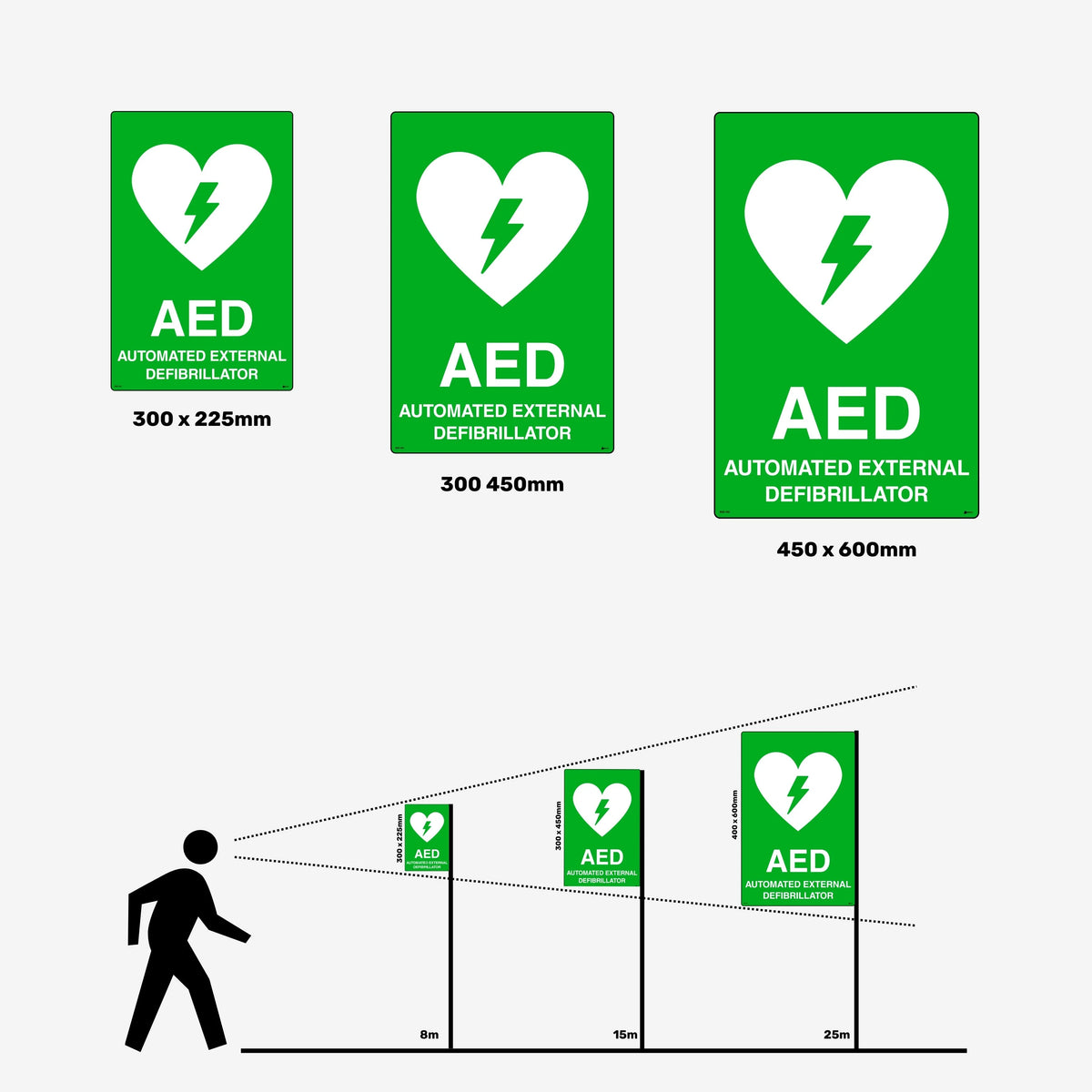
For hallway placement, a sign should be at least 8x8 inches to ensure readability from a distance of 20–30 feet. Larger signs may be required for large open-plan spaces like warehouses or gyms.
Does the ADA apply to AED signage?
Yes. Facilities must ensure that signage is compliant with the Americans with Disabilities Act (ADA), which often requires tactile characters and Braille for accessibility. Consult the latest 2026 ADA Standards for Accessible Design to ensure your mounting height and contrast levels comply with federal law.
How often should I replace AED signage?
Signs should be replaced whenever they show signs of degradation, such as color fading or loss of adhesive. If you are conducting a facility renovation, this is the ideal time to upgrade to high-visibility, photoluminescent materials.
Next Steps for Facility Management
If you are responsible for facility safety, your first action should be a "walkthrough audit." Walk your premises from the perspective of an untrained person unfamiliar with the layout. Note the points where you lose sight of the AED cabinet and identify areas where a directional arrow or a 3D wall sign would eliminate that gap.
Once the gaps are identified, ensure all new signage meets both the functional requirements for visibility and the legal requirements for accessibility in your specific jurisdiction. By treating AED signage as a critical life-safety system—rather than a decorative wall element—you create a safer environment for everyone in your facility.
Image Gallery
Select an image to open it in a new tab.


Ingrid Bjornson
Global Cyber Policy and Regulation Analyst
