Who Was William Paul Coates? The Legacy of the Black Classic Press Founder

William Paul Coates is a prominent American publisher, librarian, and former community activist best known for founding Black Classic Press in 1978. A former leader of the Baltimore chapter of the Black Panther Party, he transitioned from grassroots activism to intellectual preservation, dedicating his life to republishing obscure and essential works by and about people of African descent.
The Early Life and Activism of W. Paul Coates
To understand who William Paul Coates is, one must look at the socio-political landscape of the 1960s and 1970s. Born in the mid-1940s, Coates came of age during a period of intense racial upheaval and the burgeoning Black Power movement. His entry into public life was not through the ivory tower of academia, but through the streets of Baltimore as a member of the Black Panther Party (BPP).
During his tenure with the Black Panthers, Coates served as the Defense Captain of the Baltimore chapter. His work was deeply rooted in the party’s "Survival Programs." While the media often focused on the militant imagery of the Panthers, Coates was instrumental in organizing the Free Breakfast for Children Program and health clinics. These initiatives were designed to provide the community with the resources the state failed to provide.
However, his time with the Panthers also exposed him to the fragility of political movements. As the party faced internal friction and external pressure from the FBI’s COINTELPRO, Coates began to pivot toward a different kind of revolution: the revolution of the mind. He recognized that for Black liberation to be sustainable, it required a deep, foundational knowledge of history that was being systematically excluded from mainstream education and commercial publishing.
From Activist to Bibliophile: The Howard University Years
The transition from the Black Panther Party to the world of rare books was a natural evolution for Coates. He understood that the "struggle" was as much about information as it was about political representation. This led him to a career in librarianship, specifically at the Moorland-Spingarn Research Center at Howard University.
The Moorland-Spingarn Research Center is one of the world's largest and most comprehensive repositories of the history and culture of people of African descent. Working in this environment provided Coates with unparalleled access to primary sources, out-of-print manuscripts, and forgotten intellectual giants. It was here that he honed his skills as a researcher and bibliographer.
His work at Howard was not merely a job; it was a scouting mission. He realized that many of the most important texts for Black self-actualization were no longer in print. Traditional publishing houses saw little profit in "specialized" Black history, leaving a void that Coates felt compelled to fill. This realization became the catalyst for the birth of Black Classic Press (BCP).
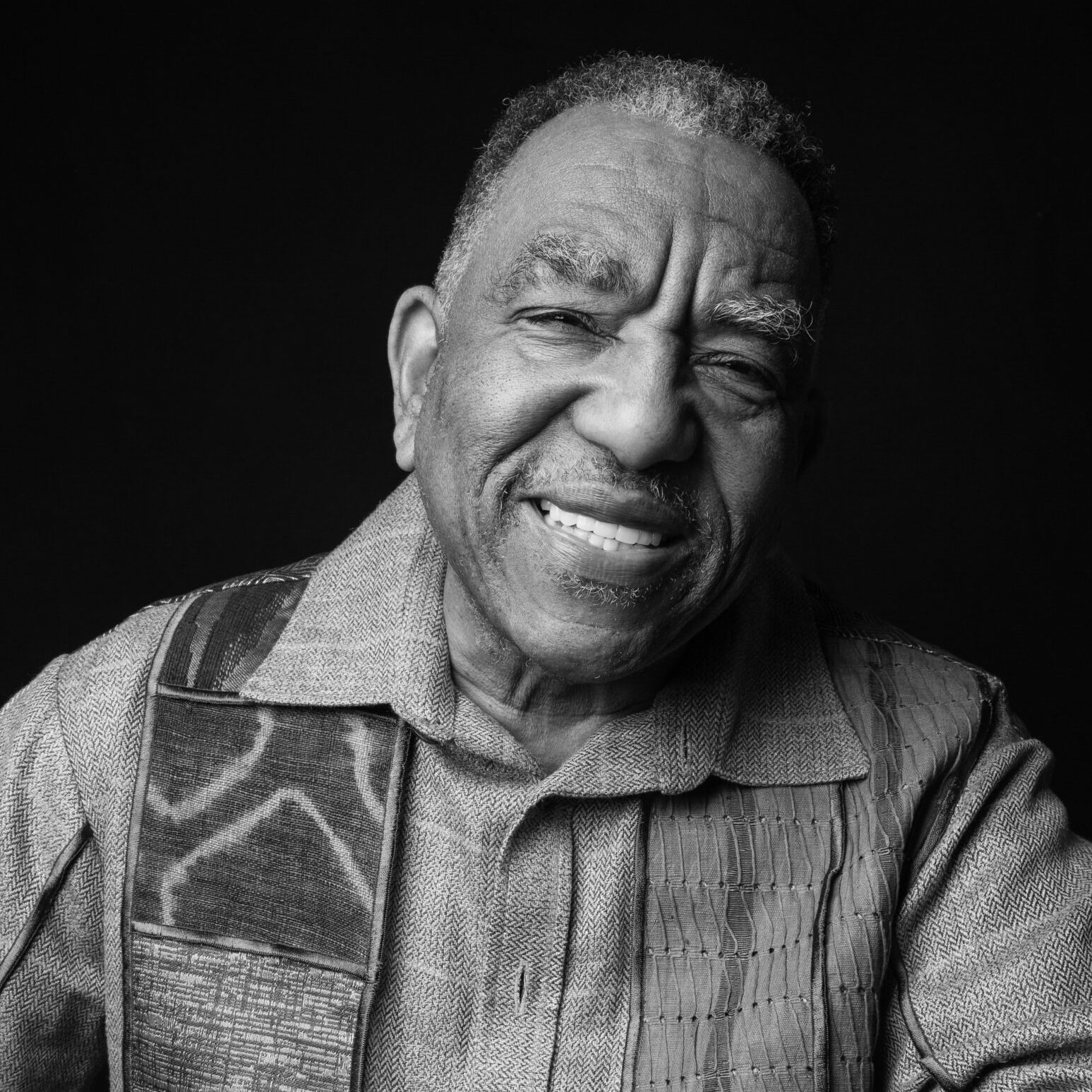
The Founding of Black Classic Press
In 1978, William Paul Coates founded Black Classic Press with a clear and singular mission: to bring back into print significant works by and about people of African descent that were otherwise unavailable. The origins of the press were humble, operating out of the basement of his home in Baltimore.
Coates did not just manage the business; he was a literal "printer." He acquired an old printing press, taught himself the mechanics of offset printing, and physically produced the books. This hands-on approach allowed the press to survive during lean years when larger institutions would have folded.
The Philosophy of "Classic" Literature
The naming of the press was intentional. By using the word "Classic," Coates challenged the Eurocentric definition of the term. He argued that works by scholars like Joel Augustus Rogers (J.A. Rogers) and John Edward Bruce were as foundational to the human experience as the works of Homer or Shakespeare.
Black Classic Press focused on several key areas:
- Historical Recovery: Reissuing texts that documented African civilizations before colonialism.
- Intellectual Biography: Highlighting the lives of Black thinkers who were erased from mainstream narratives.
- Sociological Analysis: Publishing works that examined the systemic nature of racism and the mechanics of Black resilience.
Notable Works and Authors Published by BCP
Throughout its history, Black Classic Press has been responsible for the revival of several seminal texts. Without Coates's intervention, many of these works might have remained accessible only to those with specialized library credentials.
| Author | Notable Title | Impact of Republication |
|---|---|---|
| J.A. Rogers | World’s Great Men of Color | Provided a comprehensive biographical history of global Black achievement. |
| John G. Jackson | Introduction to African Civilizations | Challenged the "Dark Continent" myth by documenting advanced African societies. |
| John Edward Bruce | The Selected Writings of John Edward Bruce | Preserved the voice of a key 19th-century Black journalist and activist. |
| Bobby Seale | Seize the Time | Republished the story of the Black Panther Party from its co-founder’s perspective. |
| Yosef Ben-Jochannan | Black Man of the Nile and His Family | Established a direct link between Ancient Egypt and African heritage. |
The republication of J.A. Rogers is perhaps Coates's most significant achievement. Rogers was a self-trained historian and journalist who spent decades traveling the world to document the African presence in global history. Coates recognized that Rogers’s work served as a "peoples' history," providing a sense of pride and continuity to a population whose history had been severed by the Middle Passage.
Influence on Contemporary Intellectuals: The Ta-Nehisi Coates Connection
While W. Paul Coates is a giant in the publishing world, many modern readers recognize his name through the work of his son, Ta-Nehisi Coates. In his memoir The Beautiful Struggle and the National Book Award-winning Between the World and Me, Ta-Nehisi provides a vivid portrait of his father’s influence.
W. Paul Coates is depicted as a rigorous, disciplined, and intellectually demanding patriarch. He raised his children in a household where reading was not a leisure activity but a survival tool. Ta-Nehisi often speaks of the "books" that filled their home—not just any books, but the specific "classics" his father was printing in the basement.
This upbringing created a unique lineage of intellectualism. W. Paul Coates provided the infrastructure (the books, the press, the history), while Ta-Nehisi provided the contemporary voice that brought those themes to a global audience. The elder Coates's commitment to "The Knowledge" (a term often used in the household to describe historical and self-awareness) became the bedrock upon which Ta-Nehisi’s career was built.
The Technical Challenges of Independent Black Publishing
Operating an independent Black press in the late 20th century was an exercise in extreme resilience. W. Paul Coates faced several systemic hurdles that he had to overcome through technical ingenuity and community networking.
Distribution Barriers
In the 1980s and 90s, major book distribution networks were often closed to small, independent publishers, especially those focusing on niche racial topics. Coates bypassed these barriers by:
- Targeting Independent Black Bookstores: He built a network of small, community-owned shops that became the primary outlets for BCP titles.
- Direct Mail and Catalogues: Long before the internet, Coates used meticulously maintained mailing lists to reach his audience directly.
- Community Events: Selling books at "Black Power" conferences, African heritage festivals, and church events.
The Shift to Digital and Print-on-Demand
As technology evolved, Coates was an early adopter of digital publishing tools. He recognized that the traditional model of large print runs and massive warehouse storage was unsustainable for a small press. By transitioning to digital workflows and eventually leveraging print-on-demand technology, he ensured that Black Classic Press remained viable into the 21st century.
Historical Preservation and the BCP Digital Archive
In the current era, William Paul Coates has moved toward ensuring the digital longevity of the materials he spent decades physicalizing. The work of Black Classic Press is not just about selling books; it is about archiving a culture.
Coates has been involved in various projects to digitize rare Black periodicals and pamphlets. His expertise as a librarian at Howard University allowed him to understand the metadata and preservation standards required to keep these records accessible for future generations of scholars.
He often speaks about the "Black bibliographic tradition," a lineage of collectors and librarians like Arthur Schomburg and Dorothy Porter Wesley. Coates sees himself as a continuation of this tradition—a gatekeeper whose job is to keep the gate open.
Legacy and Impact in 2026
As of 2026, William Paul Coates’s legacy is firmly cemented in the American intellectual canon. His impact can be measured in several ways:
- Institutional Longevity: Black Classic Press remains one of the oldest independently owned Black publishing houses in the United States.
- Intellectual Genealogy: He mentored a generation of Black publishers, editors, and writers who saw his basement operation as a proof of concept for independent media.
- Educational Reform: Many of the books he brought back into print are now standard texts in African American Studies departments across the country.
- Cultural Literacy: He helped bridge the gap between the militant activism of the 1960s and the scholarly activism of the 21st century.
Coates demonstrated that "Black Power" was not just a political slogan but a cultural imperative that required the control of one’s own narrative. By owning the means of production—the press itself—he ensured that the history of Black people would never again be entirely at the mercy of mainstream gatekeepers.
Frequently Asked Questions
Is William Paul Coates still involved with Black Classic Press?
As of 2026, while the day-to-day operations have seen more involvement from his family and a dedicated staff, W. Paul Coates remains the guiding visionary and founder. He continues to speak at literary events and consult on historical preservation projects.
What is the relationship between W. Paul Coates and the Black Panther Party?
Coates was the Defense Captain of the Baltimore chapter of the Black Panther Party. Unlike some members who focused solely on militant rhetoric, Coates was a pragmatist who focused on community survival programs and later transitioned his activism into the intellectual realm through publishing.
How many books has Black Classic Press published?
Since its inception in 1978, Black Classic Press has published or republished over 100 titles. The focus has always been on quality and historical significance rather than volume, with many titles remaining in constant print for decades.
Where can I find books published by W. Paul Coates?
Books from Black Classic Press are available through their official website, major online retailers, and specifically through independent Black-owned bookstores across the United States.
Why is W. Paul Coates considered a "librarian-publisher"?
This title reflects his dual expertise. His professional background at Howard University's Moorland-Spingarn Research Center gave him the scholarly tools to identify rare and significant texts, while his work with the press gave him the entrepreneurial vehicle to share those texts with the public.
Recommended Next Actions
For those interested in the work of William Paul Coates, the most effective way to engage with his legacy is through the literature he preserved.
- Explore the BCP Catalogue: Visit the Black Classic Press website to view their current offerings.
- Research J.A. Rogers: Start with World’s Great Men of Color to understand the type of "lost history" Coates dedicated his life to recovering.
- Read "The Beautiful Struggle": To get a personal perspective on Coates’s life and parenting philosophy, read the memoir by his son, Ta-Nehisi Coates.
- Support Independent Bookstores: Purchase BCP titles from local independent retailers to support the distribution network Coates helped build.
Image Gallery
Select an image to open it in a new tab.
Omar Farooq
EdTech Innovation and Virtual Pedagogy Journalist
