AARP does not function as an insurance company; rather, it partners with The Hartford to provide the AARP Auto Insurance Program. Rates are determined by a combination of traditional actuarial factors, such as driving history and vehicle type, and specific member-only benefits, including group discounts, accident forgiveness, and specialized coverage tailored for drivers aged 50 and older.
The AARP and The Hartford Partnership
To understand how AARP car insurance rates are formulated, one must first recognize the structure of the program. AARP (American Association of Retired Persons) is a non-profit, non-partisan organization that advocates for Americans aged 50 and older. Because AARP does not underwrite insurance policies itself, it enters into strategic alliances with financial and insurance service providers.
The primary insurance partner for the AARP Auto Insurance Program is The Hartford. When a member requests a quote, they are engaging with The Hartford’s underwriting guidelines. These guidelines are designed to account for the risk profiles of older drivers. By leveraging the collective bargaining power and the demographic research provided by AARP, the program creates specific tiers of pricing that may not be available to the general public through other insurers.
Factors Influencing Your Premium
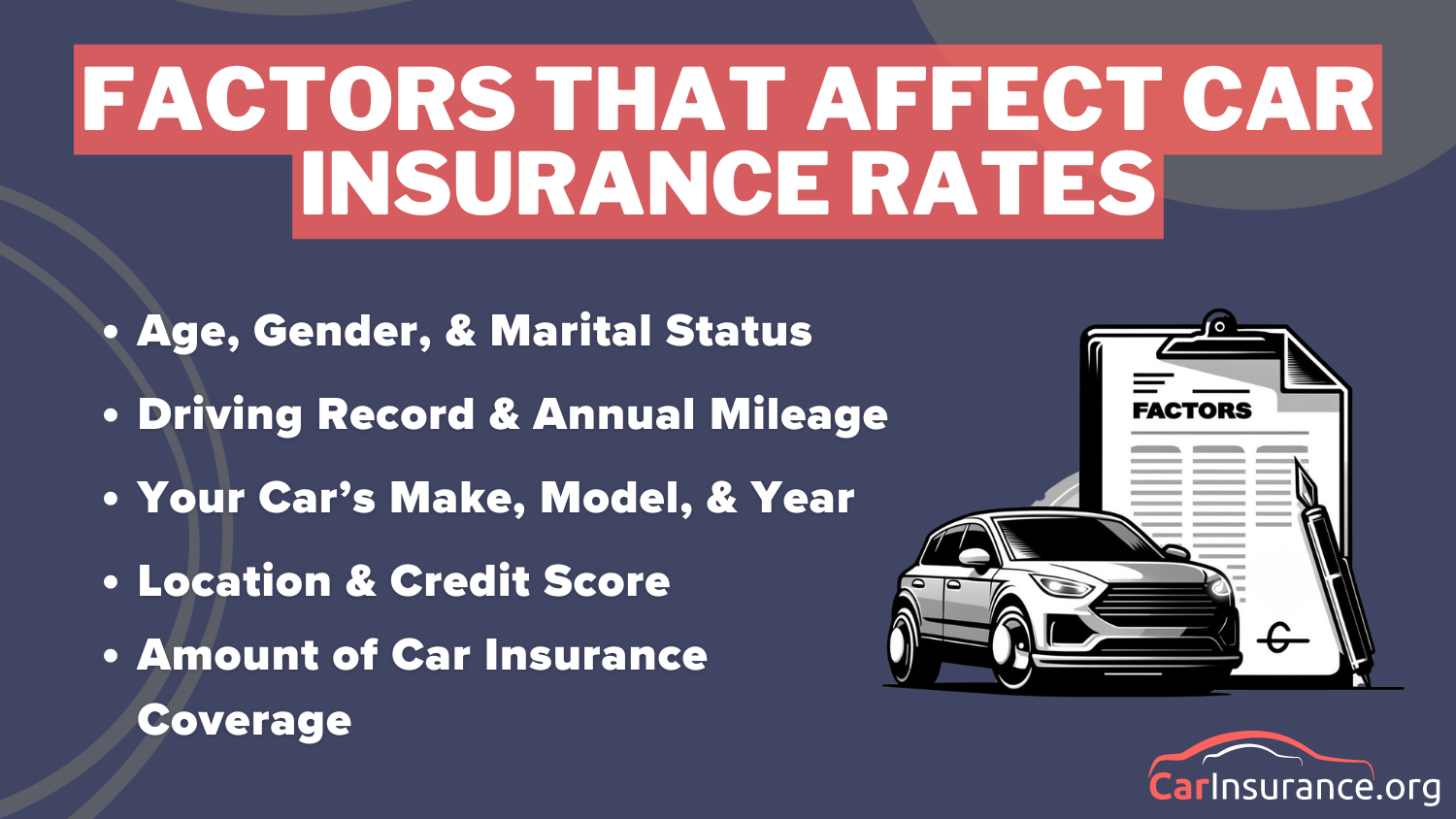
Insurance companies use complex algorithms to predict the likelihood of a claim. While many factors are universal across the industry, the AARP Auto Insurance Program via The Hartford places weight on variables relevant to experienced drivers.
1. Driving Record and History
Your personal motor vehicle record remains the most significant factor in your rate. Insurance providers look at the frequency and severity of moving violations, at-fault accidents, and comprehensive claims over the previous three to five years. For drivers with a clean record, the AARP program often provides lower baseline rates compared to general insurance products, as the membership demographic is statistically perceived as lower risk.
2. Age and Experience
While "senior" status is often associated with higher premiums in the general auto insurance market due to heightened scrutiny of reflex speeds and vision, the AARP program actively works to counteract this trend. By offering programs like the AARP Smart Driver course, which is designed to refresh knowledge of current traffic laws and defensive driving techniques, policyholders can demonstrate a commitment to safety, which may result in premium credits.
3. Vehicle Characteristics
The make, model, year, and safety features of your vehicle significantly impact your premium. High-performance vehicles, regardless of the driver's age, typically carry higher premiums due to the cost of parts, repair complexity, and theft risk. Conversely, vehicles equipped with modern safety technology—such as automatic emergency braking, blind-spot monitoring, and lane-keep assist—often qualify for discounts under the AARP program because these features reduce the probability of severe accidents.
4. Annual Mileage and Usage
The AARP program assesses how often you drive. Retired drivers who use their vehicles primarily for errands or occasional travel rather than commuting may qualify for "low-mileage" discounts. Providing an accurate estimate of your annual mileage during the quote process is essential, as inflated figures lead to unnecessarily higher premiums.
How Membership Impacts Rates
Membership in AARP acts as a gateway to group-specific discounts. When evaluating rates, you must calculate the cost of the AARP annual membership fee against the potential savings. For many policyholders, the savings achieved through exclusive program discounts—such as the "AARP member discount"—frequently exceed the nominal cost of the membership itself.
It is important to note that these discounts vary by state and individual risk profile. Because insurance is regulated at the state level in the United States, an AARP-affiliated rate in California may operate under different statutory guidelines than a rate in Florida or New York. The Hartford must file its rate structures with each state’s Department of Insurance, meaning the specific percentage of savings is not uniform nationwide.
The Role of Supplemental Features
The price of an insurance policy is not just about the monthly premium; it is about the "value per dollar" of the coverage provided. The AARP Auto Insurance Program distinguishes itself by including features that prevent rate increases or provide added protection:
- RecoverCare: This service provides coverage for transportation and household services if you are injured in an accident and cannot perform daily tasks.
- Accident Forgiveness: For long-term policyholders who maintain a clean record, this feature prevents a premium hike following the first at-fault accident.
- New Car Replacement: If a vehicle is totaled within a certain timeframe, the policy may provide for a new vehicle of the same make and model rather than the depreciated cash value.
Comparison Table: Understanding Coverage Options
The following table highlights the common differences between standard insurance policies and the AARP Auto Insurance Program through The Hartford.
| Feature | Standard Auto Insurance | AARP Auto Insurance (The Hartford) |
|---|---|---|
| Primary Target | General population | Drivers 50+ |
| Membership Requirement | None | Yes (AARP Membership) |
| Accident Forgiveness | Often an extra rider | Available to qualifying members |
| Defensive Driving Credit | Varies by carrier | Standardized credit for AARP course |
| RecoverCare Support | Typically not included | Included in many plans |
| Rate Stability | Market-dependent | Focuses on stable long-term premiums |
Evaluating the Cost-to-Coverage Ratio
When you receive a quote, do not look solely at the total dollar amount. You must examine the "Declarations Page" of the proposed policy. This document lists the limits of liability, deductibles, and coverages. A lower premium is often achieved by raising the deductible or reducing liability limits—a strategy that can be financially devastating in the event of a significant lawsuit or accident.
Always ensure that when comparing AARP-affiliated quotes with other providers, you are comparing "apples to apples." If the AARP quote offers $300,000 in liability coverage while a competitor offers $100,000, the AARP quote may appear more expensive, but it is actually providing superior financial protection.
Steps to Optimize Your Rate
If you have decided to pursue a quote through the AARP Auto Insurance Program, follow these steps to ensure you are getting the most accurate and competitive pricing:
- Gather Documentation: Have your current policy’s declarations page, your vehicle identification number (VIN), and your annual mileage estimate ready.
- Complete the AARP Smart Driver Course: If available in your jurisdiction, completing this course often yields an immediate, multi-year discount on your premium.
- Bundle Policies: Check if you can combine your auto insurance with home or renters insurance through The Hartford. Multi-policy discounts are among the most effective ways to lower your overall insurance spend.
- Review Annually: Insurance rates change based on your age, the age of your vehicle, and market trends. Re-evaluate your coverage levels at every renewal period (typically every six or twelve months).
- Inquire About Paid-in-Full Discounts: Many insurance providers offer a lower rate if you choose to pay your premium for the entire term at once, rather than in monthly installments.
Common Misconceptions
One common myth is that AARP membership automatically guarantees the "lowest" rate in the industry. Insurance is highly individualistic. A driver with a history of multiple claims or high-speed citations may find that, despite the AARP discount, another provider—who specializes in high-risk drivers—might offer a more competitive rate. Always shop around and verify that the quote provided matches your specific needs.
Another misconception is that the program is exclusively for retired individuals. AARP membership is available to anyone age 50 or older, regardless of their employment status. If you are 50, still working, and have a long commute, you are still eligible for the program, though your premium will reflect your higher exposure on the road compared to a retired individual with lower annual mileage.
Frequently Asked Questions (FAQ)
Does AARP offer insurance to drivers under 50? Generally, the AARP Auto Insurance Program through The Hartford is designed for AARP members, which requires individuals to be at least 50 years of age. While some households may have younger drivers on their policy, the primary policyholder must usually meet the membership age requirements.
How does my location affect my AARP rate? Your zip code is a primary factor in insurance pricing because it dictates the local cost of medical care, the likelihood of theft in your area, and the density of traffic. Rates are filed with your state’s insurance commissioner, meaning your premium is calibrated to the risk associated with your specific geographic region.
Is the AARP Smart Driver course mandatory for a discount? It is not mandatory, but it is highly recommended. Completing the course serves as objective verification that you are practicing defensive driving, which provides insurers with the data necessary to justify a premium reduction.
Can I get a quote without being an AARP member? You can typically receive a preliminary quote to see how the rates compare to your current policy; however, to finalize the policy and secure the member-exclusive rates and benefits, you must be a registered member of AARP.
Does The Hartford handle claims differently for AARP members? The Hartford maintains a specific claims process for the AARP program, often focusing on the specific needs of older drivers, such as providing additional assistance in coordinating repairs or ensuring the claims process is accessible and straightforward.
Next Steps
To determine if the AARP Auto Insurance Program is right for you, gather your current coverage details and visit the official website for the AARP Auto Insurance Program. Perform a side-by-side comparison with your current insurance provider, ensuring the liability limits are identical. If you are currently a member, ensure your member ID is accessible, as it will be required to apply the group discount. If you are not a member, calculate the cost of the annual membership fee and subtract it from the potential savings of a lower premium to determine the net financial impact.

Image Gallery
Select an image to open it in a new tab.



Vivian Cho
Executive IT and Emerging Technologies Reporter
