Comprehensive Guide to the SC Johnson Campus: Tours, Architecture, and Visitor Requirements

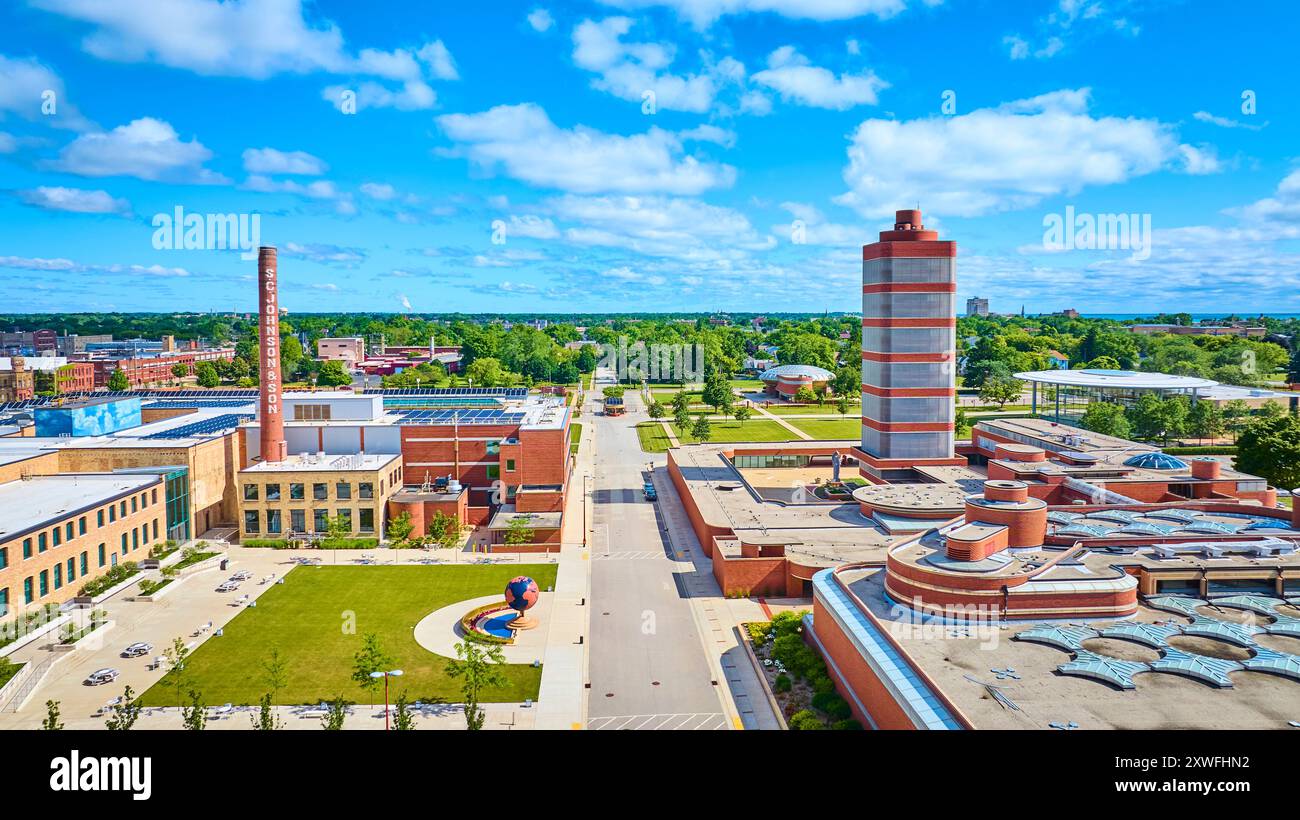
The SC Johnson Campus in Racine, Wisconsin, is a globally recognized landmark of 20th-century architecture, featuring iconic designs by Frank Lloyd Wright and Foster + Partners. Visitors can explore the Administration Building, the Research Tower, and Fortaleza Hall through free, reservation-only tours. It remains the active global headquarters for SC Johnson, blending historic preservation with modern corporate operations.
The Significance of the SC Johnson Global Headquarters
Located approximately 30 miles south of Milwaukee and 60 miles north of Chicago, the SC Johnson campus is more than a collection of office buildings; it is a pilgrimage site for architects, historians, and design enthusiasts. As of 2026, the campus continues to serve as the operational heart of SC Johnson, a family-owned company known for household brands like Glade, Pledge, and Windex.
The primary draw of the campus is the work of Frank Lloyd Wright, who was commissioned by third-generation leader H.F. Johnson Jr. to create a workspace that would inspire employees and redefine corporate identity. Wright’s contributions—the Administration Building (1939) and the Research Tower (1944)—challenged the architectural norms of the era and introduced structural innovations that remain influential today.
Modern additions, such as Fortaleza Hall (2010), designed by Norman Foster’s firm, Foster + Partners, complement the Wright legacy by bridging the company's historical achievements with its future-focused sustainability goals. Understanding the campus requires a look into these individual structures, the specific requirements for visiting them, and the technical marvels that keep them standing nearly a century later.
Architectural Landmarks of the SC Johnson Campus
The Administration Building (1939)
The Administration Building is perhaps best known for its "Great Workroom," a vast, open-plan office space spanning nearly half an acre. Wright’s vision was to create a "forest" environment, which he achieved through the use of dendriform columns. These hollow, reinforced concrete columns are only 9 inches in diameter at the base but expand to 18.5 feet in diameter at the top, resembling lily pads.
- The "Great Workroom": This space was designed to promote a sense of community and equality among workers. By removing traditional cubicles and walls, Wright anticipated the modern open-office trend by decades.
- Pyrex Tubing: Instead of traditional windows, Wright used more than 43 miles of Pyrex glass tubing. This allowed soft, diffused light to enter the building while obscuring the surrounding industrial landscape, which Wright found unappealing.
- Cherokee Red Brick: The signature warm, reddish hue of the exterior bricks was custom-made for the project and became a hallmark of Wright's later work.
The Research Tower (1944)
Standing 153 feet tall, the Research Tower is one of the highest structures ever built on the cantilever principle. It is essentially a vertical version of the Administration Building, with a central "taproot" core extending 54 feet into the ground to provide stability.
The tower was the birthplace of several iconic products, including Raid and Off!. However, due to changing fire safety codes and the logistical challenges of its narrow staircase and lack of elevators serving every floor, it was closed for active research in 1982. In recent years, it underwent an extensive restoration and is now a centerpiece of the campus tour, though access is limited to specific floors due to structural constraints.
Fortaleza Hall (2010)
Fortaleza Hall serves as a contemporary counterpoint to Wright's organic architecture. Designed by Foster + Partners, this glass-and-steel structure houses the company’s museum, a cafeteria, and the "Carnaúba" airplane—a replica of the twin-engine Sikorsky S-38 amphibian plane used by H.F. Johnson Jr. during his 1935 expedition to Brazil.
The building is a marvel of transparency and precision, utilizing a high-performance glass envelope that offers views of the historic Wright buildings. It functions as the visitor center and the starting point for most official tours.

Planning Your Visit: Tour Types and Requirements
As of 2026, SC Johnson maintains a robust public tour program. Because the campus is a secure, working corporate headquarters, access is strictly regulated. All visitors must adhere to specific protocols to ensure both safety and the privacy of SC Johnson employees.
Available Tour Experiences
The company typically offers several distinct tour packages, often categorized by the time commitment and the specific buildings covered.
- The Landmarks Tour: This is the most comprehensive option, usually lasting 90 to 120 minutes. It covers the Administration Building, the Research Tower, and Fortaleza Hall.
- The Research Tower Tour: A focused look at the vertical laboratory, emphasizing the scientific history of the company and the restoration of the Wright-designed labs.
- Wingspread Tour: While not on the main campus, Wingspread (the former H.F. Johnson Jr. residence) is located nearby in Wind Point. It is often booked in conjunction with campus tours.
- The Golden Rondelle Theater: Originally the SC Johnson pavilion at the 1964-1965 New York World's Fair, this theater now serves as a community space and film venue for visitors.
Booking and Eligibility
- Reservations: Advance reservations are mandatory. These are typically handled via the SC Johnson official website. Slots often fill up months in advance, especially during the summer and autumn months.
- Cost: As of 2026, tours remain free of charge, reflecting the Johnson family's commitment to community education and architectural appreciation.
- Identification: Adult visitors are generally required to present a valid government-issued photo ID upon check-in for security clearance.
- Mobility Considerations: While the Administration Building and Fortaleza Hall are ADA compliant, the Research Tower has significant limitations. Visitors must be able to climb several flights of stairs to view the upper laboratories, as the historic elevator has limited capacity and strict safety protocols.
Comparison of SC Johnson Tour Options (2026 Guidelines)
| Tour Name | Primary Focus | Duration | Difficulty Level | Highlights |
|---|---|---|---|---|
| Landmarks Tour | Full Architecture Overview | 2 Hours | Moderate (Walking) | Great Workroom, Fortaleza Hall |
| Research Tower | Science & Restoration | 1 Hour | High (Stairs) | 1950s era labs, Cantilever design |
| Wingspread | Residential Wright Design | 1.5 Hours | Low | Wigwam roof, 4-wing layout |
| Fortaleza/Museum | Company History | 45 Mins | Low | Carnaúba Plane, Timeline exhibits |
Technical Innovations and Engineering Feats
The SC Johnson campus is a case study in pushing the boundaries of material science. When Wright proposed the dendriform columns for the Administration Building, the Wisconsin Industrial Commission initially refused to approve the plans, believing the columns would collapse.
The 1937 Column Test
To prove the safety of his design, Wright conducted a public stress test in 1937. He built a prototype column and loaded it with sandbags and scrap iron. The column was required to hold 6 tons; it eventually held 60 tons before cracking, far exceeding safety requirements. This triumph allowed construction to proceed and solidified the "lily pad" design as a masterpiece of structural engineering.
Environmental Design and Lighting
The use of Pyrex tubing was an early attempt at environmental control. By stacking the tubes, Wright created a "light wall" that maximized natural illumination while providing a layer of thermal insulation. However, this design was notoriously difficult to seal. For decades, the building suffered from leaks until modern silicone sealants and specialized gaskets were developed to maintain the aesthetic while ensuring the building remained watertight.
Visitor Rules and Practical Advice
To make the most of a visit to the SC Johnson campus in 2026, visitors should be aware of the following operational guidelines:
- Photography Policy: Photography is generally permitted in certain areas, such as Fortaleza Hall and the exterior grounds. However, photography is often restricted inside the Great Workroom to protect the privacy of employees and sensitive corporate data. Always check with your tour guide before taking photos.
- Arrival Time: Visitors are advised to arrive at the Golden Rondelle Theater or Fortaleza Hall at least 20 minutes before their scheduled tour time. Late arrivals may forfeit their spot as tours move through secure areas on a strict schedule.
- Apparel: Comfortable walking shoes are essential. The campus is large, and even the "Low" difficulty tours involve significant standing and walking on hard surfaces.
- Bags and Storage: Large backpacks and luggage are usually prohibited on tours. There are limited locker facilities available, so it is best to leave bulky items in your vehicle.
Frequently Asked Questions
Is the SC Johnson campus open to the public every day?
No. The campus is a private corporate headquarters. Access is only granted via pre-scheduled tours, which typically run on Thursdays, Fridays, Saturdays, and Sundays. The schedule may vary during corporate holidays or special events.
Are children allowed on the tours?
Children are welcome, but the tours are generally recommended for those aged 12 and older due to the technical nature of the architectural discussions and the length of the walking tours. Some specific family-friendly events are occasionally held at the Golden Rondelle Theater.
How do I get to the SC Johnson campus from Chicago or Milwaukee?
The campus is easily accessible via I-94. From Milwaukee, take I-94 East to Highway 20 (Washington Avenue) and head east into Racine. From Chicago, take I-94 West to Highway 20 and follow the same route. There is ample free parking available at the Golden Rondelle Theater.
Can I visit the Research Tower without taking the full Landmarks Tour?
As of 2026, the Research Tower is included in most comprehensive tours, but standalone "Tower Only" tickets are sometimes available during peak seasons. Because the Tower has strict occupancy limits, these slots are highly sought after and must be booked well in advance.
Is the SC Johnson campus still used for manufacturing?
While the campus serves as the global headquarters and includes research and development labs, the primary manufacturing facilities for SC Johnson are located at the Waxdale plant, which is a few miles away in Mt. Pleasant, Wisconsin. Waxdale is not generally open for public tours.
Practical Recommendation for 2026 Visitors
If you are planning a trip to the SC Johnson campus, the most effective strategy is to book the "Landmarks Tour" at least three months in advance. To maximize your architectural experience, attempt to schedule a morning tour at the Racine campus followed by an afternoon visit to Wingspread. This provides a complete view of how Frank Lloyd Wright integrated corporate and residential design for the Johnson family. Always verify the current status of the Research Tower before your visit, as maintenance on the historic structure can occasionally lead to temporary closures of the upper levels.
Image Gallery
Select an image to open it in a new tab.
Ingrid Bjornson
Global Cyber Policy and Regulation Analyst
