
Rhode Island operates under a tort-based (at-fault) insurance system, which means the driver responsible for causing a motor vehicle accident is legally liable for the resulting damages. To operate a vehicle in the Ocean State in 2026, motorists must maintain specific minimum levels of financial responsibility, typically through a certified insurance policy that includes bodily injury and property damage liability.
Understanding how Rhode Island automobile insurance works requires navigating a combination of state statutes, regulatory oversight by the Rhode Island Department of Business Regulation (DBR), and specific legal doctrines like pure comparative negligence. Whether you are a long-term resident or a newcomer, the framework of insurance in Rhode Island is designed to protect assets and ensure that victims of traffic accidents have a path to financial recovery.
The At-Fault System and Legal Liability
Rhode Island is one of the many U.S. states that utilizes a "fault" or "tort" system for automobile insurance. This structure dictates how claims are filed and who pays for medical bills, lost wages, and vehicle repairs following a collision. In a tort state, the person who is determined to be "at fault" for the accident is held responsible for the damages.
How Claims are Handled in a Tort State
When an accident occurs in Rhode Island, an injured party has three primary avenues for seeking compensation:
- First-Party Claim: Filing a claim with their own insurance company (if they have applicable coverage like Collision or Medical Payments).
- Third-Party Claim: Filing a claim directly with the at-fault driver’s insurance carrier.
- Personal Injury Lawsuit: Filing a civil lawsuit against the at-fault driver to prove negligence and recover damages.
Unlike "no-fault" states (such as neighboring Massachusetts, which uses Personal Injury Protection or PIP), Rhode Island does not require drivers to exhaust their own insurance benefits before pursuing the other driver. This places a heavy emphasis on determining liability immediately following an incident.
Pure Comparative Negligence
A critical component of Rhode Island's insurance landscape is the doctrine of pure comparative negligence (codified in Rhode Island General Laws § 9-20-4). This rule allows a driver to recover damages even if they were partially—or even mostly—at fault for the accident.
Under pure comparative negligence, your recovery is reduced by your percentage of fault. For example, if you are found to be 20% responsible for an accident because you were speeding, and the other driver is 80% responsible for blowing a stop sign, you can still recover 80% of your total damages from the other driver’s insurer. Even a driver who is 99% at fault can theoretically recover 1% of their damages, though in practice, such small recoveries are often offset by the costs of litigation.
Mandatory Minimum Insurance Requirements in 2026
To legally register and drive a vehicle in Rhode Island, the state mandates specific minimum liability limits. These limits are often expressed in a "split-limit" format, such as 25/50/25. As of 2026, these requirements remain the baseline for legal compliance under the Rhode Island Financial Responsibility Law.
Bodily Injury Liability
- $25,000 per person: This is the maximum amount your insurance will pay for the medical expenses, pain and suffering, or funeral costs of a single individual injured in an accident you caused.
- $50,000 per accident: This is the total cap your insurance will pay for all injuries sustained by multiple people in a single accident you caused.
Property Damage Liability
- $25,000 per accident: This covers damage you cause to someone else’s property. While this usually applies to the other driver's vehicle, it also covers fences, buildings, utility poles, and other stationary objects.
Uninsured/Underinsured Motorist Coverage (UM/UIM)
Rhode Island law (R.I. Gen. Laws § 27-7-2.1) requires insurance companies to offer Uninsured Motorist (UM) and Underinsured Motorist (UIM) coverage. In 2026, if you purchase liability limits higher than the state minimum, you must also purchase UM/UIM coverage at the same levels unless you specifically reject it in writing.
- Uninsured Motorist (UM): Protects you if you are hit by a driver who has no insurance or by a hit-and-run driver.
- Underinsured Motorist (UIM): Protects you if the at-fault driver has insurance, but their limits are too low to cover the full extent of your medical bills or damages.
Optional Coverages and Protective Add-ons
While the state only mandates liability coverage, most Rhode Island drivers opt for additional protections to safeguard their own financial well-being. This is particularly important because liability insurance never pays for your own injuries or your own vehicle damage.
Collision Coverage
Collision coverage pays for repairs to your vehicle regardless of who was at fault. In the tight, high-traffic corridors of Providence or Warwick, minor collisions are common. If you have a car loan or lease, your lender will almost certainly require you to carry collision coverage to protect their investment.
Comprehensive Coverage
Also known as "other than collision," this covers damage to your vehicle resulting from non-accident events. In Rhode Island, this often includes:
- Theft and vandalism.
- Damage from coastal storms, flooding, or fallen tree limbs.
- Collisions with animals (e.g., deer).
- Glass breakage (Rhode Island has specific regulations regarding glass repair and the "right to choose" a repair facility).
Medical Payments (MedPay)
MedPay is an optional coverage that pays for medical or funeral expenses for you and your passengers, regardless of fault. This is often used to cover health insurance deductibles or co-pays following an accident. In a tort state like Rhode Island, MedPay provides immediate liquidity for medical needs while the long-term process of determining fault is underway.
Rental Reimbursement and Towing
Given the reliance on personal vehicles in many parts of the state, rental reimbursement is a frequent addition. It pays for a temporary vehicle while yours is in the shop following a covered loss.
Factors Influencing Insurance Rates in Rhode Island
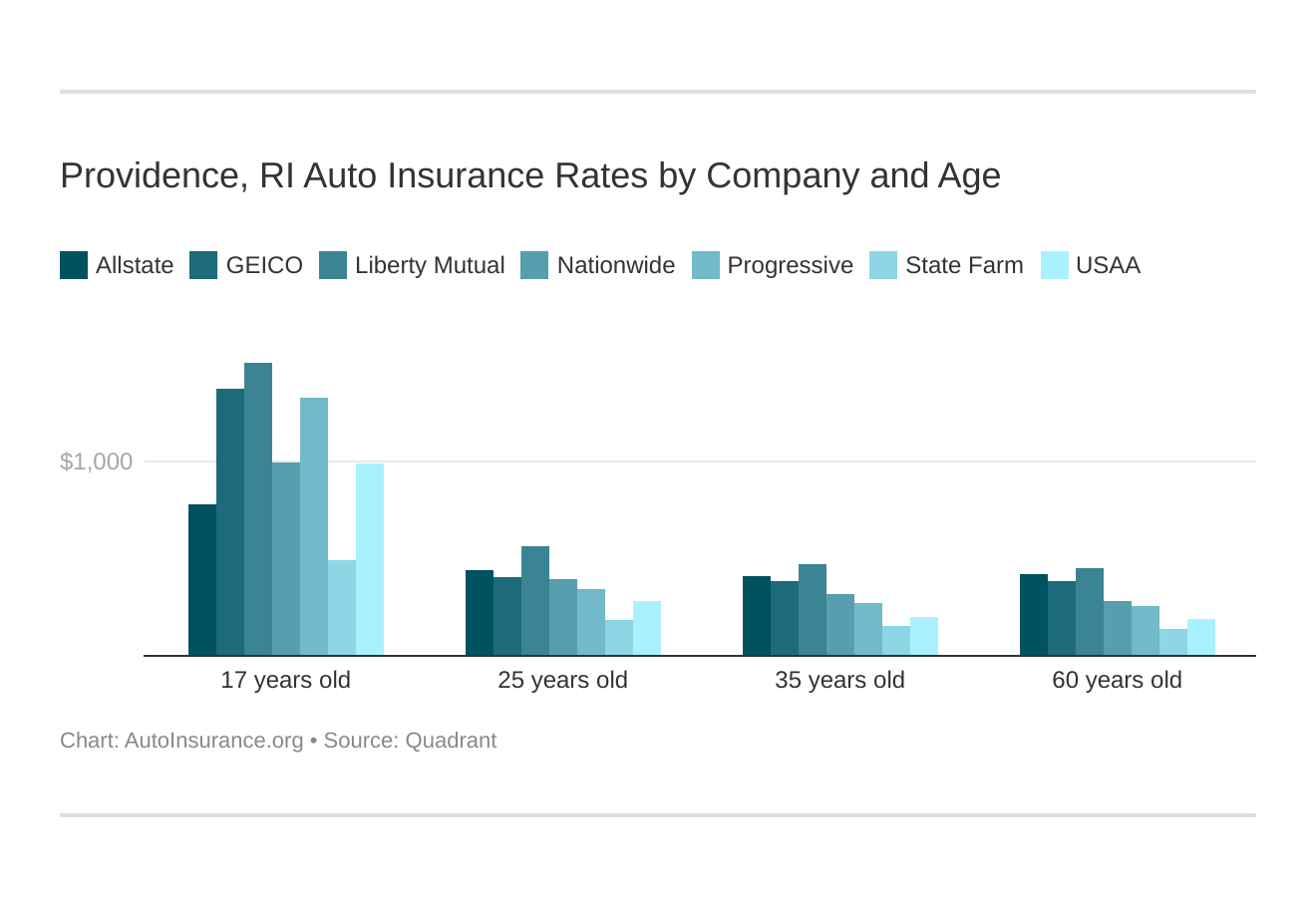
In 2026, insurance premiums in Rhode Island are calculated based on a variety of risk factors. The Rhode Island Division of Insurance oversees how companies set these rates to ensure they are not "excessive, inadequate, or unfairly discriminatory."
| Factor | Impact on Premium | Why it Matters in RI |
|---|---|---|
| Location (ZIP Code) | High | Urban areas like Providence or Pawtucket typically see higher rates due to traffic density and theft risk compared to Little Compton. |
| Driving Record | Very High | Speeding tickets, DUIs, and at-fault accidents within the last 3-5 years significantly increase costs. |
| Credit-Based Insurance Score | Moderate/High | RI allows insurers to use credit history as a factor in determining risk and pricing. |
| Vehicle Type | Moderate | High-performance vehicles or expensive SUVs cost more to repair or replace, leading to higher premiums. |
| Deductible Amount | Inverse | Choosing a higher deductible (e.g., $1,000 instead of $500) will lower your monthly or annual premium. |
The Role of the Rhode Island Department of Business Regulation (DBR)
The DBR's Insurance Division is the primary regulatory body for the industry in the state. They perform several vital functions that affect how your insurance works:
- Consumer Complaints: If an insurance company unfairly denies a claim or fails to communicate, residents can file a formal complaint with the DBR.
- Rate Approval: Insurers must file their rate plans with the DBR. The state reviews these to prevent arbitrary price hikes.
- Licensing: Every agent and company selling policies in the state must be licensed and meet solvency requirements to ensure they can pay out future claims.
- The "Right to Choose" Repairs: Rhode Island law is relatively consumer-friendly regarding vehicle repairs. Under R.I. Gen. Laws § 27-10.2-2, insurers generally cannot require you to use a specific repair shop, and for vehicles less than 48 months old, there are strict rules regarding the use of Original Equipment Manufacturer (OEM) parts versus aftermarket parts.
What Happens if You Drive Without Insurance?
Rhode Island takes uninsured driving seriously. If you are caught operating a vehicle without the minimum 25/50/25 liability coverage, you face significant legal and financial penalties.
- Fines: Initial fines can range from $100 to $500 for a first offense, but subsequent offenses can reach $1,000.
- License and Registration Suspension: The Rhode Island DMV will suspend your driving privileges and your vehicle registration until you can prove financial responsibility.
- SR-22 Requirement: You may be required to have your insurance company file an SR-22 certificate with the state. This is a document that proves you carry the required insurance. It usually results in significantly higher premiums and must be maintained for three years.
- Reinstatement Fees: To get your license back, you will have to pay administrative fees to the DMV, which are often several hundred dollars.
High-Risk Drivers and the RIAIP
For some drivers, a history of multiple accidents or serious traffic violations makes them "uninsurable" in the voluntary market. In these cases, the Rhode Island Automobile Insurance Plan (RIAIP) serves as the market of last resort.
The RIAIP ensures that all drivers can obtain the state-mandated minimum coverage. The plan assigns high-risk drivers to existing insurance companies in proportion to those companies' market share in the state. While this guarantees coverage, the premiums are substantially higher than those found in the standard market.
The Claims Process: Steps to Take After an Accident
To ensure your insurance works as intended, you must follow specific steps after an accident in Rhode Island.
- Report the Accident: If there is an injury or property damage exceeding $1,000, you must file a "State of Rhode Island Motor Vehicle Accident Report" (Form GU-4000) with the Division of Motor Vehicles within 10 days.
- Exchange Information: Get the name, address, insurance company, and policy number of the other driver.
- Document the Scene: Take photos of vehicle positions, damage, and any relevant road signs or weather conditions.
- Notify Your Insurer: Even if you weren't at fault, you should notify your company. Failure to do so promptly can sometimes jeopardize your coverage.
- Investigation: The insurance adjusters will review police reports, witness statements, and vehicle damage to determine fault based on the pure comparative negligence standard.
- Settlement or Litigation: Once fault is determined, the insurers will negotiate a settlement. If a settlement cannot be reached, the case may proceed to arbitration or a jury trial.
Frequently Asked Questions
Does Rhode Island require Uninsured Motorist coverage?
Rhode Island requires insurers to offer Uninsured/Underinsured Motorist (UM/UIM) coverage. If you purchase liability limits that are higher than the state minimum of 25/50/25, the law mandates that you carry UM/UIM at those same higher limits unless you specifically reject that coverage in writing. Because Rhode Island has a notable percentage of uninsured drivers, carrying this coverage is highly recommended.
Can my insurance company cancel my policy for no reason?
No. In Rhode Island, once a policy has been in effect for 60 days, an insurer can only cancel it for specific reasons, such as non-payment of premium, fraud, or a substantial increase in the hazard insured against (like a driver losing their license). If they decide not to renew your policy at the end of its term, they must provide you with at least 30 days' notice.
Does insurance follow the car or the driver in Rhode Island?
Generally, in Rhode Island, insurance follows the car. If you lend your car to a friend and they get into an accident, your insurance will usually act as the primary coverage. However, the driver's own insurance might act as secondary coverage if your limits are exceeded. This is why it is critical to ensure anyone driving your vehicle is listed on your policy or covered under "permissive use" clauses.
What is the "Right to Appraisal" in a Rhode Island car insurance policy?
If you and your insurance company disagree on the amount of your vehicle's loss (the cost of repairs or the total value), most RI policies include an "Appraisal Clause." This allows both you and the insurer to hire independent appraisers. If the two appraisers cannot agree, an umpire is selected to make a final, binding decision. This is a faster alternative to filing a lawsuit over vehicle value disputes.
How does the 2026 inflation trend affect my RI insurance?
By 2026, the cost of vehicle repairs—driven by advanced driver-assistance systems (ADAS) like cameras and sensors—has significantly increased. This means that the state minimum of $25,000 for property damage may no longer be sufficient to cover a multi-car accident or a collision with a high-end electric vehicle. Drivers are increasingly encouraged to carry $50,000 or $100,000 in property damage liability to avoid personal out-of-pocket expenses.
Practical Recommendation
To ensure you are fully protected under Rhode Island law in 2026, do not settle for the state minimum requirements. The 25/50/25 limits are often inadequate for serious accidents involving modern, expensive vehicles or multi-person injuries. Aim for at least 100/300/100 limits to shield your personal assets from lawsuits. Additionally, always verify that your policy includes Uninsured Motorist coverage, as this is your primary defense against the high costs of a hit-and-run or a collision with an irresponsible driver. Review your policy annually with a licensed Rhode Island agent to ensure your coverage levels keep pace with rising medical and repair costs.
Image Gallery
Select an image to open it in a new tab.




Vivian Cho
Executive IT and Emerging Technologies Reporter
