As of 2026, there are 26 sovereign monarchies ruling over 43 countries across the globe, ranging from purely ceremonial figureheads to absolute rulers with total executive power. These include famous dynasties like the House of Windsor in the United Kingdom, the House of Saud in Saudi Arabia, and the Imperial House of Japan, the world’s oldest continuous hereditary monarchy.
While the 20th century saw a significant decline in monarchical rule in favor of republicanism, the institution of royalty has proven remarkably resilient. In the mid-2020s, royal families continue to play pivotal roles in national identity, diplomacy, and, in some regions, direct governance. Understanding which royal families still exist requires a look at the different structures of power they inhabit, from the constitutional "bicycle monarchies" of Northern Europe to the influential sultanates of the Middle East.
The Different Models of Modern Monarchy
To understand the list of existing royal families, one must first distinguish between the various levels of authority they hold. Not all kings, queens, or emirs function the same way within their respective states.
Constitutional Monarchies
In these systems, the monarch acts as a non-party political head of state under a constitution. They typically have "reserve powers" but rarely exercise them, focusing instead on ceremonial duties and national unity. Most European monarchies, such as those in the United Kingdom, Sweden, and the Netherlands, follow this model.
Absolute Monarchies
In an absolute monarchy, the royal family holds supreme executive, legislative, and judicial authority. There is no constitution that limits their power, or the constitution is granted by the monarch and can be altered by them. Examples include Saudi Arabia, Oman, and Brunei.
Semi-Constitutional Monarchies
These are "hybrid" systems where the monarch retains significant political influence or executive powers alongside an elected parliament. The Kingdom of Morocco and Jordan are primary examples, where the kings take an active role in foreign policy and national security.
Royal Families of Europe: Stability and Tradition
Europe remains the continent with the highest density of constitutional monarchies. These families often maintain high levels of public support by modernizing their images and focusing on charitable endeavors.
The House of Windsor (United Kingdom and Commonwealth Realms)
The House of Windsor is perhaps the most recognized royal family globally. Under King Charles III in 2026, the family continues to oversee the United Kingdom and 14 other "Commonwealth Realms," including Canada, Australia, and New Zealand. Despite occasional debates regarding republicanism in these nations, the British Royal Family remains a central pillar of international diplomacy and the "soft power" of the UK.
The Scandinavian Monarchies
Norway, Sweden, and Denmark boast some of the most stable and informal monarchies in the world.
- Norway (House of Glücksburg): King Harald V oversees a monarchy deeply integrated into Norwegian social life.
- Sweden (House of Bernadotte): King Carl XVI Gustaf holds a purely ceremonial role, as Sweden was one of the first to strip its monarch of all formal executive functions.
- Denmark (House of Laborde de Monpezat): Following the historic abdication of Queen Margrethe II in 2024, King Frederik X has led the Danish royals into a new era of climate-focused and modern leadership.
The Benelux and Spanish Houses
- The Netherlands (House of Orange-Nassau): King Willem-Alexander's reign is defined by a "working monarchy" that supports Dutch trade and innovation.
- Belgium (House of Belgium): King Philippe serves as a vital unifying figure in a country often divided by linguistic and political lines between Flanders and Wallonia.
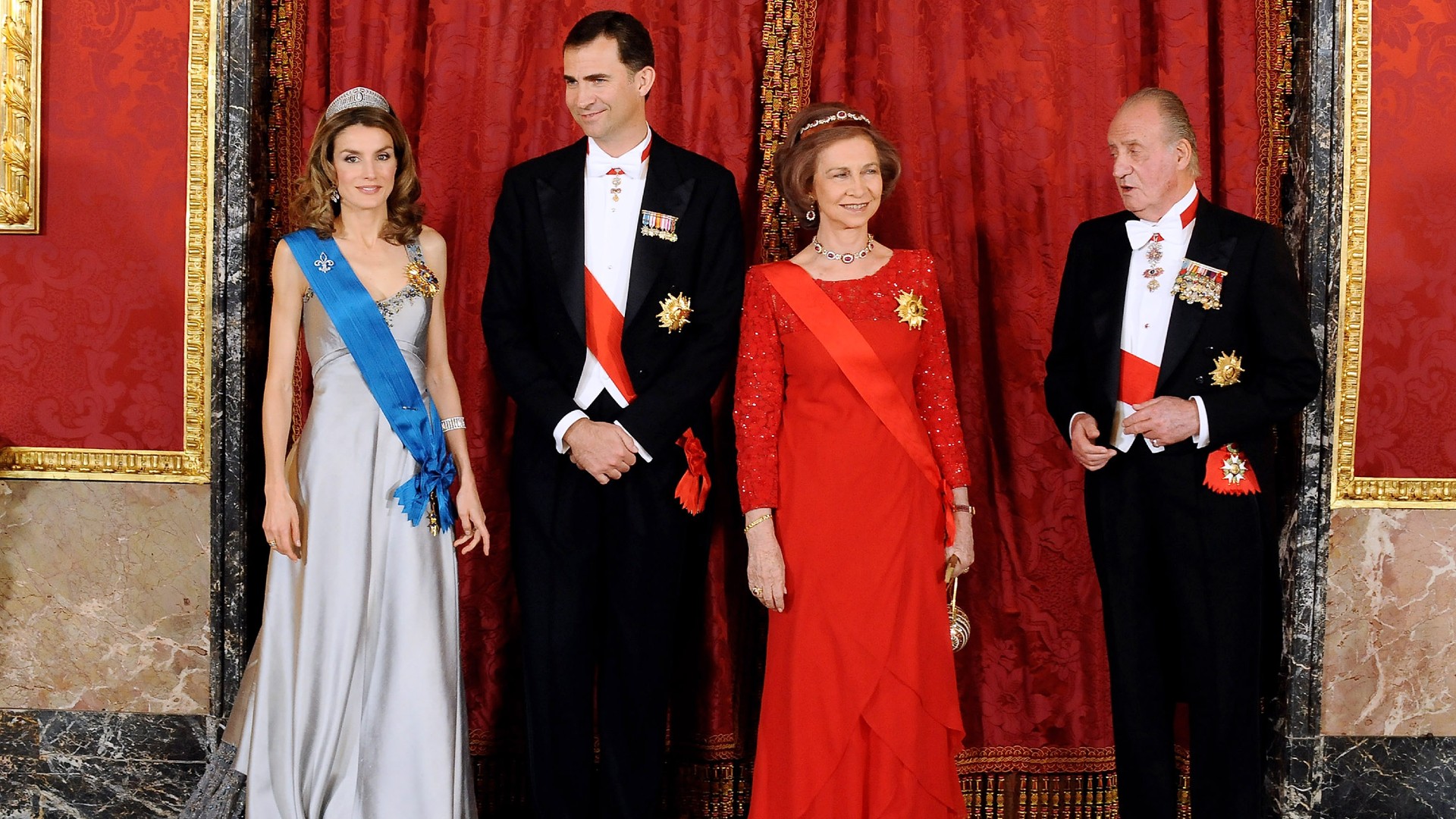
- Spain (House of Bourbon): King Felipe VI has worked tirelessly to restore the reputation of the Spanish crown following the controversies involving his father, Juan Carlos I.
European Microstates
Liechtenstein and Monaco are unique because their princes hold more power than most other European monarchs. The House of Liechtenstein and the House of Grimaldi (Monaco) are deeply involved in the day-to-day governance and economic strategies of their small but wealthy nations.

Royal Families of the Middle East: Executive Power
In the Middle East, royal families are not just symbols; they are the government. These dynasties often trace their lineage back centuries and maintain control through a combination of traditional legitimacy and vast resource wealth.
The House of Saud (Saudi Arabia)
The Al Saud family is arguably the most powerful royal house in the world. With thousands of members, the family controls every branch of the Saudi Arabian government. In 2026, the leadership continues to drive the "Vision 2030" initiative, diversifying the economy away from oil while maintaining an absolute hereditary system.
The Gulf Emirates
The United Arab Emirates (UAE) is a federation of seven hereditary monarchies (emirates), with the House of Al Nahyan (Abu Dhabi) and the House of Al Maktoum (Dubai) being the most prominent. Similarly, the House of Al Thani in Qatar and the House of Al Khalifa in Bahrain wield immense regional influence.
The Hashemite and Alawite Dynasties
- Jordan (House of Hashim): King Abdullah II claims direct descent from the Prophet Muhammad. The Jordanian monarchy is a crucial stabilizing force in the Levant, balancing complex regional geopolitics.
- Morocco (House of Alawi): King Mohammed VI oversees a "Makhzen" system where the palace holds ultimate authority over the most sensitive areas of government, despite the existence of an elected parliament.
Royal Families of Asia: Ancient Lineages
Asia’s monarchies are characterized by their deep historical roots and their roles as guardians of national culture and religion.
The Imperial House of Japan (Yamato Dynasty)
The Emperor of Japan, Naruhito, occupies the "Chrysanthemum Throne." While the 1947 constitution defines the Emperor as the "symbol of the state and of the unity of the people" with no political power, the family remains the psychological heart of Japan. It is the oldest continuous monarchy in existence, dating back, according to legend, to 660 BCE.
The House of Chakri (Thailand)
The Thai monarchy is protected by some of the world’s strictest lèse-majesté laws. King Maha Vajiralongkorn (Rama X) sits at the apex of a complex social and political hierarchy. In Thailand, the king is not just a head of state but a semi-divine figure central to Thai Buddhism and national identity.
The Unique Elective Monarchy of Malaysia
Malaysia features a rare system where nine Malay rulers elect one of themselves to serve as the Yang di-Pertuan Agong (King) for a five-year term. This ensures that no single royal house holds permanent power over the federation, a system that has provided stability since independence.
Summary of Existing Sovereign Monarchies (2026)
The following table highlights key sovereign royal families and their current status.
| Country | Royal House | Current Monarch (2026) | Type of Monarchy |
|---|---|---|---|
| United Kingdom | House of Windsor | King Charles III | Constitutional |
| Japan | Yamato Dynasty | Emperor Naruhito | Constitutional (Symbolic) |
| Saudi Arabia | House of Saud | King Salman / Crown Prince Mohammed | Absolute |
| Thailand | House of Chakri | King Rama X | Constitutional (Strong Influence) |
| Netherlands | House of Orange-Nassau | King Willem-Alexander | Constitutional |
| Spain | House of Bourbon | King Felipe VI | Constitutional |
| Jordan | House of Hashim | King Abdullah II | Semi-Constitutional |
| Morocco | House of Alawi | King Mohammed VI | Semi-Constitutional |
| Norway | House of Glücksburg | King Harald V | Constitutional |
| Monaco | House of Grimaldi | Prince Albert II | Constitutional (Executive) |
| Bhutan | House of Wangchuck | King Jigme Khesar Namgyel | Constitutional |
| Brunei | House of Bolkiah | Sultan Hassanal Bolkiah | Absolute |
African and Oceanic Monarchies
Beyond the well-known houses of Europe and Asia, several other nations maintain sovereign royal traditions.
The Kingdom of Eswatini
King Mswati III of Eswatini (formerly Swaziland) is one of Africa’s last absolute monarchs. He rules by decree and maintains a traditional lifestyle that is central to the nation's cultural fabric, despite ongoing international debates regarding democratic reforms.
The Kingdom of Lesotho
Unlike Eswatini, Lesotho is a constitutional monarchy. King Letsie III serves a role similar to that of the British monarch, acting as a living symbol of the Basotho nation while political power resides with the Prime Minister and Parliament.
The Kingdom of Tonga
In the South Pacific, the House of Tupou has ruled Tonga for generations. While the country has moved toward a more representative democracy in the last two decades, the King of Tonga retains significant authority and remains the largest landowner and cultural leader in the archipelago.
Subnational Monarchies: Influence Without Sovereignty
It is important to distinguish between "sovereign" monarchs (heads of state) and "subnational" monarchs. In many parts of the world, there are royal families that do not rule countries but hold immense traditional and legal authority over specific ethnic groups or regions.
- The Zulu King (South Africa): While South Africa is a republic, the Zulu King is recognized by the constitution and holds significant moral and traditional weight over millions of Zulus.
- The Sultans of Indonesia: Specifically, the Sultan of Yogyakarta serves as the hereditary governor of the Special Region of Yogyakarta, a unique arrangement within the Republic of Indonesia.
- Ugandan Kingdoms: Uganda recognizes several traditional kingdoms, such as Buganda, which play a vital role in cultural preservation and local community leadership.
Common Questions About World Royal Families
How many royal families are there in the world?
There are 26 sovereign royal families that act as heads of state for 43 different countries. This count includes the 15 Commonwealth realms that all share the same monarch. If you include subnational and non-sovereign traditional monarchs, the number reaches into the hundreds.
Which is the oldest royal family?
The Imperial House of Japan is recognized as the oldest continuous hereditary monarchy. Current Emperor Naruhito is the 126th monarch in a line that spans over two millennia, though early historical dates are shrouded in myth.
Do all royal families have political power?
No. Most European and some Asian monarchies (like Japan and Cambodia) are constitutional, meaning the royal family has little to no role in actual governance. However, in the Middle East and Eswatini, royal families exercise absolute or near-absolute political control.
How do royal families afford their lifestyles?
The funding for royal families generally comes from three sources: the "Sovereign Grant" or taxpayer-funded civil lists, private ancestral estates and investments (such as the Duchy of Lancaster in the UK), and national resource wealth (common in the Middle East).
Can a monarchy be abolished?
Yes. Monarchies can be abolished through constitutional amendments, referendums, or revolutions. In recent history, Barbados became a republic in 2021, removing the British monarch as its head of state, though it remained part of the Commonwealth.
The Role of Royalty in the Modern Era
In 2026, the existence of royal families is often justified through the lens of "continuity." In an era of rapid political polarization and social change, a monarch can provide a sense of historical stability that an elected politician—subject to the whims of the next election cycle—cannot.
For constitutional monarchies, the royal family serves as a brand ambassador, driving tourism and international trade. For more traditional societies, the royal family is the custodian of religious and cultural values. While the number of monarchies may continue to fluctuate, the institution remains a deeply embedded part of the global political architecture.
Next Steps for Research: If you are interested in the specific duties or successions of these families, you can visit the official government websites of the respective nations, such as the UK’s Royal.uk or the official site of the Imperial Household Agency of Japan. These resources provide the most accurate and updated information on royal decrees, schedules, and historical records.
Image Gallery
Select an image to open it in a new tab.


Lars Thomsen
Global Labor Markets and Economic Strategy Editor
