John Bolton and the NSA: The Legal and Security Conflict Over Classified Disclosures
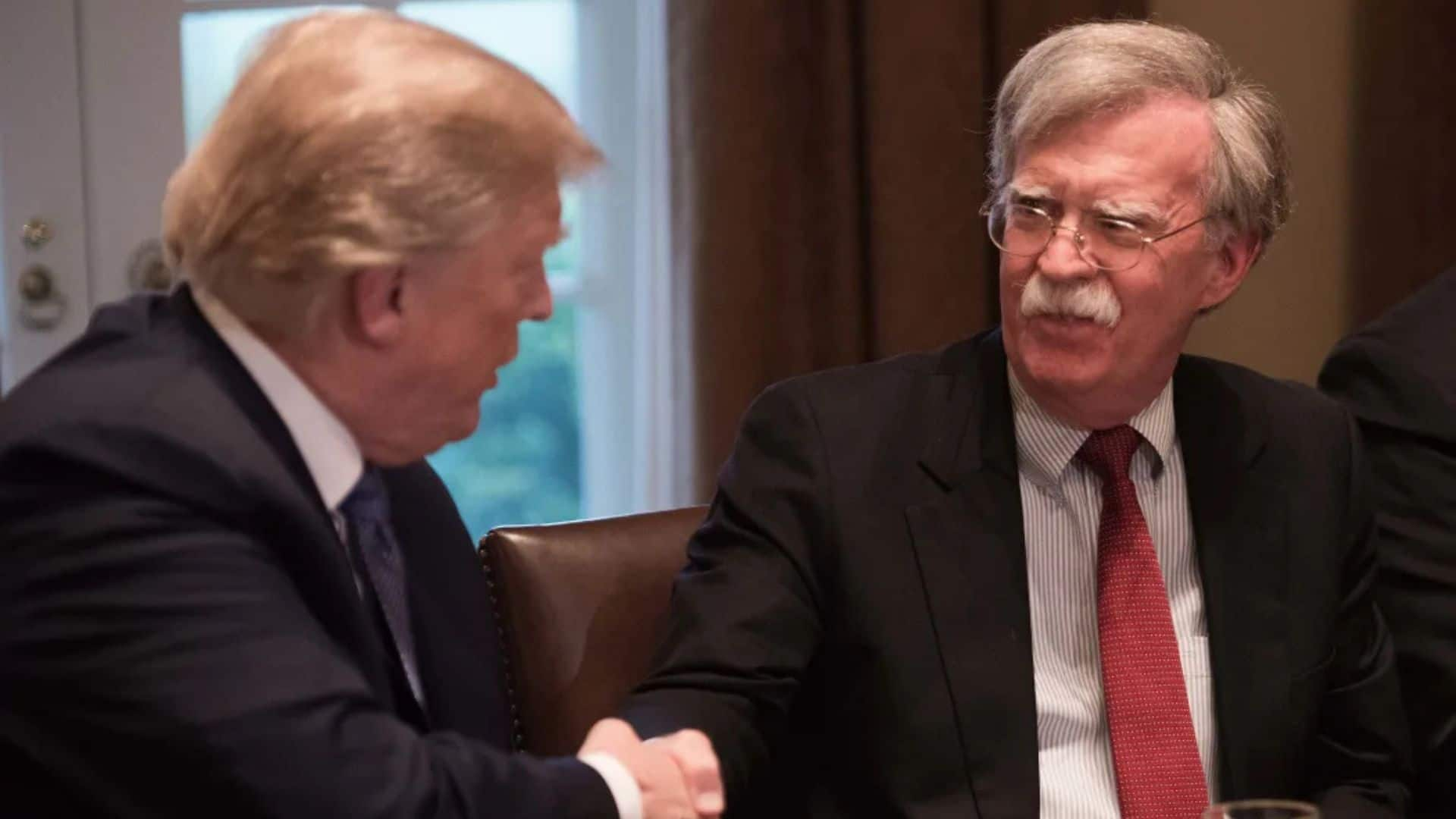
The relationship between John Bolton and the National Security Agency (NSA) is defined by a high-profile legal battle regarding the publication of his 2020 memoir, The Room Where It Happened. The NSA played a critical role in reviewing the manuscript, with Director Paul Nakasone asserting that Bolton’s writing contained Top Secret information that could compromise signals intelligence and national security.
The conflict between John Bolton, the former National Security Advisor, and the National Security Agency (NSA) represents one of the most significant modern clashes between the First Amendment rights of government officials and the executive branch’s authority to protect classified information. While Bolton served at the highest levels of the U.S. government from April 2018 to September 2019, his post-tenure relationship with the intelligence community, specifically the NSA, became adversarial during the pre-publication review of his memoirs. This tension culminated in a federal lawsuit and a deep dive into the mechanics of how the NSA protects its "equities"—the specific methods, sources, and technologies used to gather signals intelligence (SIGINT).
The Intersection of John Bolton and the NSA’s Intelligence Oversight
To understand the friction between John Bolton and the NSA, one must first understand the structural relationship between the National Security Advisor and the nation’s largest intelligence agency. As the National Security Advisor, Bolton was a primary consumer of NSA intelligence. He was briefed daily on SIGINT, which involves the interception of communications and electronic signals from foreign targets.
Bolton’s Role as National Security Advisor (2018–2019)
During his tenure under the Trump administration, Bolton’s office was the central node through which intelligence from the NSA was synthesized for presidential decision-making. His interactions with the NSA were not merely administrative; they were operational. Bolton pushed for more aggressive use of cyber capabilities, many of which are housed within the NSA’s dual-hatted structure with U.S. Cyber Command.
However, the authority that comes with such a position is bound by strict legal obligations. Upon taking office, Bolton signed several Non-Disclosure Agreements (NDAs), including the Standard Form 312 and the more specific Sensitive Compartmented Information (SCI) Nondisclosure Agreement. These documents mandate that any written work produced after government service that relies on access to classified data must undergo a Pre-publication Review (PRB).
The NSA’s Mandate in the Executive Branch
The NSA operates under the Department of Defense but serves the entire intelligence community. Its primary concern is the protection of "sources and methods." If a foreign adversary learns how the NSA intercepts their communications, they can change their encryption or communication habits, effectively "going dark" and blinding U.S. intelligence. When the NSA reviewed Bolton’s manuscript, their primary objective was to ensure that no specific SIGINT capabilities or ongoing operations were inadvertently revealed through his anecdotes of diplomatic negotiations.
The Pre-publication Review Dispute: A Catalyst for Conflict
The conflict began in earnest in December 2019, when Bolton submitted his 500-plus page manuscript to the National Security Council (NSC) for review. While the NSC handles the primary review, they frequently coordinate with other agencies, such as the NSA, when the content touches upon specific agency domains.
The Initial NSC Clearance and the Intervention
The initial review was conducted by Ellen Knight, a career professional at the NSC. Over several months, Knight worked with Bolton to excise or rephrase portions of the book to ensure it did not contain classified material. By April 2020, Knight was reportedly satisfied that the manuscript no longer contained classified information.
However, the process was abruptly halted. The White House, citing concerns that the review was insufficient, initiated a second layer of scrutiny. This is where the NSA’s involvement became central. Michael Ellis, who had recently been appointed as the NSC’s Senior Director for Intelligence Programs—and who was a former counsel to the NSA—conducted an additional review. Ellis argued that despite Knight’s clearance, the book still contained highly sensitive information.
Michael Ellis and the NSA’s Re-evaluation
The involvement of Ellis was controversial because he was a political appointee, leading to allegations that the review was being used as a tool for political censorship rather than national security. Nevertheless, Ellis’s background at the NSA gave him a specific lens through which to view the manuscript. He identified several passages that he claimed revealed "TS/SCI" (Top Secret / Sensitive Compartmented Information) related to the NSA’s work.

General Paul Nakasone’s Testimony and NSA Concerns
The most significant escalation in the Bolton-NSA saga occurred when General Paul Nakasone, the Director of the NSA and Commander of U.S. Cyber Command, filed a sworn declaration in federal court. In the case of United States v. Bolton, Nakasone provided expert testimony regarding the potential damage the book could cause.
Nakasone’s primary arguments focused on the following:
- Signals Intelligence (SIGINT) Sensitivity: He argued that Bolton’s descriptions of specific conversations and the contexts in which they were captured could allow foreign intelligence services to deduce the NSA’s technical collection methods.
- Foreign Relations Impact: The disclosure of private communications between the U.S. President and foreign leaders—when those communications are monitored or facilitated by intelligence assets—can damage diplomatic trust.
- The "Mosaic Effect": Nakasone emphasized that while a single sentence might seem innocuous to a layperson, it could be the "missing piece" for a foreign adversary trying to map out NSA operations.
This declaration transformed the dispute from a political disagreement into a formal national security matter. The NSA’s official stance was that Bolton had bypassed the final formal clearance required to publish, thereby risking "grave damage" to the United States.
The Judicial Outcome of United States v. Bolton
In June 2020, the Department of Justice (DOJ) filed a lawsuit seeking an injunction to stop the publication of The Room Where It Happened. The government argued that Bolton had breached his contract by moving forward with publication before the PRB process was officially concluded.
Judge Royce Lamberth’s Ruling
Presiding Judge Royce Lamberth denied the government's request for a preliminary injunction to block the book's distribution, noting that with hundreds of thousands of copies already in warehouses and some already leaked to the press, the "horse was out of the barn." However, Lamberth’s ruling was a partial victory for the government and a stern rebuke of Bolton.
The judge wrote that Bolton had "taken it upon himself to publish his book without securing final approval from national security officials," and that in doing so, he had likely compromised national security. This opened the door for the government to pursue Bolton’s profits from the book.
The Resolution of the Profit Seizure Case
For nearly a year, the DOJ pursued a civil case to seize Bolton’s $2 million book advance and royalties. However, in June 2021, the Justice Department moved to dismiss the lawsuit. By this time, a new administration was in place, and the focus shifted away from the Bolton dispute. Despite the dismissal, the case remains a landmark for how the NSA and other agencies can assert "classification authority" over the writings of former high-ranking officials.
Long-term Impacts on National Security Law and Publication
The Bolton-NSA conflict has lasting implications for any official who holds a security clearance. It highlighted the lack of clear timelines in the PRB process, which critics argue can be exploited by administrations to delay the release of embarrassing information.
- Standardization of Review: Since 2020, there have been calls to reform the PRB process to prevent it from being politicized. Agencies like the NSA are now under more pressure to provide clear, technical justifications for their redaction requests.
- Contractual Accountability: The case reaffirmed that an NDA is a legally binding contract. Even if an official believes information is being suppressed for political reasons, they risk their assets and potential criminal prosecution if they bypass the formal "sign-off" from agencies like the NSA.
- The Role of the "Shadow" Review: The Bolton case introduced the public to the idea that even after a career reviewer (like Ellen Knight) clears a text, the political leadership or specialized agencies (like the NSA) can intervene at the eleventh hour.
Comparing National Security Review Procedures
The following table outlines the differences between standard administrative reviews and the specialized technical reviews conducted by the NSA in cases like John Bolton's.
| Feature | Standard NSC/Administrative Review | NSA Technical (SIGINT) Review |
|---|---|---|
| Primary Goal | Ensure general policy consistency and basic non-disclosure. | Protect specific technical collection methods and encryption. |
| Reviewer Profile | Records management professionals and policy experts. | Intelligence officers, cryptologists, and SIGINT analysts. |
| Classification Level | Typically Confidential to Secret. | Top Secret / SCI (Sensitive Compartmented Information). |
| Key Concern | Diplomatic fallout or "embarrassing" policy disclosures. | Compromise of billion-dollar technical assets and foreign "going dark." |
| Legal Weight | Based on general employment NDAs. | Supported by specific statutes (e.g., 18 U.S.C. § 798). |
| Involvement Level | High for all executive branch memoirs. | Triggered only when specific intelligence "equities" are mentioned. |
Frequently Asked Questions
Did John Bolton actually go to jail for the NSA disclosures?
No, John Bolton did not face criminal charges or go to jail. While the Department of Justice initially investigated whether he had disclosed classified information, which could be a violation of the Espionage Act, no indictment was ever brought. The primary legal battle was civil, focusing on the breach of contract regarding the pre-publication review process.
Was the information in Bolton's book actually classified?
This remains a point of contention. The government, supported by affidavits from the NSA and ODNI (Office of the Director of National Intelligence), claimed that several passages contained Top Secret information. Bolton and his legal team argued that the information was either already in the public domain or was being classified retroactively to prevent political embarrassment.
Why was the NSA specifically involved instead of just the CIA?
While the CIA is often the face of intelligence, the NSA is the agency responsible for signals intelligence. Bolton’s memoir detailed numerous private conversations with foreign heads of state. The NSA’s involvement was necessary to determine if the existence or details of those conversations revealed the agency’s ability to intercept specific communications channels.
Can the government still seize money from authors who bypass the NSA review?
Yes. The legal precedent remains that if an official with a security clearance publishes material without a final "written authorization" from the relevant agencies, the government can sue to seize all proceeds from that publication. This is based on the Supreme Court’s ruling in Snepp v. United States, which was reinforced during the Bolton proceedings.
What is the "Nakasone Declaration"?
The Nakasone Declaration refers to the sworn statement by NSA Director Paul Nakasone in 2020. In it, he detailed the specific categories of information in Bolton's book that he believed were classified. This document was the primary evidentiary basis for the government’s claim that Bolton had jeopardized national security.
Practical Recommendations for Security Clearance Holders
For individuals currently or formerly employed in positions requiring access to NSA-governed intelligence, the Bolton case serves as a cautionary tale. To avoid the legal and financial pitfalls associated with unauthorized disclosures, officials should adhere to the following guidelines:
- Initiate PRB Early: Submit manuscripts at least 30 to 90 days before any intended publication or distribution to allow for multi-agency coordination between the NSC, CIA, and NSA.
- Request Specificity: If a reviewer (like an NSA SIGINT analyst) flags a passage, ask for the specific "classification guide" reference to understand why the information is deemed sensitive.
- Obtain Final Written Clearance: Never assume that verbal approval or a "preliminary" sign-off is sufficient. A formal letter of clearance is the only legal protection against a breach of contract claim.
- Consult Legal Counsel: If a dispute arises over whether information is truly classified versus politically sensitive, involve an attorney specializing in national security law early in the process.
The saga of John Bolton and the NSA highlights the delicate balance between a former official's right to speak and the government's duty to protect its most sensitive secrets. As of 2026, the case remains the primary reference point for how the executive branch manages the memoirs of high-ranking national security officials.
Image Gallery
Select an image to open it in a new tab.


Vivian Cho
Executive IT and Emerging Technologies Reporter
