
Falstaff Beer, once the third-largest brewery in the United States, officially ceased production in 2005 after decades of financial and qualitative decline. Its downfall was primarily driven by a 1975 acquisition by Paul Kalmanovitz, whose aggressive cost-cutting measures alienated loyal customers and compromised the beer's flavor, leading to its eventual retirement by the Pabst Brewing Company.
The Rise of an American Brewing Icon
To understand what happened to Falstaff, one must first recognize the heights from which it fell. The brand’s origins are deeply rooted in the brewing capital of the world: St. Louis, Missouri. The name "Falstaff" was inspired by Sir John Falstaff, the ribald, fun-loving character from William Shakespeare’s plays, symbolizing a spirit of conviviality and good cheer.
The brand was officially trademarked in 1903 by the Lemp Brewing Company, but it was the Griesedieck family who propelled it into the national spotlight. Following the repeal of Prohibition in 1933, the Falstaff Brewing Corporation embarked on an era of unprecedented expansion. By the 1950s and 1960s, Falstaff was not just a regional favorite; it was a powerhouse that rivaled industry giants like Anheuser-Busch and Schlitz. At its peak in 1966, Falstaff produced over 7 million barrels of beer annually, supported by a network of breweries in St. Louis, Omaha, New Orleans, San Jose, and Fort Wayne.
The "Choicest Product of the Brewers' Art" was more than a marketing slogan; it was a promise of quality that resonated with the American working class. Falstaff was a pioneer in sports sponsorship, famously partnering with legendary broadcaster Dizzy Dean to bring Major League Baseball into living rooms across the country. However, the very factors that fueled its growth—rapid expansion and heavy debt—eventually made it vulnerable to market shifts.
The Turning Point: The 1975 S&P Acquisition
The most significant answer to "what happened" to Falstaff lies in the mid-1970s. By 1974, Falstaff was struggling with mounting debts and intense competition from Miller and Budweiser, who were beginning to dominate the market with massive advertising budgets. In 1975, the Griesedieck family sold a controlling interest in the company to Paul Kalmanovitz, a multimillionaire known for his "slash-and-burn" business tactics and owner of the S&P Company.
Kalmanovitz’s management style was radically different from the family-oriented approach of the Griesediecks. He immediately implemented a series of draconian cost-cutting measures that many industry historians believe sounded the death knell for the brand:
- Headquarters Relocation: Kalmanovitz moved the corporate headquarters from its historic home in St. Louis to San Francisco, severing the brand’s emotional and cultural ties to its primary fan base.
- Marketing Blackout: Advertising budgets were gutted. In an era where beer was sold through television imagery and lifestyle branding, Falstaff became a ghost on the airwaves.
- Ingredient Substitution: To lower production costs, the recipe was reportedly altered. Cheaper adjuncts and hops extracts were used in place of traditional ingredients. This led to a noticeable change in flavor that loyal drinkers found unacceptable.
- Litigation and Labor Disputes: Kalmanovitz was notorious for legal battles with distributors and unions. These conflicts disrupted the supply chain and damaged the brand’s reputation among retail partners.
By 1977, the historic St. Louis brewery—the heart of the Falstaff empire—was closed. This move was symbolic of the brand's abandonment of its heritage.
The Slow Decline and the New Orleans Years
While the St. Louis operations ceased, Falstaff production continued for a time in other locations, most notably New Orleans. For a brief period in the late 1970s and early 1980s, Falstaff enjoyed a second life as a "local" favorite in the Gulf South. The New Orleans brewery became the flagship of the remaining Falstaff fleet.
However, the quality issues that began in 1975 continued to plague the brew. The beer gained a reputation as a "budget" or "sub-premium" brand, losing the prestige it had held for decades. As the craft beer revolution began to take root in the 1980s and the "Big Three" (Anheuser-Busch, Miller, and Coors) consolidated their power, Falstaff found itself in a no-man's land: it lacked the scale to compete on price and the quality to compete on taste.
By the early 1990s, the New Orleans plant was closed, and Falstaff became a "contract-brewed" brand. This meant that the beer was no longer made in its own facilities but was produced by other breweries (such as Pearl or Pabst) using the Falstaff name.
The Final Years: Pabst and Discontinuation
In 1999, the Pabst Brewing Company acquired the S&P Company’s assets, which included Falstaff along with other "legacy" brands like Pabst Blue Ribbon, Pearl, and Lone Star. Pabst, at the time, functioned primarily as a marketing company that owned various brand names but contracted out the actual brewing.
Pabst attempted to maintain Falstaff as a regional specialty, but sales continued to dwindle. By the early 2000s, Falstaff was only available in a few select markets, mostly in the Midwest and South, and often only in limited quantities. In May 2005, citing poor sales and the high cost of maintaining a low-volume brand, Pabst officially retired the Falstaff label. The last cans rolled off the line, ending over a century of brewing history.
Comparative Timeline of Falstaff’s Market Standing
The following table illustrates the dramatic shift in Falstaff's production and market presence over its most critical years.
| Year | Production Volume (Barrels) | US Market Rank | Key Event |
|---|---|---|---|
| 1950 | 2.3 Million | 6th | Post-WWII expansion begins |
| 1966 | 7.0 Million | 3rd | Peak of Falstaff's national influence |
| 1975 | 3.5 Million | 11th | Paul Kalmanovitz / S&P Company acquisition |
| 1977 | 2.1 Million | 15th | St. Louis brewery closed; HQ moved to CA |
| 1990 | < 500,000 | Unranked | Production shifted to contract brewing |
| 2005 | Negligible | N/A | Production officially discontinued by Pabst |
Why a Comeback is Difficult
In the current landscape of 2026, many nostalgia-driven beer drinkers wonder why Falstaff hasn't been revived like Narragansett or Pabst Blue Ribbon. Several technical and market-based hurdles remain:
- Trademark Ownership: The rights to the Falstaff name are still held by Pabst or its subsidiaries. Unless Pabst sees a clear financial incentive to relaunch the brand, or a third party buys the rights, the shield will remain in the vault.
- Recipe Authenticity: Because the recipe was altered so frequently during the Kalmanovitz era, there is no single "classic" Falstaff taste to replicate. Reviving the brand would require extensive research into pre-1975 brewing logs to find a recipe that appeals to modern palates.
- Market Saturation: The "retro lager" segment is currently crowded. Brands like PBR, Hamms, and Rainier have already claimed the nostalgia market, making it difficult for a dormant brand like Falstaff to carve out a profitable niche.
Technical Specifications of the Classic Brew
At its zenith, Falstaff was a classic American Adjunct Lager. While modern craft enthusiasts might dismiss this style, the technical execution during the Griesedieck era was rigorous.
- Grain Bill: A mix of six-row barley and corn (maize) adjuncts. The corn provided a light body and a crisp, clean finish that was essential for the "refreshment" market of the 1950s.
- Water Chemistry: Falstaff famously emphasized its "pure water" sources, particularly the deep wells in St. Louis and the artesian water in New Orleans.
- Fermentation: High-attenuation yeast strains were used to ensure low residual sugar, resulting in a beer that was dry and highly carbonated.
- Hops: Generally low in bitterness (IBUs in the 10–15 range), using traditional European "noble" hops or early American varieties like Cluster for subtle aroma.
FAQs About Falstaff Beer
Is Falstaff beer still made today?
No, Falstaff beer is not currently in production. The brand was officially discontinued by the Pabst Brewing Company in May 2005. While you may see vintage cans or memorabilia, any liquid inside is long past its expiration date.
Who owns the rights to Falstaff beer?
As of 2026, the trademarks and intellectual property for Falstaff Beer are owned by the Pabst Brewing Company. Pabst acquired the brand as part of its purchase of the S&P Company's portfolio in 1999.
Why did the taste of Falstaff change in the 1970s?
The taste change was largely attributed to cost-cutting measures by the new owner, Paul Kalmanovitz. These included using cheaper ingredients, such as liquid hop extracts instead of whole hops, and increasing the ratio of inexpensive corn or rice adjuncts, which many drinkers felt resulted in a "metallic" or "thinner" flavor profile.
Can I buy Falstaff beer memorabilia?
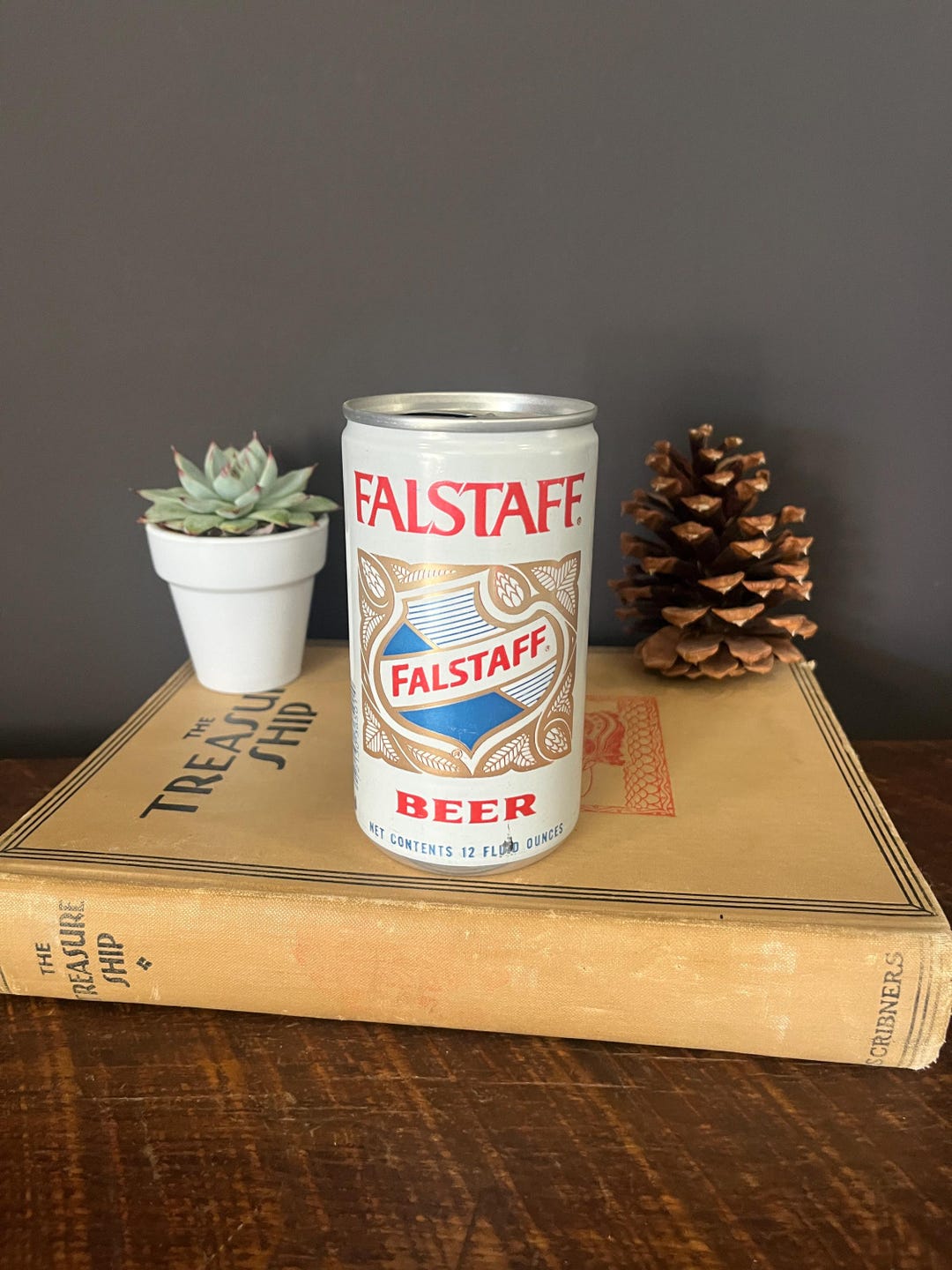
Yes, there is a thriving market for Falstaff memorabilia. Because Falstaff was a major sponsor of baseball and had iconic advertising campaigns (including neon signs and the "Falstaff Shield" logo), items like tap handles, signs, and vintage cans are highly sought after by collectors. Sites like eBay and specialized breweriana auctions are the best places to find these items.
Was Falstaff involved in any famous lawsuits?
Yes, the most famous was Falstaff Brewing Corp. v. International Brotherhood of Teamsters. Under Kalmanovitz’s leadership, the company faced numerous legal battles regarding plant closures, pension obligations, and distributor contracts. These legal troubles often overshadowed the product itself during the 1980s.
Is there any beer that tastes like the old Falstaff?
For those seeking a flavor profile similar to the pre-1975 Falstaff, modern "premium" American lagers that use high-quality six-row barley and corn adjuncts are the closest match. Brands like Narragansett Lager or some of the specialized "throwback" lagers produced by Midwestern craft breweries (such as Urban Chestnut’s "Urban Underdog") capture the clean, crisp spirit of that era.
Next Steps for Enthusiasts
If you are a fan of brewing history or the Falstaff legacy, your best course of action is to explore the historical archives and collector communities.
- Visit St. Louis History Museums: The Missouri Historical Society and local St. Louis brewing tours often feature exhibits on the Lemp and Griesedieck families.
- Join Breweriana Clubs: Organizations like the Brewery Collectibles Club of America (BCCA) have extensive resources on Falstaff’s history and can help you identify authentic memorabilia.
- Support Local Heritage Brands: While Falstaff is gone, many other regional lagers have been successfully revived. Supporting these brands encourages companies like Pabst to consider bringing back other icons from their portfolio.
For those interested in the technical side of brewing history, researching the Griesedieck family's patents and brewing records provides a fascinating look into how mass-market beer was produced before the era of industrial consolidation.
Image Gallery
Select an image to open it in a new tab.
Declan O'Connor
Higher Education and Campus Culture Reporter
