
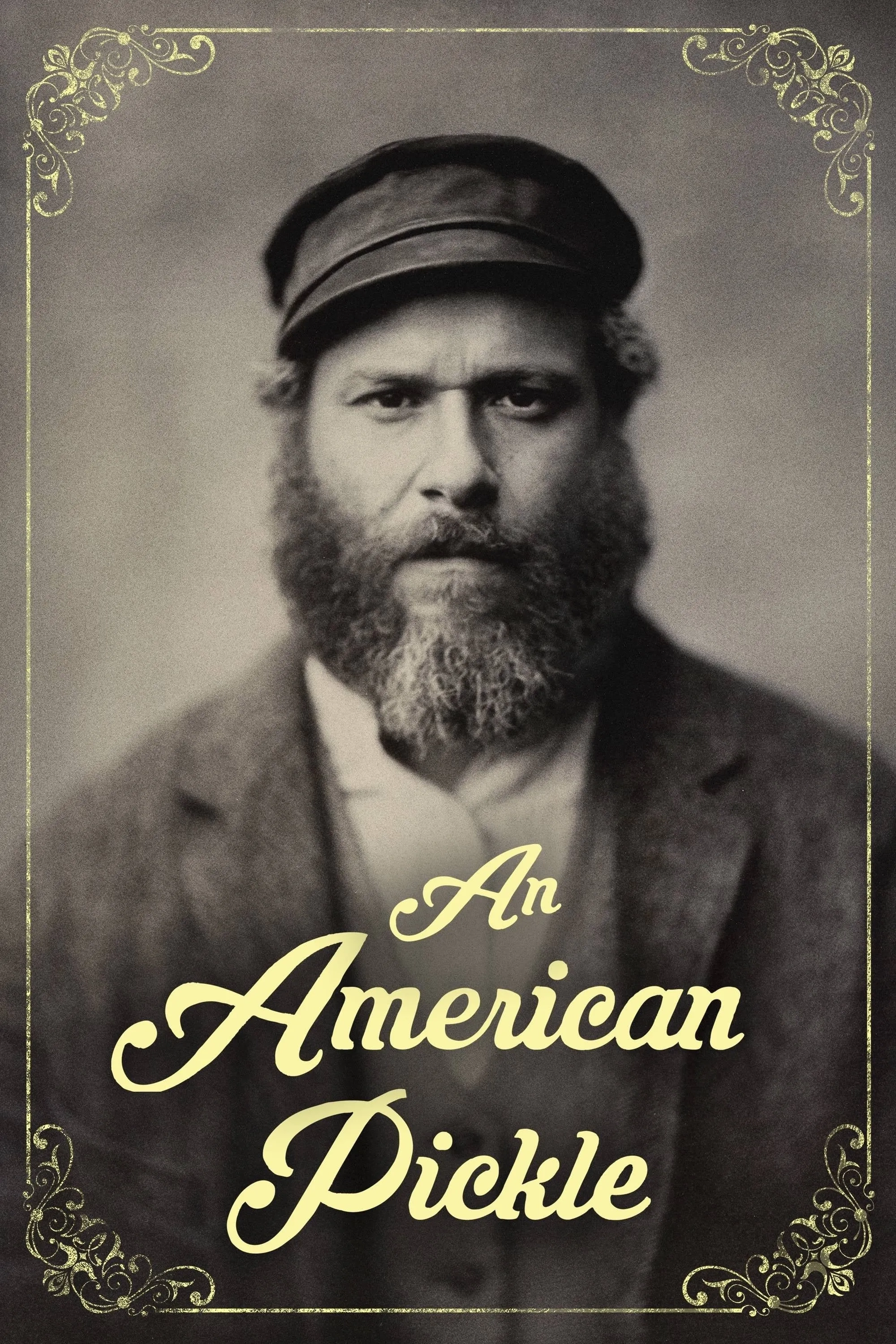
An American Pickle (2020) is a fish-out-of-water comedy-drama that centers on Herschel Greenbaum, an Eastern European immigrant who is brined for a century after falling into a pickle vat, only to emerge in modern-day Brooklyn. The film explores the friction between Old World values and contemporary millennial culture, anchored by Seth Rogen’s dual performance as both the ancestor and his present-day great-grandson, Ben.
The Production and Creative Genesis
The film is an adaptation of the 2013 short story Sell Out by Simon Rich, originally published in The New Yorker. The narrative transition from short story to feature-length film required significant structural expansion to sustain an 89-minute runtime. Director Brandon Trost, who previously served as a cinematographer on several of Rogen’s projects, helmed the production. It was released by Warner Bros. Pictures, originally slated for a traditional theatrical rollout, before being shifted to the HBO Max streaming service amidst the shifting distribution landscape of 2020.
At its core, the film functions as a character study disguised as high-concept comedy. The "pickle" conceit serves as a narrative device to facilitate a generational clash, but the film’s weight rests on the philosophical divide between Herschel’s immigrant tenacity and Ben’s aimless, digital-age malaise.
Dual Performance and Technical Execution
The most technically ambitious aspect of the film is the portrayal of two distinct characters played by the same actor. Seth Rogen performs both Herschel Greenbaum, an impoverished ditch-digger from 1920, and Ben Greenbaum, a freelance app developer in 2020.
Motion Control and Continuity
To achieve the interactions between Herschel and Ben, the production relied on motion control camera rigs. This technology allowed the camera to repeat identical movements across multiple takes, enabling Rogen to film scenes as one character and then as the other, effectively layering the performances in post-production. The technical challenge was not merely visual; Rogen had to maintain physical continuity in his posture, accent, and mannerisms while reacting to empty space or a body double.
The film avoids the "uncanny valley" effect by prioritizing character-driven nuance over heavy-handed CGI. The lighting design differentiates the two eras: the 1920s segments feature a warmer, grittier aesthetic that emphasizes Herschel’s ruggedness, while the modern Brooklyn scenes use a cooler, more clinical palette to reflect the detached nature of the digital world Ben inhabits.
Thematic Conflict: The Immigrant Experience vs. Modern Cynicism
The tension in the film is driven by the incompatibility of Herschel’s life-affirming, traditional worldview and Ben’s cynical, perfectionist outlook. Herschel represents the prototypical immigrant narrative—hard work, resilience, and a desire to provide for future generations. When he finds himself in 2020, he is horrified by how little the "American Dream" has evolved for his descendant.
Ben, conversely, represents the modern condition of being "hyper-connected yet disconnected." He is paralyzed by his inability to launch a successful mobile app, viewing life through a lens of social media metrics and external validation. The film posits a provocative question: Is the "easy life" of the 21st century a blessing, or has it eroded the survival instincts that give life meaning?
Comparison of Key Narrative Elements
The film balances comedy and pathos through specific narrative tropes. The following table highlights the primary contrasts presented in the film:
| Element | Herschel Greenbaum (1920s) | Ben Greenbaum (2020s) |
|---|---|---|
| Core Motivation | Survival and Legacy | App development and social validation |
| Cultural Anchor | Family, Religion, and Labor | Technology, Digital Metrics, and Status |
| Emotional State | Resilient and Earnest | Anxious and Cynical |
| Conflict Resolution | Physical confrontation/Hard work | Avoidance and social-media maneuvering |
| Perception of America | A land of opportunity | A system of comfort and convenience |
Critical Reception and Cultural Significance
Upon its release, An American Pickle received polarized feedback. Critics generally praised Rogen’s ability to anchor a sentimental story with his signature comedic timing, noting that his portrayal of Herschel was a departure from his usual "stoner comedy" persona. However, some reviews argued that the film struggled to sustain its momentum, citing the transition from the surreal premise to the third-act "cancel culture" subplot as a point of uneven pacing.
From a sociological perspective, the film is often studied for its depiction of the "Brooklynization" of American culture. By focusing on the rapidly changing landscape of Williamsburg, Brooklyn, the movie captures a specific moment in time where artisanal fads (like pickling) collide with long-standing neighborhood history.
Common Criticisms and Troubleshooting the Viewing Experience
Viewers approaching An American Pickle often express confusion regarding the film’s tonal shifts. It is important to remember that the film is a dark comedy, not a pure slapstick feature.
- The Surrealist Premise: Some viewers struggle to suspend disbelief regarding the science of the pickling. The film does not attempt to explain the "how" behind the preservation; it treats the event as a fable. Viewers expecting hard science fiction will be disappointed, as the focus is entirely on the emotional outcomes.
- The "Cancel Culture" Arc: The final act involving a Twitter controversy is frequently cited as the film's most contentious section. Critics suggest it detours from the relationship between the two men. To get the most out of this segment, focus on how Ben and Herschel use the platform to weaponize their opposing worldviews against each other rather than the technicality of the scandal itself.
- Pacing Issues: Because the film relies on a single comedic premise, it can feel static in the middle. The film is best viewed as a character study rather than a plot-heavy adventure.
Frequently Asked Questions
Is An American Pickle based on a true story?
No, the film is entirely fictional. It is an adaptation of the short story Sell Out by Simon Rich. While it captures the immigrant experience of the 1920s with some degree of historical accuracy, the premise of a man surviving in a pickle vat for a century is a satirical invention meant to explore generational differences.
Does the film accurately depict early 20th-century immigration?
The film uses the historical context of the "Great Migration" and the struggles of Eastern European Jewish immigrants as a thematic starting point. While it is not a documentary, it uses these historical realities to highlight the stark contrast with 21st-century Brooklyn, specifically focusing on the shift from manual labor to the digital economy.
Why was this movie released on HBO Max instead of theaters?
The film was initially scheduled for a theatrical release by Sony Pictures, but the global health environment in 2020 forced a change in distribution strategy. Warner Bros. acquired the rights to release it on the HBO Max streaming platform, a decision that mirrored the industry-wide shift toward digital-first distribution during that period.
What is the significance of the "pickling" metaphor?
The pickle serves as a literal vessel for preservation—much like how the immigrant generation attempts to preserve traditions that the following generations eventually discard or repurpose. It represents the "brine" of history that sticks to the characters, both literally and figuratively, throughout the movie.
Is there a sequel or plans for a franchise?
As of 2026, there have been no announcements regarding a sequel to An American Pickle. The film was written as a self-contained narrative with a definitive conclusion, and neither the studio nor the creative team has expressed interest in expanding the premise into a series or follow-up film.
Recommended Next Steps for Viewers
If you enjoyed the themes of generational conflict or the specific brand of humor in An American Pickle, consider exploring the broader body of work by Simon Rich. His short story collections often explore similar high-concept "what if" scenarios rooted in human foibles.
For those interested in the film’s technical side, re-watch the scenes featuring interactions between the two characters with a focus on the lighting and eye lines. It provides a masterclass in how modern filmmakers use digital effects to bridge the gap between dual performances, maintaining the integrity of the actor’s craft without relying entirely on synthetic visuals.
Finally, if the film leaves you thinking about your own family history, engage in a conversation with your elders. The movie serves as a poignant reminder that while the world changes rapidly, the fundamental struggle to be understood by those who came before us remains a timeless human experience.
Image Gallery
Select an image to open it in a new tab.


Celine Dubois
Contemporary Living and Global Arts Columnist
