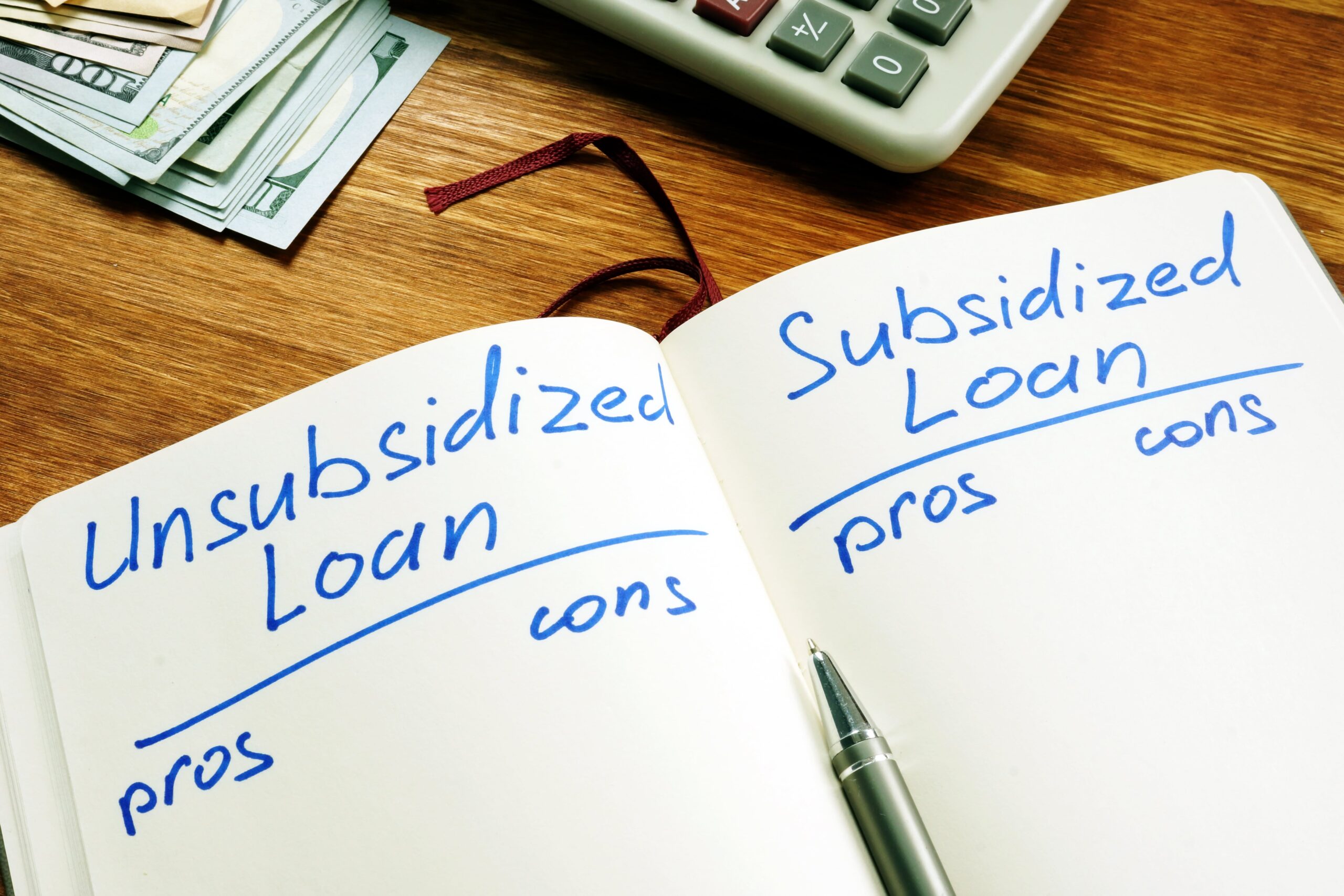
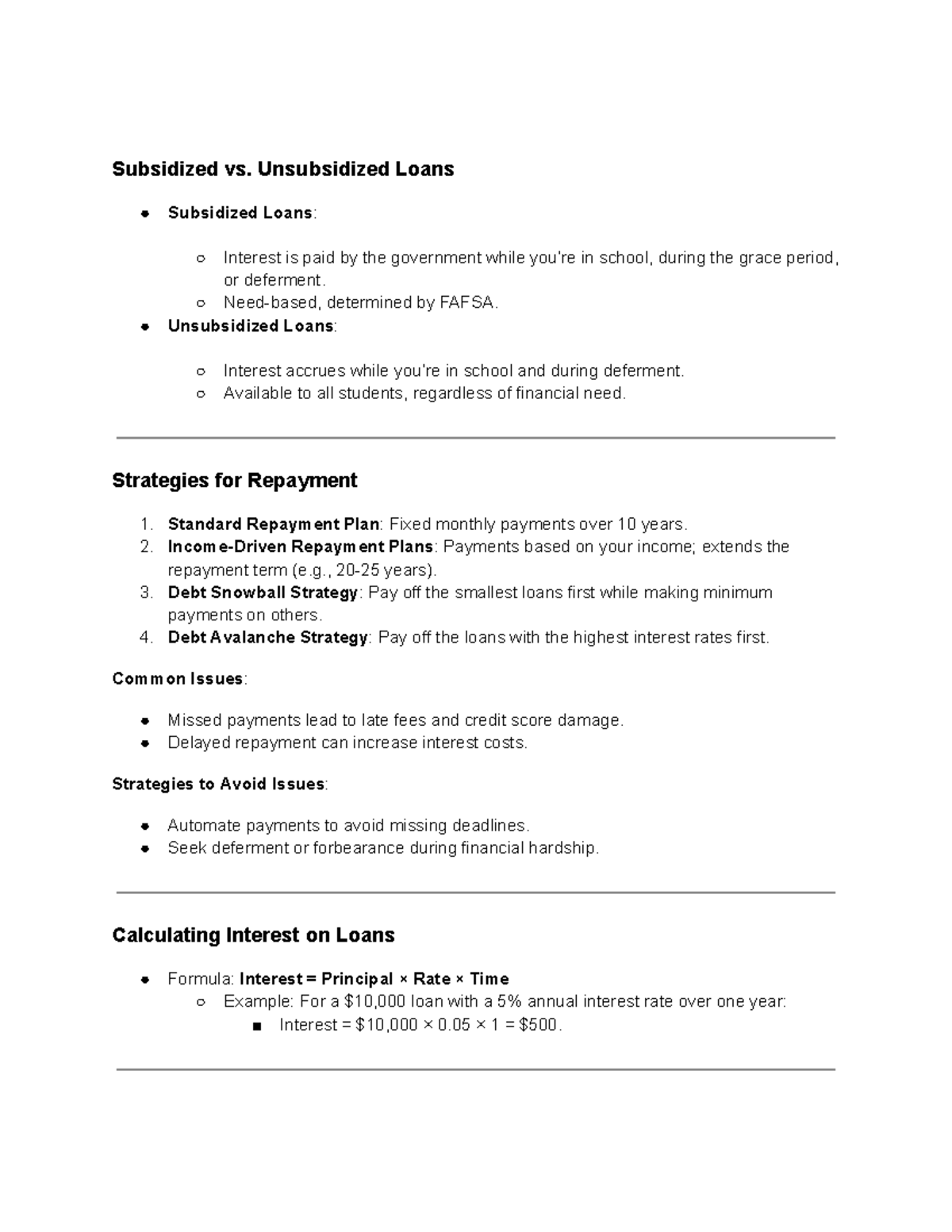
The primary difference between subsidized and unsubsidized loans lies in who pays the interest while you are in school. The federal government pays the interest on subsidized loans during enrollment and grace periods, whereas unsubsidized loans accrue interest immediately upon disbursement, making them more expensive over the life of the loan.
Federal student loans are the backbone of higher education financing in the United States. As of 2026, the U.S. Department of Education continues to offer the William D. Ford Federal Direct Loan Program, which remains the most common source of educational borrowing. For students and their families, navigating the nuances between Direct Subsidized Loans and Direct Unsubsidized Loans is critical for minimizing long-term debt.
While both types of loans offer relatively low fixed interest rates and flexible repayment options compared to private lenders, the "subsidy" aspect of the subsidized loan is a significant financial benefit that is only available to those who meet specific criteria. Understanding these differences allows borrowers to prioritize which funds to accept and how to manage their balances before and after graduation.
The Fundamentals of Direct Subsidized Loans
Direct Subsidized Loans are often referred to as the "gold standard" of student borrowing. These loans are specifically designed for undergraduate students who demonstrate a clear financial need. The "subsidized" portion of the name refers to the fact that the U.S. Department of Education acts as a benefactor, covering the interest charges on the loan during specific periods.
Eligibility and Financial Need
To qualify for a subsidized loan, a student must be an undergraduate enrolled at least half-time in a program leading to a degree or certificate. The most significant barrier to entry for this loan type is the requirement of financial need. This is determined by the Free Application for Federal Student Aid (FAFSA).
The calculation for financial need is relatively straightforward: the school subtracts the Student Aid Index (SAI)—which replaced the older Expected Family Contribution (EFC) model—from the total Cost of Attendance (COA). If the COA is higher than the SAI plus other financial aid (like scholarships or grants), the student has "need" and may be eligible for a subsidized loan up to the amount of that need, within federal limits.
When the Government Pays Your Interest
The Department of Education pays the interest on a Direct Subsidized Loan during three specific timeframes:
- While you are in school: As long as you maintain at least half-time enrollment.
- The Grace Period: For the first six months after you leave school (though some legislative cycles have adjusted this, it remains the standard as of 2026).
- Periods of Deferment: If you qualify for a legal postponement of payments—such as for economic hardship or graduate fellowship—the government continues to cover the interest.
By preventing interest from building up during these periods, the government ensures that the balance you owe when you start repayment is exactly the same as the amount you originally borrowed.
The Mechanics of Direct Unsubsidized Loans
Direct Unsubsidized Loans are far more common because they are not restricted by financial need. Almost any student, regardless of their family’s income or assets, can qualify for an unsubsidized loan as long as they meet the basic federal student aid eligibility requirements (such as being a U.S. citizen or eligible non-citizen and having a valid Social Security number).
Availability for Graduate and Professional Students
Unlike subsidized loans, which are strictly for undergraduates, Direct Unsubsidized Loans are available to both undergraduate and graduate/professional students. This makes them the primary federal tool for financing law school, medical school, and master's programs.
The True Cost of "Unsubsidized"
The word "unsubsidized" means you are entirely responsible for the interest from the moment the funds are sent to your school. Interest begins to accrue (accumulate) on the day the loan is disbursed.
If you choose not to pay the interest while you are in school or during your grace period, that interest will capitalize. Capitalization is a process where the unpaid interest is added to the principal balance of your loan. For example, if you borrow $5,000 and it accrues $500 in interest by the time you graduate, your new principal balance becomes $5,500. From that point forward, interest is charged on that new, larger amount. This compounding effect can significantly increase the total cost of the loan over a 10- or 20-year repayment term.

Comparing Key Features: Subsidized vs. Unsubsidized
Choosing between these loans—or more accurately, deciding how much of each to accept—requires a direct comparison of their limitations and benefits. Below is a breakdown of how they stack up against each other as of the 2026 academic year.
| Feature | Direct Subsidized Loan | Direct Unsubsidized Loan |
|---|---|---|
| Target Audience | Undergraduates with financial need | Undergraduates & Graduate students |
| Financial Need Required? | Yes | No |
| Interest Subsidy | Government pays interest while in school | Borrower is responsible for all interest |
| Credit Check Required? | No | No |
| Interest Rate (2025-2026) | Fixed (lower for undergraduates) | Fixed (higher for graduates) |
| Loan Limits | Lower annual and aggregate limits | Higher annual and aggregate limits |
| Grace Period | 6 months (interest-free) | 6 months (interest accrues) |
Borrowing Limits and Financial Constraints
The federal government imposes strict limits on how much a student can borrow each year and over their entire academic career. These limits are divided between subsidized and unsubsidized portions.
Annual Limits for Undergraduates
The amount you can borrow depends on your year in school and whether you are a dependent or independent student. For example, a freshman dependent student may be eligible for up to $5,500 in total Direct Loans, but no more than $3,500 of that can be in subsidized loans. As you progress to your sophomore and junior years, these limits increase slightly.
Aggregate (Lifetime) Limits
There is also a "ceiling" on total borrowing.
- Dependent Undergraduates: A total of $31,000, with no more than $23,000 in subsidized loans.
- Independent Undergraduates: A total of $57,500, with no more than $23,000 in subsidized loans.
- Graduate Students: A total of $138,500 (this includes any undergraduate loans), all of which must be unsubsidized for graduate-level study.
These limits are designed to prevent students from over-borrowing, though many find they still need to supplement these amounts with Parent PLUS Loans or private financing.
The Impact of Interest Capitalization
To truly understand the subsidized vs. unsubsidized loan difference, one must look at the math of capitalization. Let’s consider two students, both borrowing $10,000 over their four-year degree at a 5% interest rate.
Student A has a Subsidized Loan. When they graduate, they owe exactly $10,000. Their monthly payments start six months later, based on that $10,000 principal.
Student B has an Unsubsidized Loan. Over four years, their $10,000 loan has been accruing interest. By the time they enter repayment, they might owe approximately $11,200 due to capitalized interest. Student B is now paying interest on that extra $1,200 for the next decade. Over a standard 10-year repayment plan, Student B will end up paying thousands of dollars more than Student A for the exact same initial loan amount.
To mitigate this, financial advisors often recommend that students with unsubsidized loans try to pay at least the interest portion of their loan while they are still in school. Even a small monthly payment of $20 or $30 can prevent capitalization and save a significant amount of money in the long run.
Repayment Plans and Protections
Both subsidized and unsubsidized loans benefit from the robust protections offered by the federal government. These are not typically available with private student loans from banks or credit unions.
- Income-Driven Repayment (IDR) Plans: As of 2026, plans like the SAVE plan (or its successors) allow borrowers to cap their monthly payments at a percentage of their discretionary income. In some cases, if your income is low enough, your payment could be $0 per month.
- Loan Forgiveness: Both loan types are eligible for Public Service Loan Forgiveness (PSLF) if the borrower works for a qualifying non-profit or government agency for 10 years while making payments.
- Deferment and Forbearance: If you face unemployment or medical hardship, you can temporarily stop making payments. On subsidized loans, the government will again pick up the interest tab during deferment; on unsubsidized loans, the interest will continue to grow.
Common Mistakes When Choosing Between Loans
One of the most frequent errors students make is not reading their financial aid award letter carefully. Schools typically present a "package" that includes both types of loans.
- Accepting Unsubsidized First: You should always accept the full amount of subsidized loans offered before taking a single dollar of unsubsidized debt.
- Borrowing the Maximum: Just because you are eligible for $7,500 doesn't mean you should take it. Calculate your actual needs for tuition, books, and modest living expenses.
- Ignoring the Interest Statement: Even though you aren't required to pay while in school, the loan servicer will send statements. Ignoring these leads to "sticker shock" upon graduation when the capitalized balance is revealed.
Frequently Asked Questions
Can I have both a subsidized and an unsubsidized loan at the same time?
Yes. In fact, most financial aid packages for undergraduate students with financial need include a combination of both. The school will apply the maximum subsidized amount you are eligible for based on your grade level and need, and then fill the remaining gap up to your borrowing limit with unsubsidized loans.
Which loan should I pay off first if I have extra money?
You should prioritize paying off the unsubsidized loan first. Because the unsubsidized loan accrues interest that eventually capitalizes, paying it down early reduces the principal balance that interest is calculated on. Subsidized loans are "cheaper" to hold while you are in school because their interest is covered.
Do these loans require a co-signer or a credit check?
No. Unlike private student loans or PLUS loans, Direct Subsidized and Unsubsidized loans do not require a credit check or a co-signer. They are granted based on your FAFSA information and your enrollment status at an eligible school. This makes them highly accessible for young students with no credit history.
What happens to my interest if I drop below half-time enrollment?
If you drop below half-time enrollment, your six-month grace period begins. For a subsidized loan, the government will continue to pay interest during those six months. For an unsubsidized loan, interest continues to accrue. If you do not return to at least half-time status before the grace period ends, you will enter active repayment.
Are interest rates the same for both?
Generally, for undergraduate students, the interest rate is the same for both Direct Subsidized and Direct Unsubsidized loans issued in the same academic year. However, graduate students (who only qualify for unsubsidized loans) are charged a higher fixed interest rate than undergraduates.
Final Recommendations for Borrowers
When managing your educational debt in 2026, the strategy should be one of "Subsidized First, Unsubsidized Second." Always maximize your "free money" first—grants and scholarships—before turning to loans.
If you must borrow, prioritize the Direct Subsidized Loan to take advantage of the government's interest payments. If you have to take out Direct Unsubsidized Loans, make a concerted effort to pay the interest as it accrues while you are in school. This simple step can prevent your debt from "snowballing" before you even receive your diploma. Always keep your contact information updated with your loan servicer to ensure you don't miss important updates regarding interest rates or repayment options.
Image Gallery
Select an image to open it in a new tab.

Lars Thomsen
Global Labor Markets and Economic Strategy Editor
