
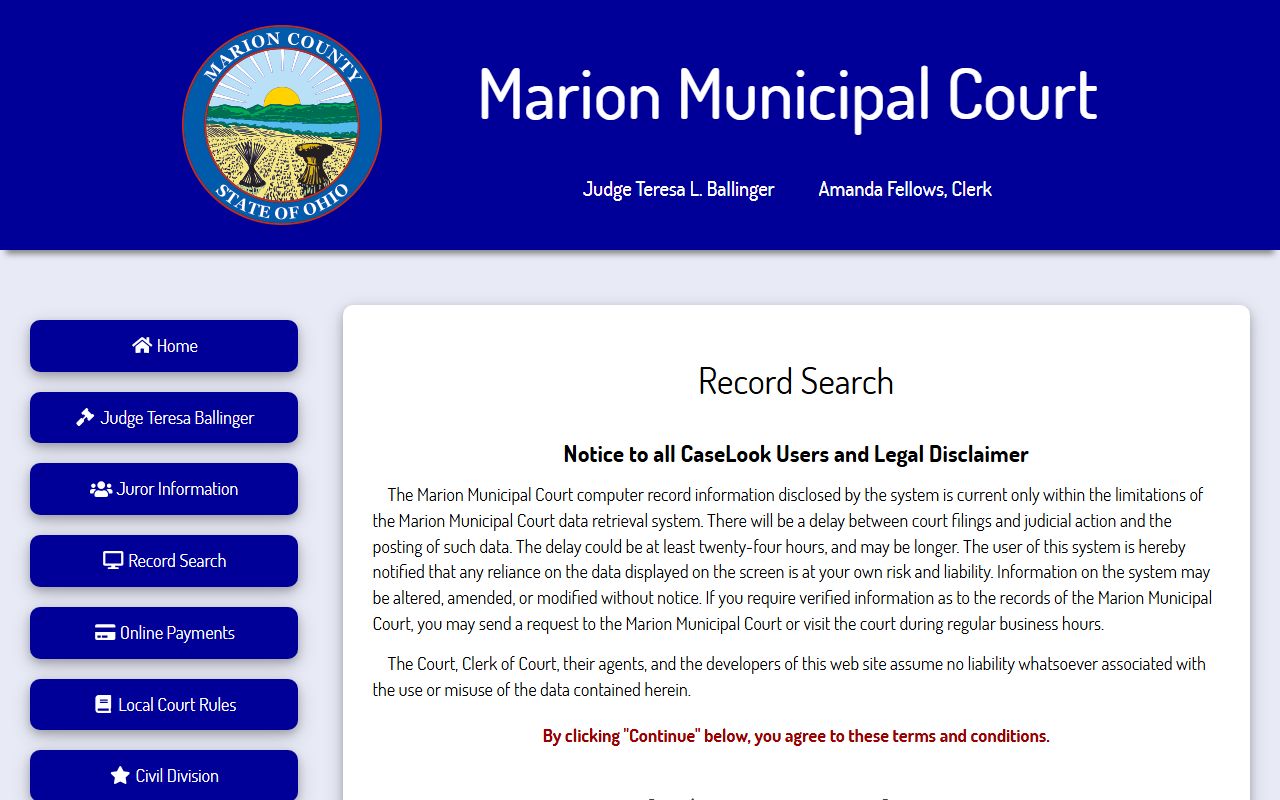
To access Marion Municipal Court records in 2026, the most efficient method is using the court's official online public access portal. Users can search by case number, party name, or attorney information to find details on criminal, traffic, and civil cases. For certified copies or older archives not available digitally, a formal request must be submitted in person or via mail to the Clerk of Court’s office at 233 West Center Street, Marion, Ohio.
Accessing court records is a fundamental right of the public, ensuring transparency within the judicial system. Whether you are a legal professional conducting due diligence, a tenant verifying a background check, or an individual checking the status of a personal citation, the Marion Municipal Court provides several avenues for information retrieval. As of 2026, the integration of digital filing systems has made these records more accessible than ever, though specific protocols must be followed to ensure the accuracy and legality of the information obtained.
Understanding the Jurisdiction of Marion Municipal Court
Before initiating a records search, it is essential to confirm that the Marion Municipal Court is the correct venue for the case in question. Located in Marion, Ohio, this court possesses a specific and limited jurisdiction. It handles cases originating within Marion County and the City of Marion.
Criminal and Traffic Jurisdiction
The court oversees all misdemeanor criminal cases. These include offenses where the potential penalty does not exceed one year in jail. Common examples include first-offense DUIs (OVI), petty theft, simple assault, and domestic violence charges classified as misdemeanors. Additionally, the court processes all traffic violations occurring within its geographic boundaries, from simple speeding tickets to more complex vehicular crimes.
It is important to note that felony cases often begin here for preliminary hearings or initial appearances, but they are typically bound over to the Marion County Common Pleas Court if the grand jury issues an indictment. If you are searching for a high-level felony record (such as murder or aggravated robbery), you may need to expand your search to the Common Pleas Court records system.
Civil Jurisdiction
The Marion Municipal Court handles civil disputes where the amount in controversy does not exceed $15,000. This includes:
- Small Claims: Disputes up to $6,000, designed for individuals to resolve conflicts without the absolute necessity of an attorney.
- General Civil Actions: Contract disputes, personal injury claims (within the monetary limit), and landlord-tenant disputes, including evictions (forcible entry and detainer).
- Rent Deposits: Situations where a tenant pays rent to the court pending repairs by a landlord.
How to Conduct an Online Records Search
The most common way to access information is through the online search portal. In 2026, the interface is designed to be mobile-friendly and accessible to the general public without requiring a subscription for basic viewing.
Step 1: Accessing the Official Portal
Begin by visiting the official website of the Marion Municipal Court. Look for the "Public Access" or "Case Search" link. Ensure you are on the official .org or .gov site to avoid third-party "people search" sites that may charge fees for data that is otherwise free.
Step 2: Selecting Search Criteria
The portal typically offers several ways to filter results:
- Name Search: This is the most used feature. You should enter the Last Name followed by the First Name. In 2026, the system uses "smart search" technology that accounts for common misspellings or phonetic similarities, but using the exact legal name yields the most accurate results.
- Case Number: If you have the specific case number (e.g., 2026 CR B 000123), this is the fastest way to find a record. The prefixes usually indicate the case type: "CR" for criminal, "TR" for traffic, and "CV" or "SC" for civil or small claims.
- Date Filed: If you do not know the name but know when an incident occurred, you can search within a specific date range.
- Attorney Name: Useful for legal researchers looking for the case history of a specific practitioner.
Step 3: Interpreting the Results
Once you click on a specific case, the system will display a "Register of Actions" or "Docket." This is a chronological log of everything that has happened in the case.
- Case Summary: Shows the judge assigned, the current status (Open, Closed, or Warrant Issued), and the parties involved.
- Charges/Claims: Lists the specific violations of the Ohio Revised Code or local ordinances.
- Financials: Displays court costs, fines, and whether they have been paid.
- Events: Lists past and future court dates, such as arraignments, pre-trials, and sentencings.
Accessing Records in Person or via Mail
While online searches provide immediate gratification, they are not always sufficient. If you require a certified copy—which is a document stamped and verified by the Clerk of Court as a true copy—you must use traditional methods. Certified copies are often required for employment verification, professional licensing, or social security applications.
In-Person Requests
The Clerk of Court’s office is located at: 233 West Center Street, Marion, OH 43302
When visiting in person:
- Hours: Generally, the office is open Monday through Friday, 8:30 AM to 4:30 PM, excluding federal and state holidays.
- Identification: Bring a valid government-issued ID. While public records can be viewed by anyone, having an ID streamlines the process for specific requests.
- Terminals: The court provides public kiosks where you can search the database and print unofficial copies for a small per-page fee.
Mail-In Requests
If you are out of state or unable to visit, you can mail a request. You must include:
- The full name and date of birth of the subject.
- The case number (if known).
- A self-addressed, stamped envelope (SASE).
- A check or money order for the copy fees.
- A clear description of which documents you need (e.g., "The final judgment entry for case 2024 TRD 5543").
Fees and Costs Associated with Record Retrieval
Under the Ohio Public Records Act, the court is permitted to charge a fee that covers the actual cost of making copies. In 2026, the fee schedule for Marion Municipal Court generally follows these guidelines:
| Service Type | Estimated Fee (2026) | Turnaround Time |
|---|---|---|
| Online Viewing/Printing (Home) | Free | Instant |
| Uncertified Paper Copies (In-Office) | $0.05 - $0.25 per page | Immediate |
| Certified Copies | $1.00 - $5.00 per document | Same Day / 7 Days (Mail) |
| Audio/Video Records (CD/USB) | $15.00 - $25.00 | 3-5 Business Days |
| Background Check (Local Search) | $5.00 - $15.00 | Variable |
Note: Fees are subject to change based on local administrative orders. Always verify the current rate with the Clerk's office before sending a payment via mail.
Understanding Case Nomenclature and Terms
To effectively navigate the Marion Municipal Court records search, one must understand the shorthand used by the court staff and the automated system.
- Disposition: This refers to the final outcome of the case. Common dispositions include "Guilty," "Not Guilty," "Dismissed," or "Transferred."
- Capias/Warrant: If the record shows an "Active Capias," it means the individual failed to appear in court, and a warrant has been issued for their arrest.
- Stay of Execution: This means the court has temporarily paused the enforcement of a judgment or sentence.
- Costs Waived: Often seen in cases involving indigency, where the court determines the defendant cannot afford the administrative fees.
- Nunc Pro Tunc: A Latin term meaning "now for then." This is used to correct a clerical error in a previous entry to reflect what actually happened in court.
Confidentiality and Restricted Records
Not all records held by the Marion Municipal Court are available for public viewing. Even in the spirit of transparency, certain protections are mandated by Ohio law.
Sealed or Expunged Records
If a record has been sealed (commonly referred to as expunged), it will no longer appear in a public records search. Ohio has expanded its expungement laws significantly leading up to 2026, allowing more individuals to seal records of certain low-level offenses after a specific period of "good behavior." If you search for a case you know existed but find nothing, it is possible the record was legally sealed.
Juvenile Records
Records involving minors are generally confidential. While some serious juvenile traffic offenses might appear, the majority of juvenile delinquency cases are handled in the Marion County Family Court and are restricted from the general public search portal.
Sensitive Information Redaction
Even in public documents, the Clerk of Court is required to redact sensitive personal identifiers. This includes:
- Social Security Numbers
- Bank account numbers
- Specific details of victims in certain sexual assault or domestic violence cases.
Troubleshooting Common Search Issues
Sometimes, a search for "accessing marion municipal court records search" returns no results or confusing data. Here are the most common reasons:
- Wrong Court: As mentioned, verify the incident happened in Marion County, Ohio. If it happened in the City of Marion, Indiana, or Marion, Illinois, you are searching the wrong state database.
- Name Variations: Try searching with just the last name and the first initial. Many records are entered with middle names or initials that might not match your query exactly.
- Recent Filing: It can take 24 to 48 hours for a paper-filed document to be scanned and indexed into the digital system. If a ticket was issued this morning, it likely won't be online until tomorrow.
- Legacy Records: Cases from the 1980s or earlier may not be digitized. These "legacy" records often require a manual search of physical ledger books or microfilm held in the court’s archives.
The Role of the Clerk of Court
The Clerk of Court is the official custodian of these records. It is important to remember that the Clerk’s staff are not attorneys. They can help you find a document, explain how to use the computer terminal, and provide fee information, but they cannot give legal advice. They cannot tell you how to plead, explain the legal implications of a "No Contest" plea, or predict what a judge might decide.
For those needing legal assistance, the Marion County Bar Association or legal aid services in Central Ohio can provide guidance on how to use the information found in a records search to build a legal defense or file a civil claim.
FAQs about Marion Municipal Court Records
Can I see body camera footage through the court records search?
Generally, no. Body camera or dash camera footage is considered evidence and is held by the law enforcement agency (like the Marion Police Department or Marion County Sheriff). While it may be introduced in court, it is not typically part of the "public access" case file online. You would need to file a separate Public Records Request with the specific police department.
How far back do the online records go?
In 2026, the online portal typically contains comprehensive records dating back to the late 1990s. For records older than 25-30 years, you may need to contact the Clerk's office to see if the files have been moved to an off-site archive or the Ohio History Connection.
Is there a way to search for multiple people at once?
The public portal is designed for individual searches. Bulk data collection (scraping) is often prohibited by the court’s "Terms of Service" to prevent the system from slowing down. Commercial entities requiring bulk data usually have to enter into a specific agreement with the court or the software provider.
What if I find an error in my own court record?
If you believe your record contains a factual error (e.g., it says a fine is unpaid when you have a receipt), you should contact the Clerk’s office immediately. You may need to file a "Motion to Correct the Record" if the error is substantial, such as an incorrect disposition.
Can I pay my fines through the records search portal?
Yes, the 2026 interface usually integrates a "Pay Now" button directly within the case summary page for traffic tickets and criminal fines. This uses a secure third-party processor, and a convenience fee usually applies.
Are marriage licenses found here?
No. Marriage licenses and probate matters (wills, estates, guardianships) are handled by the Marion County Probate Court, not the Municipal Court.
Practical Recommendation for Users
When searching for records, always start with the online portal for a preliminary overview. It is free, fast, and accessible. However, never rely solely on a digital summary for high-stakes decisions like employment or legal filings. Always secure a certified copy from the Clerk of Court if the information is being used for official purposes. This ensures you have the most accurate, legally-binding version of the record, complete with the court's seal.
Image Gallery
Select an image to open it in a new tab.



Celine Dubois
Contemporary Living and Global Arts Columnist
