Is Zac Taylor a Good Head Coach? Evaluating His Bengals Record, Tactics, and Legacy

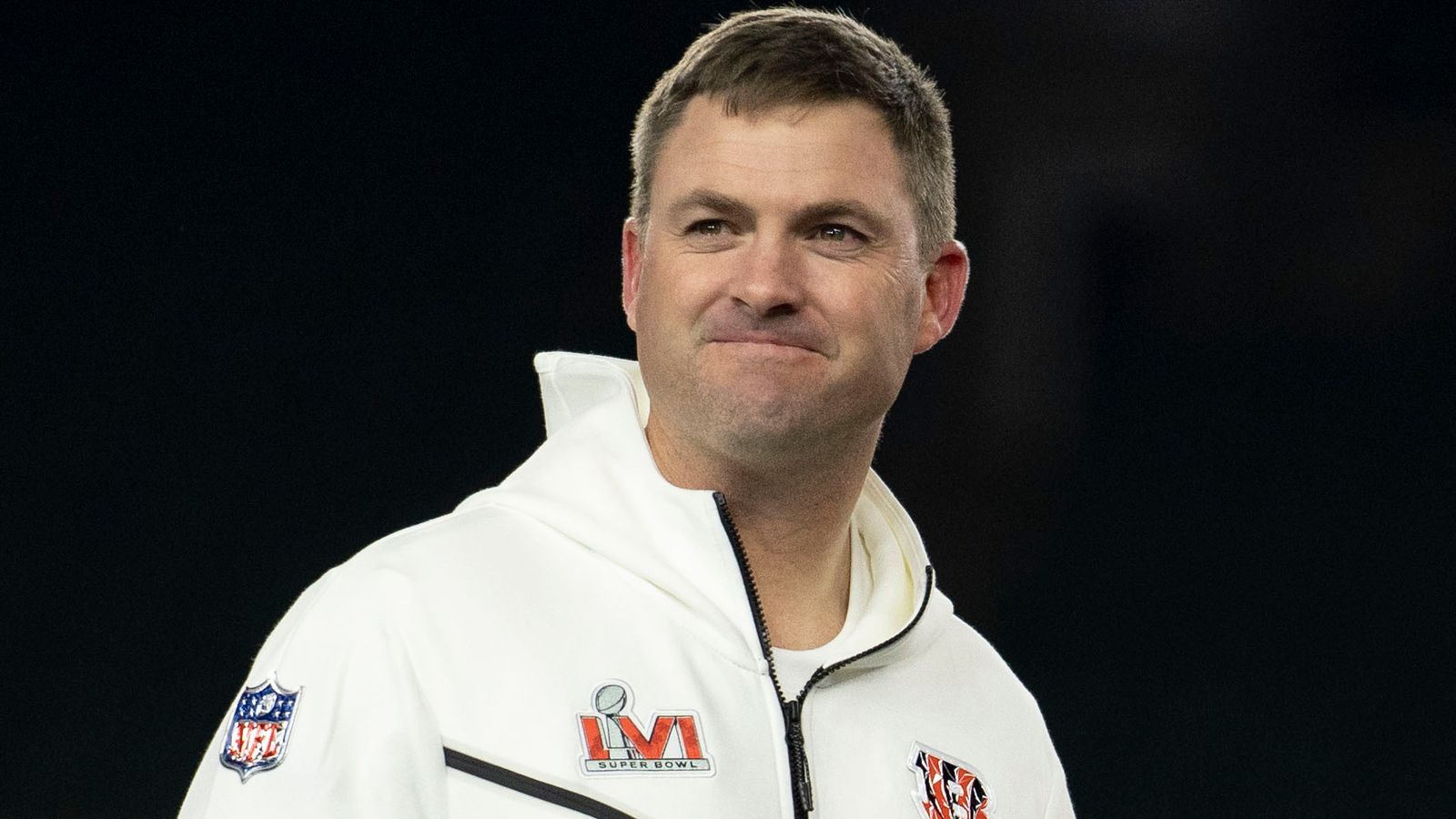
Zac Taylor is a successful NFL head coach best known for transforming the Cincinnati Bengals from a league bottom-feeder into a perennial contender. Highlighted by an AFC Championship, a Super Bowl LVI appearance, and strong locker room leadership, Taylor's tenure demonstrates elite culture-building abilities, balanced by persistent debate surrounding his offensive play-calling, game management, and dependency on star quarterback Joe Burrow.
The Zac Taylor Era: From Rebuild to Contender
When the Cincinnati Bengals hired Zac Taylor in February 2019, the decision was met with widespread skepticism across the NFL media landscape. Taylor, then just 35 years old, was coming off a stint as the quarterbacks coach for the Los Angeles Rams under offensive prodigy Sean McVay. His previous play-calling experience was limited—having served as an interim offensive coordinator for the Miami Dolphins in 2015 and the offensive coordinator for the University of Cincinnati Bearcats in 2016, a team that finished 4-8.
Taylor inherited a roster in dire need of a complete structural overhaul. The end of the Marvin Lewis era had left Cincinnati with an aging, cap-strangled roster and an organizational reputation for standing still while the rest of the league modernized. Taylor's initial years were brutal in terms of wins and losses:
- 2019: 2–14 record (secured the No. 1 overall pick in the 2020 NFL Draft).
- 2020: 4–11–1 record (marred by a season-ending knee injury to rookie quarterback Joe Burrow).
Despite a combined 6–25–1 record over his first two seasons, Bengals owner Mike Brown preached patience—a rarity in modern professional sports. That patience paid off dramatically in 2021 when Taylor led Cincinnati to a 10–7 record, an AFC North title, and the franchise’s first playoff victory in 31 years. The Bengals launched an improbable postseason run, defeating the Las Vegas Raiders, Tennessee Titans, and Kansas City Chiefs to reach Super Bowl LVI, where they ultimately fell 23–20 to Taylor's former employer, the Los Angeles Rams.
Taylor proved that the 2021 run was no fluke by following it up with a 12–4 campaign in 2022, securing back-to-back division titles and another trip to the AFC Championship Game. Subsequent seasons presented new hurdles—most notably dealing with major injuries to Burrow in 2023 and navigating defensive turnover—yet Taylor established a baseline of competitiveness that the franchise had lacked for decades.
Evaluating whether Taylor is a "good" head coach requires separating his operational strengths as a program leader from his technical responsibilities as an offensive play-caller.
Key Strengths: Culture, Leadership, and Big-Game Preparation
Evaluating an NFL head coach requires looking beyond x's and o's to examine how effectively they build an organization, command respect, and execute under pressure. In these macro-level responsibilities, Taylor has consistently scored high marks.
- Zac Taylor's Core Strengths
- Culture Building & Accountability
- Player Buy-In & Star Harmony
- Big-Game Prep & Postseason Execution
1. Cultural Transformation and Locker Room Chemistry
Before Taylor's arrival, the Bengals were frequently criticized for discipline issues, poor communication, and a lack of modern facilities and operational flexibility. Taylor systematically overhauled the team's internal environment. He established a culture centered on player accountability, transparency, and high morale.
According to player surveys published by the NFL Players Association (NFLPA), Taylor consistently ranks among the most well-liked and respected head coaches in the league. Players cite his open-door policy, willingness to adjust practice schedules to protect player longevity, and authentic communication as primary reasons for their strong buy-in.
2. Managing Superstar Personalities
Navigating high-profile talent requires delicate leadership. Taylor has successfully managed a locker room featuring hyper-confident superstars like Joe Burrow, Ja'Marr Chase, and Tee Higgins without major public friction or contract-related drama spilling onto the field.
Instead of imposing an overly rigid, authoritarian structure, Taylor gave Burrow early ownership of the offense. He allowed Burrow to influence game plans, run empty-backfield formations, and dictate tempo at the line of scrimmage. This collaborative leadership style accelerated Burrow’s development into an elite NFL quarterback and fostered a tight-knit relationship between the coaching staff and key decision-makers.
3. Postseason Performance and Big-Game Execution
A coach's ultimate test comes in January. Under Taylor, the Bengals transformed from historical playoff underachievers into one of the most dangerous postseason teams in the AFC.
Between 2021 and 2022, Taylor amassed a 5–2 playoff record. His teams demonstrated remarkable resilience, frequently orchestrating second-half comebacks against top-tier opponents. The Bengals' 18-point comeback against the Kansas City Chiefs in the 2021 AFC Championship Game remains one of the most impressive postseason road victories in recent NFL history, highlighting Taylor's ability to keep his team focused under extreme pressure.
Key Criticisms: Tactical Decisions, Play-Calling, and Scheme
While Taylor's macro-level leadership is widely praised, his micro-level football tactics have drawn sharp criticism from film analysts, advanced stats advocates, and fanbases alike.
1. Offensive System and Play-Calling Predictability
Unlike his mentor Sean McVay or contemporaries like Kyle Shanahan, Taylor’s offensive system has often been viewed as overly reliant on talent rather than dynamic design. His base offense features heavy usage of 11 personnel (one running back, one tight end, three wide receivers) run out of shotgun formations.
Critics point to several recurring tactical issues:
- Telegraphed First-Down Runs: Cincinnati has historically ranked near the top of the league in running the ball out of shotgun on early downs, often yielding low success rates and setting up second-and-long scenarios.
- Lack of Pre-Snap Motion and Under-Center Play-Action: Modern NFL offenses frequently use motion to create coverage tells and leverage, alongside play-action from under center to hold linebackers. Taylor’s offense has often lagged in these efficiency-boosting metrics, relying instead on Burrow and his receivers to win isolation matchups on the outside.
- Pass Protection Failures: While the Bengals invested heavily in offensive line free agents, critics argue that Taylor’s drop-back pass concepts leave tackles on isolated islands too frequently, contributing directly to high sack numbers for Burrow.
2. In-Game Management and Situational Awareness
Clock management, fourth-down decision-making, and challenge flag usage are areas where Taylor has experienced noticeable growing pains. Advanced analytics models, such as those provided by Pro Football Focus (PFF), have frequently penalized Taylor for overly conservative choices in high-leverage moments.
For example, in Super Bowl LVI, Taylor was criticized for calling two consecutive running plays to third-string tailback Samaje Perine on 3rd-and-1 and 4th-and-1 during crucial late-game drives, rather than putting the ball in the hands of Burrow or utilizing his star wide receivers. While his fourth-down aggressiveness improved over subsequent seasons, occasional head-scratching game-management decisions have periodically resurfaced.
3. Defensive Reliance on Staff Continuity
A major pillar of Taylor’s early head coaching success was his decision to hire Lou Anarumo as defensive coordinator in 2019. Anarumo built flexible, scheme-shifting defenses that famously baffled elite quarterbacks like Patrick Mahomes and Josh Allen in key playoff matchups.
Because Taylor is an offensive-minded coach who delegates the defense entirely, evaluators often debate how much credit Taylor deserves for Cincinnati's defensive triumphs—and conversely, how much blame he bears when the defense regressions occur due to roster turnover or aging talent.
The "Joe Burrow Effect": Evaluating Performance With and Without Star Talent
A common debate surrounding head coaches is separating their personal impact from the caliber of their starting quarterback. Just as Bill Belichick faced scrutiny regarding his record without Tom Brady, Taylor’s career evaluation is inextricably tied to Joe Burrow.
- Evaluating Zac Taylor's Head Coaching Record
- With Joe Burrow
- High Winning Percentage
- 2 AFC North Titles
- 1 Super Bowl Appearance
- Without Joe Burrow
- Low Overall Win Rate
- Rebuilding Roster Years
- Backup QB Adaptability
- With Joe Burrow
The statistical disparity in Taylor's coaching record with and without Burrow on the field is substantial:
- With Burrow Active: Taylor boasts a winning percentage comfortably above .600, featuring multiple playoff runs, division titles, and high-powered offensive metrics.
- Without Burrow (Injuries/Pre-Burrow): Taylor's win rate drops significantly, reflecting the 2019 rebuild (2–14) and stretches where Burrow missed time due to his 2020 ACL tear and 2023 wrist injury.
However, viewing Taylor's performance exclusively through the lens of Burrow's presence oversimplifies the dynamic. During the late stretch of the 2023 NFL season, when Burrow was sidelined with a season-ending wrist tear, backup quarterback Jake Browning was inserted into the starting lineup.
Instead of collapsing, Taylor and offensive coordinator Brian Callahan adapted the scheme. They adjusted the offense to feature more high-percentage throws, screen games, and simplified reads, allowing Browning to go 4–3 down the stretch and keep Cincinnati in the playoff hunt with a 9–8 final record. This stretch provided evidence that Taylor possesses genuine schematic flexibility and developmental skill beyond simply relying on Burrow's individual brilliance.
Statistical Breakdown: Zac Taylor Year-by-Year Performance
To gain a clear perspective on Taylor’s head coaching record, examine his complete performance metrics, postseason results, and organizational context across his tenure with the Cincinnati Bengals.
| Season | Regular Season Record | Division Finish | Postseason Result | Offensive Rank (Pts/Game) | Defensive Rank (Pts Allowed) | Context & Key Milestones |
|---|---|---|---|---|---|---|
| 2019 | 2–14 | 4th (AFC North) | Missed Playoffs | 30th (17.4) | 25th (26.3) | Inherited aging roster; secured #1 pick (Joe Burrow). |
| 2020 | 4–11–1 | 4th (AFC North) | Missed Playoffs | 29th (19.4) | 22nd (26.5) | Burrow tore ACL in Week 11; early culture establishment. |
| 2021 | 10–7 | 1st (AFC North) | Lost Super Bowl LVI | 7th (27.1) | 17th (22.1) | First playoff win in 31 years; AFC Champions. |
| 2022 | 12–4 | 1st (AFC North) | Lost AFC Championship | 7th (25.7) | 6th (20.1) | Back-to-back AFC North titles; 10-game win streak. |
| 2023 | 9–8 | 4th (AFC North) | Missed Playoffs | 16th (21.5) | 21st (22.6) | Burrow missed final 7 games; Jake Browning went 4-3. |
| 2024 | 9–8 | 3th (AFC North) | Missed Playoffs | 6th (25.8) | 25th (25.2) | Elite offensive production offset by defensive regression. |
| 2025 | 10–7 | 2nd (AFC North) | Wild Card Round | 8th (24.9) | 14th (21.8) | Returned to postseason; stabilized roster balance. |
Data compiled via historical records on Pro Football Reference.
Head-to-Head and Divisional Context: The AFC North Gauntlet
Evaluating Taylor requires assessing the division in which he operates. The AFC North is widely considered one of the most demanding, physically grueling, and well-coached divisions in professional sports.
Throughout his tenure, Taylor has competed directly against two future Hall of Fame coaches and an NFL Coach of the Year winner:
- John Harbaugh (Baltimore Ravens): A Super Bowl-winning coach known for elite special teams, analytical decision-making, and roster consistency.
- Mike Tomlin (Pittsburgh Steelers): A Super Bowl-winning coach famous for never suffering a losing season in over a decade and a half of leadership.
- Kevin Stefanski (Cleveland Browns): A two-time NFL Coach of the Year winner recognized for advanced offensive scheme design and quarterback-friendly structures.
- The AFC North Head Coaching Landscape
- John Harbaugh (Baltimore Ravens)
- Mike Tomlin (Pittsburgh Steelers)
- Kevin Stefanski (Cleveland Browns)
For Taylor to capture back-to-back division titles (2021, 2022) in a group that features MVP quarterbacks like Lamar Jackson and top-tier coaching talent demonstrates his modern legitimacy. While he lost early divisional matchups during the 2019–2020 rebuild, he gradually turned the Bengals into a team capable of sweeping divisional opponents through physical play and explosive adjustments.
Verdict: How Zac Taylor Ranks Among Modern NFL Coaches
Is Zac Taylor a good coach? The evidence shows that he is a top-tier culture builder and executive manager, paired with an average to slightly above-average tactical strategist.
When ranking NFL head coaches across the entire league, Taylor comfortably sits in the top 10 to 12 tier.
Summary Evaluation Breakdown
- Program Building & Leadership (Tier: Elite): Taylor completely flipped an unproductive culture into one of the most attractive player destinations in the NFL. He handles adversity smoothly, retains player respect during losing skids, and avoids off-field distractions.
- Playoff Performance & Clutch Execution (Tier: Very Good): A 5–3 overall postseason record with wins in hostile environments (Arrowhead Stadium, Nissan Stadium, Highmark Stadium) proves his ability to prepare teams for high-stakes games.
- Schematic Innovation & Play-Calling (Tier: Average): His offensive system can be static, heavy on isolated 1-on-1 matchups, and late to adopt modern efficiency tools like pre-snap motion or under-center play-action.
- In-Game Decision Making (Tier: Average): Improved from his early career, but still susceptible to questionable fourth-down and short-yardage play calls in critical windows.
Ultimately, NFL teams search decades for a head coach who can win playoff games, foster elite quarterback play, and maintain a unified locker room. While critics will continue to scrutinize his offensive play-calling nuances, Taylor’s track record in Cincinnati proves he is a successful NFL head coach fully capable of leading a franchise to the highest levels of the sport.
Frequently Asked Questions
What is Zac Taylor’s overall coaching record with the Bengals?
Through seven full seasons with the Cincinnati Bengals (2019–2025), Zac Taylor has accumulated a regular-season record of 56–57–1 and a postseason record of 5–3, highlighted by two AFC North division titles and an AFC Championship victory in 2021.
Has Zac Taylor ever won an NFL Coach of the Year award?
No, Zac Taylor has not won the official AP NFL Coach of the Year award. However, he received significant vote consideration in 2021 after leading the Bengals from a 4–11–1 record the previous year to an AFC North championship and a Super Bowl LVI appearance.
Does Zac Taylor call the plays for the Bengals' offense?
Yes, Zac Taylor is the primary offensive play-caller for the Bengals. Although he collaborates closely with his offensive coordinator (formerly Brian Callahan, followed by Dan Pitcher) during weekly game planning and on the sidelines, Taylor makes the final call sent into the quarterback's headset on game days.
What was Zac Taylor’s coaching background before joining Cincinnati?
Before being named Bengals head coach in 2019, Taylor was the Assistant Wide Receivers Coach (2017) and Quarterbacks Coach (2018) for the Los Angeles Rams under Sean McVay. He also served as the offensive coordinator for the University of Cincinnati in 2016 and interim offensive coordinator for the Miami Dolphins in 2015.
How does Zac Taylor perform in playoff games?
Taylor has a 5–3 career postseason record. Under his leadership, the Bengals won four consecutive postseason games in 2021 to reach Super Bowl LVI and added two more playoff victories in 2022 to reach back-to-back AFC Championship Games.
Recommended Next Steps for Football Fans and Analysts
To further analyze Zac Taylor's ongoing performance and tactical impact on the Cincinnati Bengals, consider the following resources:
- Review Advanced Play-Calling Metrics: Explore tracking metrics on sites like Pro Football Focus (PFF) or RBSDM (Run-Pass Option and Expected Points Added analysis) to evaluate Cincinnati's play-calling efficiency by down and distance.
- Track Official NFL Statistics: Monitor team success, roster transactions, and injury reports via the official Cincinnati Bengals Team Portal.
- Study Film Breakdown Content: Search for film analysis channels and podcasts featuring former NFL quarterbacks and coaches who dissect Taylor's drop-back pass designs and run-game concepts week to week.
Image Gallery
Select an image to open it in a new tab.
Simon Caldwell
Enterprise Technology and Systems Editor
