Is a Pekingese a Good Family Dog? Evaluating Temperament, Care, and Compatibility

A Pekingese can be a good family dog for households with older children, adults, or seniors who can respect its small size, independent nature, and specific grooming requirements, but it is generally a poor fit for chaotic homes with toddlers due to its delicate structure, low tolerance for rough handling, and protective tendencies.
Choosing the right dog breed for a family involves a careful balancing act between the animal's natural inclinations and the household's daily lifestyle, energy levels, and spatial constraints. Among toy breeds, the Pekingese holds a unique historical and behavioral profile. Originating as a revered lapdog in the ancient Chinese imperial court, this breed retains a regal, self-assured demeanor that distinguishes it from more submissive companion dogs. For prospective owners trying to determine if a Pekingese fits into a dynamic domestic environment, looking past the luxurious coat and expressive eyes reveals a complex animal with distinct physical and psychological traits.
Evaluating this breed requires a thorough examination of its temperament, health predispositions, exercise thresholds, and socialization demands. While they can form fiercely loyal bonds with their human companions, they are not universally compatible with every family dynamic. Understanding the realities of living with a Pekingese ensures that both the family and the dog can achieve a harmonious, stress-free coexistence.
Understanding the Pekingese Temperament and Personality
To answer whether a Pekingese makes a suitable family pet, one must first understand its psychological blueprint. Unlike retrievers or herding dogs bred to work cooperatively with humans, the Pekingese was bred to keep company with royalty and entertain itself within palace walls. This historical background has fostered a personality defined by dignity, independence, and a surprising amount of courage.
Dignified, Independent, and Royal
The Pekingese is often described as cat-like in its independence. While they deeply love their primary human caregivers, they rarely display the desperate, high-energy neediness seen in some other toy breeds. They prefer to observe family activities from a comfortable vantage point, such as the back of a sofa or a plush dog bed, rather than constantly demanding attention.
However, this independence can cross into stubbornness during obedience training. A Pekingese does not respond well to harsh corrections or repetitive, boring commands. Positive reinforcement, patience, and mutual respect are essential for managing their proud disposition. Families looking for an obedient, eager-to-please pet that will instantly follow every command may find the Pekingese's independent streak frustrating.
Loyalty and Attachment to Family
Within their chosen family circle, Pekingese dogs are profoundly devoted. They often bond particularly closely with one or two individuals, though they usually tolerate and affection share with the entire household. This fierce loyalty makes them wonderful companions for adults, retirees, and single-person households.
Conversely, this intense attachment can translate into possessiveness or wariness toward strangers and unfamiliar animals. If not properly socialized from an early age, a Pekingese may become overly protective of its owners, sometimes showing unwarranted aggression or excessive barking when guests arrive.
Pekingese and Children: Assessing Safety and Compatibility
The relationship between a dog and children is often the deciding factor for family pet adoption. When evaluating the Pekingese against this criterion, several distinct physical and behavioral limitations emerge that require careful consideration.
Physical Vulnerability and Fragility
Despite their brave attitudes—which often lead them to stand their ground against much larger animals—Pekingese are small, fragile dogs. Weighing typically between 7 and 14 pounds, their compact bodies and low-set frames are susceptible to injury. Rough play, accidental drops, or being stepped on by active children can easily result in severe trauma, such as fractures or spinal injuries, particularly given their long backs.
Tolerance Levels for Rough Play
Children, especially toddlers and younger school-aged kids, frequently engage in fast-paced, unpredictable play that includes pulling ears, tail-tugging, or sudden grabbing. The Pekingese has a notoriously low tolerance for such handling. If provoked, startled, or roughly handled, a Pekingese is quick to defend itself by snapping or biting.
Because of these traits, animal behaviorists and rescue organizations generally recommend Pekingese for households where children are old enough to understand canine body language, boundaries, and gentle handling techniques.
| Family Member Profile | Pekingese Compatibility | Key Considerations |
|---|---|---|
| Adults and Seniors | Excellent | Calm indoor lifestyle, manageable exercise needs, loyal companionship. |
| Older Children (10+) | Good | Capable of understanding gentle handling, boundaries, and safe play. |
| Toddlers and Young Kids | Poor | High risk of accidental injury due to small size; low tolerance for rough handling. |
| Multi-Pet Households | Moderate | Can coexist with other pets if socialized, but may show dominance or aloofness. |

Grooming and Maintenance Requirements
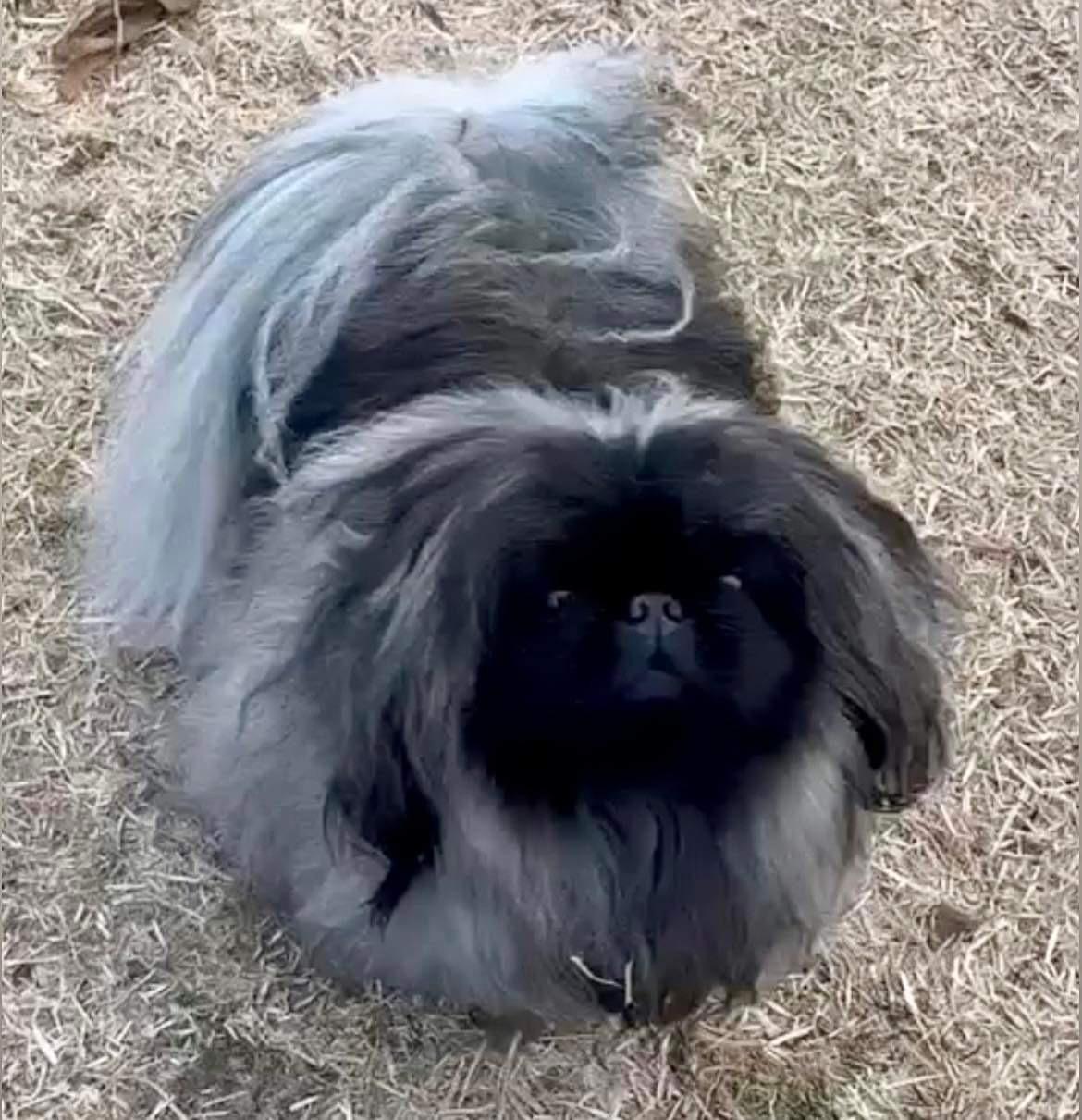
A defining characteristic of the Pekingese is its magnificent, double coat, featuring a long, straight topcoat and a thick, soft undercoat, accentuated by a prominent ruff around the neck resembling a lion's mane. While visually stunning, this coat demands a serious time commitment from the family.
Daily Maintenance and Brushing
Maintaining a Pekingese coat without mats or tangles requires daily brushing and combing. Neglecting this routine quickly leads to severe matting, which can cause painful skin infections and often forces a complete shave-down. Owners must work through the coat down to the skin using a pin brush and a metal greyhound comb, paying special attention to friction areas behind the ears, under the legs, and around the collar.
Facial Folds and Hygiene
The flat face of the Pekingese—known as a brachycephalic facial structure—includes deep facial folds around the nose and eyes. These wrinkles trap moisture, dust, and food particles, creating a breeding ground for bacteria and yeast. Families must commit to wiping these facial folds daily with a damp cloth or specialized pet-safe wipe, followed by thorough drying to prevent skin dermatitis. Additionally, their prominent eyes require regular monitoring for discharge, irritation, and corneal scratches.
Health Considerations and Veterinary Costs
Prospective owners must factor in the health profile of the Pekingese. Like many brachycephalic breeds, they are prone to specific genetic health issues that require attentive veterinary care and can incur significant medical expenses over the dog's lifetime.
Brachycephalic Obstructive Airway Syndrome (BOAS)
The shortened muzzle of the Pekingese compresses the upper respiratory tract, often resulting in Brachycephalic Obstructive Airway Syndrome. This condition causes labored breathing, snoring, snorting, and a reduced capacity to regulate body temperature. Families must keep their Pekingese in air-conditioned environments during hot, humid weather, as these dogs are extremely vulnerable to heatstroke. Strenuous exercise should be strictly avoided, especially during peak temperature hours.
Eye and Spinal Issues
Because of their prominent eyes, Pekingese are prone to conditions such as dry eye (keratoconjunctivitis sicca), corneal ulcers, and progressive retinal atrophy. Furthermore, their elongated spines and chondrodysplastic (dwarf) body type make them susceptible to intervertebral disc disease (IVDD), where a slipped or ruptured disc can cause severe pain or paralysis. Jumping off high couches or beds should be strictly discouraged through the use of pet ramps or steps.
Exercise, Training, and Daily Routine
Unlike sporting or herding breeds that require miles of running daily, the Pekingese has modest exercise requirements, making them well-suited for apartment living or homes without large backyards.
Managing Energy Levels
A couple of short daily walks and indoor play sessions are usually sufficient to keep a Pekingese physically fit and mentally stimulated. They are sprinters rather than endurance runners; over-exercising a Pekingese, particularly in warm weather, can easily compromise their breathing.
Housebreaking and Obedience Challenges
Training a Pekingese requires patience. Their independent nature means they do not always see the point in following commands immediately. Housebreaking can be a notorious hurdle with this breed, requiring consistency, positive reinforcement, and sometimes indoor potty solutions like puppy pads during inclement weather, as many Pekingese actively dislike walking in rain or snow due to their low-to-the-ground builds.
Frequently Asked Questions
Do Pekingese shed a lot?
Yes, despite having hair-like texture in some lines, Pekingese shed moderately year-round and experience heavier shedding seasons twice a year when they drop their undercoats. Daily brushing minimizes loose fur around the home, but they are not considered a hypoallergenic breed.
Are Pekingese good apartment dogs?
Pekingese excel in apartments and smaller living spaces because they do not require a large yard and have low overall exercise needs. However, their tendency to vocalize when hearing strange noises means owners must train them early to curb nuisance barking to maintain good relationships with neighbors.
Can a Pekingese live comfortably with cats and other dogs?
A Pekingese can coexist peacefully with cats and other dogs if socialized properly during puppyhood. Because of their fearless demeanor, however, they may try to assert dominance over much larger dogs, making careful supervision necessary during introductions and multi-pet interactions.
How long do Pekingese typically live?
The average lifespan of a healthy Pekingese ranges from 12 to 14 years. Providing high-quality nutrition, regular veterinary checkups, dental care, and weight management significantly contributes to longevity.
Do Pekingese suffer from separation anxiety?
While they are independent, Pekingese form strong attachments to their families and can develop separation anxiety if left alone for excessively long hours every day. They thrive best in households where someone is home for a significant portion of the day.
Making the Final Decision
Deciding whether a Pekingese is the right family dog comes down to honest self-assessment regarding your household's lifestyle, patience level, and free time. If your family consists of adults, older children, or seniors who appreciate a quiet, fiercely loyal, and dignified companion, the Pekingese can bring immense joy and affection into your home. However, if your household is fast-paced, filled with young children, or lacks the time for daily coat maintenance and specialized health monitoring, it is wise to explore alternative breeds better suited to that environment. Assess your daily routine, evaluate your commitment to grooming and veterinary care, and choose a canine companion whose needs align harmoniously with your family's way of life.
Image Gallery
Select an image to open it in a new tab.
Celine Dubois
Contemporary Living and Global Arts Columnist
