
The Hulkbuster, formally designated as Mark XLIV (44), stands as the pinnacle of Tony Stark’s specialized engineering because it represents the only suit designed not merely to augment human capability, but to neutralize a specific, world-ending physical threat. By prioritizing raw kinetic resistance, massive energy output, and modular repairability, the Hulkbuster provides unmatched durability that general-purpose armors cannot replicate.
The Genesis of the Hulkbuster Concept
The conceptual necessity for the Hulkbuster arose from the volatile relationship between Tony Stark and the Hulk. Unlike the standard iterations of the Iron Man suit, which are built for agility, reconnaissance, and general combat, the Hulkbuster was engineered with a singular focus: containment and suppression.
Stark recognized that the Hulk’s strength is theoretically infinite, scaling with his rage. Therefore, a standard suit—no matter how technologically advanced—would be dismantled piece by piece in a direct physical confrontation. The Mark XLIV was the solution, functioning more as a localized orbital platform than a traditional suit of armor. By deploying extra-vehicular components directly to the user in the field, the suit achieves a mass and volume that no other Iron Man armor possesses, allowing it to withstand blows that would pulverize a lighter frame.
Technical Specifications and Kinetic Management
The hallmark of the Hulkbuster is its immense size, which serves a mechanical purpose beyond simple intimidation. The suit’s primary function is kinetic energy dissipation. When subjected to the force of a Gamma-irradiated strike, the Hulkbuster utilizes an internal dampening system and a high-density, multi-layered chassis to redirect impact forces.
Key features defining its strength include:
- The Veronica System: The satellite-based deployment platform acts as a remote warehouse. This ensures that even if pieces of the armor are destroyed, they can be swapped out instantly, maintaining the structural integrity of the suit mid-fight.
- Repulsor-Assisted Stabilization: The suit uses a redundant array of repulsor nodes located throughout its torso and limbs. These do not just act as weapons; they function as a counter-force mechanism, allowing the suit to brace itself against the momentum of the Hulk.
- Massive Power Core: To power the servos required to move such a large frame while fighting a high-speed opponent, the suit employs multiple Arc Reactor units. This redundancy prevents a single critical hit from deactivating the suit’s life-support or mobility systems.
Comparative Analysis: Why Other Suits Fall Short
To understand why the Hulkbuster remains the gold standard for heavy-duty engagement, one must contrast it with other notable armors in the Stark inventory. Most advanced suits, such as the Mark LXXXV (85) utilizing nanotechnology, excel in versatility. They can shift shape, form weapons on the fly, and heal from minor damage. However, these nanotech suits lack the sheer bulk required to handle the specific, high-velocity impact profile of a superhuman like the Hulk.
| Suit Model | Primary Advantage | Primary Weakness vs. Hulk |
|---|---|---|
| Mark XLIV (Hulkbuster) | Massive Kinetic Resistance | Limited Maneuverability |
| Mark LXXXV (Nanotech) | Extreme Versatility | Vulnerable to Blunt Force Fatigue |
| Mark V (Suitcase) | High Portability | Minimal Armor Density |
| Mark XL (Shotgun) | Superior Speed | Insufficient Structural Mass |
The Mark LXXXV, while arguably the most "advanced" in terms of computational speed and molecular versatility, is designed for tactical fluidity. In a test of raw durability, the nanotech layers would suffer from systemic fatigue if forced to absorb the repeated, high-magnitude strikes of a creature like the Hulk. The Hulkbuster, by contrast, is built with "sacrificial" armor plating designed to fail and be replaced, keeping the pilot safe beneath a heavily reinforced cockpit.
The Role of Modular Replacement
The modular nature of the Hulkbuster is perhaps its greatest technical strength. In 2026, we look at the evolution of armor design, and the "plug-and-play" nature of the Veronica system remains a significant achievement. If a limb is severed or a chest plate compromised, the satellite deployment system provides immediate replacements.
This modularity shifts the battle from a test of endurance to a test of resource management. As long as the satellite maintains an inventory of spare parts, the Hulkbuster can theoretically remain in a high-intensity combat state indefinitely. This logistical advantage is something no other Iron Man suit can claim, as they are largely reliant on the onboard resources carried within their individual chassis.
Addressing Structural Integrity and Power Distribution
The structural integrity of the Hulkbuster is managed through an alloy composition optimized for hardness rather than weight-saving. While the standard suits use gold-titanium alloys to balance weight and strength, the Hulkbuster favors thicker, reinforced composite materials.
This weight, however, introduces a critical constraint: power consumption. The servos required to lift and maneuver the Hulkbuster are incredibly taxing on the Arc Reactor. This necessitates the use of a "power-dense" reactor configuration. When observing the suit in operation, it becomes clear that it is not intended for long-duration sorties. It is a tactical intervention tool. Its strength is not in its efficiency, but in its ability to force a confrontation to an end through overwhelming force in a short window of time.
Operational Limitations
It is important to acknowledge that the Hulkbuster’s strength is highly specialized. It is essentially a "siege" weapon. For missions requiring stealth, aerial reconnaissance, or rapid response, the Hulkbuster is entirely unsuitable. It is slow, loud, and draws significant attention.
Furthermore, the complexity of the suit introduces points of failure. The connection points between modular plates, the reliance on the satellite uplink, and the sheer heat generated by the Arc Reactors under heavy load all represent potential weaknesses. If the signal to the Veronica satellite is jammed, or if the power distribution system suffers a cascade failure, the suit becomes a tomb rather than a shield. This tradeoff—sacrificing all maneuverability for survivability—is why the Hulkbuster remains a niche, albeit supreme, tool in Stark’s arsenal.
Frequently Asked Questions
Why is the Hulkbuster considered stronger than the Nanotech suit? The Nanotech suit (Mark LXXXV) is designed for versatility and self-repair, which makes it effective against many opponents. However, it lacks the sheer mass and heavy-plating density required to absorb the extreme, sustained kinetic energy produced by the Hulk. The Hulkbuster’s strength lies in its ability to replace damaged armor components in real-time, effectively outlasting the opponent.
Can the Hulkbuster function without the Veronica satellite? The Hulkbuster can operate independently for a limited duration using its internal power reserves. However, its true potential—specifically the ability to replace damaged armor parts mid-combat—is entirely dependent on the satellite. Without it, the suit loses its modular, self-healing capability, making it significantly less effective in a prolonged battle.
Why doesn't Tony Stark use the Hulkbuster for every mission? The suit is prohibitively large, slow, and expensive to deploy. It is designed for one specific purpose: containment of high-level physical threats. For standard operations, the suit’s size makes it a liability, as it cannot move with the speed or precision required for typical hero-level engagements.
What is the "Veronica" system? Veronica is the satellite-based platform that acts as the mobile support system for the Hulkbuster. It functions as a warehouse in low-earth orbit, capable of dropping replacement components to the pilot’s location anywhere in the world to ensure the suit remains combat-ready regardless of the damage taken.
Is the Hulkbuster an autonomous suit? No, the Hulkbuster is a piloted armor. While it features advanced targeting and navigation software, it requires a human pilot—usually Tony Stark—to direct the complex combat maneuvers required to engage a target as unpredictable as the Hulk.
Next Actions for Enthusiasts and Analysts
For those analyzing the technical superiority of Stark’s armors, the focus should remain on the balance between power-to-weight ratios and mission-specific requirements. To understand the progression of this technology, compare the Mark XLIV with the development of the later Mark LXXXV models. By evaluating how the shift from "hard-plate" modularity to "molecular" nanotech changed the definition of armor, one can gain a deeper appreciation for why the Hulkbuster persists as the ultimate solution to the specific problem of extreme physical force. If you are interested in the evolution of these designs, consider reviewing the technical logs associated with the various iterations of the Arc Reactor, which serve as the heart of every Iron Man suit.
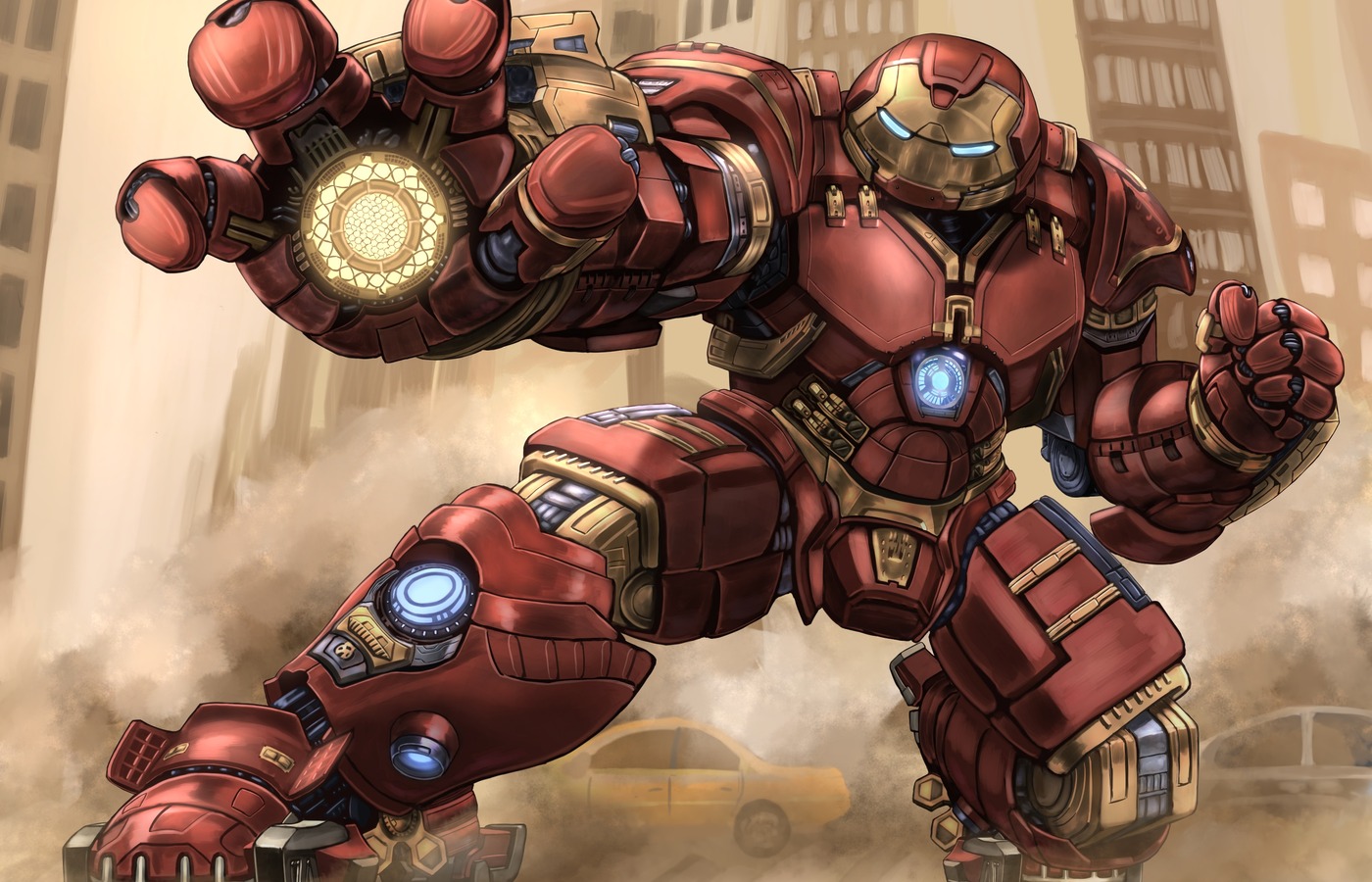
Image Gallery
Select an image to open it in a new tab.
Zara El-Hashem
Sociocultural Dynamics and Academics Writer
