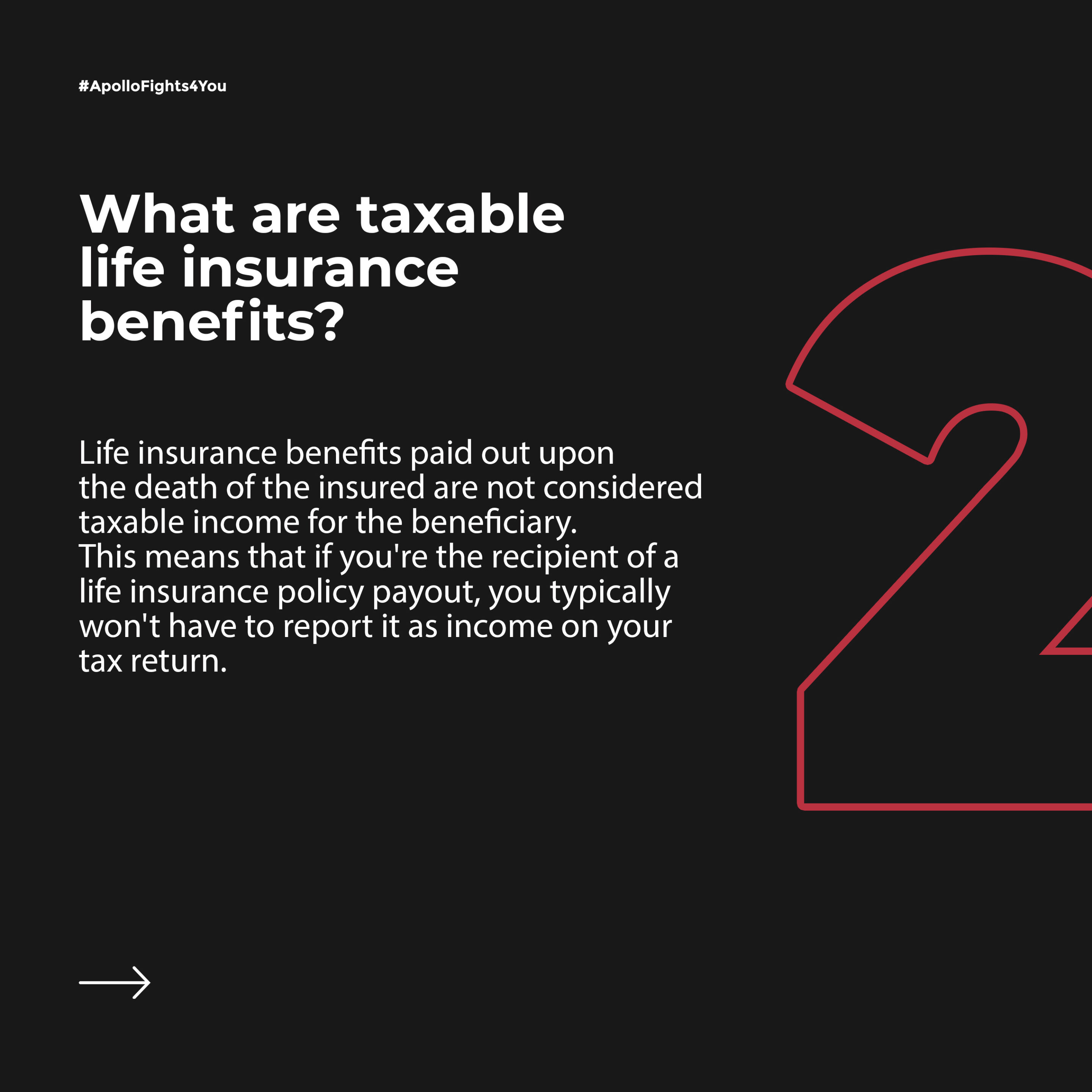
In most jurisdictions, governments do not tax life insurance death benefits as regular income when paid directly to a named beneficiary in a single lump sum. However, tax obligations can arise if the proceeds earn interest through installment payouts, if the total estate exceeds federal or state estate tax exemption limits, or if you access accumulated cash value in a permanent policy.
The General Rule: Are Life Insurance Payouts Taxable Income?
For the vast majority of beneficiaries, the money received from a life insurance policy upon the policyholder’s passing is entirely exempt from gross income tax. Under tax codes such as the U.S. Internal Revenue Code Section 101(a), gross income does not include amounts received under a life insurance contract if such amounts are paid by reason of the death of the insured.
This fundamental principle exists to ensure that life insurance serves its intended financial safety net purpose: replacing lost financial support, settling debts, or covering immediate expenses without creating a secondary tax burden during a period of grief.
Whether the policy is a term life insurance policy or a permanent life insurance product (such as whole life or universal life), the basic death benefit lump sum remains tax-free at the federal and state level in the United States, as well as in most common-law tax systems globally, including Canada, the United Kingdom, and Australia.
However, the straightforward answer "no" comes with critical operational qualifiers. While the base death benefit itself escapes standard income taxation, specific policy structures, payment methods, and asset thresholds can trigger income taxes, capital gains taxes, or estate taxes.
Key Scenarios Where Life Insurance Proceeds Become Taxable
Understanding when governments impose taxes on life insurance requires looking at how the payout is distributed, who owns the policy, and how the contract was handled during the insured person's lifetime.
- Life Insurance Taxability Framework
- Lump-Sum Death Benefit: Income Tax Free (Standard Rule)
- Installment Interest: Interest Portion Is Taxable
- Policy Included in Estate: Taxable if Above Exemption Limits
- Transferred for Value: Gain Above Consideration Is Taxable
1. Interest Earned on Delayed or Installment Distributions
When an insurance company pays out a death benefit, the beneficiary often has several settlement options. Rather than taking a single lump sum, the beneficiary may choose to leave the proceeds with the insurer to draw down over time or receive installment payments.
- Lump Sum: If you receive a $500,000 lump sum, the entire $500,000 is tax-free.
- Installment Option: If you elect to receive the payout over ten years, the insurance company holds the principal and pays interest on the remaining balance.
- Tax Effect: The original $500,000 principal remains tax-exempt. However, any interest accumulated and distributed on top of that principal is treated as ordinary taxable income and reported annually on tax forms such as IRS Form 1099-INT.
2. Estate Taxes and Policy Ownership
While income tax and estate tax are often confused, they operate under distinct legal rules. A death benefit can be completely exempt from income tax yet remain subject to estate tax.
In the United States, if the deceased person owned the life insurance policy at the time of their death, the full value of the death benefit is included in their gross estate. If the combined value of the deceased's assets—including real estate, investment accounts, business interests, and life insurance proceeds—exceeds the applicable federal estate tax exemption limit, the estate may owe federal estate taxes.
Key triggers that tie a policy to the taxable estate include:
- Incidents of Ownership: If the insured retained the right to change beneficiaries, borrow against the cash value, surrender the policy, or assign the policy within three years of death, the IRS considers them the policy owner.
- Payable to the Estate: If no living beneficiary is named and the payout reverts directly to the deceased’s estate, the proceeds automatically enter the probate estate and become vulnerable to estate taxes and creditor claims.
3. The Transfer-for-Value Rule
If a life insurance policy is transferred or sold to another party for valuable consideration (money, goods, or services), the tax-exempt status of the death benefit is generally lost under the IRS Transfer-for-Value Rule.
Under this rule, when the insured dies, the transferee (the new owner) can only exclude from gross income the actual amount paid to acquire the policy plus any premiums paid after the transfer. Any remaining payout above that combined cost basis is taxed as ordinary income.
Exceptions to the Transfer-for-Value Rule include transfers to:
- The insured person.
- A business partner of the insured.
- A partnership in which the insured is a partner.
- A corporation in which the insured is a shareholder or officer.
- A recipient whose tax basis is determined by reference to the transferor's basis (such as tax-free corporate reorganizations or gifts).
4. Group Term Life Insurance Provided by Employers
Employer-sponsored group term life insurance is a popular employee benefit. Tax regulations generally allow employers to provide up to $50,000 of group term life coverage as a tax-free fringe benefit.
If an employer provides coverage exceeding $50,000, the cost of the coverage above $50,000 must be included in the employee's gross income as imputed income. This value is calculated using IRS Uniform Premium tables (commonly referred to as "Table I" rates) based on the employee's age, and it appears on the employee’s annual Form W-2. Note that this taxes the cost of the coverage while the employee is alive, not the final death benefit payout received by beneficiaries.
How Cash Value in Permanent Life Insurance Is Taxed
Permanent life insurance contracts—such as Whole Life, Universal Life, and Variable Universal Life—include a savings or investment component known as cash value. The tax rules governing cash value differ significantly from those governing simple death benefits.
- Permanent Policy Cash Value Access
- Growth Phase: Tax-Deferred (No Annual Taxes)
- Withdrawals (Up to Basis): Tax-Free Return of Capital (FIFO)
- Withdrawals (Above Basis): Taxable Ordinary Income
- Policy Loans: Tax-Free (Unless Policy Lapses)
Tax-Deferred Growth
As long as the cash value remains inside the life insurance policy, it grows on a tax-deferred basis. You do not owe annual income taxes on interest, dividends, or capital gains accumulated within the policy contract.
Withdrawals and the Cost Basis (FIFO Rules)
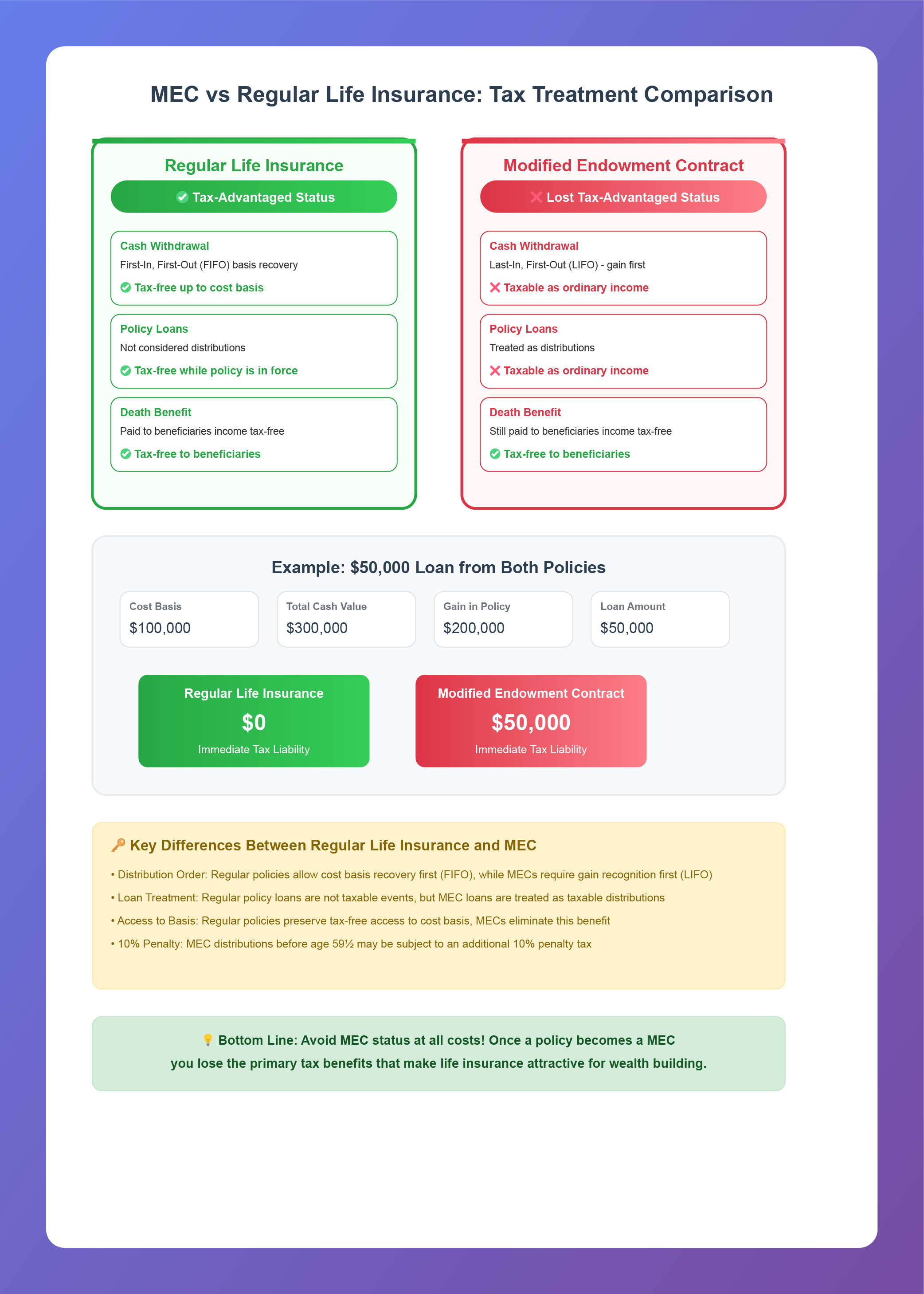
When you withdraw funds from a standard life insurance policy, tax law applies a First-In, First-Out (FIFO) accounting method. Withdrawals are treated first as a non-taxable return of the premiums you paid into the policy (your "cost basis").
You only trigger an income tax liability if total withdrawals exceed the cumulative premiums paid into the contract. Any amount withdrawn above your basis represents policy earnings and is taxed as ordinary income.
Policy Loans
Policyholders can borrow against the accumulated cash value of a permanent life insurance policy. Under normal conditions, policy loans are not taxable events, even if the loan amount exceeds the total premiums paid. The IRS does not view borrowed funds as taxable income because a loan carries an obligation of repayment.
Critical Warning: If a policy lapses, is surrendered, or terminates while an outstanding loan exists, any loan balance that exceeds the policy's cost basis immediately becomes taxable ordinary income in the year the policy terminates.
Modified Endowment Contracts (MECs)
To prevent individuals from using life insurance contracts as short-term, tax-sheltered investment vehicles, federal law establishes strict premium funding limits known as the "7-Pay Test."
If cumulative premium payments exceed the limits set by the 7-Pay Test during the first seven years of the contract (or following a material change to the policy), the policy loses its standard tax privileges and is reclassified by the IRS as a Modified Endowment Contract (MEC).
Once a policy becomes a MEC:
- The death benefit remains tax-free to beneficiaries.
- Withdrawals and loans are taxed on a Last-In, First-Out (LIFO) basis. Earnings are deemed to come out first and are taxed as ordinary income.
- Withdrawals or loans taken prior to age 59½ face an additional 10% IRS early withdrawal tax penalty on the taxable portion.
Comparison of Life Insurance Tax Treatment
The table below outlines how common life insurance transactions and structures are evaluated by tax authorities.
| Transaction or Scenario | Income Tax Status | Estate Tax Status | Primary Tax Condition or Rule |
|---|---|---|---|
| Lump-Sum Death Benefit | Exempt | Potentially Taxable | Exempt from income tax; included in estate if insured owned the policy. |
| Installment Payout (Interest Portion) | Taxable | N/A | Principal is exempt; accumulated interest is taxed as ordinary income. |
| Cash Value Growth | Tax-Deferred | N/A | No tax owed while growth remains inside an active contract. |
| Cash Value Withdrawal (Standard Policy) | Tax-Free up to Basis | N/A | Governed by FIFO rules; withdrawals exceeding premiums paid are taxable. |
| Policy Loans (Standard Policy) | Tax-Free | N/A | Non-taxable unless the policy lapses with outstanding loans exceeding basis. |
| MEC Withdrawals or Loans | Taxable (LIFO) | N/A | Earnings are withdrawn first; subject to ordinary income tax + 10% penalty if under 59½. |
| Transferred Policy Proceeds | Taxable above Basis | Potentially Taxable | Governed by Transfer-for-Value rules if sold for monetary consideration. |
| Group Coverage Above $50,000 | Taxable (Imputed) | N/A | Cost of excess coverage added to W-2 income based on IRS Table I rates. |
Strategies to Protect Life Insurance Proceeds from Taxes
Policyholders and estate planners frequently utilize structured legal arrangements to ensure life insurance proceeds remain entirely protected from estate taxes and administrative delays.
Utilizing an Irrevocable Life Insurance Trust (ILIT)
An Irrevocable Life Insurance Trust (ILIT) is a trust specifically created to own and hold a life insurance policy. When properly drafted and executed:
- Ownership Separation: The trust—not the insured individual—owns the policy.
- Estate Removal: Because the insured holds no "incidents of ownership," the death benefit is completely excluded from the insured’s gross estate for estate tax purposes.
- Controlled Distributions: The trust document specifies exactly how, when, and to whom proceeds are distributed, protecting beneficiaries from lump-sum mismanagement or external creditor claims.
The Three-Year Lookback Rule: If an existing policy is transferred from personal ownership into an ILIT, the insured must survive for at least three years after the transfer date. If the insured passes away within this three-year window, the IRS pulls the death benefit back into the taxable gross estate under Section 2035 of the Internal Revenue Code.
Proper Beneficiary Designations
Failing to maintain up-to-date beneficiary designations is one of the most frequent administrative mistakes made by policyholders.
- Primary vs. Contingent Beneficiaries: Always name both primary and secondary (contingent) beneficiaries. If a primary beneficiary predeceases the insured and no contingent is listed, the payout defaults to the estate.
- Avoiding Estate Designation: Explicitly naming individuals or legal trusts prevents the policy proceeds from passing through probate, which reduces exposure to estate settlement fees, state inheritance taxes, and public court records.
International Context: How Other Nations Tax Life Insurance
While U.S. federal and state laws form a major point of reference, direct comparisons with international systems highlight similar basic principles with distinct local variations:
- United Kingdom: Life insurance lump-sum payouts are generally free from UK Income Tax and Capital Gains Tax. However, if the policy is not written "in trust," proceeds form part of the deceased's estate and may trigger UK Inheritance Tax (IHT) if the total estate value exceeds the Nil Rate Band threshold.
- Canada: Death benefits paid directly to a named beneficiary pass completely tax-free and outside the probate process. Canada does not have an estate tax, though final tax returns for the deceased assess capital gains on deemed dispositions of other assets.
- Australia: Payouts from term life insurance policies received by tax dependents (such as spouses or minor children) are generally tax-free. Non-dependents receiving benefits through a superannuation (pension) fund framework may incur tax on certain components of the payout.
Frequently Asked Questions
Do I need to report a life insurance death benefit on my annual tax return?
If you receive a lump-sum death benefit payout, you generally do not need to report it as income on your U.S. federal Form 1040 or state return. However, if any portion of the payout includes interest earned after the policyholder's death, the insurance company will send you a Form 1099-INT, and that interest portion must be reported as taxable income.
Are life insurance premiums tax-deductible?
For individuals, personal life insurance premiums are considered personal living expenses and are not tax-deductible. For businesses, premiums paid on key-person life insurance policies are generally non-deductible if the business is a direct or indirect beneficiary under the policy.
What happens if I surrender a whole life insurance policy for cash?
If you surrender a permanent policy, the insurance company pays you the accumulated cash value minus any surrender charges and outstanding loans. You will owe ordinary income tax on any amount received that exceeds the total premiums you paid into the policy over time.
Can state government taxes affect life insurance payouts?
While most states align with federal guidelines exempting death benefits from state income taxes, a small number of states maintain separate state-level estate taxes or inheritance taxes. Inheritance taxes, where applicable, depend on the relationship between the deceased and the beneficiary, though surviving spouses are almost universally exempt.
Is acceleration of death benefits for terminal illness taxable?
Under the U.S. Health Insurance Portability and Accountability Act (HIPAA) and Internal Revenue Code Section 101(g), accelerated death benefits received by a terminally ill or chronically ill individual are generally excluded from gross income, allowing policyholders to access funds tax-free to cover end-of-life care costs.
Recommended Next Steps
To ensure your life insurance strategy achieves maximum tax efficiency and aligns with current legal requirements, consider taking the following actions:
- Audit Policy Ownership: Check who actually owns your life insurance policies. If your personal assets approach federal or state estate tax thresholds, consult an estate planning attorney about setting up an Irrevocable Life Insurance Trust (ILIT).
- Review Beneficiary Lists: Ensure primary and contingent beneficiaries are named clearly by name rather than generically. Verify that your estate is not listed as the default beneficiary.
- Monitor Cash Value Accumulation: If you own permanent life insurance, review annual policy illustrations to verify that total premiums remain within the limits of the 7-Pay Test to prevent your policy from converting into a Modified Endowment Contract (MEC).
- Consult a Qualified Advisor: Tax codes, estate thresholds, and state-specific regulations evolve. Work directly with a Certified Financial Planner (CFP), Certified Public Accountant (CPA), or qualified estate attorney to verify your coverage details against your overall estate plan.
Disclaimer: Tax laws are complex and subject to change. This guide provides generalized educational information. For specific guidance regarding your individual tax situation or estate plan, consult a licensed tax professional or legal advisor.
Image Gallery
Select an image to open it in a new tab.






Ingrid Bjornson
Global Cyber Policy and Regulation Analyst
