
To choose the right Maryland massage therapy school in 2026, you must ensure the program is approved by the Maryland State Board of Massage Therapy Examiners and provides at least 750 hours of instruction. You must also decide between the Licensed Massage Therapist (LMT) and Registered Massage Practitioner (RMP) tracks based on your college credit history.
Selecting a massage therapy program is a significant professional investment that requires balancing educational rigor, financial cost, and career goals. In Maryland, the landscape for massage education is unique due to specific tier-based licensing regulations. Whether you intend to work in a high-end spa in Annapolis or a clinical healthcare setting in Baltimore, the school you choose acts as the foundation for your hands-on skills, theoretical knowledge, and legal eligibility to practice.
Understanding Maryland’s Two-Tier Licensing System
Before evaluating specific schools, you must understand the distinction between the two types of credentials offered in the state: Licensed Massage Therapist (LMT) and Registered Massage Practitioner (RMP). This distinction is the most critical factor in your decision-making process, as it dictates your future work environment.
The Licensed Massage Therapist (LMT) Track
An LMT credential allows you to practice massage therapy in any setting, including "healthcare" settings such as hospitals, physical therapy clinics, and chiropractic offices. To qualify as an LMT in Maryland, you must complete the required 750 hours of massage therapy education and hold at least 60 credit hours from an accredited college or university. Many students choose community college-based massage programs because they allow for the simultaneous completion of these 60 credits and the massage curriculum.
The Registered Massage Practitioner (RMP) Track
An RMP credential allows you to practice in "non-healthcare" settings, such as salons, spas, or fitness centers. The educational requirement for the massage portion is the same—750 hours—but you do not need the additional 60 college credits. This track is often preferred by those looking to enter the workforce quickly in the wellness and hospitality industry.
When choosing a school, ask the admissions department how their curriculum accommodates both tracks. Some private vocational schools focus primarily on the RMP requirements, while community colleges are structured specifically to help you reach the LMT designation.
Evaluating the 750-Hour Curriculum Standard
As of 2026, Maryland law remains firm on the 750-hour minimum for massage therapy education. This is higher than the national average in some states, reflecting Maryland's commitment to high clinical standards. When reviewing a school’s syllabus, verify how these hours are distributed across core competencies.
Anatomy, Physiology, and Kinesiology
A high-quality program will dedicate a significant portion of the 750 hours to the "sciences" of the body. Anatomy (structure) and Physiology (function) provide the "what" and "how" of the human body, while Kinesiology (the study of movement) provides the "why." You should look for schools that use high-quality anatomical models and perhaps even offer integrated digital learning tools to help you visualize muscle attachments and joint mechanics.
Pathology and Contraindications
Understanding when not to massage a client is just as important as knowing how to perform a stroke. The right school will emphasize pathology—the study of diseases. In a clinical environment, you will encounter clients with diabetes, hypertension, or cancer. Your education must prepare you to adapt your pressure and technique to ensure client safety, a skill that separates professional therapists from amateurs.
Modality Diversity
While Swedish massage is the foundation of most programs, a competitive Maryland school should introduce you to various modalities, such as:
- Deep Tissue Massage: Focuses on realigning deeper layers of muscles and connective tissue.
- Myofascial Release: A safe and very effective hands-on technique that involves applying gentle sustained pressure into the Myofascial connective tissue restrictions.
- Sports Massage: Geared toward athletes to prevent injury and enhance performance.
- Trigger Point Therapy: Focused on specific points of tension within muscle tissue.
Accreditation and Board Approval
It is vital to distinguish between "State Board Approval" and "National Accreditation." While a school must be approved by the Maryland State Board of Massage Therapy Examiners for you to sit for the licensing exam, national accreditation provides an extra layer of quality assurance and eligibility for federal financial aid.
Maryland State Board Approval
The first step in your search is visiting the Maryland State Board of Massage Therapy Examiners website. They maintain a list of approved programs. If a school is not on this list, you will not be eligible for licensure in Maryland, regardless of how many hours you complete.
National Accreditation (COMTA and Beyond)
The Commission on Massage Therapy Accreditation (COMTA) is the gold standard for massage-specific accreditation. Other schools may be accredited by broader bodies like the Accrediting Commission of Career Schools and Colleges (ACCSC). Accreditation ensures that the school meets rigorous standards regarding faculty qualifications, student services, and ethical business practices. Furthermore, only students at accredited schools are generally eligible for federal Pell Grants and Stafford Loans.
Comparing Costs and Program Length
The cost of massage school in Maryland can vary significantly depending on whether the institution is a public community college or a private vocational school.
| School Type | Average Tuition (2026 Estimates) | Average Duration | Pros | Cons |
|---|---|---|---|---|
| Community College | $5,000 – $9,000 (In-County) | 12 – 24 Months | Lowest cost; Earns college credits; LMT pathway. | Slower pace; May include "filler" general education. |
| Private Vocational | $11,000 – $16,000 | 7 – 12 Months | Accelerated schedule; Specialist focus; Job placement. | Higher cost; Credits rarely transfer to colleges. |
| Specialized Institute | $13,000 – $18,000 | 9 – 15 Months | Deep focus on specific holistic philosophies. | Most expensive; Often limited locations. |
When calculating costs, remember to factor in "hidden" expenses such as massage tables (often $300–$600), linens, oils/lotions, textbooks, and the fee for the national certification exam (MBLEx).
The Importance of the Student Clinic
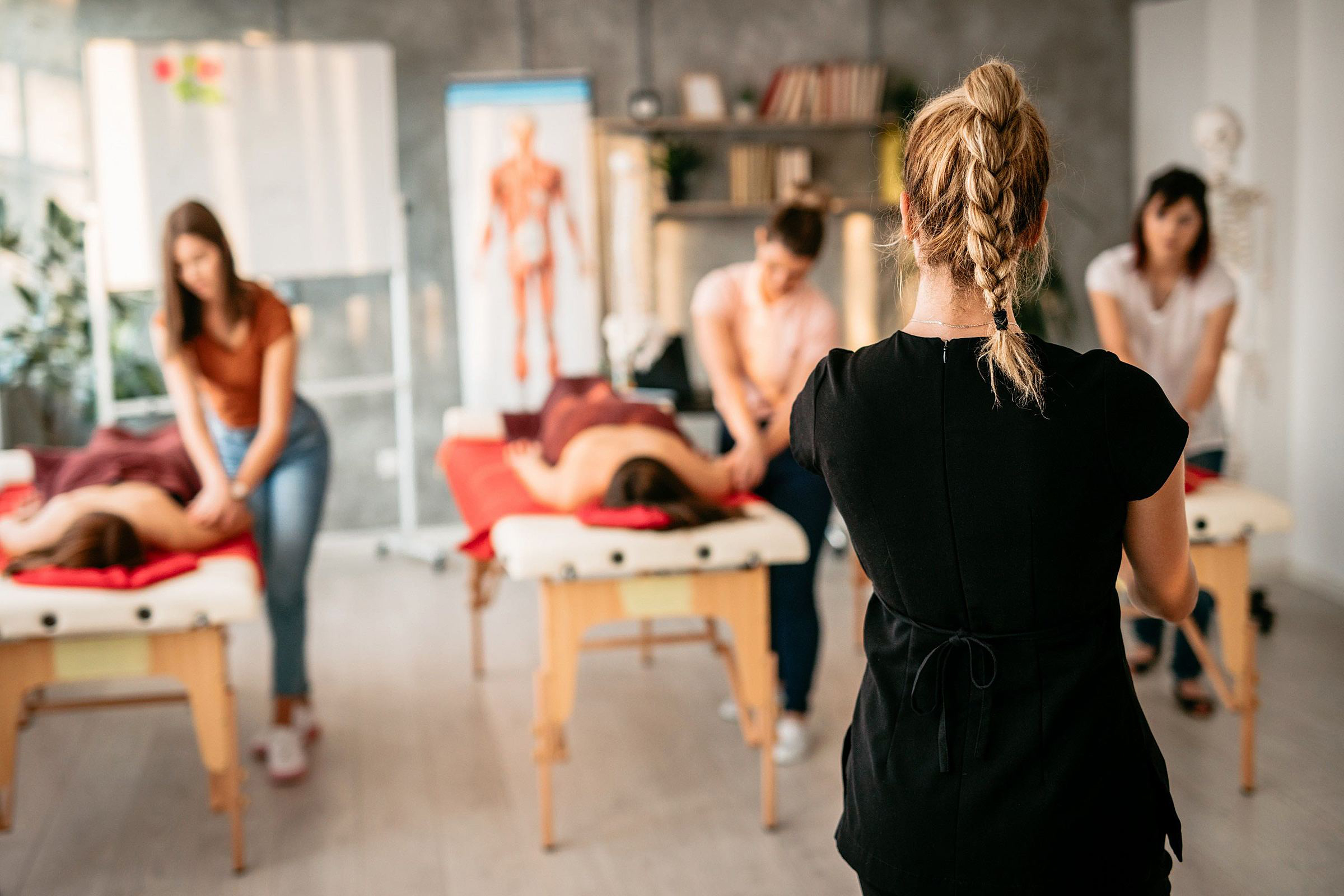
The most transformative part of your education will be the student clinic. This is a supervised environment where the school opens its doors to the public, allowing students to perform massages for a reduced fee.
When touring Maryland schools, pay close attention to the clinic facilities. Are they clean and professional? Does the school actively market the clinic to ensure you get a steady stream of diverse clients? A school that only has you "massage your classmates" is not providing adequate preparation for the real world. You need to experience different body types, varying levels of muscle tension, and the administrative side of the business, such as intake forms and SOAP (Subjective, Objective, Assessment, Plan) charting.
Location and Commute Considerations
Maryland’s geography—from the Eastern Shore to the mountains of Western Maryland—means that school location is a major logistical factor. Most top-tier schools are clustered around the Baltimore-Washington corridor (including Frederick, Columbia, and Silver Spring).
If you live in a rural area, look for programs that offer "hybrid" options. In 2026, many Maryland schools have adopted a model where lecture-based courses (Anatomy, Ethics, Business) are conducted online, while hands-on labs and clinicals require in-person attendance on weekends or specific evenings. This can significantly reduce the burden of a long commute.
Faculty Experience and Mentorship
The quality of your education is directly tied to the experience of your instructors. A great Maryland massage school should employ instructors who are not just "teachers" but active or retired practitioners with years of clinical experience.
During your admissions interview, ask:
- How long have the lead instructors been practicing massage?
- Do they have specialties (e.g., oncology massage, lymphatic drainage)?
- What is the student-to-teacher ratio in hands-on lab classes? (A ratio of 15:1 or lower is ideal for receiving personalized feedback on your technique).
Preparing for the MBLEx and Maryland Jurisprudence Exam
Your school's job isn't just to teach you how to massage; it's to help you get licensed. In Maryland, this requires passing two exams:
- The MBLEx (Massage & Bodywork Licensing Examination): Administered by the Federation of State Massage Therapy Boards (FSMTB), this is a national exam covering anatomy, kinesiology, pathology, and professional ethics. Ask about the school's "pass rate" for the MBLEx. A school with a consistently high pass rate likely has a curriculum well-aligned with national standards.
- The Maryland Jurisprudence Exam: This is a smaller exam focused on the specific laws and regulations of Maryland. A good school will include a dedicated module on Maryland law to ensure you understand your scope of practice and ethical obligations within the state.
Common Mistakes to Avoid
- Ignoring the LMT/RMP Distinction: Do not wait until graduation to realize you need 60 college credits for the job you want. If you want to work for a major hospital system like Johns Hopkins or University of Maryland Medical System, you must pursue the LMT track.
- Choosing Based Solely on Price: While community colleges are affordable, some students struggle with the academic "red tape" and longer completion times. Conversely, an expensive private school isn't always better if their faculty turnover is high.
- Neglecting Financial Aid Research: Many students assume trade schools don't offer aid. Verify if the school participates in Title IV funding. In Maryland, you may also be eligible for the Workforce Development Sequence Scholarship if you attend a community college program.
Frequently Asked Questions
Can I transfer my massage therapy license from another state to Maryland?
Maryland offers licensure by endorsement, but it is not automatic. The Board will review your original education to ensure it met the 750-hour requirement and that you passed the MBLEx. If your original state only required 500 hours, you might need to complete additional coursework at a Maryland-approved school before being granted a license.
What is the average salary for a massage therapist in Maryland in 2026?
Salaries vary by setting, but Maryland remains one of the higher-paying states due to the high cost of living and the concentration of luxury spas and medical facilities. On average, therapists can expect to earn between $50,000 and $85,000 annually, including tips and bonuses, though those in private practice often earn more.
How long does it take to complete a massage program in Maryland?
Full-time programs usually take between 7 and 10 months. Part-time or evening programs, which are common for those working full-time, typically take 15 to 20 months.
Are online massage therapy schools valid in Maryland?
No. While some theoretical components (like business or ethics) can be taken online, the Maryland State Board requires the majority of the 750 hours to be completed through in-person, hands-on instruction. Be wary of any "100% online" massage programs; they will not lead to licensure in Maryland.
Do I need a college degree to be a massage therapist in Maryland?
No, you do not need a degree to be a Registered Massage Practitioner (RMP). However, to be a Licensed Massage Therapist (LMT), you must have 60 college credits, which is roughly equivalent to an Associate's Degree.
Final Recommendation
When choosing the right Maryland massage therapy school for you, prioritize institutions that align with your long-term career destination. If your goal is medical massage or clinical rehabilitation, choose a community college program like Anne Arundel Community College or CCBC, which simplifies the path to LMT status. If you are looking for an immersive, fast-paced environment focused on wellness and spa modalities, a specialized private institution like the Holistic Massage Training Institute or Central Maryland School of Massage may be a better fit.
Before signing an enrollment agreement, attend an open house, receive a massage in the student clinic, and speak directly with current students. Their firsthand experience is the most reliable indicator of whether the school’s culture and teaching style will support your success in the 2026 Maryland wellness market.
Image Gallery
Select an image to open it in a new tab.
Celine Dubois
Contemporary Living and Global Arts Columnist
