
Alexandria balances ancient Mediterranean history with coastal charm, featuring landmarks like the reconstructed Bibliotheca Alexandrina, the medieval Qaitbay Citadel, and nineteenth-century royal gardens. This essential guide helps travelers navigate the city's rich heritage, practical logistics, and top cultural sites efficiently.
Introduction to Alexandria: History and Geography
Founded by Alexander the Great in 331 BCE, Alexandria served as a premier intellectual and commercial hub of the ancient world. Famous for its legendary Great Library and the ancient Lighthouse—one of the Seven Wonders of the Ancient World—the city was a melting pot of Greek, Roman, Egyptian, and Jewish cultures. Today, modern Alexandria stretches along a sweeping crescent-shaped Mediterranean coastline, acting as Egypt’s primary seaport and second-largest city.
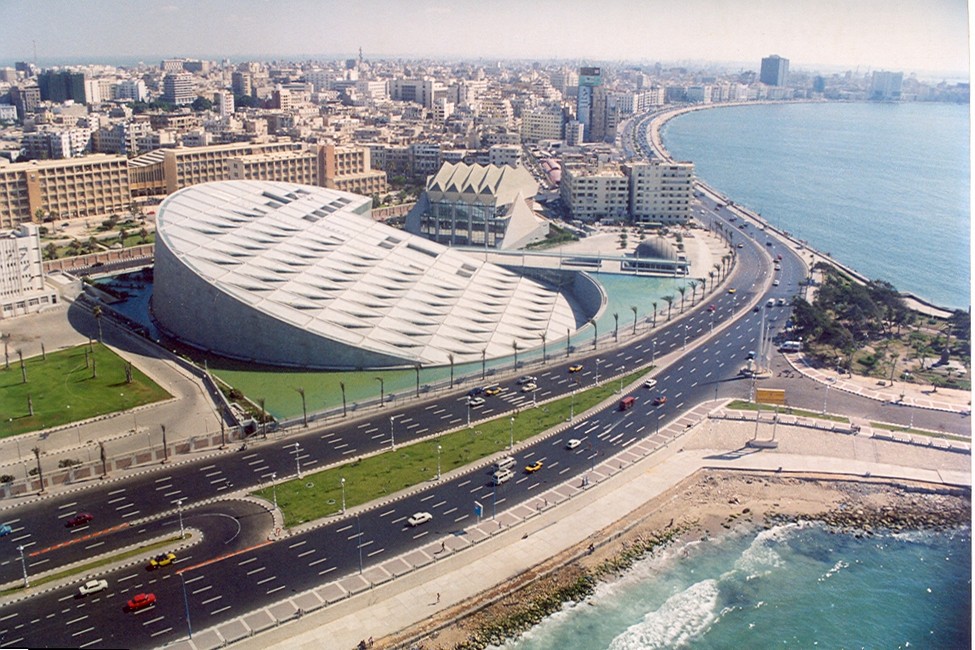
Understanding Alexandria's geography is essential for planning an itinerary. The city is primarily linear, stretching from east to west along the Corniche, a scenic waterfront boulevard. Most historical sites, cultural centers, and hotels cluster near the Eastern Harbour and downtown (Al-Raml station area), while outer districts like Montazah stretch to the east. Navigating this corridor requires balancing historical exploration with modern Egyptian urban transit.
Essential Historical and Cultural Landmarks
A thorough exploration of Alexandria begins with its iconic architecture and institutions, each representing distinct eras of the city's layered past.
The Bibliotheca Alexandrina
The modern Bibliotheca Alexandrina commemorates the ancient Library of Alexandria. Opened in 2002, its striking, tilt-disk architecture symbolizes a sun rising over the Mediterranean. Inside, the massive main reading room can hold millions of volumes, complemented by specialized libraries for maps, rare books, and multimedia. The complex also houses several permanent museums—including antiquities, manuscripts, and the history of science—along with art galleries. Visitors should allocate at least half a day to explore the architectural layout and exhibitions fully.
Qaitbay Citadel
Perched on the eastern tip of Pharos Island where the ancient Lighthouse once stood, the Qaitbay Citadel is a fifteenth-century defensive fortress built by Sultan Al-Ashraf Qaitbay. Constructed largely from the ruins of the fallen lighthouse, the limestone citadel offers commanding views of the Mediterranean Sea and the Alexandrian skyline. Visitors can walk through its vaulted stone chambers, view historical displays, and observe the sea spray crashing against the ancient breakwaters that foundation the structure.
Montazah Palace and Gardens
Located on the eastern edge of the city, the Montazah Palace complex spans over 150 acres of landscaped gardens, pine forests, and sandy beaches. Built in the late nineteenth and early twentieth centuries as a royal summer residence for the Egyptian royal family, the architecture blends Ottoman and Florentine styles. While the interior of the primary palace (Al-Haramlik) is generally restricted, the sprawling gardens and walking paths are open to the public, offering a quiet escape from the urban density of downtown Alexandria.

Underground Heritage and Roman Antiquity
Beneath the bustling streets of modern Alexandria lie exceptional archaeological treasures reflecting its Greco-Roman golden age.
Catacombs of Kom el Shoqafa
Discovered accidentally in 1900, the Catacombs of Kom el Shoqafa represent the largest known Roman burial site in Egypt. Carved deep into the bedrock across multiple subterranean levels, these tombs display a unique artistic fusion of ancient Egyptian, Greek, and Roman funerary symbolism. Visitors descend a spiral staircase into rock-cut chambers, banquet halls for memorial meals, and sarcophagi niches featuring stylized deities wearing Roman armor alongside Egyptian headgear.
Kom el-Dikka and the Roman Amphitheatre
Located near the Alexandria tram station, Kom el-Dikka is an archaeological park that reveals a thriving residential and civic quarter of Roman Alexandria. The site's primary feature is Egypt’s only preserved Roman amphitheatre, featuring marble seating tiers, mosaic flooring, and surrounding Roman baths and villa ruins. Walking through the open-air site provides clear insight into urban planning and public architecture during the classical era.
Pompey’s Pillar
Standing in an ancient archaeological zone near the Muslim cemetery of Al-Karawa, Pompey’s Pillar is a massive red Aswan granite triumphal column erected in honor of the Roman Emperor Diocletian around 297 CE. Rising over twenty-five meters high, it is one of the largest monolithic columns constructed outside of Rome. The surrounding site also features underground water reservoirs (the Serapeum remains) and sphinx statues recovered from the seabed.
Coastal Promenades and Cultural Neighborhoods
Beyond specific monuments, Alexandria's character is experienced along its streets, squares, and coastal stretches.
The Corniche and Eastern Harbour
The Corniche stretches for more than fifteen kilometers along the Mediterranean, connecting Montazah in the east to Anfoushi and the Qaitbay Citadel in the west. Walking along this waterfront reveals the shifting moods of the sea, historic seafront cafes, and neoclassical architecture from the early twentieth century. The Eastern Harbour area is particularly vibrant at sunset, where local fishermen mend nets and visitors gather to watch the sky change color over the water.
Manshia Square and Downtown Alexandria
Downtown Alexandria retains the atmosphere of a nineteenth-century European city, reminiscent of Paris or Athens, characterized by grand arcades, wide boulevards, and fading art deco facades. Manshia Square serves as a central hub, surrounded by bustling commercial districts, traditional coffee houses, and historic retail shops. Exploring these streets on foot exposes travelers to daily Alexandrian life, local textile markets, and historic confectioneries.
Practical Planning: Comparison of Top Sites
To help prioritize an itinerary based on interest and time constraints, the following table compares key attractions by category, recommended duration, and primary highlights.
| Attraction | Category | Recommended Duration | Primary Highlight |
|---|---|---|---|
| Bibliotheca Alexandrina | Modern Cultural/Library | 3–4 Hours | Reading room, antiquities museum, and striking architecture. |
| Qaitbay Citadel | Medieval Military/History | 1.5–2 Hours | Historic fortress built on the ancient lighthouse site with sea views. |
| Catacombs of Kom el Shoqafa | Greco-Roman Antiquity | 1.5 Hours | Multi-level subterranean tombs with blended cultural art styles. |
| Kom el-Dikka | Roman Archaeological Park | 1–2 Hours | Preserved marble amphitheatre and Roman bath remains. |
| Montazah Gardens | Nature/Royal Heritage | 2–3 Hours | Expansive coastal parklands and historic royal palace exterior. |
Practical Logistics and Travel Guidance
Traveling to and within Alexandria requires understanding transportation networks, seasonal weather patterns, and local ticketing procedures.
Getting There from Cairo
- Train: The Egyptian National Railways operates frequent, reliable passenger services between Cairo Ramses Station and Alexandria (Misr Station). Air-conditioned express trains take approximately 2.5 to 3 hours.
- Road: Private taxis, microbuses, and long-distance coach services (such as Go Bus or Blue Bus) run regularly along the Desert Road, taking roughly 3 hours depending on Cairo traffic.
Local Transportation
- Trams: Alexandria features one of the oldest operating tram networks in the world. While charming and inexpensive, lines can be crowded and complex for first-time visitors.
- Taxis and Ride-Hailing: Black and yellow metered or unmetered taxis are ubiquitous. Agreeing on a fare before departure is standard practice if the meter is not used. International ride-hailing apps like Uber operate reliably in the city and eliminate fare negotiations.
Entrance Fees and Operating Hours
Most major historical sites and museums open around 9:00 AM and close between 4:00 PM and 5:00 PM daily. Ticket offices at major attractions like the Catacombs and Qaitbay Citadel increasingly utilize electronic payment cards rather than cash, so carrying a credit or debit card is recommended.
Frequently Asked Questions
What is the best time of year to visit Alexandria?
Spring (March to May) and autumn (September to November) offer mild temperatures and comfortable weather for walking along the Corniche. Summer months (June to August) draw large crowds of domestic tourists seeking relief from Cairo's heat, resulting in busy beaches and higher accommodation demand. Winter can be cool, windy, and occasionally rainy.
How many days are needed to see Alexandria?
Two full days are sufficient to cover the essential historical sites, including the Bibliotheca Alexandrina, the Qaitbay Citadel, the Catacombs, and a stroll along the Corniche. A three-day stay allows for a more relaxed pace, including time to explore local seafood restaurants and outer coastal parks.
Is Alexandria safe for independent international travelers?
Yes, Alexandria is generally safe for travelers. Standard urban precautions apply: remain aware of belongings in crowded markets, use reputable ride-hailing applications or agreed-fare taxis, and respect local cultural norms regarding modest dress, particularly when visiting religious sites.
Can you go inside the Montazah Palace?
Generally, no. The interior of the primary Al-Haramlik Palace is closed to the general public, though visitors are free to purchase an entry ticket to explore the surrounding expansive gardens, walking paths, and coastal views.
Are English and other foreign languages spoken at tourist sites?
Major cultural institutions like the Bibliotheca Alexandrina provide signage, guides, and materials in Arabic, English, and French. At smaller archaeological sites, signage may be limited, so hiring an official licensed tour guide at the entrance can significantly enhance the historical context.
Next Actions for Travelers
Finalize travel arrangements by booking train tickets or private transport from Cairo in advance, and confirm operating hours for seasonal holidays. Prioritize accommodations near the Eastern Harbour or downtown to maintain easy walking access to the Corniche, tram lines, and primary dining establishments.
Image Gallery
Select an image to open it in a new tab.



Lars Thomsen
Global Labor Markets and Economic Strategy Editor
