
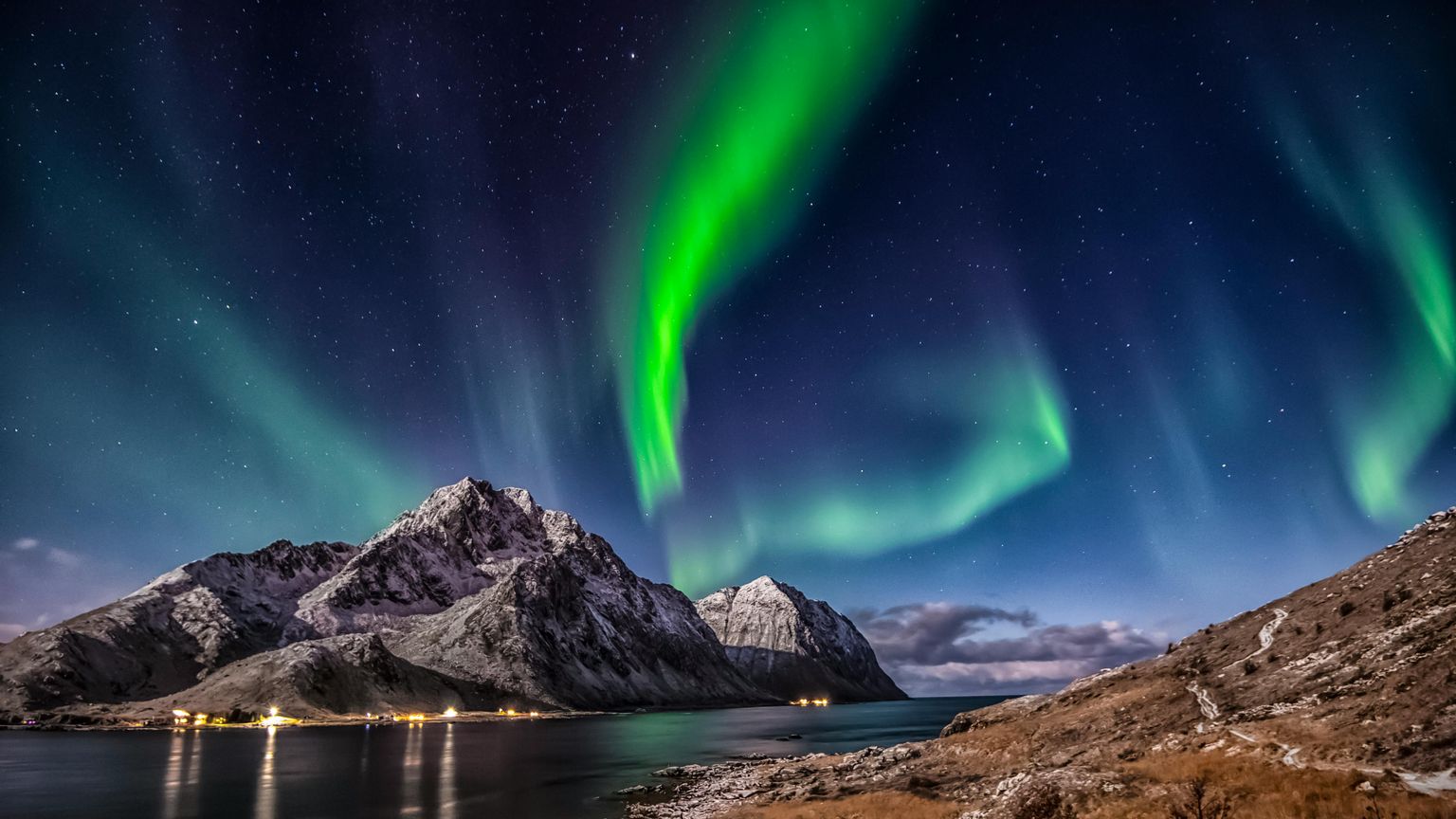
Chasing the aurora borealis requires deliberate planning, strategic geography, and a deep understanding of solar physics and atmospheric conditions. The best destinations combine high magnetic latitude, minimal light pollution, and reliable winter meteorological patterns to offer avid travelers the highest probability of witnessing one of nature's most mesmerizing phenomena.
Understanding the Aurora Borealis: Science and Mechanics
The northern lights are not mere atmospheric projections, but the visible manifestation of complex interplanetary interactions. The process begins on the surface of the sun, where active regions produce solar flares and coronal mass ejections (CMEs). These events launch massive streams of charged particles—primarily electrons and protons—into space via the solar wind. When these energetic particles reach Earth, they encounter our planet's magnetosphere, a protective magnetic field generated by internal fluid dynamics.
While the magnetosphere deflects the vast majority of the solar wind, some charged particles become trapped in the Van Allen radiation belts and are guided along magnetic field lines toward the polar regions. As these particles descend into the upper atmosphere—specifically the thermosphere, roughly 80 to 600 kilometers above the Earth's surface—they collide with gaseous atoms and molecules, principally oxygen and nitrogen.
These collisions excite the atmospheric gases, temporarily boosting their electrons to higher energy states. When the electrons return to their ground state, they release energy in the form of photons. The color of the aurora depends heavily on the specific gas involved and the altitude at which the collision occurs:
- Green: The most common aurora color, produced by oxygen molecules colliding at altitudes of roughly 100 to 150 kilometers.
- Red: Also produced by oxygen, but at higher altitudes exceeding 240 kilometers, typically visible only during intense geomagnetic storms.
- Blue and Purple: Generated by nitrogen molecules at lower altitudes, usually appearing along the lower edges or fringes of active auroral curtains.
For avid travelers, understanding this mechanics shifts the journey from a passive sightseeing trip to an informed expedition. Success depends on monitoring space weather indices, such as the Kp-index—a scale from 0 to 9 that measures geomagnetic activity—and positioning oneself beneath the auroral oval, a ring-shaped band centered around the Earth's geomagnetic poles where auroral frequency is highest.
Geographic Selection: Choosing Your Destination
Latitude alone does not guarantee a successful aurora hunt. Travelers must balance geomagnetic positioning with logistical access, microclimates, and infrastructural support. The world's premier aurora-viewing destinations offer unique advantages tailored to different travel styles, ranging from rugged Arctic wilderness expeditions to luxurious glass-roofed igloo retreats.
Tromsø, Norway: The Arctic Metropolis
Tromsø stands as one of the premier hubs for aurora seekers due to its unique combination of urban comfort and untamed wilderness. Located at 69°N, well inside the Arctic Circle, the city benefits from the warming influence of the Gulf Stream, resulting in a relatively mild coastal winter compared to continental Arctic destinations.
The primary advantage of Tromsø is its topographical diversity. When local coastal weather brings clouds and snow, guides can easily drive travelers inland toward the Finnish or Swedish borders, where dry continental air masses often create clear skies. Furthermore, Tromsø offers robust tourism infrastructure, featuring specialized northern lights tour operators, research-backed forecasting services, and regular Arctic expeditions.
Lapland (Finland, Sweden, and Norway): The Winter Wonderland
Sápmi, the cultural region traditionally inhabited by the Sami people, spans the northern territories of Norway, Sweden, and Finland, offering some of the most serene and visually striking backdrops for the aurora borealis. Finnish Lapland, in particular, has revolutionized aurora tourism with specialized accommodations such as glass igloos and Arctic cabins designed to provide unobstructed night-sky views from the warmth of a bed.
The region is characterized by taiga forests, frozen lakes, and deep snow packs, creating quintessential winter landscapes. Because inland Lapland features a more stable continental climate than the Norwegian coast, it frequently experiences clear, freezing nights that are ideal for prolonged photography sessions. Activities such as reindeer sledding, snowmobiling, and cross-country skiing seamlessly complement the night-time auroral hunts.
Iceland: The Land of Fire and Ice
Iceland offers unmatched versatility for travelers who wish to combine aurora viewing with dramatic geological exploration. Because the entire island sits beneath the auroral oval, the northern lights can be witnessed from almost any location during clear winter nights, provided light pollution is minimal.
Travelers can base themselves in Reykjavik and take day trips to geothermal lagoons, black sand beaches, and glacial lagoons before hunting for lights at night, or they can embark on a full-ring road expedition. However, Iceland's maritime climate makes weather notoriously volatile. Rapidly shifting cloud cover requires flexibility, often forcing travelers to track satellite cloud maps continuously and drive considerable distances to find clear patches of sky.
Svalbard, Norway: The Extreme Arctic Frontier
For advanced travelers seeking complete isolation and daytime aurora opportunities, Svalbard represents the ultimate frontier. Located at 78°N, halfway between the mainland of Norway and the North Pole, Svalbard experiences polar night from mid-November to late January. During this period, the sun remains below the horizon 24 hours a day, allowing for northern lights sightings even at noon.
Svalbard is a high-arctic wilderness defined by glaciers, polar bears, and dramatic fjords. Expeditions require strict safety protocols due to wildlife hazards, and the climate is fiercely cold. It is a destination suited strictly for experienced cold-weather travelers and photography enthusiasts looking for pristine conditions far beyond mass tourism routes.
Yukon and Northwest Territories, Canada: Continental Stability
North America offers exceptional viewing opportunities, with Canada's Yukon and Northwest Territories standing out as premier locations. Situated beneath the center of the auroral oval and far from maritime moisture sources, regions around Yellowknife and Whitehorse boast exceptionally high statistical probabilities of clear, cloudless nights during the winter months.
The vast, open landscapes provide expansive horizons, and the dry winter air minimizes atmospheric distortion. Northern Canada appeals to travelers seeking deep wilderness immersion, indigenous cultural exchanges, and dog-sledding adventures far removed from crowded European tourist circuits.
Comparative Overview of Top Aurora Destinations
| Destination | Ideal Season | Primary Climate Factor | Infrastructure Level | Best For |
|---|---|---|---|---|
| Tromsø, Norway | Sept – March | Coastal / Maritime (Variable) | High | Flexible chasing, fjords, culture |
| Finnish Lapland | Dec – March | Continental (Stable, cold) | High | Glass igloos, winter sports, family |
| Iceland | Sept – April | Volatile / Maritime | High | Combining waterfalls, glaciers, and lights |
| Svalbard, Norway | Nov – Feb | Extreme Arctic (Polar night) | Moderate | Daytime aurora, extreme adventure |
| Yukon, Canada | Nov – March | Continental (Dry, clear) | Moderate | Deep wilderness, high statistical clarity |
Essential Planning and Technical Preparation
Witnessing and photographing the northern lights successfully requires careful preparation regarding gear, clothing, timing, and field techniques. Inadequate preparation can quickly turn an awe-inspiring Arctic expedition into an uncomfortable ordeal.
Timing Your Expedition
While solar activity occurs year-round, darkness is required to see the aurora. Therefore, the viewing season runs from September to late March.
- September and October: Offer milder temperatures, autumn colors, and reflections in open water bodies, but shorter periods of total darkness.
- November to January: Provide maximum darkness and deep snow landscapes, including polar night conditions in high latitudes, but feature extreme sub-zero temperatures.
- February and March: Often considered the sweet spot, balancing increasing daylight hours with stable winter snow packs and high geomagnetic statistical activity around the equinoxes.
Cold Weather Layering and Survival
Arctic temperatures frequently drop below -20°C (-4°F), and wind chill factors can make conditions perilous. Avid travelers must adopt a strict three-layer clothing system:
- Base Layer: Moisture-wicking thermal underwear made of merino wool or high-performance synthetics. Avoid cotton, which retains moisture and conducts cold.
- Mid Layer: Insulating fleece or wool sweaters that trap body heat while allowing vapor to escape.
- Outer Layer: Windproof and waterproof shell jackets and trousers (Gore-Tex or equivalent), paired with an expedition-grade down parka rated for extreme sub-zero conditions.
- Extremities: Insulated rated winter boots with thick rubber soles, windproof mittens paired with thin liner gloves for camera handling, and thermal headwear covering the ears.
Photographic Equipment and Settings
Capturing the northern lights requires a manual camera setup capable of handling low-light environments. Smartphones are improving rapidly, but capturing sharp, detailed auroral curtains still demands dedicated hardware:
- Camera: A mirrorless or DSLR camera with good high-ISO performance and a large sensor (full-crop or full-frame).
- Lens: A fast, wide-angle lens with a maximum aperture of f/2.8 or wider (e.g., 14mm–24mm) to capture expansive sky vistas.
- Support: A sturdy tripod is mandatory, as long exposures will blur with hand movement in heavy Arctic winds.
- Camera Settings: Shoot in RAW format. Set the lens to manual focus, focusing on a bright distant star or distant horizon light. Use an aperture of f/2.8 or wider, an ISO setting between 1600 and 6400, and an exposure time ranging from 2 to 10 seconds depending on how fast the aurora is moving.
Common Mistakes to Avoid
Even seasoned travelers often make preventable errors when planning their first dedicated aurora expedition. Avoiding these pitfalls significantly increases the likelihood of a successful trip.
- Underestimating Cloud Cover: Many travelers book a single night in a fixed location and assume they will see lights. Microclimates dictate success. Always check satellite cloud forecasts and maintain the flexibility to rent a car or hire a guide to drive away from coastal storms into clear inland zones.
- Ignoring the Moon Phase: While a full moon brightly illuminates snowy landscapes for dramatic foreground photography, its intense glare can wash out faint auroral arcs. The optimal time for intense visual contrast is during the new moon phase.
- Failing to Protect Batteries: Lithium-ion batteries drain rapidly in extreme cold. Always keep spare camera and phone batteries inside an inner jacket pocket close to body heat, and pack chemical hand warmers to tape to battery compartments during long shoots.
- Relying Solely on Naked-Eye Expectations: Faint auroras often appear as gray or white wisps to the naked eye because human cone cells do not process color well in low light. Cameras capture the vibrant greens and reds instantly via long exposure. Do not pack up gear just because the sky looks colorless; check your camera viewfinder to see what light is being gathered.
Frequently Asked Questions
Can you see the northern lights during the summer months?
No, the aurora borealis occurs year-round, but it cannot be seen during the summer in polar regions due to the midnight sun. Continuous daylight prevents the dark skies required for the phenomenon to be visible to the human eye. Dark nighttime skies are essential.
Do I need to book an organized tour, or can I self-drive?
Both options are viable, depending on your confidence in winter driving. Self-driving offers ultimate flexibility to chase clear skies across borders. However, organized tours led by professional local guides provide valuable expertise in reading local microclimates, navigating hazardous icy roads, and operating specialized wilderness equipment.
What is the Kp-index, and how reliable is it?
The Kp-index measures disturbances in the Earth's magnetic field on a scale from 0 to 9. While a higher Kp-index indicates a stronger probability of visible auroras further south, it is a global average and not a localized guarantee. Clear skies and local magnetic sub-storms matter just as much as a high Kp number.
How cold does it get when viewing the northern lights?
Viewing locations almost exclusively sit within or near the Arctic Circle during winter months, meaning temperatures routinely range from -10°C to -30°C (14°F to -22°F). Wind chill can make it feel significantly colder, making proper thermal layering non-negotiable.
Are northern lights guaranteed if I travel to the Arctic?
No natural phenomenon can be guaranteed. Success depends on a combination of clear weather, solar activity, and dark skies. To maximize your chances, experts recommend booking a stay of at least four to five nights in a prime auroral zone.
Next Actions for Avid Travelers
To turn your northern lights aspiration into a concrete reality, begin by selecting your destination based on your preferred travel style—whether that involves independent road-tripping across Iceland or booking a wilderness lodge in Finnish Lapland. Secure your accommodations well in advance, as prime winter weeks fill up quickly. Invest in high-grade thermal clothing and familiarize yourself with manual camera settings before departure. Monitor solar activity feeds through reputable space weather prediction centers as your travel dates approach, maintain flexibility in your daily itinerary, and prepare to spend late nights under the vast Arctic sky.
Image Gallery
Select an image to open it in a new tab.

Vivian Cho
Executive IT and Emerging Technologies Reporter
