
The best way to cook carne asada is by grilling citrus-marinated outside skirt steak over intense, direct heat (500°F to 600°F) using hardwood charcoal or mesquite. Sear the meat rapidly for two to four minutes per side to build a smoky crust while keeping the interior juicy, rest for five minutes, and slice thinly against the grain.
Understanding Carne Asada: Meat Selection and Cut Profiles
Carne asada translates directly from Spanish as "grilled meat," but in culinary tradition, it refers to a specific preparation of thin, heavily seasoned, or marinated beef cooked rapidly over extreme heat. Achieving steakhouse-quality results at home depends heavily on selecting the correct cut of beef. Because carne asada relies on rapid high-heat searing, the ideal cut must balance muscle fiber structure, fat distribution, and surface area.
BEEF CUT HIERARCHY:
- Outside Skirt: Gold Standard (High fat, loose grain, juicy)
- Inside Skirt: Leaner, tighter grain (Requires tenderizing)
- Flank Steak: Thicker, wide grain (Best served medium-rare)
- Diezmillo: Chuck flap (Affordable, tender, rich flavor)
Outside Skirt Steak (Arrachera Center)
Outside skirt steak is universally recognized by professional chefs and traditional Mexican butchers (carniceros) as the premier choice for carne asada. Cut from the diaphragm of the steer, outside skirt features a deep, beefy flavor and a high concentration of intramuscular fat. Its coarse, open muscle grain allows marinades to penetrate deeply, while the fat melts during high-heat grilling to keep the meat basting from within. Outside skirt is typically sold with a membrane that must be peeled off before marinating, though many butcher counters perform this step before sale.
Inside Skirt Steak
Inside skirt steak comes from the transverse abdominal muscle. While similar in appearance to outside skirt, inside steak is noticeably wider, thinner, leaner, and covered in a tighter layer of muscle fiber. Because it contains less internal marbling, inside skirt easily dries out or becomes chewy if overcooked. When using inside skirt steak, precise marinating and strict adherence to medium-rare internal temperatures are necessary to retain tenderness.
Flank Steak
Flank steak is harvested from the cow's lower abdominal area. It is significantly thicker, flatter, and wider than skirt steak, featuring long, clear muscle fibers running along its length. Flank steak is leaner than outside skirt steak, offering a very clean, pronounced beef flavor. Because of its thickness and lower fat content, flank steak must be seared hot, pulled off the heat at medium-rare (130°F to 135°F), and sliced thinly across its wide muscle fibers.
Alternative Cuts: Diezmillo and Hanger Steak
- Diezmillo (Chuck Flap): Highly popular in traditional Mexican carnicerías, diezmillo is sliced thin across the chuck section. It offers excellent marbling and rich flavor at a lower price point than skirt steak.
- Hanger Steak (Onglet): Hanging from the diaphragm near the kidney, hanger steak shares the coarse grain and intense flavor of skirt steak. It is slightly thicker, making it ideal for cooks who prefer a charred exterior with a rare to medium-rare center.
The Science of the Perfect Carne Asada Marinade
A proper carne asada marinade does not merely surface-flavor the beef; it alters the surface chemistry of the meat to accelerate browning, tenderize outer muscle fibers, and balance rich animal fats with crisp acidity.
MARINADE COMPONENTS:
- Acids (Citrus): Denatures proteins, balances fat
- Fats (Oil): Carries aromatics, prevents sticking
- Glutamates (Soy): Enhances umami, aids moisture retention
- Aromatics (Garlic): Infuses deep savoriness during high sear
Acidic Base: Citrus Balance
Freshly squeezed lime juice provides the signature bright tang of authentic carne asada. The citric acid gently breaks down surface proteins, allowing moisture and seasonings to cling to the meat. However, pure lime juice can become overly harsh during cooking. Blending lime juice with fresh orange juice introduces natural sugars that balance the acidity and caramelize instantly over the flames, promoting the Maillard reaction—the chemical process responsible for a flavorful brown crust.
Fats and Aromatics as Flavor Vectors
Oil serves as an essential carrier in any meat marinade. Fat-soluble flavor compounds found in garlic, fresh cilantro, cumin, and fresh chilis (such as jalapeño or serrano) do not dissolve in water. High-smoke-point oils, such as avocado or refined olive oil, dissolve these aromatics and coat the meat evenly. This oil barrier ensures even heat transmission across the meat's surface when it contacts the grill grate.
Glutamates and Salt Engineering
Salt is the only molecule in a marinade capable of penetrating deep beneath the surface of the meat. Incorporating sea salt or sodium-rich glutamates—such as soy sauce or tamari—alters the protein structure within the beef, enabling muscle cells to hold onto moisture during high-heat cooking. A small splash of soy sauce provides deep umami notes without making the final dish taste distinctly Asian.
Optimal Marinating Timeframes
Timing is critical when working with acidic marinades:
- Optimal Window: 2 to 6 hours in the refrigerator.
- Minimum Time: 1 hour (surface coating only, limited tenderizing).
- Maximum Limit: 12 hours. Leaving thin beef cuts in a high-acid marinade past 12 hours results in "acid cooking" (similar to ceviche). The acid fully denatures the surface proteins, turning the outer layer of the steak mushy and mealy once cooked.

Cooking Methods: High-Heat Grilling vs. Indoor Cast Iron
The ultimate goal when cooking carne asada is achieving a deeply charred, aromatic exterior while keeping the thin interior tender and medium-rare to medium. This requires cooking over intense heat for a short duration.
COOKING METHOD SPECTRUM:
- Charcoal / Mesquite Grill: Gold Standard (500°F+, smoky)
- Heavy Cast Iron Skillet: Best Indoor (High thermal mass)
- Gas Grill (Max Heat): Convenient (Requires direct flame)
- Low Heat / Indoor Oven: Avoid (Steams meat, turns chewy)
Method 1: Charcoal or Wood Grilling (The Authentic Gold Standard)
Live-fire grilling over lump charcoal and mesquite wood produces the undisputed best carne asada. Charcoal generates radiant heat exceeding 600°F, while mesquite provides a sharp, authentic smoke profile that complements the citrus and garlic marinade.
- Setup: Set up a two-zone fire by piling lit charcoal on one side of the grill, leaving the other side empty. This creates a high-heat sear zone and a cool safety zone.
- Preheat: Allow the grates to absorb heat for at least 10 to 15 minutes. Clean and oil the grates thoroughly.
- Execution: Place the marinated meat directly over the hottest coals. Grill for 2 to 4 minutes on the first side until deep char marks form and the edges curl. Flip and sear for an additional 2 to 3 minutes.
Method 2: High-Heat Cast Iron Skillet or Heavy Griddle (Indoor Method)
When outdoor grilling is not feasible, a heavy cast iron skillet or flat-top griddle is the best indoor alternative. Cast iron retains immense thermal mass, preventing the pan's temperature from dropping rapidly when cold meat is added.
- Setup: Place a dry cast iron skillet over high burner heat until it smokes lightly (approximately 5 to 7 minutes).
- Preparation: Remove excess liquid marinade from the steak surface using paper towels. Wet steaks drop surface temperature and steam rather than sear.
- Execution: Lightly oil the pan with a high-smoke-point oil (such as avocado oil). Lay the meat down flat, pressing lightly to ensure complete surface contact. Sear uninterrupted for 3 minutes, flip, and finish for 2 to 3 minutes. Work in small batches to avoid overcrowding the pan.
Why Low-Heat Methods Fail
Baking carne asada in an oven or cooking it over medium stovetop heat destroys its signature texture. Thin beef cuts subjected to low temperatures release stored water into the pan, causing the meat to boil or steam in its own juices. This yields grey, tough, rubbery beef without a charred crust.
Temperature Targets and Heat Management
Because skirt and flank steaks are thin, traditional slow-cooking temperature guidelines do not apply. Heat transfers to the center within minutes.
| Desired Doneness | Pull Temperature (Thermometer) | Final Rested Temperature | Visual & Texture Profile |
|---|---|---|---|
| Rare | 120°F – 125°F (49°C – 52°C) | 125°F – 130°F (52°C – 54°C) | Deep red core, highly soft, high moisture loss when cut |
| Medium-Rare (Ideal) | 130°F – 135°F (54°C – 57°C) | 135°F – 140°F (57°C – 60°C) | Warm red-pink center, optimal juice retention, tender yield |
| Medium | 140°F – 145°F (60°C – 63°C) | 145°F – 150°F (63°C – 66°C) | Soft pink center, firmer texture, well-caramelized exterior |
| Well-Done | 155°F+ (68°C+) | 160°F+ (71°C+) | Completely brown throughout, dry and firm, chewy fiber structure |
Note: Always insert an instant-read digital thermometer horizontally into the thickest part of the steak for an accurate reading.
Slicing and Resting: Unlocking Maximum Tenderness
How you cut the meat after cooking matters just as much as how you marinate or grill it. Even a perfectly cooked skirt steak will feel tough and stringy if sliced incorrectly.
CUTTING AGAINST THE GRAIN:
- Long Muscle Fibers
- Incorrect Slice: Leaves long fibers intact; chewy texture
- Correct Slice: Cuts fibers short; instantly tender bite
The Physics of Muscle Fibers
Skirt and flank steaks consist of long, rope-like muscle fibers that contract and tighten during cooking. Chewing through these intact fibers requires significant force. By slicing perpendicular to these muscle strands, you shorten the individual fibers to the width of the slice, allowing the meat to fall apart easily in your mouth.
The Resting Period
Remove the seared steak from the grill or skillet and transfer it to a warm cutting board or platter. Allow it to rest uncovered or loosely tented with foil for 5 to 8 minutes. During this period:
- Thermal carryover cooking finishes raising the internal temperature by 3°F to 5°F.
- Muscle fibers relax, allowing hot juices to redistribute evenly throughout the meat rather than spilling onto the cutting board.
Step-by-Step Slicing Instructions
- Identify the Grain Direction: Look closely at the surface of the rested steak to locate the parallel lines of muscle fiber.
- Divide into Sections: Skirt steaks can be up to two feet long. Cut the long strip crosswise into manageable 4-to-6-inch sections.
- Rotate 90 Degrees: Rotate each section so that the muscle fibers run left-to-right across your cutting board.
- Slice Thinly on a Bias: Using a sharp chef's knife or slicing knife, slice the beef thinly (around 1/8 to 1/4 inch thick) at a 45-degree angle. The angled cut produces wider, tender strips perfect for tacos, burritos, or plate presentation.
Carne Asada Cut & Method Comparison Matrix
Use this matrix to match your available cooking equipment and preferences with the appropriate cut of beef:
| Cut Name | Fat & Marbling Level | Tenderness Potential | Recommended Marinate Time | Ideal Cooking Method | Best Final Doneness |
|---|---|---|---|---|---|
| Outside Skirt | High | Very High | 3 – 6 Hours | Charcoal / Mesquite Grill | Medium-Rare (135°F) |
| Inside Skirt | Moderate-Low | Moderate | 4 – 8 Hours | High-Heat Cast Iron Skillet | Medium-Rare (130°F) |
| Flank Steak | Low | Moderate | 4 – 8 Hours | High-Heat Gas or Charcoal Grill | Medium-Rare (130°F) |
| Diezmillo (Chuck Flap) | High | High | 2 – 4 Hours | Flat-Top Griddle / Cast Iron | Medium (140°F) |
| Hanger Steak | Moderate-High | High | 2 – 4 Hours | Charcoal Sear over Direct Coals | Rare to Medium-Rare (125°F–130°F) |
Step-by-Step Guide: Cooking Carne Asada from Start to Finish
Ingredients & Equipment Checklist
Core Ingredients
- Beef: 2 to 3 lbs outside skirt steak (trimmed of excess heavy membrane)
- Citrus Base: 1/3 cup fresh lime juice (approx. 3-4 limes), 1/3 cup fresh orange juice (approx. 1 large orange)
- Oil: 1/4 cup avocado oil or refined olive oil
- Glutamates & Seasoning: 3 tablespoons soy sauce, 1 tablespoon sea salt, 1 teaspoon freshly cracked black pepper
- Aromatics: 6 cloves garlic (minced), 1 cup fresh cilantro (finely chopped), 1 large jalapeño (seeded and diced)
- Spices: 1 tablespoon ground cumin, 1 teaspoon dried Mexican oregano
Equipment Needed
- Heavy-duty gallon sealable bag or shallow glass baking dish
- Charcoal grill (with lump charcoal/mesquite) or 12-inch heavy cast iron skillet
- Instant-read digital meat thermometer
- Long-handled grill tongs
- Wood cutting board and sharp chef's knife
Step 1: Trim and Prep the Beef
Examine the skirt steak. Remove loose silverskin or excessive surface fat pads, but retain thin layers of intramuscular fat. Pat the surface dry with paper towels to ensure the marinade sticks to the meat.
Step 2: Mix and Apply the Marinade
In a medium bowl, whisk together the lime juice, orange juice, avocado oil, soy sauce, minced garlic, chopped cilantro, diced jalapeño, cumin, oregano, black pepper, and salt until completely emulsified. Place the steak into a sealable gallon bag, pour in the marinade, press out excess air, and seal tightly. Massage the bag to ensure all surfaces are coated. Refrigerate for 3 to 6 hours.
Step 3: Heat the Grill or Skillet
Remove the beef from the refrigerator 20 to 30 minutes before cooking to take off the cold chill. Ignite your charcoal grill, establishing a dense bed of glowing, white-hot coals (aim for a surface temperature of 550°F to 600°F). If using a cast iron skillet indoors, heat it on high until it smokes gently.
Step 4: Sear the Meat Rapidly
Remove the meat from the marinade, shaking off excess heavy liquids or large cilantro clumps that could burn into bitter carbon. Place the meat directly onto the hot grate or screaming-hot pan. Sear without moving for 3 minutes to build a deep brown and charred crust. Flip using tongs and sear the reverse side for an additional 2 to 3 minutes until an instant-read thermometer registers 130°F to 135°F in the thickest section.
THE PERFECT SEARING TIMELINE:
- 0:00: Steak hits 600°F grill surface.
- 1:30: Fats melt, initial flare-ups create authentic smoke flavor.
- 3:00: Flip steak; deep brown crust and charred edges achieved.
- 5:00: Check temp (130°F-135°F); remove instantly to board.
- 10:00: Rest complete; juices redistributed. Slice against grain.
Step 5: Rest, Slice, and Serve
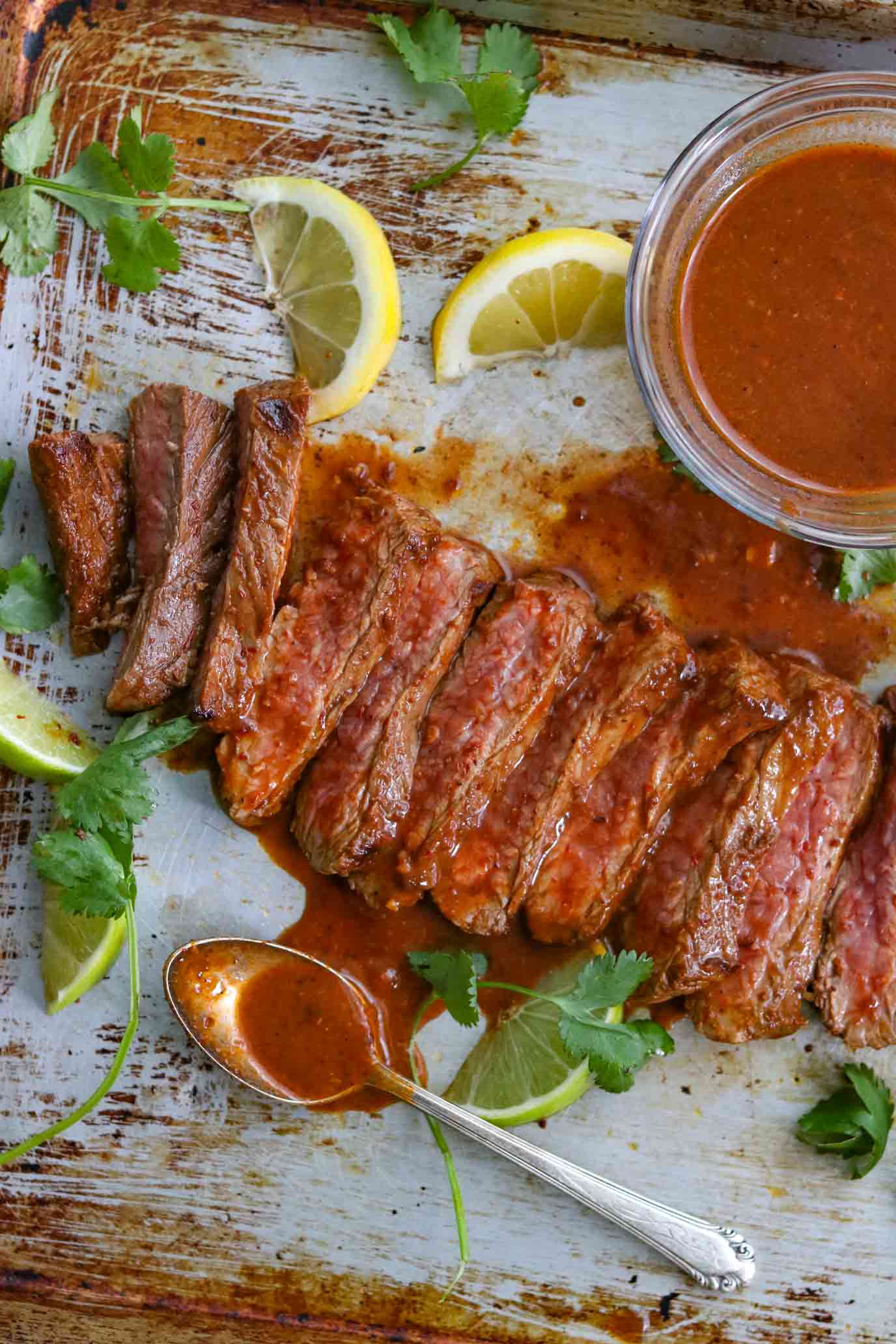
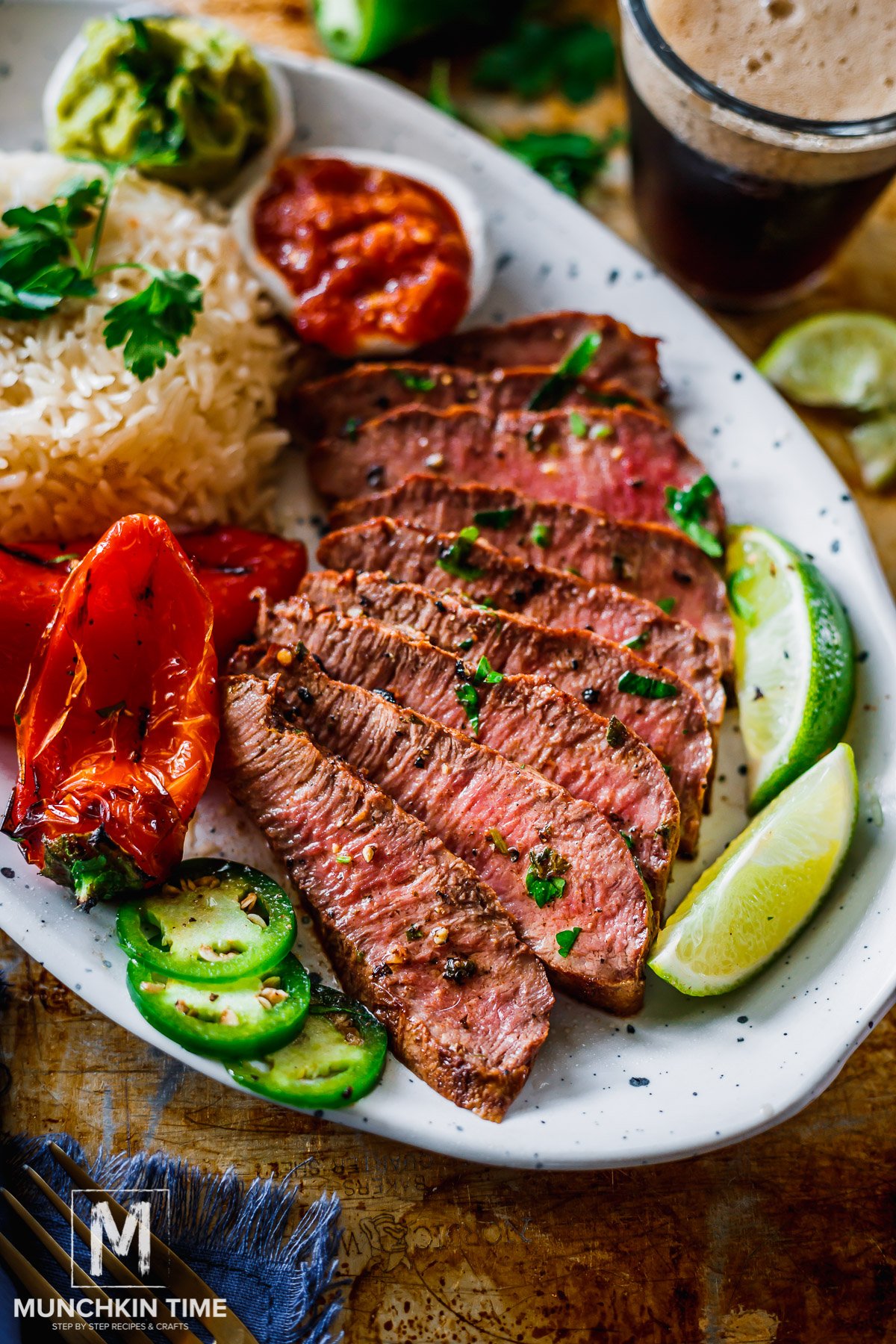
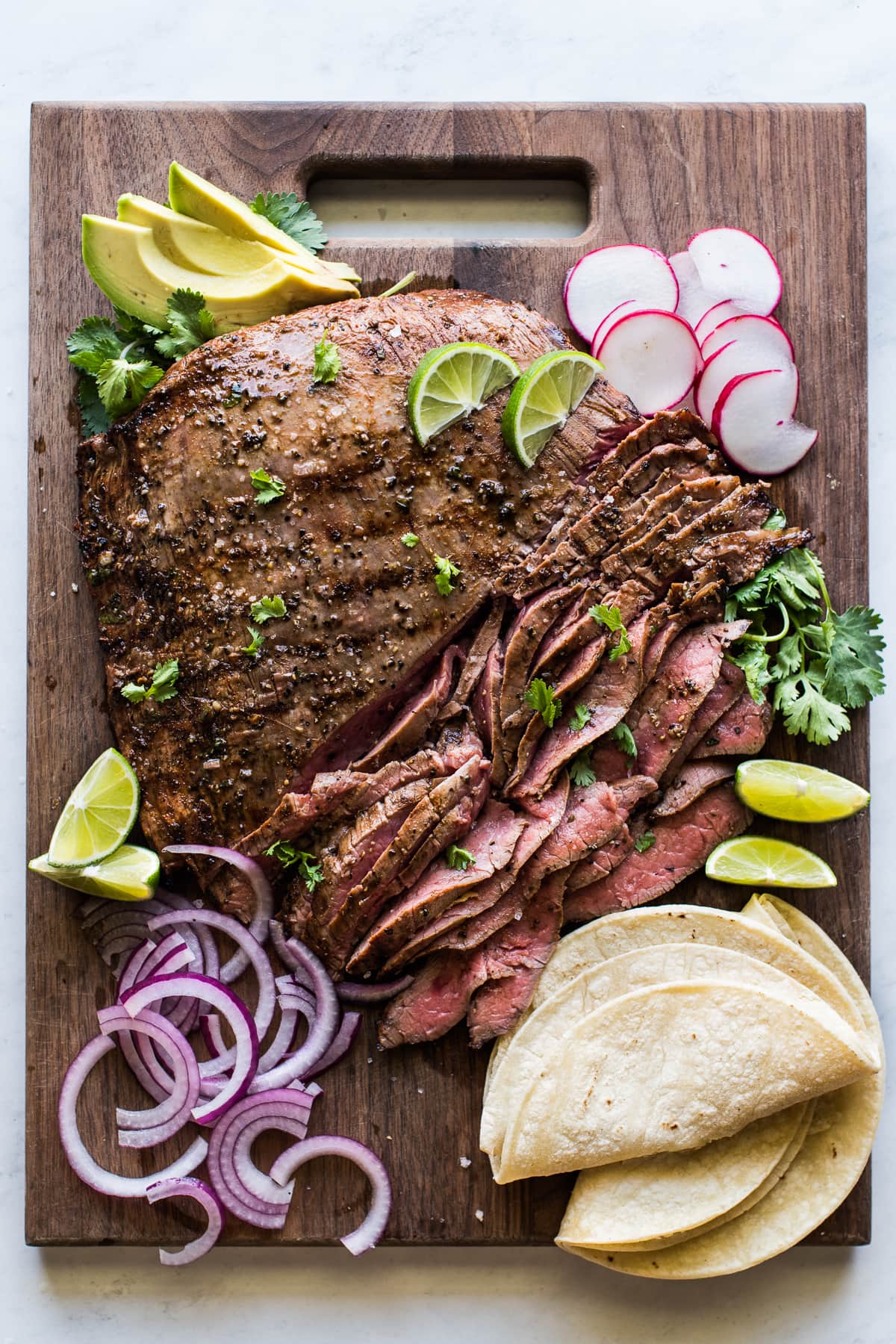
Transfer the seared beef to your cutting board. Let it rest for 5 to 8 minutes. Divide the long steaks into shorter 4-inch blocks, rotate them 90 degrees, and carve thin slices across the grain at a 45-degree angle. Serve immediately with warm corn tortillas, fresh lime wedges, roasted salsa, and diced onions.
Common Carne Asada Mistakes and How to Avoid Them
1. Over-Marinating the Beef
- The Error: Leaving skirt steak in citrus marinade overnight (12 to 24 hours) thinking it increases flavor.
- The Consequence: The acid completely breaks down the meat's surface proteins, turning the outer layer mushy, gray, and chalky once seared.
- The Fix: Limit citrus marinating to 6 hours maximum. If you need to prepare meat 24 hours ahead, mix oil, garlic, and spices without the citrus juices, adding the fresh lime and orange juice only during the final 3 hours.
2. Cooking Over Medium or Low Heat
- The Error: Placing marinated steak into a moderately warm pan or onto a low-temp gas grill to avoid flare-ups.
- The Consequence: The internal temperature reaches medium-well long before a caramelized crust can form, resulting in grey, rubbery, steamed meat.
- The Fix: Ensure your grill or pan is smoking hot before adding the beef. You need extreme direct heat to sear the exterior within 4 to 6 total minutes of cooking time.
3. Placing Soaking-Wet Steaks on the Heat
- The Error: Transferring beef directly from the marinade bag onto the cooking surface with heavy liquid dripping off.
- The Consequence: Excess water must evaporate before searing can occur. This lowers the surface temperature of the pan or coals, steaming the meat instead of searing it.
- The Fix: Shake off excess liquid marinade vigorously over the sink before cooking.
4. Slicing Parallel to Muscle Fibers
- The Error: Slicing the long strip of skirt steak into strips along the line of the muscle fibers.
- The Consequence: Each slice contains intact muscle ropes that are extremely difficult to chew.
- The Fix: Always cut the long steak into shorter blocks, turn those blocks 90 degrees, and slice thinly across the grain strands.
Frequently Asked Questions
What is the absolute best cut of meat for authentic carne asada?
Outside skirt steak (arrachera) is the best overall cut. It contains the ideal ratio of intramuscular fat to lean muscle, featuring an open grain structure that absorbs citrus marinade efficiently while staying juicy under high-heat searing.
Can I make carne asada in advance for meal prep?
Yes, but slice the meat only right before serving. If prepping ahead, grill the steaks slightly rarer (around 125°F to 130°F), rest, and store the whole steaks in an airtight container in the refrigerator for up to three days. Reheat rapidly in a hot skillet for 60 seconds per side to prevent drying out before slicing.
How do I prevent flare-ups on a charcoal grill when cooking skirt steak?
Skirt steak contains dripping fat and oil from marinades, which naturally ignites when contacting hot charcoal. Manage flare-ups by creating a two-zone cooking setup (coals on one side, clean floor on the other). If flames engulf the meat, use your tongs to shift the steak to the cool zone for 15 seconds until the flames subside, then return it to the coals.
Is flank steak better than skirt steak for carne asada?
Skirt steak is generally superior for carne asada because it contains more fat, offering a richer flavor and more tender texture when cooked over extreme heat. Flank steak is leaner and thicker, making it a great alternative if you prefer a less fatty meat cut, but it must be cooked carefully to medium-rare to avoid becoming dry.
Why is my cooked carne asada chewy despite being cooked medium-rare?
Chewiness in medium-rare carne asada is almost always caused by cutting the meat with the grain instead of against it. If you cut parallel to the long muscle fibers, you leave long strands intact that are tough to chew. Always locate the direction of the muscle lines and slice perpendicularly across them.
Final Recommendation: Achieving Steakhouse Results at Home
To cook the best carne asada, source outside skirt steak from a butcher, marinate it for 3 to 6 hours in a balanced mix of fresh lime, orange juice, oil, garlic, and spices, and cook it over extreme direct heat (500°F+) using charcoal or a heavy cast iron skillet. Limit total cooking time to under 6 minutes, allow the meat to rest for 5 minutes, and carve it into thin strips strictly across the muscle grain. Serving the hot seared steak inside freshly warmed corn tortillas with a squeeze of lime juice delivers authentic Mexican flavor and unmatched tenderness every single time.
Image Gallery
Select an image to open it in a new tab.




Vivian Cho
Executive IT and Emerging Technologies Reporter
