
Unsubscribe links are essential because they ensure legal compliance with global privacy regulations, protect your domain's sender reputation, and build long-term consumer trust. By providing an easy exit, you prevent users from marking messages as spam—a metric that major mail providers like Google and Yahoo use to determine whether your emails reach the inbox or the junk folder.
The Evolution of the Unsubscribe Link in 2026
In the digital landscape of 2026, the unsubscribe link has transitioned from a mere legal footnote to a cornerstone of technical email infrastructure. For years, marketers viewed the "unsubscribe" button with trepidation, fearing a shrinking list and lost revenue. However, the modern perspective acknowledges that a clean, engaged list is significantly more valuable than a massive list filled with disinterested or hostile recipients.
The importance of these links is rooted in three primary pillars: legal necessity, technical deliverability, and brand integrity. When a recipient can no longer find a way to opt out of your communications, their next move is almost always to report the email as spam. In 2026, the threshold for spam complaints is lower than ever, and exceeding it can result in an immediate and devastating drop in your ability to reach any of your customers.
Legal Frameworks and Compliance Requirements
Operating without a functional and visible unsubscribe mechanism is no longer just a "bad practice"—it is a legal liability that carries significant financial risks. Various international jurisdictions have codified the right to opt out, and as of 2026, enforcement has become more automated and rigorous.
CAN-SPAM Act (United States)
The Controlling the Assault of Non-Solicited Pornography and Marketing (CAN-SPAM) Act remains the foundational law in the U.S. It mandates that every commercial email must include a clear and conspicuous explanation of how the recipient can opt out of getting emails from you in the future.
- Processing Time: You must honor a recipient’s opt-out request within 10 business days.
- Persistence: You cannot charge a fee, require the recipient to give you any personally identifying information beyond an email address, or make the recipient take any step other than sending a reply email or visiting a single page on an Internet website as a condition for honoring an opt-out request.
- Penalties: Violations can result in penalties of over $50,000 per individual email.
GDPR and the "Right to be Forgotten" (European Union)
The General Data Protection Regulation (GDPR) treats the unsubscribe link as a fundamental aspect of "consent." Under GDPR, withdrawing consent must be as easy as giving it. If a user signed up with one click, they should be able to leave with one click.
- Transparency: The process must be intuitive.
- Documentation: Senders must keep records of when and how a user unsubscribed to ensure they are not accidentally re-added to a list during a data sync.
CASL (Canada)
Canada’s Anti-Spam Legislation (CASL) is among the strictest in the world. It requires that the unsubscribe mechanism be valid for at least 60 days after the message is sent. Unlike some other laws, CASL requires that the request be performed "without delay," moving much faster than the 10-day window allowed by CAN-SPAM.

Protecting Your Sender Reputation and Deliverability
Perhaps the most immediate "why" behind unsubscribe links is the impact on your Sender Reputation. This is a score assigned by Internet Service Providers (ISPs) like Gmail, Outlook, and iCloud to the organization that sends an email.
The Spam Complaint Ratio
In 2024, Google and Yahoo implemented strict requirements for bulk senders, mandating a spam complaint rate of less than 0.3%. By 2026, these standards have become the baseline for all senders, regardless of volume. If a user wants to stop receiving your emails but cannot find an unsubscribe link, they will click the "Report Spam" button.
- ISP Logic: If enough users report your emails as spam, the ISP concludes that your content is unwanted.
- Consequence: Your emails will begin bypassing the inbox entirely and landing in the junk folder for all recipients, even those who actually want to read them.
One-Click Unsubscribe (RFC 8058)
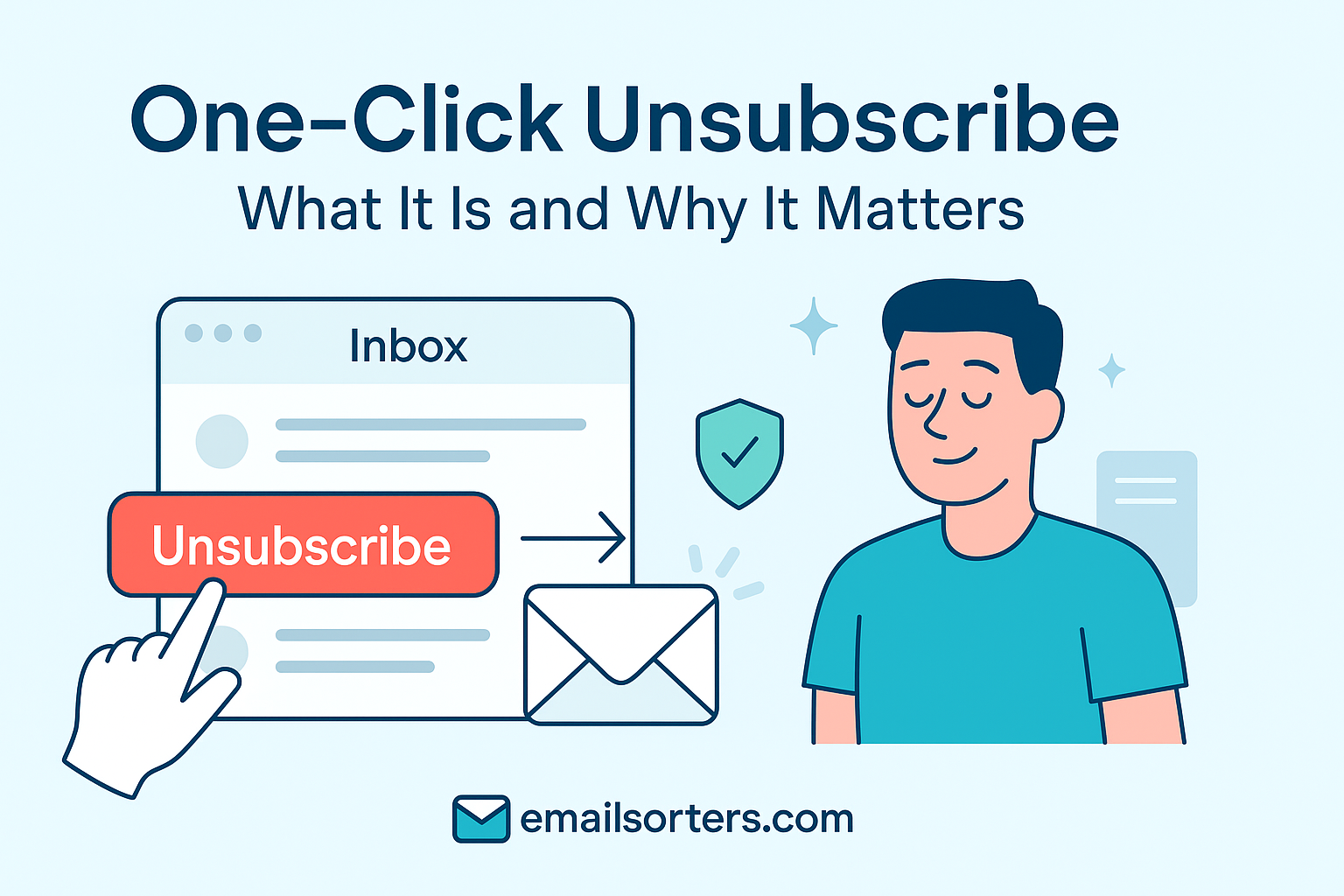
Modern email standards now require "One-Click Unsubscribe" functionality in the email header. This is a technical implementation where the email client (like Gmail) displays its own "Unsubscribe" button at the very top of the interface, separate from your email body. This relies on the List-Unsubscribe and List-Unsubscribe-Post headers. If these are missing, ISPs may flag your mail as non-compliant, leading to throttled delivery or outright blocking.
The Psychological Impact on Brand Trust
The presence of a clear unsubscribe link communicates to the customer that you value their autonomy more than your vanity metrics. It is a signal of a "consent-based" relationship.
Reducing Friction and Resentment
When a user feels "trapped" in a subscription, their perception of the brand sours. This resentment often leads to negative word-of-mouth or public call-outs on social media. Conversely, an easy, graceful exit leaves the door open for the customer to return in the future. A user might unsubscribe simply because they are overwhelmed with emails or no longer need a specific service right now, but if the process was painless, they are more likely to re-subscribe when their needs change.
The "Dark Pattern" Trap
Hiding the unsubscribe link—using tiny fonts, low-contrast colors, or burying it inside a massive block of text—is considered a "dark pattern." In 2026, consumer advocacy groups and even some browser extensions actively flag brands that employ these tactics. Using dark patterns might keep your list numbers high in the short term, but it destroys your brand's credibility and invites regulatory scrutiny.
Technical Implementation and Best Practices
Simply having a link is not enough; the implementation must meet modern technical and usability standards. The following table compares the different approaches to managing email exits.
| Feature | Basic Unsubscribe Link | One-Click Header (RFC 8058) | Preference Center |
|---|---|---|---|
| User Effort | Low (1-2 clicks) | Lowest (1 click) | Medium (2-3 clicks) |
| Legal Compliance | Required by CAN-SPAM/GDPR | Required by ISPs (Google/Yahoo) | Recommended for UX |
| Data Granularity | Binary (In or Out) | Binary (In or Out) | High (Frequency/Topics) |
| Implementation | HTML in Footer | SMTP Header Metadata | Custom Web Landing Page |
| Best Use Case | All commercial emails | Bulk marketing sends | High-volume newsletters |
Optimizing the Footer Link
Your footer link should be easy to read and use. Avoid jargon; "Unsubscribe" is more effective and recognizable than "Change your communication preferences" or "Click here to stop receiving these." Ensure the link is "mobile-friendly," meaning the clickable area is large enough for a thumb to press without accidentally hitting a nearby link.
The Role of Preference Centers
A preference center is a sophisticated alternative to a total unsubscribe. It allows users to choose:
- Frequency: Reduce emails from "daily" to "weekly."
- Content Types: Opt out of "promotional offers" while staying subscribed to "product updates."
- Temporary Pause: "Snooze" all emails for 30 days. By providing these options, you can often retain subscribers who were on the verge of leaving entirely.
Common Mistakes to Avoid in 2026
Despite the importance of these links, many organizations still struggle with the execution. Avoid these critical errors to maintain your list health:
- Requiring a Login: Never force a user to log into an account to unsubscribe. This is a violation of most international anti-spam laws and is the fastest way to earn a spam complaint.
- Dead Links: Regularly audit your email templates to ensure the unsubscribe tags are functioning correctly. A broken link is legally equivalent to no link at all.
- Delayed Processing: While CAN-SPAM allows 10 days, the expectation in 2026 is near-instantaneous removal. If a user receives another marketing email an hour after unsubscribing, they will likely report it as spam.
- The "Confirmation Email": Do not send an email to confirm the unsubscribe. The user has already asked for fewer emails from you; sending one more to say "you are gone" is counterproductive and, in some jurisdictions, technically a violation.
The Impact of AI on Email Filtering
In 2026, ISPs use advanced Artificial Intelligence (AI) to monitor sender behavior. These AI filters look at "engagement signals." If a large percentage of your audience is deleting your emails without opening them, the AI perceives this as a lack of interest.
By providing a clear unsubscribe link, you encourage disinterested users to remove themselves. This actually improves your open rates and click-through rates. A smaller list of highly engaged users is favored by AI filters, ensuring your messages stay in the primary inbox rather than being relegated to the "Promotions" or "Junk" tabs.
Frequently Asked Questions
Does an unsubscribe link hurt my SEO or digital marketing ROI?
No. In fact, it helps your ROI by ensuring your emails reach the people most likely to buy. High bounce rates and spam complaints—often the result of missing unsubscribe links—can lead to domain blacklisting, which can indirectly affect your brand's digital presence across other channels.
Can I hide the unsubscribe link in a "Transactional Email"?
Transactional emails (like receipts, password resets, or shipping notifications) are generally not required by law to have an unsubscribe link because they are considered necessary for the business relationship. However, you must be careful not to include marketing content in these emails. If a transactional email contains significant promotional material, it may be reclassified as a commercial email, requiring a link.
What should I do if my unsubscribe rate is very high?
A high unsubscribe rate is usually a symptom of one of three things: sending too frequently, sending irrelevant content, or a mismatch between what was promised at signup and what is being delivered. Use a preference center to ask for feedback during the unsubscribe process to identify the root cause.
Is it legal to use a "Reply to Unsubscribe" method?
While legally acceptable under CAN-SPAM, it is technically outdated and discouraged in 2026. Automated systems often fail to parse reply emails correctly, leading to missed requests and subsequent spam complaints. A direct link or header-based one-click method is the industry standard.
How often should I "clean" my list manually?
Even with a functional unsubscribe link, you should perform a manual "list wash" every 3-6 months. This involves removing "ghost" subscribers—those who haven't opened or clicked an email in over 6 months. This proactive approach mirrors the function of the unsubscribe link by maintaining high list quality.
Final Recommendation
For your 2026 email strategy, treat the unsubscribe link as a deliverability tool rather than a churn metric. Implement RFC 8058 one-click headers for all bulk communications and ensure your footer link is highly visible and requires no login. If you are concerned about losing subscribers, invest in a robust preference center that offers frequency options. This balanced approach satisfies legal requirements, keeps ISPs happy, and preserves the integrity of your brand's relationship with its audience.
Image Gallery
Select an image to open it in a new tab.



Celine Dubois
Contemporary Living and Global Arts Columnist
