
Tesla’s quarterly profitability is determined by the company’s ability to manage high-volume manufacturing costs, vehicle delivery logistics, and the expansion of its energy storage and services divisions. Investors monitor these figures closely to gauge operational efficiency, margin stability across diverse vehicle models, and the long-term impact of capital-intensive investments in autonomous driving and artificial intelligence infrastructure.
The Anatomy of Tesla’s Quarterly Financial Reports
To understand how Tesla generates and reports its quarterly profit, one must look beyond the "bottom line" net income. Tesla reports its results in alignment with Generally Accepted Accounting Principles (GAAP), though the company frequently highlights Non-GAAP figures to exclude stock-based compensation and other non-cash expenses.
Quarterly earnings are primarily driven by four segments: Automotive Sales, Automotive Leasing, Energy Generation and Storage, and Services and Other. The interplay between these segments determines the company's gross margin. Automotive gross margin is often viewed as the "North Star" for analysts, as it reflects the cost of goods sold (COGS) relative to the average selling price of vehicles like the Model 3, Model Y, and newer specialized platforms.
The Role of Vehicle Deliveries
Delivery numbers serve as the primary indicator of revenue volume. Unlike traditional legacy automakers that report sales to dealers, Tesla recognizes revenue upon the transfer of control to the customer. Consequently, a misalignment between production and delivery—often caused by transit times or regional registration delays—can create significant quarterly variance in reported profits.
Operational Expenditures (OpEx)
Tesla’s profitability is heavily influenced by Research and Development (R&D) spending and Selling, General, and Administrative (SG&A) costs. Because Tesla prioritizes vertical integration—manufacturing its own battery cells, seats, and even software stacks—its R&D expenditure is consistently high. Investors analyze these expenses to determine if Tesla is successfully scaling its AI and robotics initiatives without eroding the margins generated by its core automotive business.
Analyzing Quarterly Trends and Seasonality
Tesla’s financial performance often exhibits a "back-weighted" trend within each fiscal year. In many historical cycles, the company has seen higher delivery volumes in the final month of a quarter or the final quarter of the year. This phenomenon is often attributed to the "end-of-quarter push," where logistics teams prioritize vehicle handovers to meet delivery targets.
Impact of Pricing Strategy
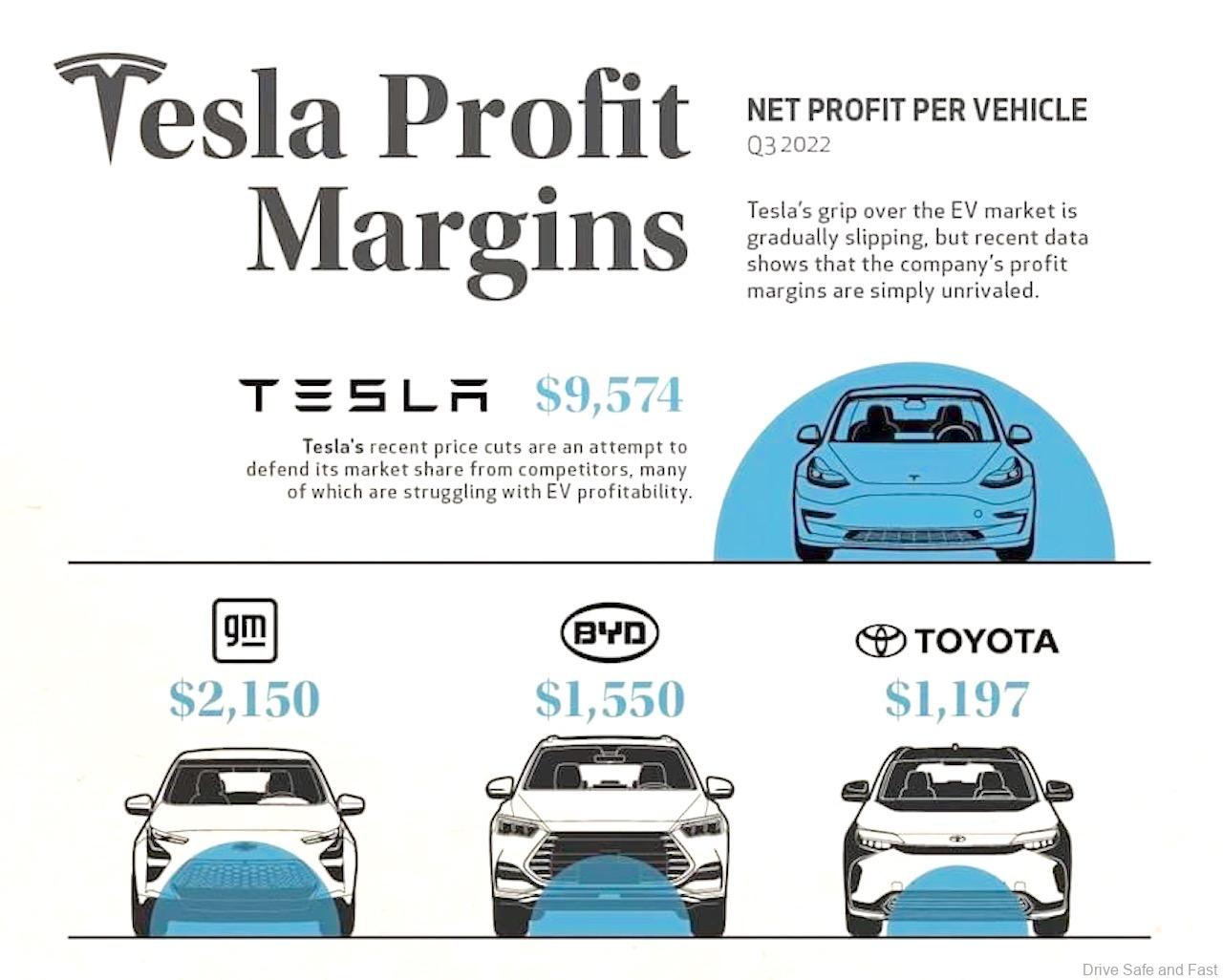
One of the most significant variables in Tesla’s quarterly profit calculation is its dynamic pricing model. Because Tesla operates direct-to-consumer, it can adjust vehicle prices globally in real-time. A price reduction, while intended to stimulate demand and protect market share, directly compresses the automotive gross margin. Analysts evaluate the "Net Income vs. Pricing" spread to determine if the company is successfully maintaining profitability despite aggressive competitive discounting.
Regulatory Credits
A unique aspect of Tesla’s profitability is the sale of regulatory credits to other automakers. While Tesla’s core business is growing, these credits remain a high-margin, albeit volatile, revenue stream. Because they cost the company almost nothing to produce, they provide a boost to net income that can fluctuate significantly from one quarter to the next, depending on the regulatory cycles of the jurisdictions in which Tesla operates.

Key Metrics for Evaluating Financial Health
When reviewing a Tesla quarterly report, stakeholders should look past the headline EPS (Earnings Per Share) and focus on the following metrics:
- Automotive Gross Margin (excluding regulatory credits): This is the purest measure of manufacturing efficiency. It reveals how profitable the vehicles are without the subsidy of environmental credits.
- Free Cash Flow (FCF): As a capital-intensive company, Tesla must fund its factory expansions (Gigafactories) and AI hardware outlays. Positive FCF indicates that the company can sustain its growth using its own earnings rather than relying on external debt.
- Operating Margin: This measures how much of every dollar of sales Tesla keeps after paying for variable costs of production and operating expenses.
- Energy Storage Deployment: As this segment grows, it represents a secondary profit engine that operates on different economic cycles than the automotive sector.
Comparative Profit Analysis
| Financial Metric | Focus Area | Why It Matters |
|---|---|---|
| Gross Margin | Manufacturing | Reflects production efficiency and material costs. |
| Operating Margin | Overhead | Indicates management's control over R&D and SG&A. |
| Free Cash Flow | Liquidity | Measures ability to fund future growth organically. |
| Regulatory Credits | Non-Core Revenue | Provides high-margin padding that varies by market. |
Challenges to Quarterly Profitability
Tesla faces several recurring pressures that can impact quarterly outcomes. First, the ramp-up phase of new vehicle programs or battery production facilities typically results in negative or suppressed margins. When Tesla introduces a new model, the initial cost of engineering, tooling, and labor inefficiencies often weighs heavily on the bottom line until the production line hits a "steady state."
Second, geopolitical and macroeconomic conditions significantly affect supply chain costs. Fluctuations in the price of raw materials—such as lithium, nickel, and cobalt—can increase the cost of goods sold. Furthermore, currency fluctuations (FX impact) play a role, as Tesla generates significant revenue in currencies other than the US Dollar.
Finally, the company’s investment in FSD (Full Self-Driving) and humanoid robotics represents a multi-year gamble. While these initiatives promise high-margin software revenue in the future, they represent current expenses that detract from immediate quarterly profitability. Analysts must weigh this "short-term pain for long-term gain" strategy when assessing the stock’s valuation.
How to Verify Quarterly Results
Investors and interested parties should always source financial data directly from official channels. Tesla publishes its quarterly results through an "Update Letter" and hosts a live earnings call.
- Access the Investor Relations Portal: Navigate to the official Tesla Investor Relations website.
- Locate the Quarterly Results: Look for the "Quarterly Results" section, which provides the PDF version of the Update Letter and the associated SEC Form 10-Q (or 10-K for the fourth quarter).
- Review the GAAP Tables: In the back of the Update Letter, Tesla provides a bridge between GAAP and Non-GAAP measures. This is essential for understanding what specific items (like restructuring charges or tax benefits) are impacting the net income.
- Listen to the Earnings Call: The Q&A session on the earnings call often clarifies the "why" behind the numbers, providing context that written documents might lack regarding supply chain hurdles or product roadmap adjustments.
Disclaimer: This article is for informational purposes and does not constitute financial, investment, or legal advice. Financial markets are volatile; consult with a qualified financial advisor before making investment decisions.
Frequently Asked Questions
Why does Tesla’s profit fluctuate so much between quarters?
Profit fluctuations are largely due to delivery logistics, the timing of new model ramps, and the volatility of regulatory credit sales. Because Tesla’s business is centered on large, physical product deliveries, any disruption in transit or final assembly results in revenue being shifted from one quarter to the next.
What is the difference between GAAP and Non-GAAP profit for Tesla?
GAAP profit follows standardized accounting rules, which include all expenses like stock-based compensation for employees and executives. Non-GAAP profit excludes these items to provide what the company views as a clearer picture of operational performance. Investors should look at both to understand the total cost of running the business.
How do energy storage profits compare to automotive profits?
Energy storage is a high-growth segment for Tesla. While it historically contributed a smaller portion of the total profit than automotive, its margins are increasingly becoming a focus. Unlike automotive, which is driven by consumer demand and interest rates, energy storage is driven by utility-scale infrastructure projects and industrial demand.
Do regulatory credits always contribute to Tesla's profit?
Yes, regulatory credits are a significant contributor to net income. Because these credits are sold to other manufacturers who fail to meet emission standards, they essentially provide "pure profit" to Tesla. However, these sales are cyclical and often decline as other automakers transition to their own electric fleets.
Where can I find historical data on Tesla's quarterly earnings?
Historical data is available in the "Quarterly Results" archive on the official Tesla Investor Relations website. You can download these reports in PDF format dating back to the company’s early public years to analyze long-term trends in margin expansion and revenue growth.
Next Actions for Interested Investors
If you are analyzing Tesla for investment purposes, start by downloading the last four quarters of Update Letters. Plot the "Automotive Gross Margin (excluding regulatory credits)" on a spreadsheet to see the true trend of manufacturing efficiency over the past year. Observe how the operating margin responds to changes in global vehicle pricing. By focusing on these core operational metrics rather than the headline net income, you will gain a clearer understanding of Tesla’s underlying financial strength and its ability to scale production profitably in an increasingly competitive electric vehicle landscape.
Image Gallery
Select an image to open it in a new tab.
Declan O'Connor
Higher Education and Campus Culture Reporter
