
Steve Caballero is a pioneer of professional skateboarding, best known as a key member of Powell-Peralta’s legendary Bones Brigade, the inventor of the Caballerial trick, and the signature athlete behind the Vans Half Cab skate shoe. His career spans over four decades, bridging the transition from 1970s skatepark bowls to vert ramp dominance, street skate innovation, and lasting cultural impact.
The Early Years and the Bones Brigade Era
Steve Caballero began skateboarding in December 1976 at the age of twelve in San Jose, California. Born with scoliosis—a structural curvature of the spine—Caballero found that skateboarding offered physical empowerment and freedom of movement without the competitive rigidity of traditional team sports. He honed his skills at local Northern California venues, most notably Winchester Skatepark in San Jose and Campbell Skate Park.
In 1979, while competing as an amateur in a contest at Winchester, Caballero was spotted by Stacy Peralta, co-founder of Powell-Peralta Skateboards. Peralta recognized Caballero's fluid style, low center of gravity, and high technical execution on pool walls and vertical ramps. By late 1979, Caballero officially joined the Powell-Peralta roster, becoming one of the founding members of the Bones Brigade alongside skaters like Tony Hawk, Lance Mountain, Mike McGill, Tommy Guerrero, and Rodney Mullen.
- Bones Brigade Foundation (1979)
- Steve Caballero
- Tony Hawk
- Mike McGill
- Powell-Peralta Media (Future Primitive)
- Innovation (Caballerial)
The Bones Brigade fundamentally altered how skateboarding was consumed worldwide. Through groundbreaking VHS video releases directed by Peralta, such as The Bones Brigade Video Show (1984), Future Primitive (1985), and The Search for Animal Chin (1987), Caballero reached a global audience. His segment in Future Primitive, set to punk music, showcased a smooth, effortless aesthetic that made complex vertical maneuvers accessible and inspiring to viewers.
During the 1980s, Caballero dominated the professional contest circuit. He set world records for high air on a halfpipe (reaching 11 feet above the coping in 1987) and won numerous vert and bowl titles. What set him apart from many contemporaries was his adaptability: as public interest shifted away from vert ramps toward street skating in the late 1980s and early 1990s, Caballero modified his approach to remain technical, stylish, and highly relevant.
Technical Innovation: The Caballerial and the Half-Cab
Caballero's most lasting mechanical contribution to skateboarding physics and trick nomenclature is the Caballerial (often shortened to "Cab") and its derivative, the Half-Cab.
Origin of the Trick
In 1981, at Winchester Skatepark, Caballero rolled up a vertical ramp backward in a "fakie" stance (riding backward with feet placed in standard riding position). Upon reaching the transition, he popped an ollie off the tail, rotated a full 360 degrees in the air, and landed moving forward down the ramp without grabbing his board. Prior to this, aerial rotations on vert ramps relied on hand grabs to maintain control. Executing a full 360-degree rotation purely via the pop of the tail while traveling backward was a quantum leap in trick evolution.
Initially dubbed the "Fakie 360 Ollie," the skate community and media quickly renamed it the Caballerial in honor of its creator.
- Fakie Entry
- Tail Pop off Coping
- 360° Unassisted Rotation
- Forward Landing
The Half-Cab Evolution
As street skating exploded in the late 1980s, skaters adapted vertical maneuvers to flat ground, ledges, and handrails. When a skater performs a 180-degree rotation out of a fakie position on flatground or street obstacles, it is called a Half-Cab. The Half-Cab became an essential building block for modern street skateboarding, serving as an entry trick into slides, grinds, and multi-flip combinations.
Step-by-Step Breakdown: Executing a Classic Half-Cab
Phase 1: Approach — Fakie stance, head turned backward
Phase 2: Pop & Turn — Pop tail, wind shoulders 180 degrees front/back
Phase 3: Catch & Roll — Level deck, land, roll forward cleanly
Foot Positioning: Setup in your standard riding stance, but rolling backward (fakie). Place your back foot squarely in the pocket of the nose (acting as the tail while rolling backward) and your front foot slightly below the front truck bolts at a subtle angle.
Weight Distribution & Approach: Keep your head turned over your shoulder in the direction of motion. Maintain balanced weight so the board does not shift prematurely before the pop.
The Wind-Up and Pop: Initiate a slight shoulder rotation just before snapping the board. As the tail snaps down against the ground, unwind your shoulders in the direction of the rotation (either frontside or backside).
Leveling the Deck: Slide your front foot up toward the tail to level out the board mid-air, allowing the deck to stick to your grip tape during the 180-degree turn.
Landing and Roll-Away: Complete the 180-degree rotation in the air, land squarely over your bolts, absorb the impact with your knees bent, and roll away in your natural forward stance.
Common Execution Errors to Avoid
- Pre-rotating the Board on the Ground: Scraping the tail on the ground to initiate rotation before leaving the air robs the trick of height and pop. Ensure the snap happens straight down before the shoulders carry the board around.
- Under-rotating Shoulders: The board always follows the head and torso. If shoulders stop rotating at 90 degrees, the wheels will hang up on landing, leading to a slide-out or fall.
- Over-leaning Forward: Leaning too far over the toes during a fakie frontside rotation causes the board to fly out behind the rider upon landing.
Footwear Legacy: The Evolution of the Vans Half Cab
Beyond tricks, Steve Caballero altered the landscape of skate footwear design. In 1989, Vans introduced the Vans Caballero (commonly referred to as the Cab High-Top), which was the company’s first signature skate shoe.
- 1989: Vans Caballero High-Top Released
- 1990-1991: Skaters cut down collars & use duct tape for street agility
- 1992: Vans officially launches the mid-top Vans Half Cab
The Born-Out-of-Necessity DIY Redesign
By 1991, street skaters required greater ankle mobility than rigid vert high-tops permitted. Skaters began taking scissors to their high-top Caballero shoes, cutting the padded ankle collars down to a mid-top silhouette and sealing the raw edges with duct tape.
Recognizing this grass-roots adaptation, Caballero approached Vans with an idea: cut out the middleman and manufacture a pre-cut mid-top shoe directly. In 1992, Vans launched the Vans Half Cab. Featuring a mid-top collar, durable suede construction, and a distinct side woven patch depicting Steve Caballero executing a mid-air trick, the Half Cab became an enduring standard in skate shoes.
- Modern Vans Half Cab Pro Architecture
- Upper: Reinforced Heavy-Duty Suede & Canvas
- Collar: Mid-Top Silhouette for Ankle Mobility
- Reinforcement: DURACAP™ Rubber Underlays in High-Wear Zones
- Cushioning: POPCUSH™ / ULTRACUSH™ Impact-Absorbing Insoles
- Outsole: SICKSTICK™ Rubber Waffle Sole for Board Control
Technical Anatomy of the Vans Half Cab
- DURACAP™ Underlays: Reinforced rubber underlays positioned in high-wear areas beneath the suede panels prevent premature blowout from grip tape abrasion during ollies and kickflips.
- POPCUSH™ Cushioning: High-rebound foam insoles designed for impact protection that prevent heel bruises when jumping from stairs or dropping into pools.
- SICKSTICK™ Rubber Compound: A proprietary gum-rubber outsole formulation designed to maximize grip, board feel, and durability over standard gum rubber.
- Internal Heel Counters: Structured heel cups that hold the foot securely in place, reducing slippage inside the shoe during technical foot maneuvers.
The shoe celebrated its 30th anniversary in 2022, maintaining continuous production since 1992—a rarity in athletic and action sports footwear.
Equipment Setup Evolution: 1980s Vert vs. Modern Era
To understand Caballero's technical adaptability, it is helpful to look at how his equipment setups evolved over time to match changing terrain and riding styles.
| Technical Parameter | 1980s Powell-Peralta Vert Setup | Modern Bowl/Park Setup |
|---|---|---|
| Deck Width | 9.75" – 10.0" (Wide, directional shape) | 8.5" – 9.0" (Popsicle or shaped hybrid) |
| Wheelbase | 15.0" – 15.5" (Longer for high-speed stability) | 14.25" – 14.75" (Shorter for faster turns) |
| Deck Graphics | VCJ Dragon Graphic (Screen-printed) | Classic Dragon / Custom Guest Art |
| Wheel Diameter | 60mm – 66mm (Hardness: 97A - 99A) | 56mm – 58mm (Hardness: 84B / 101A) |
| Truck Width | 169mm (Independent / Tracker) | 149mm – 159mm (Independent Stage 11) |
| Footwear | Vans Caballero High-Top (1989) | Vans Half Cab Pro / Skate Half Cab |
| Safety Gear | Full pads (Pro-Tec Helmet, Knee/Elbow pads) | Knee pads (Vert/Bowl), Helmet |
Beyond Skateboarding: Art, Music, and Culture
Steve Caballero’s influence extends outside skateboard performance into punk rock, graphic art, and motorcycling.
Punk Rock Career
In 1982, Caballero co-founded the San Jose punk rock band The Faction. Playing bass guitar, Caballero and the band pioneered "Skate Punk"—a fast, high-energy subgroup of hard rock that explicitly referenced skateboarding culture in its lyrics. Their 1983 song "Skate Harasser" became an anthem for the era. Over the decades, Caballero played in several other musical projects, including Odd Man Out, Shadt, Soda, and more recently, the punk band Urethane, formed in 2020.
- Steve Caballero Creative Outlets
- Skateboarding
- Powell-Peralta
- Bones Brigade
- Music
- The Faction
- Urethane
- Visual Art
- Deck Graphics
- Painting
- Hot Rods & Motocross
- Custom Vintage Motorcycle Builds & Flat-Track Racing
- Skateboarding
Visual Art and Design
Caballero is an artist who draws, paints, and designs graphics. His signature Powell-Peralta graphic—the Caballero Dragon, originally drawn by artist V. Courtlandt Johnson (VCJ) based on Caballero's Japanese heritage and birth year (1964, Year of the Dragon)—remains one of the most recognized icons in action sports history. Caballero has drawn his own limited-edition graphics, footwear colorways, and pop-culture mashup artwork exhibited in galleries worldwide.
Hot Rods and Motocross
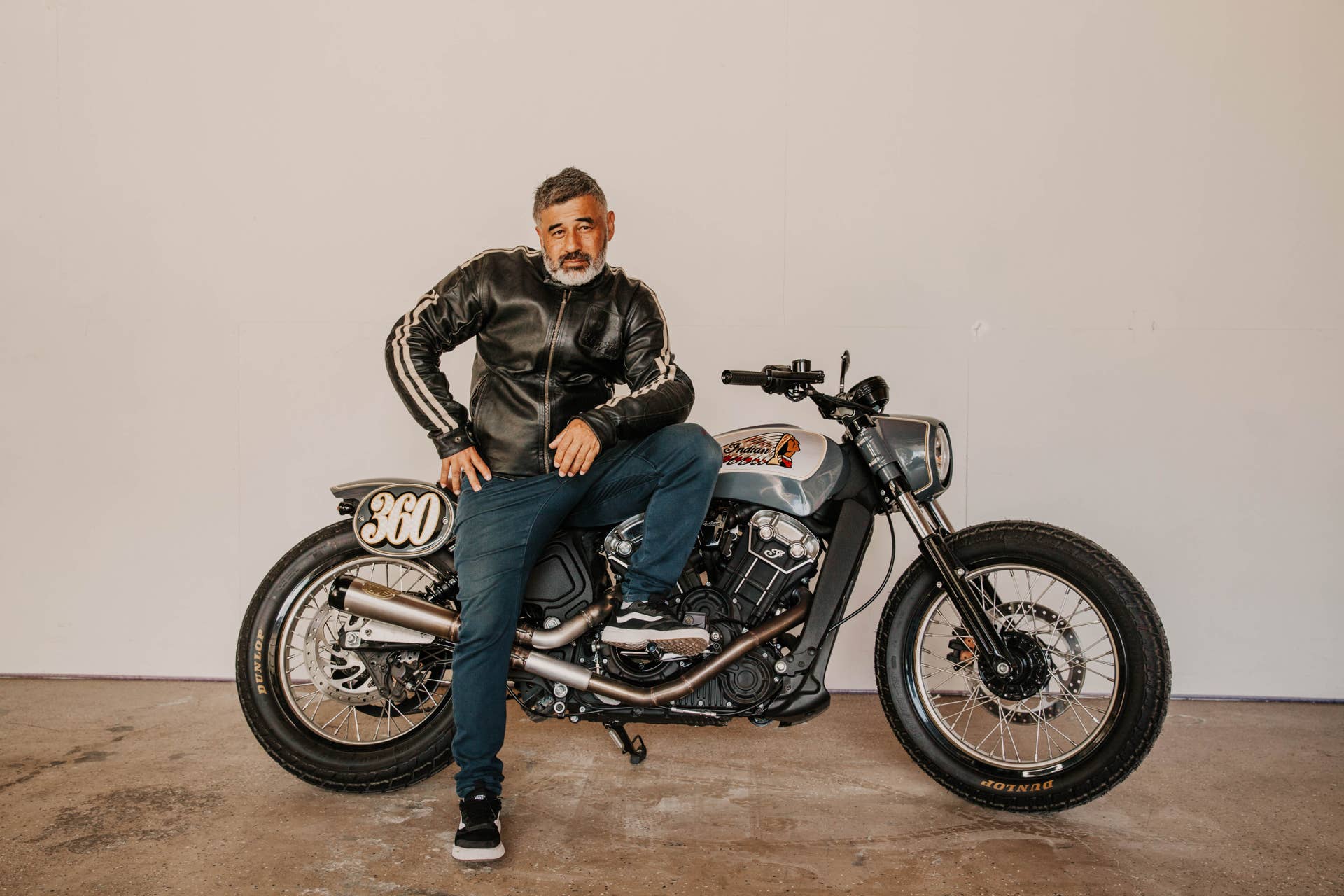
In addition to music and art, Caballero builds custom hot rods and vintage motorcycles. He competes in vintage motocross and flat-track motorcycle races, demonstrating athletic longevity across multiple disciplines well into his fifties and sixties.
Key Takeaways for Skaters and Cultural Historians
- Adaptability Preserves Longevity: Caballero transitioned seamlessly across distinct eras—from early 1970s fiberglass decks to 1980s vert dominance, 1990s street skate evolution, and modern master-class bowl riding.
- Technological Heritage: The Caballerial trick unlocked new aerial dimensions by proving that unassisted rotational ollies were possible on vertical surfaces without hand grabs.
- Pioneering Footwear Design: The Vans Half Cab demonstrated how athlete-led DIY modifications can define a permanent footwear standard.
- Multidisciplinary Creative Focus: Skateboarding, punk music, fine art, and motorcycling mutually reinforced Caballero's personal brand, creating a template for multi-hyphenate action sports athletes.
Frequently Asked Questions
What is the difference between a Caballerial and a Half-Cab?
A Caballerial is a full 360-degree rotation off a tail pop while rolling backward (fakie), originally executed on a vertical ramp transition. A Half-Cab is a 180-degree rotation popped from a fakie position, performed on flatground, bank ramps, or street obstacles.
Why is the Vans shoe called the Half Cab?
When skaters in the early 1990s began cutting down Steve Caballero's high-top signature shoe into a mid-top to increase ankle movement for street skating, they referred to the modified shoe as a "Half-Cab." Vans formally adopted the concept and name in 1992 when releasing the official mid-top model.
Is Steve Caballero still skateboarding?
Yes. Caballero continues to skate pools, bowls, and park transitions regularly. He frequently participates in legends competitions, bowl jams, and promotional events around the globe, demonstrating high technical execution well into his 60s.
What stance does Steve Caballero ride?
Steve Caballero rides in a goofy stance, meaning his right foot is placed forward toward the nose of the board, while his left foot sits on the tail for popping tricks.
What punk bands has Steve Caballero played in?
Steve Caballero played bass guitar in the influential skate-punk band The Faction, formed in 1982. He has also performed with bands such as Odd Man Out, Soda, Shadt, and the punk rock group Urethane.
Image Gallery
Select an image to open it in a new tab.




Ingrid Bjornson
Global Cyber Policy and Regulation Analyst
