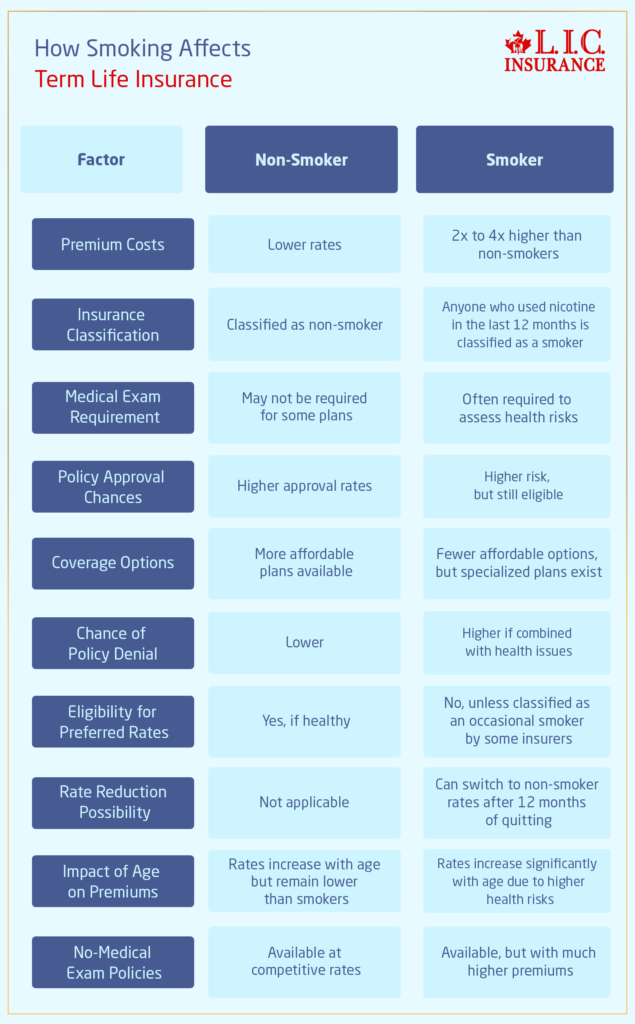
A smokers life insurance policy is a standard life insurance contract—either term or permanent—issued to an individual who uses nicotine or tobacco products, resulting in higher premium rates to account for increased mortality risk. While coverage is widely available, smokers typically pay two to four times more than non-smokers for the same death benefit, depending on their age, health, and specific type of tobacco use.
Life insurance for smokers remains one of the most misunderstood areas of personal finance. Many consumers believe that having a history of tobacco use makes them uninsurable or that "smoker rates" only apply to heavy cigarette users. In reality, the landscape in 2026 is nuanced. Insurance carriers have refined their underwriting processes to distinguish between occasional cigar smokers, habitual cigarette users, and those utilizing modern nicotine delivery systems like e-cigarettes or heated tobacco products. Understanding how these policies work is essential for securing financial protection for your family without overpaying or risking a claim denial.
Defining the "Smoker" Status in 2026
The first hurdle in obtaining a smokers life insurance policy is understanding how insurance companies define the term. In the eyes of an underwriter, smoking is not limited to cigarettes. Most carriers categorize an applicant as a smoker if they have used any nicotine products within the last 12 to 24 months.
What Counts as Tobacco Use?
While every insurance company has its own proprietary guidelines, the following products generally trigger smoker rates:
- Cigarettes: Any frequency of use usually results in "Standard Smoker" or "Tobacco" rates.
- E-cigarettes and Vapes: Despite early industry debates, most carriers in 2026 treat vaping the same as cigarette smoking due to the presence of nicotine and the long-term respiratory uncertainties.
- Cigars: Some companies offer "Occasional Cigar" rates (e.g., 12 or fewer per year) that allow for non-smoker pricing, provided the laboratory results show no nicotine.
- Chewing Tobacco and Snuff: Because these products contain nicotine and carry heightened risks of oral cancers, they are classified under tobacco rates.
- Nicotine Replacement Therapy (NRT): The use of patches, gum, or lozenges often keeps an applicant in the smoker category because the presence of nicotine in the blood/urine test is the primary metric for classification.
- Marijuana: The industry is split here. Some carriers offer non-smoker rates to recreational marijuana users, while others classify any inhaled substance as a "smoker" risk.
The Cotinine Test
During the medical exam (paramedical), insurers test for cotinine, a byproduct of nicotine that stays in the body longer than nicotine itself. Cotinine can be detected in blood, saliva, or urine for several days to weeks after use. If a "non-smoker" applicant tests positive for cotinine, the carrier will likely pivot the application to smoker rates or decline the policy if they feel the applicant was intentionally deceptive.
Why Smoker Policies Cost More: The Actuarial Reality
The primary driver of high premiums for smokers is the statistical reality of mortality. Actuaries use vast datasets to determine the "risk of loss" for any given policyholder. According to the Centers for Disease Control and Prevention (CDC), smoking remains a leading cause of preventable death, contributing to heart disease, stroke, and various forms of cancer.
In 2026, life insurance companies continue to rely on "Mortality Tables" that show a stark difference in life expectancy between smokers and non-smokers. A 35-year-old male smoker is statistically more likely to trigger a death benefit claim than a 35-year-old male non-smoker. To compensate for this higher probability of paying out a claim, the insurance company must collect more in premiums. This is known as adverse selection mitigation.

Types of Life Insurance Available for Smokers
Smokers have access to the same basic policy structures as non-smokers, though the "Preferred" and "Super Preferred" rate classes are generally off-limits.
1. Term Life Insurance
This is the most popular choice for smokers due to its affordability relative to permanent options. A term policy provides coverage for a specific period (e.g., 10, 20, or 30 years). If the insured dies during the term, the beneficiaries receive the death benefit. If the insured stops smoking during the term, they can often apply for a "re-rating" after one to two years of being nicotine-free.
2. Whole Life Insurance
Whole life provides permanent coverage and includes a cash-value component that grows over time. For smokers, whole life is significantly more expensive than term. However, it offers the benefit of level premiums—meaning the rate will not increase as the smoker gets older, provided the policy remains in force.
3. Universal Life Insurance
Universal life is another permanent option that offers more flexibility in premium payments and death benefits. This is often used by smokers who want permanent protection but need the ability to adjust their outlays if their financial situation changes.
4. Guaranteed Issue Life Insurance
For smokers who have already developed health issues (such as COPD or heart disease), traditional underwriting might be impossible. Guaranteed issue policies do not require a medical exam or health questions. The trade-off is much lower coverage limits (usually under $25,000) and higher costs, but it ensures that even high-risk smokers can obtain some level of final expense coverage.
Comparing Costs: Smoker vs. Non-Smoker Premiums (2026 Estimates)
The table below illustrates the estimated monthly premium difference for a $500,000, 20-year Term Life Policy for individuals in good health (outside of tobacco use).
| Age | Gender | Non-Smoker (Standard) | Smoker (Standard) | Estimated % Increase |
|---|---|---|---|---|
| 25 | Female | $24.50 | $78.10 | 218% |
| 25 | Male | $29.10 | $94.40 | 224% |
| 35 | Female | $31.80 | $112.50 | 253% |
| 35 | Male | $38.20 | $145.20 | 280% |
| 45 | Female | $62.40 | $245.00 | 292% |
| 45 | Male | $81.90 | $312.60 | 281% |
| 55 | Female | $148.20 | $585.30 | 294% |
| 55 | Male | $195.50 | $742.00 | 279% |
Note: These figures are 2026 projections based on historical actuarial trends. Actual rates vary by carrier, BMI, and family medical history.
The Consequences of Non-Disclosure
A common temptation for applicants is to claim "non-smoker" status to save money. This is considered material misrepresentation and is a form of insurance fraud. Life insurance policies include a "Contestability Period," typically the first two years of the policy.
If the insured dies during this period, the insurance company has the right to investigate the original application. If they discover the insured was a smoker but lied on the application (e.g., through medical records or the presence of cotinine in a previous autopsy or medical report), they can:
- Deny the claim entirely: Leaving the beneficiaries with nothing but a refund of premiums paid.
- Adjust the death benefit: Reducing the payout to what the premium would have purchased had the truth been known.
Even after the contestability period expires, proven fraud can, in some jurisdictions, lead to legal challenges or policy rescission. Honesty is the only way to ensure the financial security of your beneficiaries.
Strategies to Secure Better Rates as a Smoker
While smoker rates are high, there are professional strategies to mitigate the cost of a smokers life insurance policy.
- Work with an Independent Agent: Unlike "captive" agents who work for one company, independent agents represent dozens of carriers. Some carriers are "smoker-friendly" and may offer better rates for cigar users or vapers than others.
- Improve Other Health Metrics: If you cannot change your smoking status immediately, focusing on other underwritten factors can help. Maintaining a healthy BMI, managing blood pressure, and keeping cholesterol in check can prevent you from being "table rated" (charged even more) on top of the smoker rate.
- Utilize the "Quit Smoking" Incentive: Some modern life insurance companies in 2026 offer policies with "smoker" rates for the first year, with a built-in provision to lower the rate automatically if the policyholder provides proof of smoking cessation after 12 months.
- Consider a Shorter Term: If you plan to quit smoking in the near future, you might buy a 10-year term policy now to protect your family at the lowest possible cost for a smoker, then apply for a new 20 or 30-year non-smoker policy once you have been "clean" for the required time.
Transitioning to Non-Smoker Rates
The most effective way to lower your life insurance costs is to quit using nicotine. However, you cannot simply call your insurer the day after you quit to demand a lower rate.
Most insurance companies require a minimum of 12 months of being nicotine-free to qualify for "Standard Non-Smoker" rates. To reach "Preferred" or "Super Preferred" tiers, carriers often require three to five years of abstinence.
Steps to Re-Rating:
- Maintain Abstinence: Ensure no nicotine or tobacco use for at least 12 months.
- Contact Your Insurer: Request a "Reconsideration of Rating."
- Undergo a New Medical Exam: The carrier will likely require a new blood and urine test to confirm the absence of cotinine.
- Updated Health Review: The insurer will also look at your current weight and health status. If you quit smoking but gained a significant amount of weight, the premium might not drop as much as expected.
Frequently Asked Questions
Does occasional social smoking count for smoker rates?
Yes. In the eyes of most life insurance underwriters, there is no "casual" smoker. If you smoke one cigarette a week or even once a month, you are technically a smoker. If you disclose it, you pay the smoker rate. If you don't disclose it and the medical exam detects nicotine, your application may be declined for "non-disclosure."
Are e-cigarettes or "vaping" treated differently than cigarettes?
As of 2026, most major carriers treat vaping identically to cigarette smoking. While some niche carriers might offer slightly better rates for non-combustible nicotine users, the prevailing industry standard is to classify any nicotine delivery system as tobacco use.
What if I only smoke marijuana?
The treatment of marijuana varies significantly by carrier. Due to widespread legalization, many insurers now offer non-smoker rates to recreational marijuana users, provided they don't also use tobacco. However, frequency matters; daily use may still result in higher rates or a "table rating" due to potential lifestyle risks or respiratory concerns.
Can I get life insurance if I use nicotine patches or gum?
Usually, NRT users are still classified as smokers because the labs will test positive for nicotine. Most carriers require you to be free of all nicotine—including patches and gum—for at least 12 months before granting non-smoker status.
Will my premiums go up automatically if I start smoking after the policy is issued?
No. Life insurance is underwritten based on your health at the time of application. If you were a non-smoker when you bought the policy and you start smoking later, your premiums remain the same, and your coverage remains valid. However, you must be truthful during the application process itself.
Final Recommendation
If you are a smoker in 2026, the best course of action is to secure coverage now rather than waiting until you quit. Life insurance costs increase with age, and waiting to quit smoking could leave your family unprotected in the interim. Secure a smokers life insurance policy today to lock in your insurability, then use the high cost of premiums as an added financial incentive to begin your smoking cessation journey. Once you have successfully remained nicotine-free for 12 to 24 months, work with your agent to apply for a rate reduction or a new policy at non-tobacco rates.
Image Gallery
Select an image to open it in a new tab.
Celine Dubois
Contemporary Living and Global Arts Columnist
