
Luxury Burning Man represents the stark intersection of radical counter-culture and extreme wealth. While the event is founded on principles of decommodification and self-reliance, high-net-worth individuals often spend between $15,000 and $100,000 on "plug-and-play" camps, air-conditioned RVs, and private transport, creating a profound cultural tension within the Black Rock Desert.
The 2026 Burning Man season continues to grapple with a central identity crisis: can a gift economy survive when a segment of its population pays for a curated, turn-key experience? As the event has evolved from a small bonfire on a San Francisco beach to a temporary city of 80,000 people in Nevada’s Black Rock Desert, the influx of "luxury burners" has transformed the landscape of the Playa. This transformation is not merely financial; it is a fundamental shift in how the event’s Ten Principles are interpreted and applied.
The Financial Reality: What Does "Luxury" Actually Cost?
To understand the contradiction, one must first understand the scale of investment required to experience Burning Man through a lens of luxury. While a standard ticket in 2026 remains in the $575 to $650 range (excluding vehicle passes and taxes), the true cost of a luxury experience is found in the logistics and camp memberships.
The Breakdown of High-End Expenses
For the "one percent" of attendees, the expenses begin long before they reach the dust. Private aviation is the primary entry point for the luxury tier. Utilizing the 88NV private airport—a temporary landing strip constructed on the Playa—allows wealthy participants to bypass the grueling 8-to-15-hour "Gate" traffic. A charter flight from San Francisco or Los Angeles can range from $2,500 to $5,000 per seat.
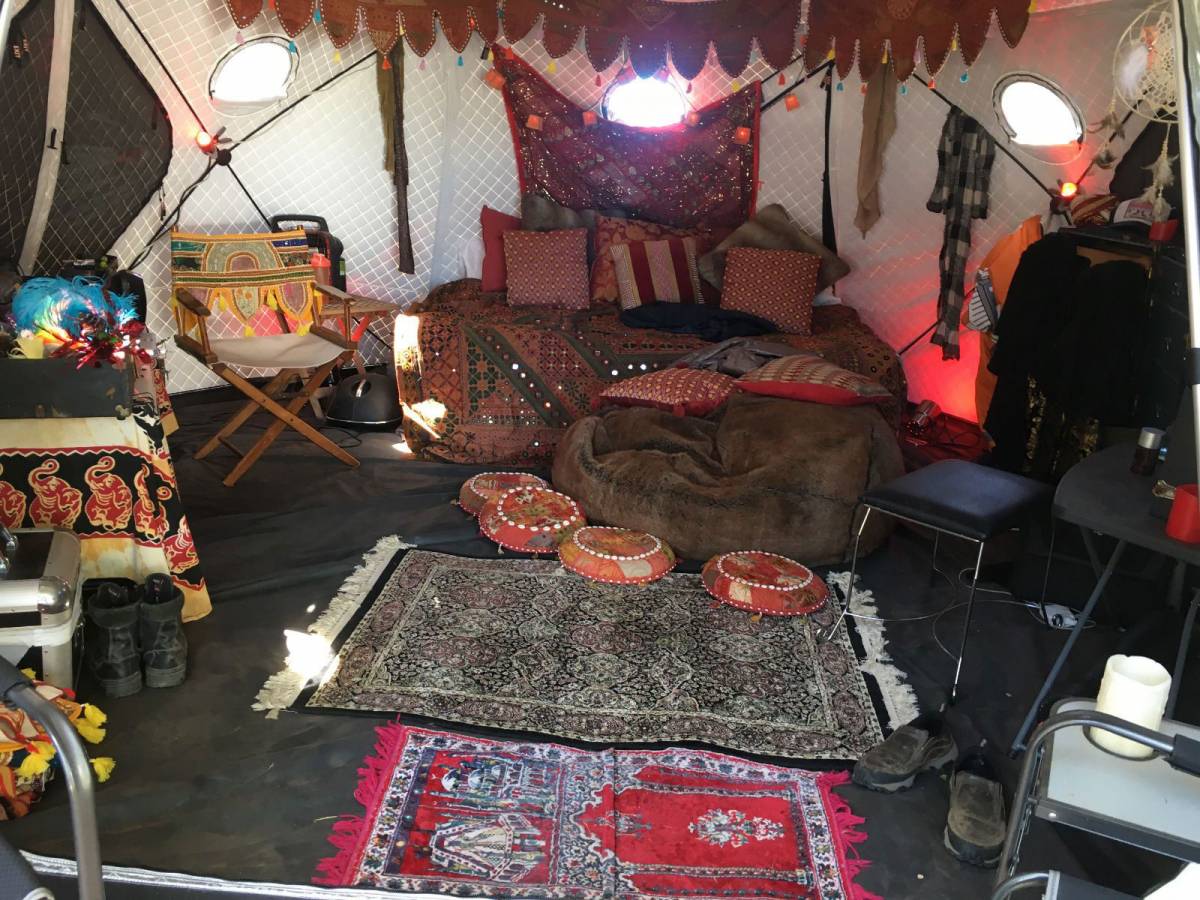
Once on the ground, the "Plug-and-Play" (PnP) camp model takes over. These camps provide everything from pre-erected ShiftPods or luxury trailers with power and air conditioning to professional catering and private "Sherpas" (hired staff) who manage bicycle repairs, costume changes, and cleaning.
| Expense Category | Standard Burner (Self-Reliant) | Luxury Burner (Turn-key) |
|---|---|---|
| Ticket & Vehicle Pass | $700 - $850 | $700 - $2,500 (FOMO Tiers) |
| Transportation | $100 - $300 (Gas/Carpool) | $3,000 - $10,000 (Private Flight/Art Car) |
| Shelter | $200 - $1,500 (Tent/ShiftPod) | $15,000 - $50,000 (RV/Luxury Camp) |
| Food & Water | $200 - $500 (Self-prepped) | $5,000 - $15,000 (Chef-catered) |
| Principle Alignment | High (Radical Self-reliance) | Low (Outsourced Labor) |
The Cultural Contradiction: Decommodification vs. The "Sherpa" Economy
The core of the "Luxury Burning Man" controversy lies in the violation of Decommodification and Radical Self-reliance. These two principles are the bedrock of the Burning Man experience. Decommodification dictates that the environment should be free from commercial sponsorships, transactions, and advertising. Radical Self-reliance encourages the individual to discover, exercise, and rely on their inner resources.
The Rise and Regulation of Plug-and-Play Camps
In the mid-2010s, the "Plug-and-Play" camp phenomenon exploded. Wealthy attendees, often from the tech or finance sectors, would pay a lump sum to a camp organizer who handled all logistics. By 2026, the Burning Man Project (BMP)—the non-profit that organizes the event—has implemented stricter regulations to curb these "convenience camps."
The BMP’s stance is that when you pay for a service within the city, you are no longer a participant; you are a consumer. This creates a "spectator" class that consumes the art and effort of others without contributing their own labor or creativity. In response, the BMP has revoked the placement of several high-profile camps over the years that were found to be operating as for-profit businesses or failing to contribute meaningfully to the communal effort.
The Problem of Hired Labor
The use of hired "Sherpas" is perhaps the most contentious aspect of luxury on the Playa. These are paid workers who build the camps, cook the meals, and clean up the "MOOP" (Matter Out Of Place) for wealthy clients. This introduces a class hierarchy that the event was designed to dissolve. When one person is cleaning the dust off another’s boots for a wage, the "Radical Inclusion" of the event becomes skewed by the same capitalistic structures participants are supposedly escaping.
Technological Enablers of Desert Luxury
The year 2026 has seen a surge in technologies that make the harsh environment of the Black Rock Desert significantly more hospitable for those with the means to afford them. These advancements have further widened the gap between the traditional experience and the luxury one.
- Starlink and High-Speed Connectivity: While "Immediacy" is a core principle suggesting participants remain present and offline, high-powered satellite internet allows luxury camps to maintain seamless business operations and social media presence from the middle of a dry lakebed.
- Advanced Solar-Battery Arrays: High-end camps now deploy massive, silent solar grids (such as those from companies like Tesla or specialized industrial providers) that power industrial-grade air conditioning units 24/7, removing the "radical" element of enduring the 100°F+ desert heat.
- Hydroponic and Luxury Catering: Far from the "canned beans and jerky" diet of the traditional burner, luxury camps often feature refrigerated containers housing fresh organic produce and fine wines, supported by professional-grade mobile kitchens.
Impact on the Environment and "Leaving No Trace"
The luxury experience often carries a significantly higher carbon footprint. Private jets, heavy-duty trailers, and the massive power requirements of air-conditioned enclosures contribute to an environmental impact that contradicts the principle of Leaving No Trace.
The Burning Man Project has set ambitious goals to be carbon negative by 2030. However, the luxury segment presents a major hurdle. A single private flight into Black Rock City produces more emissions per passenger than a dozen carpools coming from Reno. Furthermore, the sheer volume of "stuff" brought in by luxury camps—often discarded or left in storage for only one week of use per year—challenges the sustainability of the event.
Why the Luxury Experience Persists
Despite the pushback from the "old guard" of Burners and the restrictions from the BMP, the luxury experience persists for several reasons:
- Philanthropy and Art Support: Many of the most massive, awe-inspiring art installations on the Playa are funded by the very individuals who stay in luxury camps. The "billionaire class" of Burners often acts as modern-day Medicis, providing the capital necessary for large-scale engineering projects that define the event's visual landscape.
- Accessibility for the Time-Poor: For high-level executives or public figures, the "Radical Self-reliance" of spending two weeks preparing gear and a week cleaning it afterward is a logistical impossibility. Luxury camps offer a way for these influential people to participate, albeit in a modified way.
- The "Bucket List" Effect: As Burning Man has become a global cultural phenomenon, it has attracted "tourists" who want the photos and the status of having attended without the physical hardship.
Comparison: Traditional vs. Luxury Philosophy
The divide is best understood not just by the cost, but by the intent of the participant.
| Feature | Traditional Burner | Luxury Burner |
|---|---|---|
| Preparation | Months of planning, packing, and building. | Signing a contract and wiring funds. |
| Participation | Volunteering for shifts (Greeters, Ice, Rangers). | Observing art and attending private parties. |
| Experience of the Desert | Enduring heat, dust, and physical exhaustion. | Retiring to a climate-controlled environment. |
| Community Connection | Deep bonding through shared hardship and labor. | Interaction primarily within an exclusive social circle. |
Frequently Asked Questions
Is "Luxury Burning Man" actually allowed by the organizers?
The Burning Man Project does not officially recognize "luxury" as a category. While they cannot stop people from bringing expensive gear, they actively ban "Plug-and-Play" camps that sell packages or use hired labor for basic tasks. Camps must be "invited" to have a reserved spot, and those that violate the 10 Principles (especially Decommodification) are denied placement in subsequent years.
How much should I expect to spend for a "mid-range" experience in 2026?
A mid-range experience—which involves a comfortable hexayurt or a shared RV, decent food, and a collaborative camp—typically costs between $2,500 and $5,000 per person. This includes the ticket, vehicle pass, shared camp dues, and personal supplies.
Can I fly into Burning Man on a commercial airline?
No. There are no commercial flights to Black Rock City. You can fly commercially to Reno-Tahoe International Airport (RNO) and then take the "Burner Express" bus, or you can use a private charter to land at the temporary 88NV airport on the Playa.
Do luxury camps provide tickets to their members?
Generally, no. Every individual is responsible for securing their own ticket through the various sales (Main Sale, FOMO Sale, or the STEP program). However, some established camps have a small allocation of "Directed Group Sale" tickets for essential builders and leads, which are rarely given to luxury guests.
Is it possible to be "Radically Self-reliant" while staying in a luxury camp?
It is a paradox. While you are physically in the desert, if you are not responsible for your own water, food, and shelter, you are technically not practicing Radical Self-reliance. Many luxury burners argue that by outsourcing their survival, they are free to practice "Radical Self-expression" more fully, though this remains a point of intense debate.
Recommendations for Navigating the Contradiction
If you are planning to attend Burning Man in 2026 and have significant financial resources, the most respected way to participate is through contribution rather than consumption.
- Fund an Honorarium Art Project: Instead of spending $50,000 on a private trailer, consider donating that amount to an artist or a collective building a large-scale installation.
- Join a Working Camp: Avoid turn-key experiences. Join a camp where you are required to pull shifts—whether that’s cooking for 100 people, hauling ice, or helping with the "MOOP" sweep.
- Prioritize Sustainability: Invest in high-end solar power and gray-water evaporation systems that help the event meet its environmental goals, rather than relying on gas-powered generators.
- Embrace the Dust: The core value of the event is found in the struggle against the elements. Spending at least some of your time outside the air conditioning will provide a more authentic connection to the community and the environment.
The "Luxury Burning Man" experience will likely always exist as long as there is wealth inequality in the outside world. However, the true "magic" of the Playa is a currency that cannot be bought: the feeling of communal effort and the visceral experience of a world built on gifts rather than gold.
Image Gallery
Select an image to open it in a new tab.


Celine Dubois
Contemporary Living and Global Arts Columnist
