What Is the Massachusetts Workers' Compensation Process? A Step-by-Step Guide
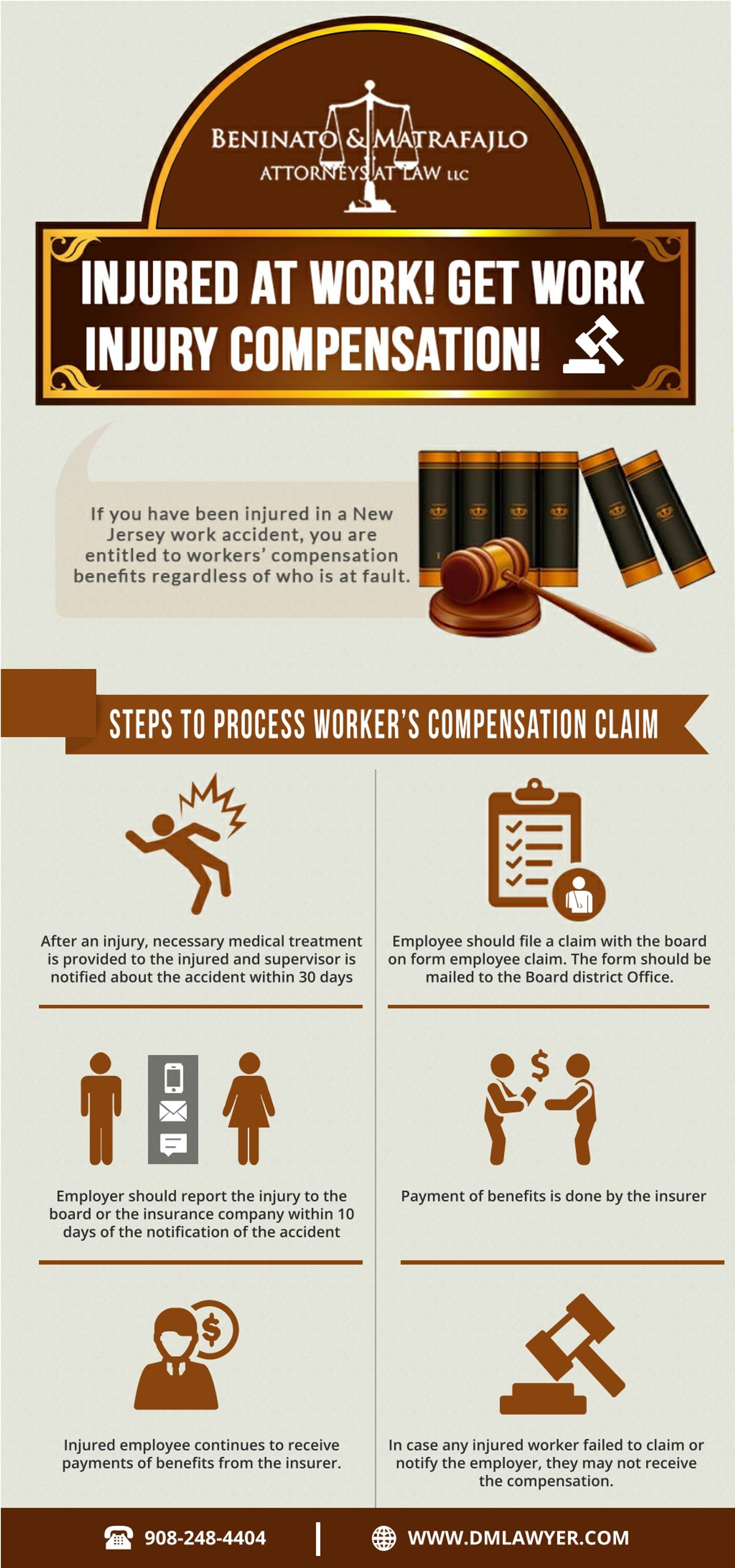
The Massachusetts workers' compensation process is a state-mandated administrative legal framework governed by Massachusetts General Laws Chapter 152 and administered by the Department of Industrial Accidents (DIA). It requires almost all private and public employers in the Commonwealth to maintain workers' compensation insurance, providing wage replacement benefits, medical coverage, and vocational rehabilitation to employees injured on the job.
Massachusetts Workers' Comp Timeline
- Incident: Employee reports injury to employer immediately
- Employer Form 101: Filed if > 4 days missed (5 days or 7-day reporting rule)
- Insurer Decision: Pay or Deny within 14 days
DIA Dispute Resolution Path
- Conciliation: Informal meeting to resolve dispute
- Conference: AJ issues temporary order
- Formal Hearing: Full trial with IME examination
- Appeals Board: Legal review by 3-Judge DIA panel
Navigating an occupational injury or illness in Massachusetts involves specific statutory deadlines, administrative procedures, and specialized forms. Whether an injury is an acute trauma—such as a construction fall or machinery accident—or a cumulative injury like repetitive strain, understanding each stage of the workers' compensation system helps ensure injured workers protect their legal rights and access their full entitled benefits.
Disclaimer: This guide provides educational information regarding Massachusetts administrative procedure. It does not constitute formal legal advice. Injured workers seeking legal representation or legal opinions should consult a licensed Massachusetts workers' compensation attorney.
Overview of Massachusetts Workers' Compensation Law (M.G.L. c. 152)
Workers' compensation in Massachusetts is governed by Massachusetts General Laws Chapter 152. This statutory framework functions as a "no-fault" insurance system. Under this model, injured workers do not need to prove that their employer was negligent or at fault for the injury to qualify for benefits. Conversely, employees generally forfeit their right to file a personal injury lawsuit in civil court against their employer for workplace injuries—a legal principle known as the "exclusive remedy doctrine."
The primary agency overseeing the system is the Massachusetts Department of Industrial Accidents (DIA). The DIA operates under the Executive Office of Labor and Workforce Development, administering benefit disputes, tracking insurer compliance, and scheduling formal dispute resolution proceedings across its regional offices in Boston, Fall River, Lawrence, Springfield, and Worcester.
Mandatory Employer Coverage
Under Massachusetts law, virtually all employers operating within the Commonwealth are legally required to carry workers' compensation insurance coverage, regardless of the number of employees or the hours worked. This mandate applies to full-time, part-time, seasonal, and temporary employees. Sole proprietors, corporate officers, and members of LLCs may choose to opt out of coverage under specific conditions, but general employees cannot be asked to waive their statutory rights.
Employers who fail to secure required insurance coverage face strict administrative penalties from the DIA Office of Investigations. Uninsured employers may receive a Stop Work Order (SWO), mandating immediate cessation of business operations, accompanied by daily civil fines. If an employee is injured while working for an uninsured employer, benefits may be paid through the Massachusetts Workers' Compensation Trust Fund (WC Trust Fund), which subsequently pursues civil actions and statutory liens against the non-compliant employer.
Step 1: Immediate Injury Reporting and Medical Care
The workers' compensation process begins at the exact moment a workplace injury, accident, or diagnosis of an occupational disease occurs. Following proper protocols immediately after an incident is critical to avoiding claim denials.
- Workplace Injury/Illness Occurs
- Report to Supervisor/Employer
- Seek Immediate Medical Treatment
- Missed Work Calculation:
- Missed < 5 Days: Medical Benefits Only (No Wage Loss Claim)
- Missed >= 5 Days: Employer Files Form 101 (Triggers 14-Day Insurer Clock)
Reporting the Injury to the Employer
An injured worker should report any workplace accident or symptom onset to their employer, supervisor, or human resources department as soon as practicable. While M.G.L. c. 152 technically states that notice should be given "as soon as practicable," delaying notice beyond a few days gives insurance carriers grounds to argue that the injury occurred outside of employment or was not work-related.
Written notification is strongly advised. The notice should specify:
- The date, exact time, and precise location of the incident.
- How the injury or exposure occurred.
- The specific body parts affected.
- Names of any witnesses present.
Securing Initial Medical Treatment
Seeking prompt medical evaluation establishes a clear, contemporaneous medical record connecting the diagnosed conditions directly to the workplace incident. Workers should inform the treating medical providers that the injury is work-related so medical billing is billed directly to the employer's workers' compensation carrier rather than personal health insurance.
Under Massachusetts law (M.G.L. c. 152, § 30), an employer may require an employee to attend an initial medical examination at an employer-selected preferred medical facility for the first medical visit only. Following that initial visit, the injured employee retains the absolute legal right to choose their own primary treating physician, specialists, surgeons, and physical therapy providers.
Step 2: Employer Filing Obligations and DIA Form 101
Once an employer is notified of an employee's work-related injury, specific administrative reporting duties are triggered under state regulations.
Employer Reporting Timeline (Form 101)
- Day 1 - 4 of Missed Work: Injury logged internally; no mandatory DIA filing.
- Day 5 of Missed Work: Statutory threshold reached.
- Within 7 Calendar Days of 5th Missed Day: Employer MUST file Form 101 with DIA and send a copy to the Workers' Compensation Insurer.
The 5-Day Incapacity Threshold
An employer is not required to submit a formal injury report to the DIA if the employee's injury results in less than five total or partial calendar days of missed work. However, if the injury causes the worker to lose five or more calendar days of work (which do not need to be consecutive), the employer must take administrative action.
Submitting Form 101 (Employer's First Report of Injury)
Within 7 calendar days (excluding Sundays and legal holidays) after receiving notice that an employee has missed five calendar days of work due to an injury, the employer must complete and submit Form 101 (Employer's First Report of Injury or Occupational Illness) to:
- The Department of Industrial Accidents.
- The employer's workers' compensation insurance carrier.
- The injured employee.
Form 101 outlines essential details, including the employee's Average Weekly Wage (AWW), job classification, date of hire, nature of the injury, and initial medical provider information. Failure by an employer to file Form 101 within statutory timeframes can result in administrative fines levied by the DIA.
Step 3: Insurer Investigation and Decision
Upon receiving Form 101 from the employer or notice of an injury directly from the worker, the insurance company opens a claim file and assigns an insurance adjuster to investigate the matter.
- Insurer Receives Form 101 (14 Calendar Days Clock)
- Issue Benefits Notice (Pay Without Prejudice Period): Up to 180 Days (Can Extend to 360 via Form 115)
- Issue Form 104 (Denial): Employee Files Form 110 (Starts DIA Resolution)
The Statutory 14-Day Decision Deadline
The workers' compensation insurer has 14 calendar days from the date it receives the employer's Form 101 to take one of two official actions:
- Begin paying weekly disability benefits and coverage of medical bills.
- Formally deny the claim by issuing Form 104 (Insurer's Notice of Denial).
If an insurer fails to respond within 14 days and subsequently begins paying benefits late, statutory penalty payments may be assessed against the carrier under M.G.L. c. 152, § 7.
Understanding the "Pay Without Prejudice" Period (§ 7(1))
When an insurer commences weekly compensation checks, it typically does so under a legal status called the "Pay Without Prejudice" period, established under M.G.L. c. 152, § 7(1).
Key rules governing this period include:
- Duration: The standard pay-without-prejudice period lasts for 180 calendar days starting from the onset date of disability.
- No Admission of Liability: Paying weekly benefits during this period does not mean the insurer has accepted legal liability for the injury or claim.
- Extension via Form 115: The insurer and employee can mutually agree to extend this temporary payment period for up to an additional 180 days (for a total of 360 calendar days) by completing Form 115 (Agreement to Extend Pay Without Prejudice Period).
- Modification or Termination: During the pay-without-prejudice period, the insurer can modify or stop paying weekly compensation by giving the employee and the DIA 7 calendar days' written notice using Form 106 (Insurer's Notice of Termination or Modification of Weekly Compensation Paid Without Prejudice).
- Acceptance of Liability: If the insurer continues paying weekly benefits past the 180-day window (or the agreed 360-day extension) without issuing a Form 106 denial or formal modification, the insurer legally accepts liability for the injury. Once liability is established, the insurer cannot unilaterally stop or reduce benefits without DIA approval or written consent from the worker.
Step 4: The DIA Dispute Resolution Process
If the workers' compensation insurer issues a Form 104 denial, stops weekly benefits via Form 106, or refuses to pay specific medical treatments or diagnostic procedures, the administrative dispute resolution process begins.
- Stage 1: Conciliation
- Informal meeting with a DIA Conciliator
- Goal: Voluntary agreement or narrowing of legal/medical issues
- Stage 2: Industrial Conference
- Formal proceeding before an assigned Administrative Judge (AJ)
- Submissions: Briefs, medical records, wage history
- Result: AJ issues a temporary, legally binding Conference Order
- Stage 3: Evidentiary Hearing
- Formal trial under rules of evidence
- Mandates Section 11A Impartial Medical Examination (IME)
- Witnesses testify under oath; AJ issues detailed, binding Decision
- Stage 4: Review Board & Judicial Appeals
- Panel of 3 Administrative Law Judges reviews record for legal error
- Subsequent appeal option: Massachusetts Appeals Court
Initiating a Claim: Form 110
To initiate a dispute before the DIA, the injured worker (typically through a workers' compensation attorney) files Form 110 (Employee's Claim). This document specifies the nature of the claim, requested wage benefits, disputed medical bills, outstanding periods of total or partial disability, and the underlying medical diagnoses. The worker must attach medical evidence—such as doctor reports, diagnostic imaging results, and disability notes—supporting the claim.
Stage 1: Informal Conciliation
The first step following a Form 110 filing is an informal meeting called a Conciliation.
- Format: The conciliation takes place at a regional DIA office or virtually, moderated by a DIA Conciliator. Both the employee (and their attorney) and the insurance adjuster (or defense attorney) attend.
- Objective: The Conciliator attempts to facilitate a voluntary agreement between the parties without formal judicial intervention.
- Outcome: If the parties resolve the dispute, an agreement is executed. If no agreement is reached, the Conciliator certifies the case for the next stage and verifies that necessary medical records and wage documentation have been exchanged.
Stage 2: Industrial Conference
If conciliation fails, the case is assigned to an Administrative Judge (AJ) for a formal Conference.
- Procedure: Unlike conciliation, an Industrial Conference is a formal legal proceeding. Attorneys present legal arguments, medical records, pay stubs, and witness affidavits to the judge.
- Conference Order: Following the conference, the Administrative Judge issues a Conference Order. This order directs the insurer to pay weekly benefits, pay specific medical expenses, or denies the claim entirely.
- Binding Nature: A Conference Order is legally binding on both parties immediately. Either side can appeal the order within 14 calendar days of issuance by filing Form 121 (Appeal of Conference Order) along with a statutory filing fee.
Stage 3: Evidentiary Hearing
Appealing a Conference Order escalates the dispute to a full formal Evidentiary Hearing, which operates similarly to a bench trial in civil court.
- Section 11A Impartial Medical Examination: Under M.G.L. c. 152, § 11A, when a Conference Order involving medical disputes is appealed, the injured worker must undergo a comprehensive medical evaluation by an Impartial Medical Examiner (IME) appointed by the DIA. The § 11A physician evaluates causal relationship, current disability status, and treatment necessity. Their written report is admitted as prima facie evidence in the proceeding.
- Trial Testimony: At the hearing, formal rules of evidence apply. Direct testimony and cross-examination of witnesses, experts, and the injured worker occur under oath before the Administrative Judge. Court reporters record a verbatim transcript.
- Hearing Decision: After reviewing the trial record and post-hearing legal briefs, the judge writes a comprehensive, binding legal decision granting or denying benefits.
Stage 4: Review Board and Judicial Appeals
If either party contends that the Administrative Judge's Hearing Decision contained legal errors, arbitrary findings, or abused judicial discretion, an appeal can be filed with the DIA Review Board.
- Review Board Structure: A panel of three Administrative Law Judges reviews the hearing transcripts, evidentiary exhibits, and legal briefs. The Review Board does not re-hear live testimony; its jurisdiction is strictly limited to evaluating errors of law.
- Court Appeals: Decisions of the DIA Review Board may be appealed directly to the Massachusetts Appeals Court, and ultimately, under rare circumstances, to the Supreme Judicial Court (SJC).
Summary of Massachusetts Workers' Compensation Benefits
Massachusetts law defines several primary categories of indemnity (wage replacement) and medical benefits available to qualifying injured workers.
1. Temporary Total Disability Benefits (M.G.L. c. 152, § 34)
- Eligibility: Paid when a work injury completely prevents an employee from performing any job duty for a temporary period.
- Benefit Amount: Calculated at 60% of the worker's Average Weekly Wage (AWW), subject to maximum and minimum caps tied to the State Average Weekly Wage (SAWW) established annually.
- Maximum Duration: Payable up to a maximum limit of 156 weeks (3 years).
2. Temporary Partial Disability Benefits (M.G.L. c. 152, § 35)
- Eligibility: Paid when an employee can return to light-duty work or part-time employment but earns less than their pre-injury wage, or when they are medically capable of light-duty work but remain unemployed.
- Benefit Amount: Calculated at up to 60% of the difference between the worker's pre-injury AWW and their post-injury earning capacity (capped at 75% of what the worker would receive under § 34 total disability).
- Maximum Duration: Payable up to 260 weeks (5 years); can extend to 520 weeks under specific circumstances involving severe injuries. Combined statutory duration across § 34 total and § 35 partial benefits cannot exceed 7 years.
3. Permanent and Total Disability Benefits (M.G.L. c. 152, § 34A)
- Eligibility: Reserved for workers who suffer catastrophic injuries resulting in permanent, total inability to engage in any gainful, suitable employment.
- Benefit Amount: Calculated at 66.67% (two-thirds) of the worker's pre-injury AWW, subject to statutory SAWW maximums.
- Maximum Duration: Payable for life, or for the total duration of the permanent disability. Includes potential Cost of Living Adjustments (COLA).
4. Medical Expense Benefits (M.G.L. c. 152, § 30)
- Coverage: Insurers must cover all adequate, reasonable, and necessary medical care directly related to the workplace injury.
- Included Care: Emergency medical services, doctor visits, hospitalizations, surgeries, physical therapy, prescription drugs, prosthetic devices, and medical equipment.
- Travel Reimbursement: Includes mileage and transportation expenses incurred traveling to and from medical appointments, diagnostic testing, and physical therapy sessions.
5. Specific Injuries and Disfigurement (M.G.L. c. 152, § 36)
- Coverage: Provides a one-time, lump-sum payment for permanent loss of function, loss of limb, total loss of hearing or vision, or bodily disfigurement/scarring.
- Limitations: Scarring benefits under § 36 are strictly limited to scars located on the face, neck, or hands, unless the scar is resulting from an operative surgery performed to correct a work-related condition.
Comparison Table: Key Phases in the Claim Pipeline
The following table summarizes the primary administrative phases within the Massachusetts workers' compensation system, including their underlying statutory authority, practical objectives, and typical operational timelines.
| Administrative Phase | Statutory Authority | Primary Objective | Key Deadlines / Durations |
|---|---|---|---|
| Employer Injury Reporting | M.G.L. c. 152, § 6 | Formally notify DIA and insurer of employee injury involving lost time. | Employer must file Form 101 within 7 calendar days of 5th missed work day. |
| Insurer Initial Decision | M.G.L. c. 152, § 7 | Insurer must begin weekly payments or issue formal denial. | Insurer has 14 calendar days from receipt of Form 101 to act. |
| Pay Without Prejudice Period | M.G.L. c. 152, § 7(1) | Temporary benefit payments while carrier investigates liability. | Initial 180 days; extendable to 360 days via Form 115 agreement. |
| DIA Conciliation | M.G.L. c. 152, § 10 | Informal dispute resolution moderated by DIA Conciliator. | Scheduled within 3 to 6 weeks following Form 110 filing. |
| Industrial Conference | M.G.L. c. 152, § 10A | Formal motion hearing before Administrative Judge. | Assigned following failed conciliation; judge issues enforceable Order. |
| Evidentiary Hearing | M.G.L. c. 152, § 11 | Complete formal trial with sworn witness testimony and expert IME report. | Appeals of Conference Order must be filed within 14 calendar days. |
| Review Board Appeal | M.G.L. c. 152, § 11C | Appellate review of hearing record for errors of law. | Appeals of Hearing Decision must be submitted within 30 calendar days. |
Common Pitfalls to Avoid During the Claim Process
Navigating a Massachusetts workers' compensation claim involves complex legal rules. Injured workers frequently encounter procedural errors that can disrupt their benefit payments or lead to claim dismissals:
- Failing to Report Injuries Immediately: Delaying notification to an employer allows insurance carriers to argue that the injury occurred outside of work or was caused by pre-existing conditions.
- Missing Medical Appointments: Unexcused missed appointments with treating physicians or DIA-appointed Impartial Medical Examiners give insurers legal grounds to suspend weekly benefit payments under M.G.L. c. 152, § 45.
- Ignoring Form 106 Notices: When an insurer issues Form 106 terminating benefits during the pay-without-prejudice period, the worker has a limited window to file Form 110 to contest the termination.
- Signing Lump-Sum Agreements Without Counsel: Executing a settlement or Lump-Sum Agreement (Section 48) waives rights to future wage benefits and potentially impacts social security disability benefits or health insurance coverage if not structured correctly.
Frequently Asked Questions (FAQ)
Can an employer fire an employee for filing a workers' compensation claim in Massachusetts?
No. Massachusetts General Laws Chapter 152, Section 75A strictly prohibits employers from retaliating, discriminating against, or terminating an employee solely because they filed a workers' compensation claim or exercised their statutory rights under the law. Additionally, Section 75A mandates that employers give hiring preference to injured workers returning to work when suitable positions become available.
How is the Average Weekly Wage (AWW) calculated under Massachusetts law?
Under M.G.L. c. 152, § 1(1), an employee's Average Weekly Wage (AWW) is generally calculated by taking their total gross earnings (including overtime, bonuses, and tips) from the employer over the 52 weeks immediately preceding the date of injury and dividing that total by 52. If the employee worked less than 52 weeks, alternative calculations based on shorter tenure or wages of comparable employees apply.
Do injured workers pay taxes on Massachusetts workers' compensation benefits?
No. Disability benefits paid under Massachusetts workers' compensation law are generally exempt from state and federal income taxes under Section 104(a)(1) of the Internal Revenue Code.
What happens if an employer in Massachusetts does not have workers' compensation insurance?
If an employer lacks mandated coverage, the injured worker can file a claim against the Massachusetts Workers' Compensation Trust Fund (WC Trust Fund) administered by the DIA. The Trust Fund provides statutory benefits to eligible workers and aggressively pursues recovery, civil penalties, and legal action against non-compliant employers.
What is a Lump-Sum Settlement in Massachusetts workers' compensation?
A Lump-Sum Settlement (governed by M.G.L. c. 152, § 48) is a voluntary agreement where the injured worker receives a single, one-time payment from the insurance company in exchange for releasing the insurer from future weekly indemnity benefit obligations. Some lump-sum settlements also close out future medical rights, subject to explicit DIA Administrative Judge approval.
Next Steps for Injured Workers
If you sustain a workplace injury or contract an occupational illness in Massachusetts, taking disciplined steps early protects your legal claims:
- Document Everything: Maintain a detailed file containing medical treatment records, physician disability notes, out-of-pocket receipts, prescription records, and copies of all correspondence received from your employer, insurer, or the DIA.
- Verify Your Wage Record: Obtain complete gross pay stubs covering the 52 weeks prior to your injury to ensure your Average Weekly Wage (AWW) is calculated accurately by the insurer.
- Monitor Statutory Deadlines: Pay strict attention to administrative deadlines, including the 14-day window to appeal adverse Industrial Conference Orders.
- Consult Qualified Legal Counsel: Workers' compensation law involves complex administrative procedures, medical evidence evaluations, and legal defense strategies. Attorney fees in Massachusetts workers' compensation cases are regulated by statute (M.G.L. c. 152, § 13A) and are frequently paid directly by the insurance carrier if the employee prevails at administrative stages.
Image Gallery
Select an image to open it in a new tab.
Mateo Castillo
Decentralized Finance and E-Payments Strategist
