
Floyd Mayweather Jr. achieved his "billion-dollar" status by transitioning from a traditional athlete to a self-promoted business entity. By paying $750,000 to buy out of his contract with Top Rank in 2006, Mayweather gained full control over his brand, revenue streams, and fight negotiations, eventually becoming the most successful pay-per-view (PPV) attraction in sports history.
The Strategic Pivot: The $750,000 Bet on Independence
In the early 2000s, Floyd Mayweather Jr. was a highly respected world champion known as "Pretty Boy Floyd." Despite his technical brilliance, he was signed to Top Rank, a traditional promotional powerhouse led by Bob Arum. Under this model, the promoter typically took the lion's share of the profit, paying the athlete a fixed purse while retaining control over television rights, ticket sales, and sponsorships.
The turning point occurred in 2006. Mayweather was offered an $8 million purse to fight Antonio Margarito. Recognizing that his earning potential was being capped by his contract, Mayweather exercised a "buyout" clause in his agreement. He paid Top Rank $750,000 to become a free agent. This move was viewed as an enormous risk at the time; if Mayweather had lost his next few fights, he would have lacked the institutional backing of a major promoter. Instead, this independence allowed him to form Mayweather Promotions, shifting his role from "employee" to "employer."
Ownership of the Revenue Stack
By acting as his own promoter, Mayweather essentially verticalized his business. In a typical boxing arrangement, a fighter receives a percentage of the "net" profit after the promoter deducts expenses. As the promoter, Mayweather (alongside his advisor Al Haymon) controlled the "gross." This allowed him to:
- Negotiate directly with networks: He struck a historic six-fight deal with Showtime/CBS in 2013, which guaranteed him $250 million.
- Control the Gate: He kept the revenue from live ticket sales at arenas like the MGM Grand.
- Sponsorship Integration: Instead of sharing sponsorship revenue with a promoter, 100% of the income from brands like Hublot or Burger King went to his camp.
- PPV Upside: He received a massive percentage of every dollar generated through pay-per-view sales once a certain threshold was met.
The "Money" Persona: Rebranding for Maximum Conversion
Mayweather’s wealth was not just a product of his boxing skill; it was a result of a calculated marketing rebrand. He realized that in the combat sports world, "villains" often sell more tickets than "heroes." He transitioned from "Pretty Boy Floyd" to "Money" Mayweather, a persona defined by ostentatious displays of wealth, arrogance, and an undefeated record.
This psychological marketing served a dual purpose. Fans of Mayweather paid to see him continue his winning streak, while his detractors paid in the hopes of seeing him finally lose. By maintaining his "0" (undefeated record), he increased the "scarcity value" of his brand. Every fight was marketed as the potential moment his legacy would crumble, which drove PPV buys into the millions.
The Role of HBO’s 24/7
Mayweather was one of the first athletes to truly leverage reality television as a promotional tool. Through the HBO series 24/7, he invited cameras into his lifestyle, showcasing private jets, fleets of exotic cars, and stacks of cash. This wasn't just vanity; it was a conversion tactic. It built a narrative that made his fights feel like major cultural events rather than just sporting contests.
The Economics of the Mega-Fights
While Mayweather earned consistently high purses throughout the late 2000s, two specific events catapulted his net worth into the billionaire tier. These fights demonstrated how he could leverage his brand to create "super-events" that transcended boxing.
The Manny Pacquiao Fight (2015)
The fight against Manny Pacquiao was nearly six years in the making. By delaying the bout, Mayweather and his team allowed the demand to reach a fever pitch. When the fight finally occurred in May 2015, it shattered every existing financial record in combat sports.
- PPV Buys: Approximately 4.6 million.
- Total Revenue: Over $600 million.
- Mayweather’s Take: Roughly $250 million for 36 minutes of work.
The Conor McGregor "Money Fight" (2017)
In 2017, Mayweather came out of retirement to face UFC star Conor McGregor. This was a masterclass in cross-promotional business. By bridging the gap between Boxing and MMA fans, the event generated 4.3 million PPV buys. Mayweather’s ability to negotiate a favorable split as the primary promoter ensured he walked away with an estimated $300 million, pushing his career earnings past the $1 billion mark.
Diversification and the 2026 Financial Landscape
As of 2026, Mayweather's wealth has transitioned from active athletic income to diversified asset management. He has frequently stated that he makes "seven figures a month" through smart investments and passive income streams.
Real Estate and Commercial Ventures
Mayweather has invested heavily in commercial real estate, particularly in New York City. He is a partner in several skyscrapers managed by SL Green Realty Corp., including investments in One Vanderbilt, one of the most valuable office buildings in the world. These investments provide a stable hedge against the volatility of the entertainment industry.
The TMT (The Money Team) Brand
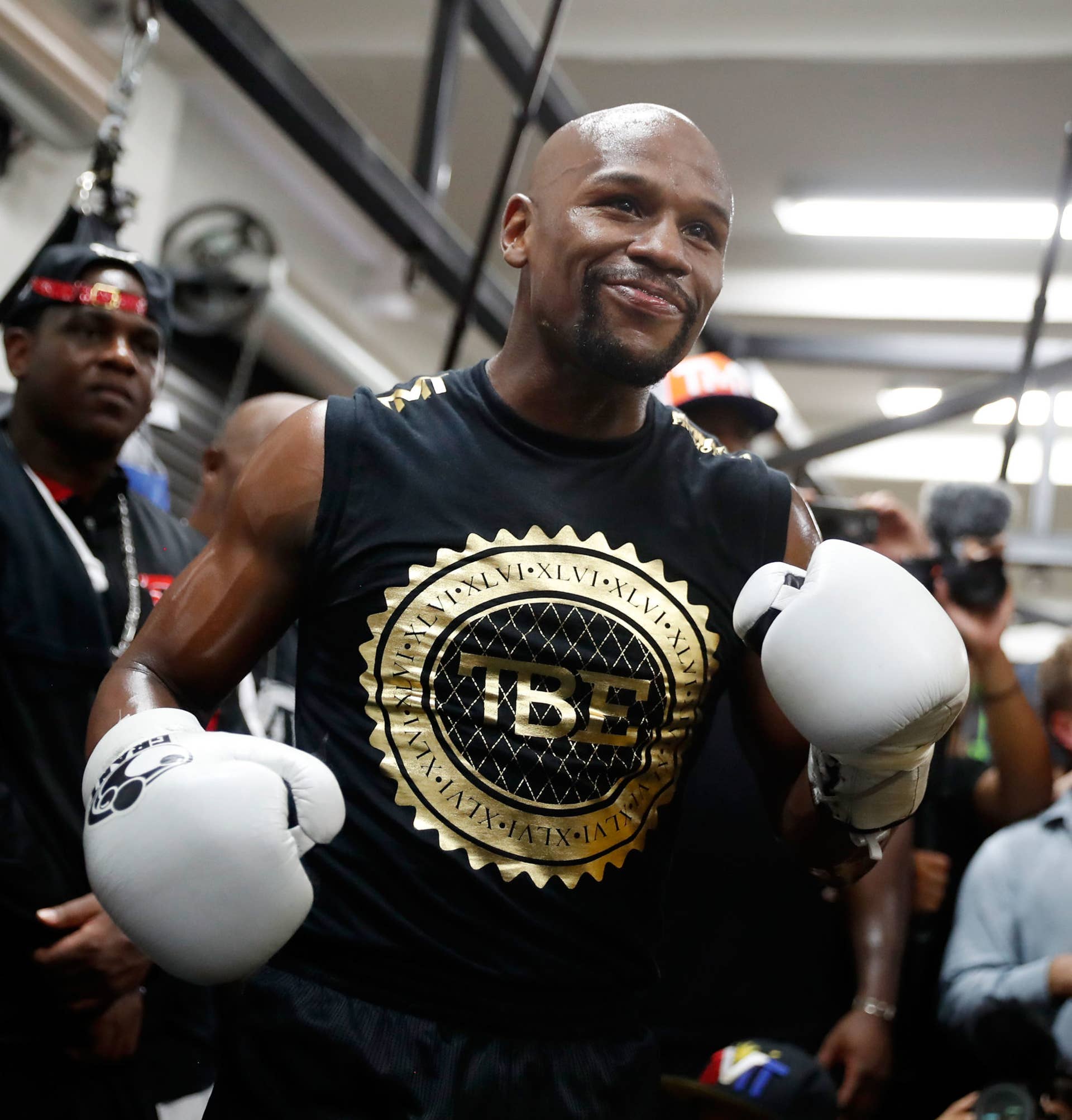
The Money Team (TMT) is more than just a social circle; it is a global lifestyle brand. Through merchandise, apparel, and gym franchises, the TMT logo has become a recognizable symbol of success. By owning the trademark and controlling the distribution, Mayweather avoids the licensing fees that most athletes pay to apparel giants like Nike or Adidas.
Exhibition Circuits and "Legalized Bank Robbery"
Even in retirement, Mayweather continues to generate wealth through high-profile exhibitions. These non-sanctioned bouts (against YouTubers, MMA fighters, or international kickboxers) allow him to earn $10 million to $50 million per appearance with minimal physical risk. He famously refers to these as "legalized bank robberies," highlighting the low effort required relative to the massive financial reward.
| Event / Business Driver | Year(s) | Estimated Earnings | Key Strategic Lesson |
|---|---|---|---|
| Top Rank Buyout | 2006 | -$750,000 (Cost) | Betting on self-ownership. |
| Showtime Deal | 2013-2015 | $250+ Million | High-guarantee network partnership. |
| Mayweather vs. Pacquiao | 2015 | $250+ Million | Maximizing demand through scarcity. |
| Mayweather vs. McGregor | 2017 | $300+ Million | Cross-industry market expansion. |
| Real Estate Portfolio | 2018-2026 | Undisclosed (Monthly) | Transitioning to passive cash flow. |
| Exhibition Bouts | 2021-2026 | $100+ Million (Total) | Monetizing legacy and brand name. |
Financial Management and Internal Infrastructure
One of the less-discussed aspects of Mayweather's wealth is his internal team. While his public persona is one of reckless spending, his business operations are handled by a sophisticated network of professionals, led for years by Al Haymon.
The Al Haymon Partnership
Al Haymon, a Harvard-educated businessman, was instrumental in structuring Mayweather’s deals. Together, they bypassed the traditional "middleman" system of boxing. This partnership ensured that Mayweather was never cheated on the "back-end" of his PPV deals—a common issue for fighters in previous generations.
Tax Strategy and Liquidity
Despite occasional reports of IRS liens in the past, Mayweather has managed to maintain a high level of liquidity. Unlike many retired athletes who find their wealth tied up in illiquid assets, Mayweather keeps a significant portion of his net worth in cash and short-term holdings, allowing him to capitalize on new investment opportunities immediately.
Why Mayweather’s Wealth Model is Unique
Most athletes earn their money as contractors. They are paid to perform. Mayweather transformed into a platform. By the end of his career, he didn't just fight; he provided the infrastructure (Mayweather Promotions) and the distribution (Showtime/PPV) for others to participate in his events. This shift from labor to capital is the fundamental reason he remains wealthy while many of his contemporaries have struggled financially.
Frequently Asked Questions
How much did Floyd Mayweather pay to leave his promoter?
In 2006, Floyd Mayweather Jr. paid $750,000 to exercise a buyout clause in his contract with Top Rank. This allowed him to become a free agent and start Mayweather Promotions. This decision is widely considered the smartest financial move in sports history, as it allowed him to earn hundreds of millions more than he would have under a standard contract.
What is Floyd Mayweather’s net worth in 2026?
While exact figures for private individuals vary, financial analysts estimate Mayweather’s net worth to be comfortably between $1.2 billion and $1.5 billion as of 2026. This includes his career earnings, his extensive real estate portfolio, and his ongoing income from The Money Team (TMT) and exhibition fights.
How much did Mayweather make from the McGregor fight?
Floyd Mayweather earned an estimated $300 million from the 2017 fight against Conor McGregor. This figure includes his guaranteed purse and his share of the PPV revenue, gate, and international television rights. The event was the second-highest-selling PPV in history, only trailing Mayweather’s fight against Manny Pacquiao.
Does Mayweather own real estate?
Yes, Mayweather is a major investor in commercial real estate. He has a significant stake in several New York City skyscrapers, including partnerships with SL Green. He also owns a vast collection of luxury residential properties in Las Vegas, Miami, and Los Angeles.
What is The Money Team (TMT)?
The Money Team is Mayweather’s personal brand and lifestyle company. It serves as an umbrella for his apparel line, fitness franchises, and promotional ventures. The brand relies on "social proof" and luxury marketing to sell merchandise and gym memberships globally.
Summary and Final Actions
Floyd Mayweather Jr. became rich by refusing to accept the status quo of the sports industry. He recognized that the real wealth lay in ownership rather than performance. By controlling his own promotion, mastering the "villain" marketing arc, and reinvesting his earnings into high-yield commercial real estate, he created a financial fortress that persists long after his professional retirement.
For those looking to apply his principles, the key takeaway is the importance of vertical integration. Whether in sports, business, or creative fields, moving from being a "service provider" to a "platform owner" is the most effective path to exponential wealth.
Image Gallery
Select an image to open it in a new tab.


Vivian Cho
Executive IT and Emerging Technologies Reporter
