Building a Website for Scientific Articles: A Comprehensive Technical Guide
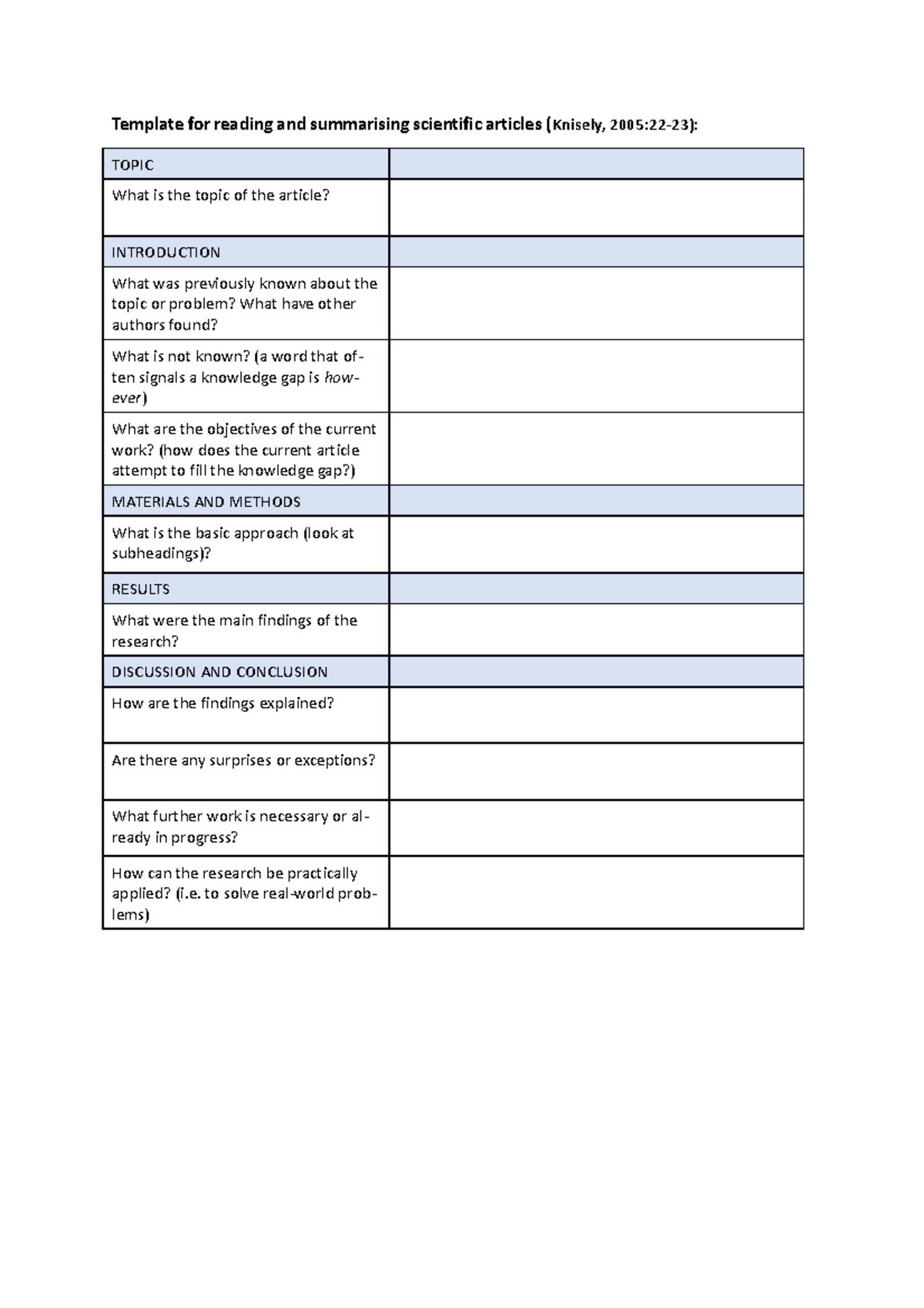
Building a website for scientific articles requires a sophisticated architecture that prioritizes data integrity, discoverability, and accessibility. Unlike general-purpose content management systems, a platform designed for academic and scientific dissemination must support structured metadata, persistent identifiers, and high-performance search functionality to ensure that research is both discoverable by peer-review indexing services and readable by global scientific communities.
Defining the Core Architecture of a Scientific Repository
A website dedicated to scientific articles is fundamentally a database-driven application. Your primary objective is to manage the lifecycle of a document—from submission and peer review to publishing and long-term archiving. This requires a robust content management system (CMS) that treats scientific data as first-class objects rather than simple blog posts.
Before selecting a platform, identify whether your site will function as a standalone journal, a preprint server, or a university repository. Each model necessitates different technical requirements. A professional journal, for instance, requires an integrated workflow for editorial management, whereas an institutional repository emphasizes bulk ingestion and interoperability with protocols like OAI-PMH (Open Archives Initiative Protocol for Metadata Harvesting).
Choosing the Right Infrastructure: CMS vs. Custom Development
The decision to use a pre-built publishing platform versus a custom web application is the most significant architectural choice you will make.
For many academic publishers, Open Journal Systems (OJS) remains the industry standard. Developed by the Public Knowledge Project (PKP), OJS provides an end-to-end workflow for manuscript submission, peer review, and digital publishing. It is specifically engineered to handle the technical requirements of modern academic workflows, including the assignment of Digital Object Identifiers (DOIs) and the generation of structured metadata for indexing services like Crossref or Google Scholar.
If you choose a more flexible approach, such as WordPress with specialized plugins (e.g., scholarly publishing extensions) or a custom framework like Django or Laravel, you must manually implement the following requirements:
- Structured Metadata: Implementation of Dublin Core or schema.org metadata to ensure that search engines correctly parse article titles, authors, abstracts, and funding information.
- Persistent Identifiers: Integration with services like Crossref to register DOIs, ensuring that every article has a permanent link that survives site migrations or URL structure changes.
- Search and Retrieval: An internal search engine capable of filtering by author, keyword, subject, and publication date.
Essential Metadata and Discoverability Standards
For scientific articles to be considered "discoverable," your website must adhere to international bibliographic standards. Search engines and academic databases do not merely look at your text; they look at the underlying machine-readable tags that describe the article.
Schema.org and JSON-LD Utilizing JSON-LD (JavaScript Object Notation for Linked Data) within your page headers is critical. This format allows you to embed information about the publication date, the journal volume and issue, and the DOI directly into the source code of the article page. This machine-readable data is the primary bridge between your website and aggregators like PubMed or the Directory of Open Access Journals (DOAJ).
OAI-PMH Support If your repository intends to share its content with libraries and international databases, implementing OAI-PMH is non-negotiable. This protocol defines the mechanism for data providers to expose their metadata to service providers, allowing researchers to find your articles through third-party discovery services rather than relying solely on your direct traffic.
Comparison of Publishing Platforms
| Feature | Open Journal Systems (OJS) | WordPress (with Plugins) | Custom Web Framework |
|---|---|---|---|
| Primary Use | Peer-reviewed journals | General repositories/blogs | Highly bespoke platforms |
| Peer Review Workflow | Integrated (native) | Requires complex plugins | Built from scratch |
| Metadata Support | Excellent (OAI-PMH/Crossref) | Moderate (SEO focused) | Total control |
| Maintenance Effort | Moderate (requires hosting) | Low | High (full-stack dev) |
| Cost | Free (Open Source) | Low (Licensing fees vary) | High (Development time) |
Technical Security and Long-term Preservation
Scientific data is fragile. Beyond standard web security—such as SSL/TLS encryption and regular server backups—you must implement strategies for long-term digital preservation.
Academic integrity requires that an article published in 2026 remains available for reference in 2046 and beyond. This implies that your file storage system should be redundant. Consider using cloud-native storage solutions that offer versioning, and ensure that your database is backed up daily to off-site locations.
Furthermore, you should establish a clear policy for "retractions" or "corrections." In the scientific community, the ability to append errata or officially retract an article while maintaining the original record is a standard professional requirement. Your website architecture must allow for these updates without breaking the DOI or the persistent link to the original work.
Accessibility and User Experience
Scientific researchers interact with your site differently than casual readers. They often require the ability to export citations in various formats (BibTeX, RIS, APA) and frequently access content via mobile devices or specialized browser extensions.
- Citation Exports: Integrate functionality that allows users to download citation files directly from the article abstract page.
- PDF Generation: While HTML versions of articles are preferred for web accessibility, provide high-quality, tagged PDF versions that follow the PDF/A standard for long-term archiving.
- Readability: Maintain a clean, minimalist design. Excessive sidebar distractions or intrusive media elements hinder the concentration required for technical reading.
Common Pitfalls to Avoid
The most common mistake when building a science-oriented website is failing to future-proof the URL structure. Once an article is published and shared via a DOI, the URL should never change. Changing the site architecture or moving content after indexing will create broken links, which are catastrophic for academic citations.
Another frequent error is the neglect of image resolution and accessibility. Scientific figures (graphs, charts, and medical imaging) must have descriptive alternative text (alt-text) and be provided in high-resolution formats that support zooming. Failure to do this limits the utility of the article for both visually impaired users and researchers analyzing granular data.
Frequently Asked Questions (FAQ)
1. Does my scientific website need an ISSN? If your website functions as a serial publication (a journal), you should apply for an International Standard Serial Number (ISSN). An ISSN acts as a unique identifier for your publication, distinguishing it from other resources and assisting in database integration.
2. How do I handle article submissions securely? You should never use simple email forms for submissions. Use a dedicated workflow system (like the one built into OJS) that provides an encrypted submission portal, keeps track of manuscript versions, and logs the peer-review history for audit purposes.
3. Is cloud hosting better than on-premise for scientific websites? For most organizations, cloud hosting is superior due to its scalability and the availability of managed database services. It reduces the technical overhead of managing server hardware, allowing the editorial team to focus on the content rather than system administration.
4. How do I make my articles rank better in Google Scholar?
Google Scholar prioritizes sites that provide high-quality, structured bibliographic metadata. Ensure your pages include proper tags for authors, publication dates, and citations, and verify that your OAI-PMH feed is correctly configured.
5. What is the role of the DOI in my website's architecture? The DOI is a unique alphanumeric string that provides a persistent link to your article. It acts as a permanent address that persists even if your domain name or website structure changes. It is the backbone of modern scientific citation.
Next Actions for Implementation
If you are beginning this project, start by defining your editorial workflow and selecting your platform based on the comparison table provided. Once the CMS is selected, prioritize the implementation of Crossref registration. Without DOIs and structured metadata, your content will effectively remain hidden from the global academic research community. Build the environment, test your OAI-PMH integration against a validator, and ensure your preservation strategy is documented before the first article is uploaded.
Image Gallery
Select an image to open it in a new tab.





Declan O'Connor
Higher Education and Campus Culture Reporter
