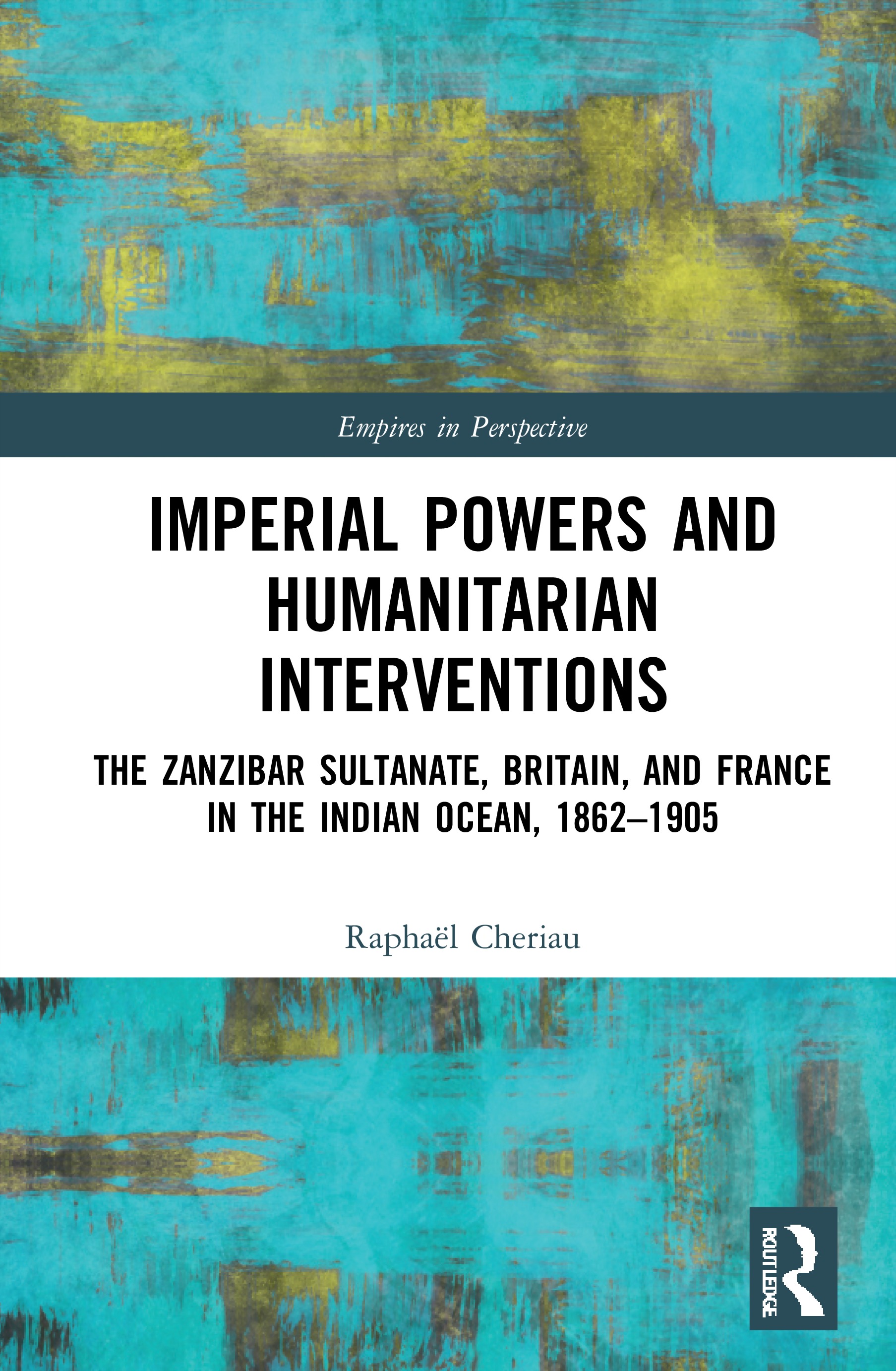
An imperial power is a sovereign state that exercises supreme authority, control, or significant influence over foreign territories, nations, or peoples. This dominance is typically achieved through military conquest, economic pressure, or diplomatic coercion, aiming to expand the state's reach, secure resources, and establish a hierarchical relationship over subordinate entities.
The concept of an imperial power is central to understanding the evolution of global geopolitics. While the map of 2026 reflects a world of independent nation-states, the legacy of imperial structures continues to influence international law, language, and economic dependencies. To understand what constitutes an imperial power, one must look beyond simple territorial acquisition and examine the underlying mechanisms of control and the ideological justifications that sustain them.
The Core Characteristics of an Imperial Power
An imperial power is defined not just by what it owns, but by how it projects authority. Historically and in contemporary political theory, several pillars identify a state as an imperial actor.
1. Territorial and Political Expansion
The most visible sign of an imperial power is the extension of its borders or the establishment of "spheres of influence." Unlike a standard nation-state that operates within fixed, recognized boundaries, an imperial power seeks to incorporate peripheral regions into its political system. This can occur through direct annexation, where the territory becomes a province of the power, or through protectorates and client states, where local rulers remain in place but answer to the imperial center.
2. Economic Dominance and Resource Extraction
Imperialism is often driven by the "metropole" (the central power) seeking resources that it lacks domestically. This includes raw materials like minerals, oil, and agricultural products, or access to new markets for its manufactured goods. An imperial power typically structures the economy of the subordinate region to benefit the center, often through trade monopolies or exploitative labor practices.
3. Military Superiority
The ability to enforce will through force is a prerequisite for imperial status. This involves not only the initial conquest but the ongoing maintenance of garrisons, naval routes, and logistical chains. In the modern era, this also extends to technological superiority in cyberwarfare and satellite surveillance, allowing a power to project force without physical occupation.
4. Cultural and Ideological Imposition
An imperial power often exports its language, legal system, religion, and social norms to its dependencies. This "soft power" serves to legitimize the occupation and create a class of local administrators who identify more with the imperial center than with their own population. Historically, this was often framed as a "civilizing mission" or a religious mandate.
Imperialism vs. Colonialism: A Technical Distinction
While often used interchangeably, "imperialism" and "colonialism" describe different facets of power projection. Understanding this distinction is vital for any academic or political analysis of the subject.
Imperialism is the overarching policy or ideology of extending a nation's rule over foreign nations, often by military force or by gaining political and economic control. It is the exercise of power from a distance.
Colonialism is a specific practice of imperialism that involves the settlement of people from the imperial power in the new territory. In colonialism, the imperial power displaces or subordinates the indigenous population to establish permanent settlements, often restructuring the entire social and economic fabric of the region to mirror the mother country.
An imperial power can exist without extensive colonial settlements (as seen in some phases of the Mongol Empire), but colonialism cannot exist without an imperial power providing the legal and military framework for settlement.

Historical Evolution of Imperial Powers
The nature of imperial powers has shifted significantly from antiquity to the 21st century. These shifts are characterized by changes in technology, economic theory, and international norms.
Ancient Land-Based Empires
Ancient imperial powers, such as the Roman Empire, the Persian Empire, and the Han Dynasty of China, relied primarily on land-based expansion. Their power was limited by the speed of animal transport and the ability to feed standing armies. Rome, in particular, set the template for imperial administration by granting citizenship to conquered elites and building a massive infrastructure of roads to facilitate rapid military movement.
The Age of Maritime Empires
With the advent of advanced navigation in the 15th century, powers like Portugal, Spain, Britain, and France began projecting power across oceans. This "Blue Water" imperialism allowed relatively small nations to control vast territories in the Americas, Africa, and Asia. The British Empire became the most successful iteration of this model, utilizing naval supremacy to control global trade "choke points" like the Suez Canal and the Strait of Malacca.
The Cold War and Superpower Imperialism
In the mid-20th century, the traditional colonial model collapsed, giving way to a new form of imperial power represented by the United States and the Soviet Union. These were "superpowers" that exercised imperial influence not through formal colonies, but through ideological blocs, military alliances (like NATO and the Warsaw Pact), and economic aid packages (like the Marshall Plan). This is often referred to as "informal empire."
Comparison of Major Historical Imperial Powers
The following table compares different imperial powers across history to illustrate the various methods of control and the scale of their influence.
| Imperial Power | Peak Period | Primary Method of Control | Key Resource/Objective | Decline Factors |
|---|---|---|---|---|
| Roman Empire | 117 AD | Military Annexation & Law | Grain, Slaves, Tax Revenue | Overextension, Barbarian Invasions |
| Mongol Empire | 1270s | Cavalry Warfare & Tribute | Trade Routes (Silk Road) | Succession Disputes, Fragmentation |
| Spanish Empire | 16th Century | Colonial Settlement & Religion | Gold, Silver, Spices | Economic Mismanagement, Naval Loss |
| British Empire | 1920s | Naval Dominance & Trade | Textiles, Tea, Rubber, Oil | World Wars, Rising Nationalism |
| Soviet Union | 1950s-80s | Ideological Blocs & Buffer States | Industrial Output, Geopolitics | Economic Stagnation, Political Reform |
The Mechanisms of Imperial Control
How does an imperial power maintain control over a population that may vastly outnumber its own? This is achieved through a combination of administrative strategies and technological advantages.
Direct vs. Indirect Rule
Imperial powers generally choose between two administrative styles:
- Direct Rule: The imperial power replaces local leadership with its own officials. This was common in French colonial Africa. It ensures high control but is expensive and often provokes local resentment.
- Indirect Rule: The imperial power rules through existing local leaders (kings, chiefs, or sultans). The British famously used this in India and Nigeria. It is more cost-effective but relies on the continued loyalty of local elites.
Technological Monopolies
An imperial power maintains its edge by restricting access to advanced technology. In the 19th century, this was the "Maxim gun" and the steamship. In 2026, it involves the control of semiconductor supply chains, artificial intelligence algorithms, and satellite communication networks like Starlink or state-run equivalents.
The Financial System
Modern imperial influence is frequently exerted through debt and currency. When a powerful nation provides massive loans to a smaller nation for infrastructure projects, it can create a "debt trap." If the smaller nation cannot repay, the imperial power may take control of strategic assets, such as ports or mines, effectively exerting imperial control without firing a shot.
The Ideology of Imperialism
No imperial power survives long on brute force alone; it requires a narrative to justify its dominance both to its own citizens and to the world.
- Manifest Destiny: In the 19th-century United States, this was the belief that the country was divinely ordained to expand across the North American continent.
- Social Darwinism: Late 19th-century European powers used pseudo-scientific theories to argue that "stronger" races were naturally meant to rule over "weaker" ones.
- Modern Democratization: In more recent decades, some powers have justified interventionist policies by claiming a mandate to spread democracy, human rights, or "stability" to volatile regions.
The Legacies of Imperial Power in 2026
Though the era of "high imperialism" ended with the decolonization movements of the mid-20th century, the world in 2026 is still shaped by its outcomes.
- Border Disputes: Many modern conflicts are the result of "arbitrary borders" drawn by imperial powers in the 19th century (such as the Sykes-Picot Agreement in the Middle East) that ignored ethnic and linguistic realities.
- Linguistic Dominance: The fact that English, Spanish, and French remain global lingua francas is a direct result of past imperial expansion.
- Legal and Educational Systems: Many former colonies continue to use the legal codes (e.g., British Common Law) and educational structures established by their former imperial masters.
- Neo-imperialism: This term describes the ongoing economic and political influence that former imperial powers—or new ones—exercise over developing nations, often through multinational corporations and international financial institutions.
Frequently Asked Questions
What is the difference between a superpower and an imperial power?
A superpower is a state with the capacity to project significant power globally (military, economic, and cultural). While most superpowers behave as imperial powers by seeking to influence or control other nations, an imperial power is specifically defined by its relationship of dominance over foreign territories. A state can be an imperial power locally (a regional hegemon) without being a global superpower.
Can a democracy be an imperial power?
Yes. History shows that many democracies have acted as imperial powers. The Athenian Empire was a democracy at its core, and Great Britain was a parliamentary democracy while it controlled the largest empire in history. The United States, a constitutional republic, has frequently been described by historians as an "informal" imperial power due to its global military presence and economic influence.
Are there any imperial powers left in 2026?
Technically, most nations today subscribe to the United Nations Charter, which recognizes the sovereignty of all member states. However, political scientists argue that "neo-imperialism" exists where powerful nations use economic and digital tools to control smaller ones. Russia’s actions in Eastern Europe and China’s "Belt and Road Initiative" are often debated in the context of modern imperial ambitions.
How do imperial powers typically fall?
The decline of an imperial power is usually caused by "imperial overstretch"—where the cost of maintaining the empire (military spending, administration) exceeds the economic benefits it provides. Other factors include the rise of nationalism in subordinate territories, internal political decay at the center, and the emergence of competing powers.
Does an imperial power always occupy land?
No. In the modern era, "imperialism without colonies" is common. This involves controlling a country’s economy, its political leaders, or its digital infrastructure without having a physical military presence on the ground. This is sometimes called "hegemony" or "soft imperialism."
Recommendation for Further Study
To truly understand the impact of an imperial power, one should study both the "metropole" (the center) and the "periphery" (the controlled regions). Reading primary source documents, such as the General Act of the Berlin Conference (1885), provides insight into how imperial powers historically negotiated the division of the world. For those interested in modern geopolitics, monitoring the developments of international trade blocs and military alliances in 2026 will reveal how the "imperial" impulse has transitioned into the 21st-century digital and economic landscape.
Image Gallery
Select an image to open it in a new tab.





Vivian Cho
Executive IT and Emerging Technologies Reporter
