
As of 2026, the Commonwealth of Nations consists of 56 independent and equal member states. This voluntary association spans every inhabited continent, encompassing approximately 2.5 billion people—more than one-third of the world’s population. While the majority of members were formerly under British rule, the organization has evolved into a diverse platform for international cooperation based on shared values of democracy, human rights, and the rule of roll.
The modern Commonwealth is characterized by its diversity; it includes some of the world's largest, smallest, wealthiest, and poorest countries. From the vast landmass of Canada and the economic powerhouse of India to the small island nations of the Pacific like Tuvalu and Nauru, membership offers a unique geopolitical forum where every nation, regardless of size or GDP, has an equal voice.
The Regional Distribution of Commonwealth Members
To understand the current makeup of the Commonwealth in 2026, it is most effective to view the members through their geographical regions. This distribution highlights the organization's global reach and its significant influence in the Global South, particularly across Africa and the Pacific.
Africa (21 Countries)
Africa constitutes the largest regional bloc within the Commonwealth. The membership in this region has seen recent growth, with countries that do not have a traditional British colonial history seeking the diplomatic and economic benefits of the association.
- Botswana: Joined in 1966.
- Cameroon: Joined in 1995 (formerly part-British and part-French).
- Eswatini: Joined in 1968.
- Gabon: Joined in June 2022.
- The Gambia: Rejoined in 2018 after a brief withdrawal.
- Ghana: Joined in 1957.
- Kenya: Joined in 1963.
- Lesotho: Joined in 1966.
- Malawi: Joined in 1964.
- Mauritius: Joined in 1968.
- Mozambique: Joined in 1995 (the first member with no colonial ties to Britain).
- Namibia: Joined in 1990.
- Nigeria: Joined in 1960.
- Rwanda: Joined in 2009 (second member with no colonial ties to Britain).
- Seychelles: Joined in 1976.
- Sierra Leone: Joined in 1961.
- South Africa: Joined in 1931 (withdrew in 1961, rejoined in 1994).
- Togo: Joined in June 2022.
- Uganda: Joined in 1962.
- United Republic of Tanzania: Joined in 1961.
- Zambia: Joined in 1964.
Asia (8 Countries)
The Asian members include the Commonwealth’s most populous nation, India, which plays a pivotal role in the organization’s leadership and economic strategy.
- Bangladesh: Joined in 1972.
- Brunei Darussalam: Joined in 1984.
- India: Joined in 1947.
- Malaysia: Joined in 1957.
- Maldives: Joined in 1982 (withdrew in 2016, rejoined in 2020).
- Pakistan: Joined in 1947 (withdrew in 1972, rejoined in 1989).
- Singapore: Joined in 1965.
- Sri Lanka: Joined in 1948.
Caribbean and Americas (13 Countries)
This region contains many of the "Commonwealth Realms," where King Charles III remains the Head of State, though several nations are currently engaged in domestic debates regarding transitioning to a republican model.
- Antigua and Barbuda: Joined in 1981.
- The Bahamas: Joined in 1973.
- Barbados: Joined in 1966 (became a republic in 2021 but remains a member).
- Belize: Joined in 1981.
- Canada: Joined in 1931.
- Dominica: Joined in 1978.
- Grenada: Joined in 1974.
- Guyana: Joined in 1966.
- Jamaica: Joined in 1962.
- Saint Lucia: Joined in 1979.
- St Kitts and Nevis: Joined in 1983.
- St Vincent and the Grenadines: Joined in 1979.
- Trinidad and Tobago: Joined in 1962.
Europe (3 Countries)
The European membership is the smallest but includes the founding member and the seat of the Commonwealth Secretariat.
- Cyprus: Joined in 1961.
- Malta: Joined in 1964.
- United Kingdom: Joined in 1931 (Founding Member).
Pacific (11 Countries)
The Pacific members are primarily small island developing states (SIDS). The Commonwealth provides these nations with a critical platform for advocating on issues like climate change and maritime security.
- Australia: Joined in 1931.
- Fiji: Joined in 1970 (rejoined in 2014 after several suspensions).
- Kiribati: Joined in 1979.
- Nauru: Joined in 1968.
- New Zealand: Joined in 1931.
- Papua New Guinea: Joined in 1975.
- Samoa: Joined in 1970.
- Solomon Islands: Joined in 1978.
- Tonga: Joined in 1970.
- Tuvalu: Joined in 1978.
- Vanuatu: Joined in 1980.
The Governance and Leadership Structure
The Commonwealth is not a political union but an intergovernmental organization. Its structure is designed to ensure that all members have an equal say in the direction of the association.
The Head of the Commonwealth
As of 2026, King Charles III serves as the Head of the Commonwealth. It is important to distinguish this role from his position as King of the United Kingdom. Being Head of the Commonwealth is a symbolic role that carries no executive power. While the position is not hereditary, the Commonwealth leaders agreed at the 2018 meeting that King Charles would succeed Queen Elizabeth II in this capacity.
The Commonwealth Secretariat
The Commonwealth Secretariat, established in 1965 and based at Marlborough House in London, is the main intergovernmental agency and central executive arm. It is led by the Secretary-General, who is elected by the Heads of Government for a maximum of two four-year terms. The Secretariat is responsible for implementing the decisions made by the member governments and providing technical assistance and policy advice.
Commonwealth Heads of Government Meeting (CHOGM)
The primary decision-making forum is the CHOGM, held every two years. At these summits, leaders discuss global issues such as trade, climate change, and security. The meeting is hosted by different member countries on a rotating basis, and the host leader serves as the "Commonwealth Chair-in-Office" until the next meeting.
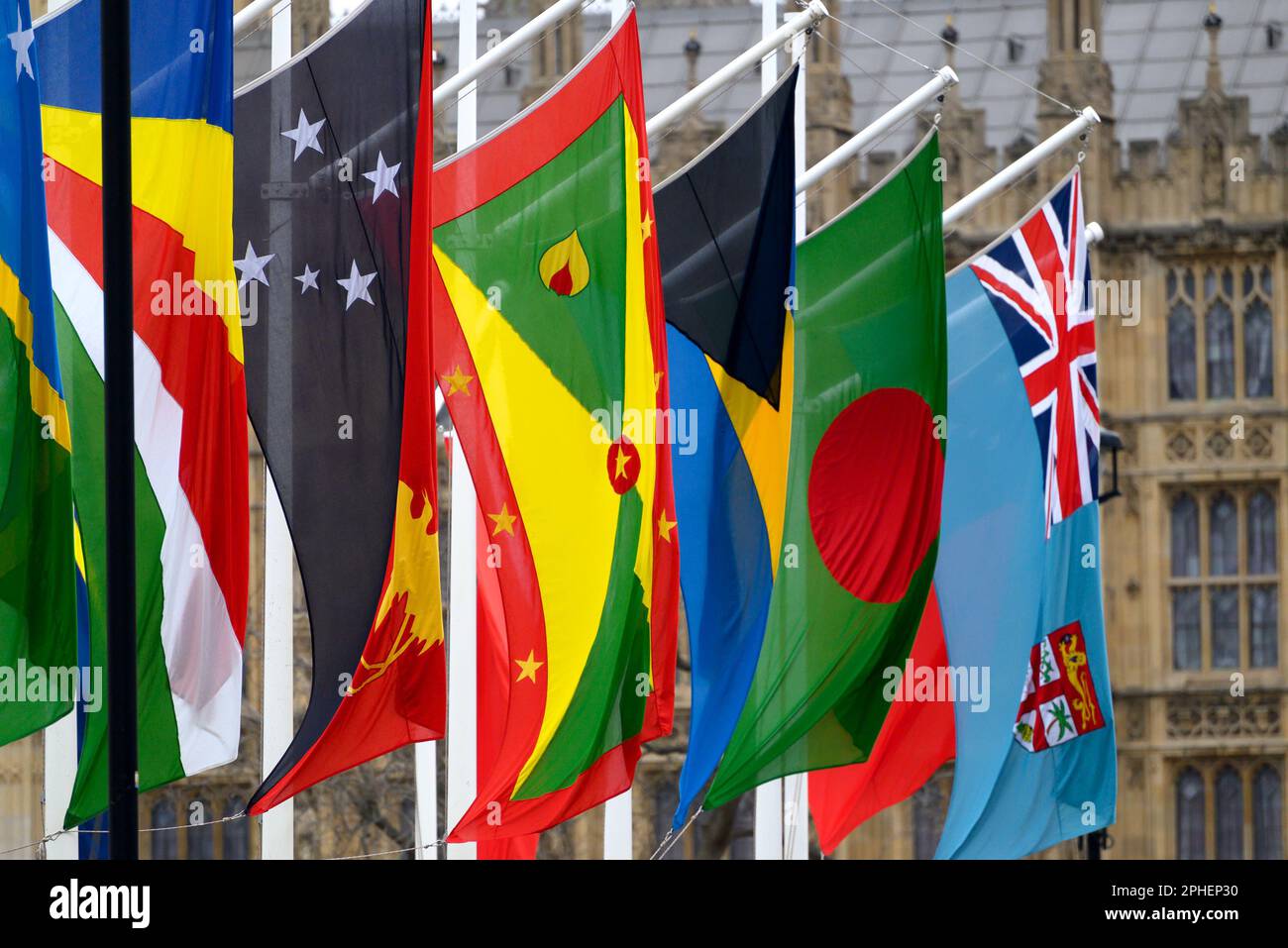
Three Types of Commonwealth Members
Membership in the Commonwealth does not dictate a country's internal form of government. In 2026, the 56 members fall into three distinct categories based on their constitutional arrangements.
- Republics (36 Members): The majority of Commonwealth countries are republics, with their own elected or appointed Heads of State (Presidents). India was the first country to remain a member after becoming a republic in 1949, setting the precedent that the British Monarch did not need to be the Head of State for a nation to stay in the Commonwealth.
- Commonwealth Realms (15 Members): These are sovereign states that recognize King Charles III as their monarch and Head of State. In these countries, the King is represented by a Governor-General. This group includes the UK, Canada, Australia, and several Caribbean and Pacific nations.
- Indigenous Monarchies (5 Members): These countries have their own monarchs. They are Brunei Darussalam (Sultan), Eswatini (King), Lesotho (King), Malaysia (Yang di-Pertuan Agong), and Tonga (King).
| Category | Count | Key Examples |
|---|---|---|
| Republics | 36 | India, South Africa, Singapore, Nigeria, Barbados |
| Commonwealth Realms | 15 | United Kingdom, Canada, Australia, Jamaica, New Zealand |
| Indigenous Monarchies | 5 | Malaysia, Brunei, Eswatini, Lesotho, Tonga |
Requirements and Criteria for Joining
The Commonwealth is an "open" organization, meaning any country can apply to join, provided they meet specific criteria established by the members. These criteria were most recently updated in the 1995 Harare Declaration and the 2007 Kampala CHOGM.
Key Membership Criteria:
- Acceptance of Commonwealth Values: A candidate must demonstrate a commitment to democracy, the rule of law, judicial independence, and the protection of human rights.
- Sovereignty: The applicant must be a fully independent sovereign state.
- Language: While English is the working language of the Secretariat, it is not a strict requirement for the population, though it is the primary medium for Commonwealth discourse.
- Institutional Links: Historically, a link to a current member or the UK was required. However, the admissions of Mozambique (1995) and Rwanda (2009) showed that the organization is willing to admit countries based on shared future goals rather than shared colonial pasts.
- Acknowledgement of the Head: All members must accept King Charles III as the symbol of the free association of independent member nations and, as such, the Head of the Commonwealth.
The "Commonwealth Advantage" in Trade and Diplomacy
One of the primary reasons nations remain in the Commonwealth is the economic and diplomatic benefit often referred to as the Commonwealth Advantage. Statistical analysis consistently shows that trade between member countries is, on average, 21% cheaper than trade with non-members. This is attributed to similar legal systems (often based on Common Law), shared administrative structures, and the use of the English language.
Furthermore, the Commonwealth provides a significant support network for Small Island Developing States (SIDS). Of the 56 members, 33 are classified as "small states." The organization uses its collective voice in larger forums like the United Nations and the G20 to lobby for climate change financing and debt relief for these vulnerable nations.
Technical and Legal Cooperation
The Commonwealth Foundation and various professional associations facilitate the exchange of expertise in law, education, and medicine. For instance, the Commonwealth Magistrates' and Judges' Association helps maintain judicial standards, while the Commonwealth Parliamentary Association supports the development of democratic institutions.
Challenges and Future Outlook in 2026
As of 2026, the Commonwealth faces several internal and external challenges that shape its current status.
- The Republican Movement: Following Barbados’ transition to a republic in 2021, other nations, particularly Jamaica and the Bahamas, have actively discussed similar constitutional changes. The Commonwealth has proven it can easily accommodate this transition without the country losing its membership.
- Climate Change: For the 11 members in the Pacific and the numerous island nations in the Caribbean, climate change is an existential threat. The Commonwealth’s "Blue Charter" is a major initiative focused on ocean protection and sustainable development.
- Re-entries and New Interest: Zimbabwe has expressed interest in re-joining the Commonwealth after its suspension and subsequent withdrawal in 2003. The process for re-entry involves rigorous monitoring of the country’s democratic progress and human rights record.
- The Francophone Expansion: The addition of Gabon and Togo (both formerly French-associated) signifies a shift where the Commonwealth is viewed as a pragmatic alternative or supplement to the Francophonie, offering wider access to English-speaking markets and different diplomatic networks.
Frequently Asked Questions
Which country was the last to join the Commonwealth?
Gabon and Togo were the most recent countries to join the Commonwealth, officially becoming members in June 2022 during the CHOGM held in Kigali, Rwanda. Neither country had a direct colonial link to the United Kingdom.
Is the United States part of the Commonwealth?
No, the United States is not a member of the Commonwealth. Although it was once a collection of British colonies, it gained independence long before the modern Commonwealth was established in 1949 and has never sought membership.
Can a country be removed from the Commonwealth?
A country can be suspended or expelled if it seriously and persistently violates the principles of the Commonwealth Charter. Nigeria (1995), Fiji (multiple times), and Zimbabwe (2002) have all faced suspension. Suspension usually involves being barred from attending meetings and receiving technical assistance.
What is the difference between the Commonwealth and the British Empire?
The British Empire was a system of colonial rule directed from London. The Commonwealth is a voluntary association of independent, sovereign nations. In the Commonwealth, all members are equal, and the UK has no legal or political power over other members.
Does being in the Commonwealth mean you have the same King?
No. Only 15 of the 56 members are "Realms" that recognize King Charles III as their Head of State. The other 41 members are either republics or have their own separate monarchs.
Practical Next Steps for Verification
If you are researching membership for travel, visa, or educational purposes, it is recommended to verify the current status of a specific country via the official Commonwealth Secretariat website. Membership can impact eligibility for certain scholarships, such as the Commonwealth Scholarship and Fellowship Plan, and may provide specific consular assistance protocols in third-party countries.
Image Gallery
Select an image to open it in a new tab.
Celine Dubois
Contemporary Living and Global Arts Columnist
