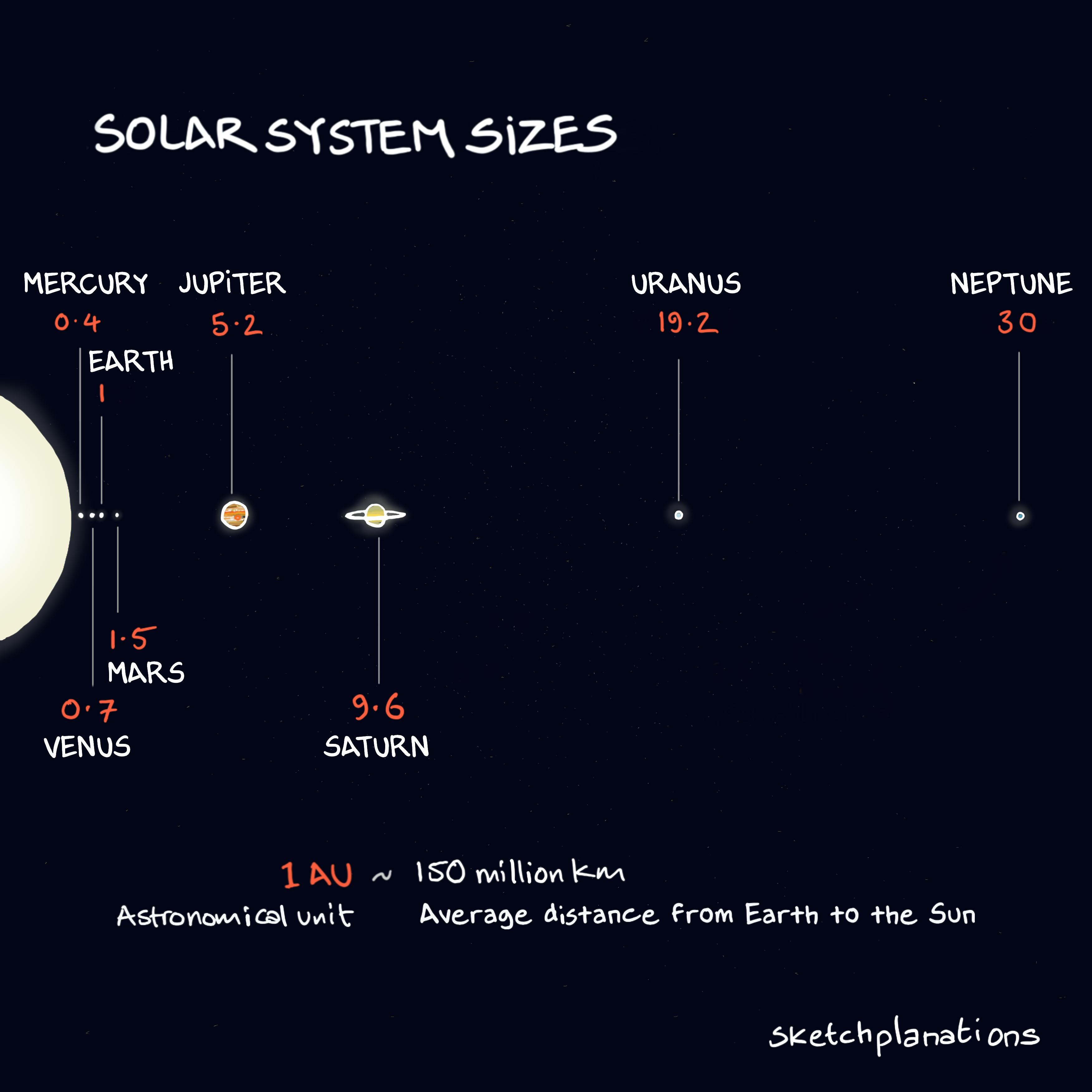
To make a scale model of the solar system, you must first determine whether you are scaling for planet size, orbital distance, or both. For a manageable home project, select a scaling factor—such as 1 centimeter representing 100,000 kilometers—calculate the relative sizes of the planets using spheres like foam balls or fruit, and then map out their distances across a yard or hallway.
Creating a scale model of the solar system is one of the most effective ways to comprehend the staggering vastness of space. However, many people are surprised to learn that it is nearly impossible to represent both the size of the planets and the distance between them on the same scale within a standard room. If the Earth were the size of a marble, the Sun would be roughly the size of a large yoga ball, and Neptune would be located over two miles away.
By following this guide, you can choose the right scaling method for your space, calculate the math accurately, and assemble a visually impressive model that reflects the true proportions of our celestial neighborhood.
Understanding the Two Scaling Methods
Before you pick up any materials, you must decide which aspect of the solar system you want to emphasize. Most educational models fall into one of two categories.
1. The Size-Only Scale
In this model, you focus on the relative diameters of the planets. This allows you to see how Jupiter dwarfs the Earth or how tiny Mercury is compared to Neptune. Because the distances are ignored, this model can fit easily on a tabletop or a shelf. This is the preferred method for classroom displays or decorative bedroom models.
2. The Distance-Only (or Dual) Scale
This model focuses on the empty space between the planets. Because space is approximately 99.9% "nothing," a distance-accurate model requires a long outdoor area, such as a park, a football field, or a quiet stretch of sidewalk. A "dual scale" attempts to do both but usually results in planets so small they are nearly invisible (like grains of sand) if the distance is kept within a few hundred yards.
Step 1: Calculating the Scale Ratios
Mathematics is the foundation of any accurate model. To begin, you need the actual astronomical data. As of 2026, our measurements of planetary diameters and mean orbital distances remain the standard scientific figures used by NASA and the International Astronomical Union (IAU).
The "Sun as a Basketball" Method
A popular and manageable scale is setting the Sun at approximately 20–25 centimeters (the size of a standard basketball). If the Sun is 24 cm in diameter, the following proportions apply:
- Mercury: 0.8 mm (a tiny speck of sand)
- Earth: 2.2 mm (a small peppercorn)
- Jupiter: 2.5 cm (a large marble or bouncy ball)
- Neptune: 8.5 mm (a small grape)
Distance Calculations
If you use the same basketball-sized Sun to calculate distances, the scale becomes a "walking model." In this scenario, 1 astronomical unit (AU)—the distance from the Earth to the Sun—is approximately 26 meters (85 feet).
| Celestial Body | Average Distance from Sun (km) | Model Distance (if Sun is 24cm) | Recommended Object (Size Scale) |
|---|---|---|---|
| The Sun | 1,392,700 (Diameter) | 0 meters (Center) | Basketball / Large Balloon |
| Mercury | 57,910,000 | 10 meters | Grain of sand |
| Venus | 108,200,000 | 19 meters | Peppercorn |
| Earth | 149,600,000 | 26 meters | Peppercorn |
| Mars | 227,940,000 | 40 meters | Large pinhead |
| Jupiter | 778,330,000 | 135 meters | Bouncy ball / XL Marble |
| Saturn | 1,429,400,000 | 248 meters | Standard marble |
| Uranus | 2,870,990,000 | 499 meters | Coffee bean / Small bead |
| Neptune | 4,504,000,000 | 782 meters | Small grape / Small bead |

Step 2: Gathering Materials and Tools
For a high-quality 2026-standard model, you should aim for durability and ease of painting. Avoid heavy materials that might sag if you are hanging the model.
- Core Spheres: Expanded polystyrene (EPS) foam balls are the standard choice. They are lightweight, inexpensive, and available in various sizes. For a more sustainable 2026 approach, consider biodegradable cellulose-based spheres or 3D-printed hollow shells.
- Skewers and Wire: To hold the planets during painting or to mount them on a base, use bamboo skewers or 18-gauge galvanized wire.
- Adhesives: Use solvent-free craft glue. Avoid superglues or spray adhesives that contain acetone, as they will melt foam balls instantly.
- Paint: Acrylic paints are ideal. Ensure you have primary colors (Red, Blue, Yellow) plus Black and White for mixing.
- The Rings: For Saturn and Uranus, use cardstock, thin plastic sheets, or even old CDs to represent the ring systems.
- Measurement Tools: A metric tape measure, a digital caliper (for precision sizing of small planets), and a calculator.
Step 3: Constructing the Planets
When building the planets, focus on the distinguishing features that make each world unique. This adds educational value and aesthetic appeal to your scale model.
The Inner Rocky Planets
Mercury, Venus, Earth, and Mars are the smallest. If your model is on a tabletop, these will likely be tiny foam balls or even beads.
- Mercury: Use a grey, cratered texture. You can achieve this by dabbing a dry sponge with dark grey paint over a light grey base.
- Venus: Use a yellowish-white or pale orange. Venus is shrouded in thick clouds, so it should look smooth and featureless.
- Earth: Focus on the "Blue Marble" look. Paint it primarily blue, then add green/brown continents. For a 2026 touch, use a fine-tip white paint pen to add swirling cloud patterns.
- Mars: Use a deep ochre or reddish-brown. If your model is large enough, add a tiny white dot at the pole to represent the ice cap.
The Gas Giants and Ice Giants
These planets are significantly larger and require more detail.
- Jupiter: Use tan, cream, and reddish-brown paints. The most important feature is the Great Red Spot. Use a toothpick to swirl the colors together while the paint is wet to mimic the atmospheric bands.
- Saturn: Paint it a pale golden-yellow. For the rings, cut a circle out of cardstock with a hole in the center. Glue the ring to the equator of the planet. Make sure the ring is at an angle, as Saturn’s tilt is a defining characteristic.
- Uranus and Neptune: These "Ice Giants" should be shades of blue. Uranus is a pale, cyan-blue and should be tilted on its side (98-degree axial tilt). Neptune is a deeper, vivid azure.
Step 4: Setting the Distances (The Layout)
If you are performing a "Walking Solar System" project, you will need a long, straight path.
- Place the Sun: Secure your basketball-sized Sun at the starting point.
- Measure and Mark: Use your tape measure to walk the calculated distances. In 2026, you can also use GPS-based distance tracking apps on a smartphone to mark "waypoints" for each planet.
- Use Signs: Because the planets are so small on this scale, they are easy to lose. Glue each planet-sphere to a wooden stake or a sign that describes the planet’s name, temperature, and one interesting fact.
- The Outer Reach: Note that by the time you reach Neptune, you will be nearly 800 meters (about half a mile) away from your Sun. This physical exertion is the "Aha!" moment of the project—it demonstrates how truly isolated our world is.
Step 5: Advanced Features and Detail Work
To move beyond a basic school project and create a professional-grade scale model, consider adding these elements:
The Asteroid Belt and Kuiper Belt
Space isn't just planets. To represent the Asteroid Belt (between Mars and Jupiter), use a spray bottle to flick tiny droplets of grey paint onto a dark background, or glue coarse black sand or birdseed to a ring of cardboard. For the Kuiper Belt (beyond Neptune), you can include a tiny speck for Pluto, which was reclassified as a dwarf planet in 2006 but remains a vital part of the solar system's history.
Adding an Orrery Mechanism
If you are skilled with mechanics or 2026-era DIY robotics, you can mount your planets on rotating arms. Use a central motor to turn the arms at speeds proportional to their orbital periods. For example, since Mercury orbits the Sun every 88 days and Earth every 365 days, Mercury’s arm should move roughly four times faster than Earth’s.
Common Mistakes to Avoid
- Ignoring the Sun's Size: Many kits provide foam balls for planets but include a Sun that is only slightly larger than Jupiter. This is inaccurate. In reality, the Sun contains 99.8% of the total mass of the solar system. If you can't fit a properly scaled Sun, it is better to represent it as a flat "slice" of a circle on a wall.
- Using the Wrong Paint: Standard spray paint can dissolve many types of craft foam. Always use water-based acrylics or check the label to ensure the spray is "foam-safe."
- Linear Spacing: Avoid the temptation to space the planets equally. The inner planets are crowded together, while the outer planets are separated by massive gulfs. The distance from Saturn to Uranus is greater than the distance from the Sun to Saturn.
Frequently Asked Questions
Why can't I fit both size and distance in one room?
The scale of the solar system is extreme. If you make the Earth just 1 centimeter wide, the Sun would be 1.1 meters wide (the size of a small dining table), and Neptune would be over 3.5 kilometers (2.2 miles) away. To fit a model in a single room, you must either make the planets microscopically small or significantly shrink the distances.
What is the best material for Saturn's rings?
For a professional look, use a transparent overhead projector sheet (if available) or a thin sheet of clear acrylic. Paint the rings on the clear surface using a "dry brush" technique to create the appearance of thousands of individual icy tracks while maintaining transparency.
Is Pluto included in a scale model?
While Pluto was classified as a dwarf planet in 2006, many people still include it in their models for historical or educational purposes. On the basketball-scale Sun model, Pluto would be over 1 kilometer away and would be the size of a grain of dust.
How do I make the planets hang without wobbling?
If you are hanging the model from a ceiling, use clear fishing line. Attach the line to a small eye-hook screwed into the top of the foam ball. Use a drop of glue to ensure the hook doesn't pull out of the soft foam. To prevent wobbling, ensure the attachment point is centered exactly above the planet's center of gravity.
Can I use fruit to represent the planets?
Yes, this is an excellent "temporary" model. Use a large watermelon for the Sun (though it's still too small), a large grapefruit for Jupiter, an apple for Saturn, a cherry for Neptune/Uranus, and blueberries or peppercorns for the inner planets. This is a great way to visualize scale without a trip to the craft store.
Final Recommendations
Once your model is complete, the final step is verification. Compare your finished layout against official NASA imagery to ensure the colors and relative positions are correct. If you built a distance-scale model, invite others to walk the path with you. The process of walking from the Sun to Neptune provides a visceral understanding of the "Empty" in "Outer Space" that no book or video can replicate.
For your next project, you might consider expanding the scale to the nearest star, Proxima Centauri. On the same scale where the Sun is a basketball in London, Proxima Centauri would be another basketball located in New York City.
Image Gallery
Select an image to open it in a new tab.


Zara El-Hashem
Sociocultural Dynamics and Academics Writer
