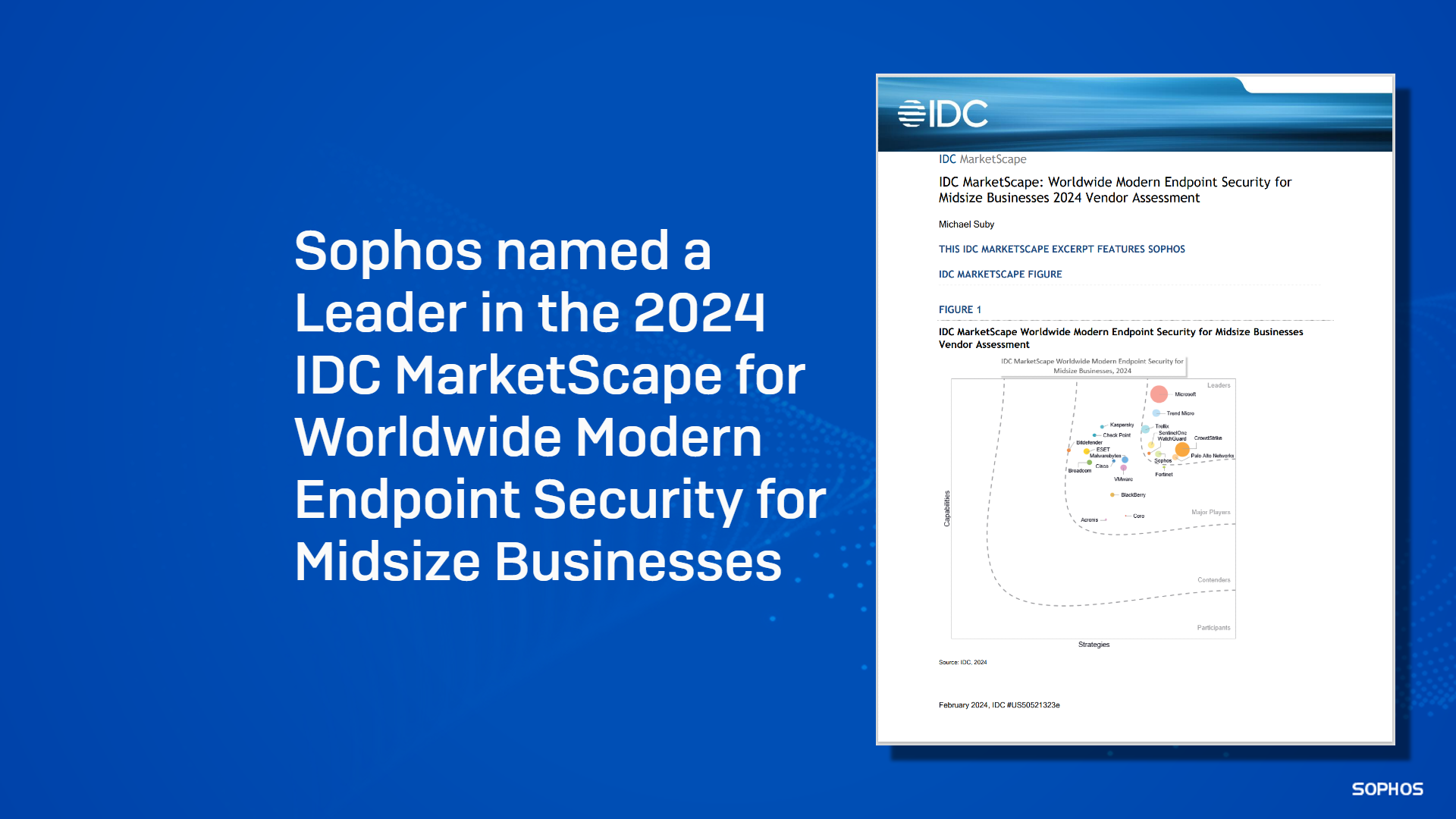
Sophos Ltd is a cornerstone of modern security because it democratizes enterprise-grade protection through its integrated "Cybersecurity-as-a-Service" model. By combining advanced AI-driven endpoint defense with human-led Managed Detection and Response (MDR), Sophos provides organizations of all sizes with the automated tools and expert oversight necessary to neutralize complex, multi-stage cyberattacks in real-time.
The Evolution of Sophos in the 2026 Cybersecurity Landscape
To understand why Sophos Ltd remains a pivotal entity in 2026, one must look at the trajectory of the threat landscape over the last decade. As we navigate the current year, the distinction between "endpoint security" and "network security" has largely evaporated, replaced by a holistic need for visibility across entire digital estates. Sophos, headquartered in Abingdon, United Kingdom, has transitioned from a traditional antivirus vendor into a cloud-native security powerhouse.
Historically, Sophos gained prominence by focusing on the mid-market—organizations that required robust security but lacked the massive internal Security Operations Centers (SOCs) of Fortune 500 companies. This focus dictated their product philosophy: powerful technology that is easy to manage. Today, this philosophy has manifested in the Sophos Adaptive Cybersecurity Ecosystem (ACE), a framework that allows various security components to share intelligence and respond to threats autonomously.
The company's acquisition by Thoma Bravo in 2020 provided the capital infusion necessary to pivot aggressively toward Managed Service Providers (MSPs) and cloud security. In 2026, this move is viewed as a masterstroke, as the global talent shortage in cybersecurity has made managed services the only viable path for most enterprises to maintain a 24/7 defensive posture.
The Adaptive Cybersecurity Ecosystem (ACE)
At the heart of Sophos’s relevance is the Adaptive Cybersecurity Ecosystem. This is not merely a marketing term; it represents a technical architecture where Sophos Central—a single-pane-of-glass management console—acts as the brain for a wide array of interconnected limbs.
In the past, security products operated in "silos." An email gateway might block a phishing link, but it wouldn't necessarily tell the endpoint protection to scan for related files, nor would it inform the firewall to block the associated IP address. Sophos changed this dynamic through its Synchronized Security technology. When an endpoint detects a threat, it sends a "heartbeat" status change to the Sophos Firewall. The firewall can then automatically isolate that specific device from the rest of the network, preventing lateral movement before an admin even sees the alert.
This automation is critical in 2026, where the "Mean Time to Detect" (MTTD) must be measured in seconds, not hours. By automating the initial containment steps, Sophos allows human analysts to focus on the more complex tasks of root cause analysis and long-term remediation.

Why Managed Detection and Response (MDR) is the Primary Driver
Perhaps the most significant reason Sophos Ltd matters today is its leadership in Managed Detection and Response (MDR). As of 2026, Sophos MDR protects over 20,000 customers globally, providing a level of threat hunting that was once exclusive to government agencies and global banks.
The Human Element in an AI-Driven World
While AI is foundational to Sophos’s software, the company recognizes that attackers are also using AI to craft more convincing social engineering and polymorphic malware. To counter this, Sophos employs hundreds of elite threat hunters who monitor telemetry from Sophos products and third-party integrations (such as Microsoft, Amazon Web Services, and Google Cloud).
Sophos MDR matters because it solves the "alert fatigue" problem. Most internal IT teams are overwhelmed by thousands of notifications daily, 99% of which are benign or low-risk. Sophos analysts filter this noise, identifying the 1% of signals that indicate a sophisticated "hands-on-keyboard" attack. This human-led approach ensures that when a breach is attempted at 3:00 AM on a Sunday, an expert is already working to neutralize it.
Integration with Third-Party Security Stacks
A major shift in Sophos’s strategy that solidified its importance was the move toward an open ecosystem. Sophos MDR can now ingest telemetry from competitors' products. This means a company using a different firewall or a different email security provider can still benefit from Sophos’s 24/7 threat hunting. This interoperability makes Sophos a central "security layer" rather than just another vendor in a crowded stack.
Technical Depth: Intercept X and Deep Learning
Sophos Intercept X, the company’s flagship endpoint protection platform, remains a dominant force in 2026 due to its sophisticated use of deep learning. Unlike traditional machine learning, which often relies on human-curated features to identify malware, Sophos’s deep learning neural networks analyze hundreds of millions of file attributes to identify patterns that indicate malicious intent.
Exploit Prevention
One of the most technically impressive aspects of Intercept X is its focus on exploit prevention. Rather than just looking for known malware "signatures," Sophos identifies the techniques used by attackers during the exploitation phase of an attack. This includes memory protection, protecting against "process hollowing," and mitigating "stack pivoting." By blocking the tools of the trade rather than just the files, Sophos can stop "zero-day" attacks that have never been seen before.
CryptoGuard Technology
Ransomware continues to be the most prevalent threat in 2026. Sophos’s CryptoGuard technology serves as a final safety net. It monitors the file system for unauthorized encryption. If a process starts encrypting files at an unnatural speed, CryptoGuard halts the process and automatically rolls back the encrypted files to their original state using a local cache. This "self-healing" capability is a major reason why Sophos is preferred by organizations with high-availability requirements.
Sophos Firewall and the SASE Evolution
The transition to remote and hybrid work necessitated a change in how we view the "perimeter." Sophos has responded by evolving its firewall technology into a comprehensive Secure Access Service Edge (SASE) offering.
The Sophos Firewall Xstream architecture provides deep packet inspection (DPI) for TLS 1.3 traffic, which is essential because most modern web traffic—and most modern malware—is encrypted. Without the ability to inspect this traffic at scale, firewalls become blind. Sophos's use of dedicated Xstream Flow Processors ensures that this inspection doesn't create a bottleneck for network performance.
Furthermore, Sophos has replaced traditional, cumbersome VPNs with Zero Trust Network Access (ZTNA). In 2026, ZTNA is the standard for secure remote access. It works on the principle of "never trust, always verify." A user is not granted access to the entire network; instead, they are granted access only to the specific applications they need, and only if their device meets strict health and security compliance checks.
Comparison: Sophos vs. Legacy Security Approaches
The following table illustrates why the Sophos integrated approach is superior to fragmented legacy security models in the 2026 environment.
| Feature | Legacy Security Approach | Sophos Integrated Approach (2026) |
|---|---|---|
| Response Time | Manual; depends on IT staff availability. | Automated via Synchronized Security; immediate isolation. |
| Visibility | Siloed; separate consoles for email, web, and endpoint. | Unified; "Single Pane of Glass" via Sophos Central. |
| Threat Hunting | Reactive; occurs after a breach is discovered. | Proactive; 24/7 human-led MDR threat hunting. |
| Remote Work | VPN-dependent; grants broad network access. | ZTNA-driven; granular, application-specific access. |
| Malware Detection | Signature-based; misses new or modified threats. | Deep Learning; identifies malicious patterns and techniques. |
| Infrastructure | On-premises hardware; difficult to scale. | Cloud-native; scales instantly across global offices. |
The Role of Sophos in Compliance and Cyber Insurance
In 2026, cybersecurity is no longer just a technical issue; it is a legal and financial one. Regulatory frameworks like GDPR, CCPA, and their various international successors have become more stringent. Additionally, the cyber insurance market has matured, with insurers requiring proof of 24/7 monitoring before they will issue a policy.
Sophos matters because it provides the "proof of due diligence" that insurers and regulators demand. The detailed reporting available in Sophos Central allows companies to show exactly what protections are in place, how often they are updated, and how incidents were handled. For many small-to-medium businesses, having Sophos MDR is the only way to qualify for affordable cyber insurance premiums.
Sophos Labs: Global Intelligence
The underlying intelligence that fuels these products comes from Sophos Labs. This global research entity processes billions of requests daily, providing a real-time map of global cyber threats. Sophos Labs matters because it contributes to the broader security community through the publication of technical reports on new ransomware strains, state-sponsored actor movements, and vulnerability disclosures. This contribution ensures that the entire industry stays a step ahead of attackers.
Common Challenges and Considerations
While Sophos provides a comprehensive suite, it is not a "set and forget" solution. Organizations must still ensure they follow best practices to maximize the value of the platform.
- Configuration Hygiene: Even the best firewall is ineffective if ports are left open unnecessarily. Regular audits of Sophos Central policies are required.
- User Education: Sophos provides Phish Threat, a simulation and training tool. Technology alone cannot stop a user from giving away their credentials; ongoing training is essential.
- Deployment Coverage: The "Synchronized Security" benefits only work if Sophos agents are installed on every device. Unmanaged "shadow IT" remains a significant risk factor.
FAQ
Is Sophos suitable for very small businesses with only 5-10 employees?
Yes, Sophos is highly scalable. While they serve large enterprises, their cloud-native Sophos Central platform is designed to be accessible for small businesses. Many small firms utilize Sophos through a Managed Service Provider (MSP), which handles the technical configuration on their behalf, providing them with enterprise-grade security at a predictable monthly cost.
How does Sophos handle privacy and data residency?
Sophos provides multiple data center locations globally for Sophos Central, including regions in North America, Europe, and Asia. This allows organizations to ensure their management data remains within specific jurisdictions to comply with local data residency laws like the GDPR. Sophos encrypts data in transit and at rest, maintaining high standards for platform security.
Can Sophos Intercept X run alongside other antivirus software?
While Intercept X is designed to be a complete endpoint protection solution, it can run in "detection only" mode or alongside certain other antivirus products. However, for maximum performance and to take advantage of the Synchronized Security features (like the heartbeat connection to the firewall), it is generally recommended to use Sophos as the primary security agent.
What is the difference between Sophos XDR and Sophos MDR?
XDR (Extended Detection and Response) is a tool that provides your internal IT team with the data and capabilities to hunt for threats across your network, email, and endpoints. MDR (Managed Detection and Response) is a service where Sophos’s own analysts use those XDR tools to hunt for and neutralize threats for you. Essentially, XDR is the software, and MDR is the software plus the expert humans.
How does Sophos protect against "fileless" malware?
Sophos uses several techniques to stop fileless attacks, which exist only in a computer's RAM. These include Behavioral Analysis, which detects suspicious process behavior (like PowerShell attempting to download an unauthorized script), and Exploit Prevention, which blocks the memory manipulation techniques that fileless malware relies on to execute.
Strategic Recommendation for 2026
For organizations looking to solidify their defense in 2026, the recommendation is to move beyond standalone products and embrace the Sophos MDR service integrated with Sophos ZTNA. The combination of human-led threat hunting and "zero trust" access control addresses the two biggest vulnerabilities in the modern enterprise: sophisticated persistent threats and the security gaps inherent in remote work.
Implementing Sophos is not merely about installing software; it is about adopting a resilient operational framework. Organizations should start by centralizing their management in Sophos Central and enabling Synchronized Security to automate the "handshake" between their network and their endpoints. This creates a defensive posture that is greater than the sum of its parts.
Image Gallery
Select an image to open it in a new tab.
Declan O'Connor
Higher Education and Campus Culture Reporter
