
The historical vulnerability of Indy 500 drivers to methanol fires—most notably demonstrated by the 1964 and 1981 incidents—serves as the cornerstone for modern open-wheel safety protocols. These tragic events exposed critical gaps in fire-retardant technology, fuel handling, and pit-lane safety, forcing a complete overhaul of how racing organizations manage high-energy combustible liquids in a high-density environment.
The Nature of Methanol as a Racing Fuel
Methanol (CH3OH) was adopted by the Indianapolis 500 primarily for its high octane rating, efficiency in high-compression engines, and favorable cooling properties. However, from a safety perspective, methanol presents a unique set of challenges that are distinct from gasoline or diesel. Methanol fires are notoriously difficult to detect because they burn with a nearly invisible, pale-blue flame, especially in bright daylight.
When a fuel spill occurs in the pit lane or on the track, the methanol may ignite without the telltale orange or black smoke associated with hydrocarbon fires. For decades, this "invisible fire" phenomenon caught crews, track safety teams, and drivers off guard. The heat intensity is extreme, and because methanol is water-miscible, traditional firefighting foam may not always effectively suppress a large-scale fire without the correct concentrations. The gaps identified in early Indy 500 safety protocols were not just about personal protective equipment; they were fundamentally about visibility and detection.
The 1964 Disaster: A Turning Point in Safety
The 1964 Indianapolis 500 is etched into motorsport history for the wrong reasons. A multi-car accident on the second lap involved Dave MacDonald and Eddie Sachs, leading to a catastrophic explosion of methanol. The resulting fireball and the slow realization of the severity of the burns sustained by the drivers forced the United States Auto Club (USAC) to rethink everything.
At the time, driver uniforms consisted largely of cotton or thin materials that offered negligible thermal protection. The 1964 incident highlighted that the "safety gap" wasn't just in the car—it was on the human body. Following the 1964 fire, the industry began a concerted, multi-year effort to integrate fire-resistant fabrics. This eventually led to the widespread adoption of Nomex, a meta-aramid fiber that became the industry standard for fire-resistant suits. The "gap" here was the assumption that a car’s containment was enough; 1964 proved that the driver’s personal equipment was the last and most critical line of defense.
The 1981 Incident: Pit Lane Vulnerabilities
While track crashes are often the focus of safety discussions, the 1981 Indianapolis 500 highlighted a different, equally dangerous safety gap: the pit lane environment. A refueling fire involving Mario Andretti’s team brought to light that the fuel hoses and couplings themselves were high-risk failure points.
During high-pressure refueling, if a nozzle fails to seat correctly or if a hose leaks under pressure, the resulting spray can ignite instantaneously upon contact with hot engine components or static discharge. The 1981 fire demonstrated that safety was not just about the driver; it was about the mechanics. This incident accelerated the transition toward "dry-break" couplings—mechanisms that prevent fuel flow unless the nozzle is securely attached to the car’s fuel inlet. By eliminating the possibility of a "free flow" of methanol during a mechanical failure, the risk of a massive pit-lane conflagration was significantly reduced.
Comparative Analysis of Racing Fuel Risks
The following table summarizes why methanol necessitated such radical changes in safety technology compared to standard fuel safety practices.
| Fuel Feature | Methanol (CH3OH) | Gasoline (High Octane) | Safety Implication |
|---|---|---|---|
| Flame Visibility | Near-invisible (pale blue) | Bright orange/yellow | Methanol requires specialized IR sensors |
| Water Solubility | Fully miscible | Immiscible | Methanol needs specific foam agents |
| Ignition Temp | Lower threshold | Higher threshold | Methanol ignites more easily in mist form |
| Combustion Heat | Intense, but lower flame height | Higher, radiant heat | Both require high-grade fire suits |
The Evolution of Fire-Retardant Technology
The response to these fires created a layered safety approach. It is not enough to have one solution; the industry now relies on an integrated stack of protections.
- Fire-Resistant Suits (Nomex and beyond): Modern suits are rated by their TPP (Thermal Protective Performance). These garments are engineered to provide a specific amount of time before the temperature inside the suit reaches a level that causes second-degree burns.
- Fuel Tank Cell Technology: Modern IndyCar fuel cells are made of Kevlar-reinforced rubber bladders. These are designed to be "crashworthy," meaning they can withstand high-impact deformation without rupturing.
- Fire Suppression Systems (On-board): Every race car is now equipped with an on-board, driver-activated fire extinguishing system. This is a vital gap-filler; if a driver is incapacitated or trapped, the system can douse the engine bay or cockpit in fire-suppressant chemicals.
- Pit Lane Protocols: Strict rules regarding the number of crew members allowed over the wall, mandatory fire-resistant apparel for all crew, and the presence of dedicated fire marshals with pressurized foam extinguishers have become the global standard.
Addressing the Invisible Fire Challenge
One of the most persistent safety gaps related to methanol was the inability of the human eye to detect the flame. In the late 20th century, the introduction of specialized fire-detection cameras for the pit lane allowed officials to monitor fuel splashes through thermal imaging. This technology ensures that even if a flame is invisible to the human eye in the midday sun, the infrared signature is captured, and the automatic suppression systems can be triggered immediately.
This is a prime example of moving from "reactive" safety (responding after a burn occurs) to "proactive" safety (detecting the failure before human exposure). The adoption of high-speed infrared cameras and thermal sensors in the pits has effectively closed the detection gap that was so lethal in the mid-1960s.
Prerequisites for Modern Motorsport Safety
For any organization or track hosting high-performance events involving fuels like methanol, several technical prerequisites must be met to bridge the historical gaps:
- Certified Fuel Containment: All fuel cells must meet current FIA or INDYCAR structural integrity standards.
- Fire Suppression Training: Every crew member must undergo routine training for "cold-start" fire drills, where the focus is on rapid suppression of a hidden, silent fire.
- PPE Verification: Rigorous testing of fire suits, including gloves, socks, and balaclavas. A "gap" in coverage—such as exposed skin at the wrist or ankle—is considered a major safety violation.
- Environmental Management: Because methanol is toxic to the environment, pits must have dedicated drainage and neutralization kits to prevent hazardous runoff in the event of a spill.
Common Safety Mistakes and Misconceptions
Despite significant progress, complacency remains the greatest threat to safety. A common error is the underestimation of "cold" methanol spills. Because methanol burns cleanly, many individuals mistakenly assume that a small spill does not pose an immediate threat. However, the vapor density of methanol means it can pool in low-lying areas, creating a "vapor trail" that can carry a flame back to the source from several feet away.
Another misconception is that synthetic base layers in clothing provide the same protection as professional-grade Nomex. Under high heat, synthetic materials can melt onto the skin, exacerbating the severity of burns. Safety directors emphasize that the entire ensemble—from the base layer to the suit—must be chemically compatible and thermally rated for the specific type of fuel being utilized.
The Role of Technology in Future-Proofing
As of 2026, the focus has shifted toward predictive maintenance. Using sensors within the fuel couplings and on the fuel lines, teams can now monitor pressure fluctuations in real-time. If a fuel line begins to degrade or if a coupling shows signs of mechanical fatigue, telemetry data will alert the crew before the car even enters the pits.
This digital layer of safety represents the next evolution of the lessons learned from the methanol fires of the past. By turning fuel delivery into a monitored, data-driven process, the risk of a catastrophic leak occurring in the first place is drastically reduced. The safety gap has narrowed from "how to put out a fire" to "how to prevent the fire from starting."
Frequently Asked Questions
Why was methanol specifically so dangerous at the Indy 500? Methanol burns with a nearly invisible flame in bright sunlight, making it difficult for track marshals and mechanics to spot the fire early. Furthermore, its ability to mix with water made early firefighting efforts less effective compared to hydrocarbon fires.
What is the "dry-break" system and why is it important? The dry-break coupling is a safety-engineered connector that prevents fuel from flowing unless it is properly locked into the car’s fuel inlet. It is vital because it eliminates the risk of fuel spraying during a disconnected or partially connected refueling attempt, which was a common cause of pit fires.
How do modern fire suits protect against methanol? Modern fire suits are made of meta-aramid fibers (like Nomex) that do not melt or drip when exposed to extreme heat. They are measured by Thermal Protective Performance (TPP), ensuring they offer a calculated window of time for the driver to egress the vehicle safely.
Are there still risks with methanol in 2026? While the risk of massive, uncontrollable fires is significantly lower due to improved engineering and gear, the chemical toxicity and the potential for invisible fires mean that safety protocols remain stringent and mandatory for all sanctioned events.
What should a team do if a fuel leak occurs during a pit stop? The standard protocol is an immediate "stop-flow" order, followed by the deployment of the fire suppression team. Mechanics are trained to clear the area instantly while marshals apply specialized foam designed to blanket the surface and cut off oxygen, even if the fire is invisible.
Conclusion: Constant Vigilance
The history of methanol fires at the Indianapolis 500 is a record of human and mechanical progress forged through trial and error. From the tragic lessons of 1964 and the critical infrastructure overhaul following 1981, the sport has transformed into one where safety is engineered into every component of the vehicle and every action of the crew.
The fundamental task for safety directors today is to ensure that these historical lessons are not forgotten as technology advances. The integration of sensors, the strict adherence to PPE standards, and the culture of preemptive risk assessment serve as the primary barriers between a routine race and a catastrophic event. For teams, the next step is the continuous auditing of telemetry systems to ensure that fuel delivery remains a closed, predictable process, effectively closing the final gaps in racing safety.
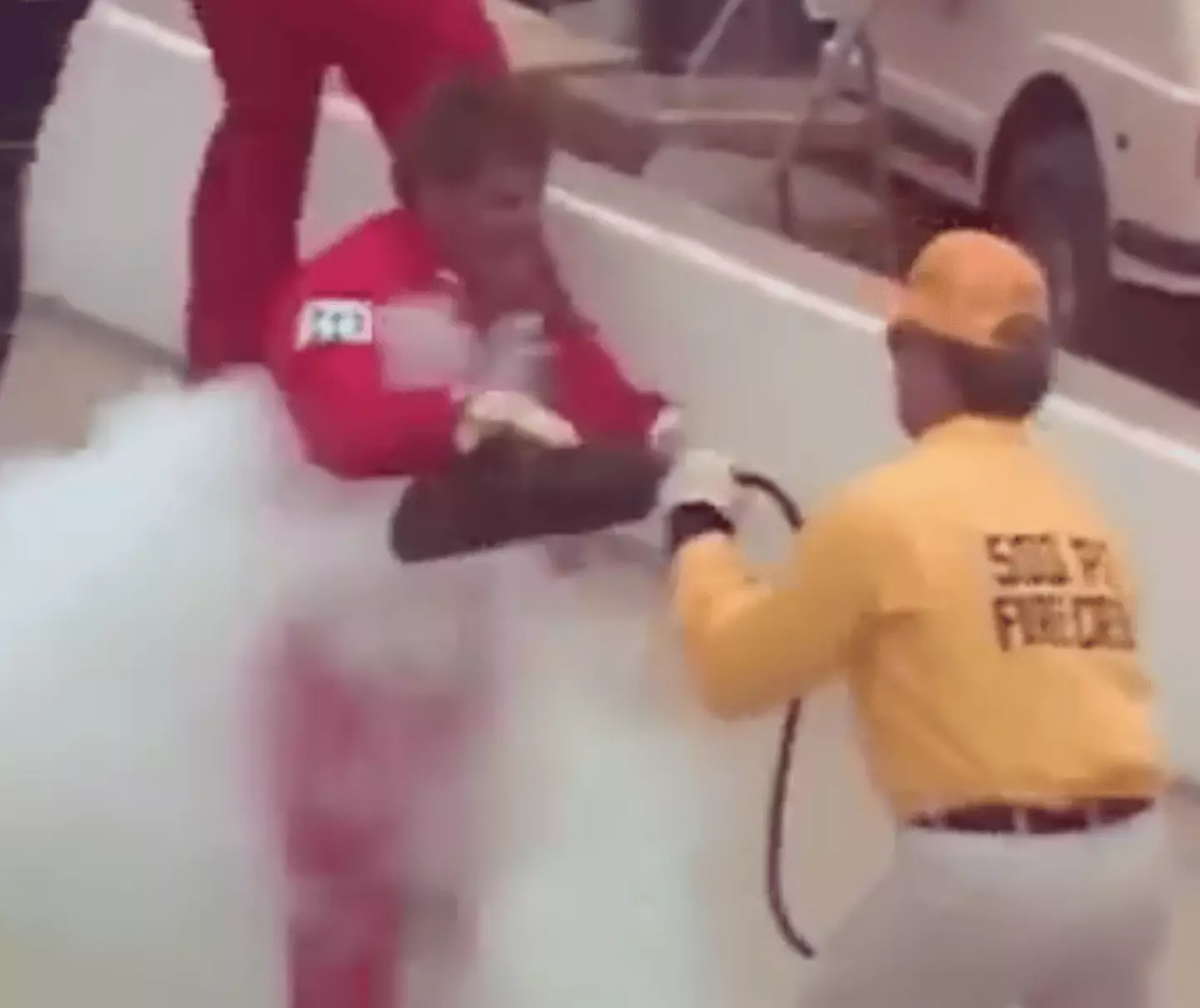
Image Gallery
Select an image to open it in a new tab.



Mateo Castillo
Decentralized Finance and E-Payments Strategist
