Mastering the Art of Cooking Beef Shank: A Comprehensive Guide

Cooking beef shank successfully requires shifting your focus from quick, high-heat methods to slow, methodical processes that break down tough connective tissues. Beef shank is a cross-cut section of the leg, characterized by a central marrow bone surrounded by lean muscle fibers and a significant amount of collagen. When prepared correctly, this collagen transforms into gelatin, creating an incredibly tender, flavorful result that defines classic dishes like Osso Buco or slow-braised beef shanks.
Understanding the Anatomy of Beef Shank
To cook beef shank effectively, one must understand exactly what the cut is. The shank is a heavily exercised muscle, which is why it is densely packed with connective tissue. Unlike a steak, which is composed primarily of muscle fibers that stay tender when cooked quickly, the shank is biologically designed to support the weight of the animal.
This structural reality means that the shank is one of the most flavorful parts of the cow, as the connective tissue contains high levels of collagen. However, if you attempt to grill or sear this cut to medium-rare, the meat will be nearly impossible to chew. The objective of cooking is not just "doneness" in the sense of temperature, but rather "tenderness" in the sense of structural breakdown. You are looking to dissolve the collagen into succulent gelatin through long-term exposure to moist heat.
Essential Prerequisites for Success
Before beginning, ensure you have the appropriate tools and ingredients. You do not need professional-grade kitchen equipment, but you do need items that facilitate steady temperature control.
Kitchen Equipment
- A Heavy-Bottomed Pot or Dutch Oven: This is non-negotiable. Cast iron or enameled cast iron provides the thermal mass necessary to maintain a constant, low simmer for several hours.
- Tongs: You will need these for searing the meat on all sides.
- Kitchen Twine: This is an often-overlooked tool. Beef shank is prone to falling apart as it cooks. Tying the perimeter of the meat with butcher’s twine helps it retain its shape, keeping the marrow bone in the center of the meat.
Ingredient Selection
- The Meat: Look for shanks that are approximately 1.5 to 2 inches thick. If they are too thin, they may disintegrate before the connective tissue fully softens.
- The Aromatics: A classic mirepoix (onions, carrots, and celery) provides the foundational flavor profile.
- The Liquid: You need an acidic or enzymatic element to assist the breakdown. Red wine, beef stock, or a combination of both is standard. The acidity of the wine helps cut through the richness of the marrow.

The Step-by-Step Braising Process
Braising is the gold standard for cooking beef shank. This method involves searing the meat to develop flavor via the Maillard reaction, then simmering it in a small amount of liquid.
1. Preparing and Searing
Pat the shanks dry with paper towels. Moisture is the enemy of the Maillard reaction; if the meat is wet, it will steam rather than brown. Season the shanks generously with kosher salt and black pepper. Heat a neutral oil—such as canola or grapeseed—in your Dutch oven over medium-high heat. Sear the meat until a deep, dark brown crust forms on both sides. Remove the meat and set it aside.
2. Developing the Foundation
Lower the heat and add your chopped aromatics to the rendered fat in the pan. Sauté them until the onions are translucent. If you are using tomato paste, add it now and cook for two minutes to remove the raw metallic taste. Deglaze the pan with your choice of wine, scraping up the browned bits (fond) from the bottom of the pot. These bits are concentrated sources of flavor that will form the base of your braising liquid.
3. The Long Simmer
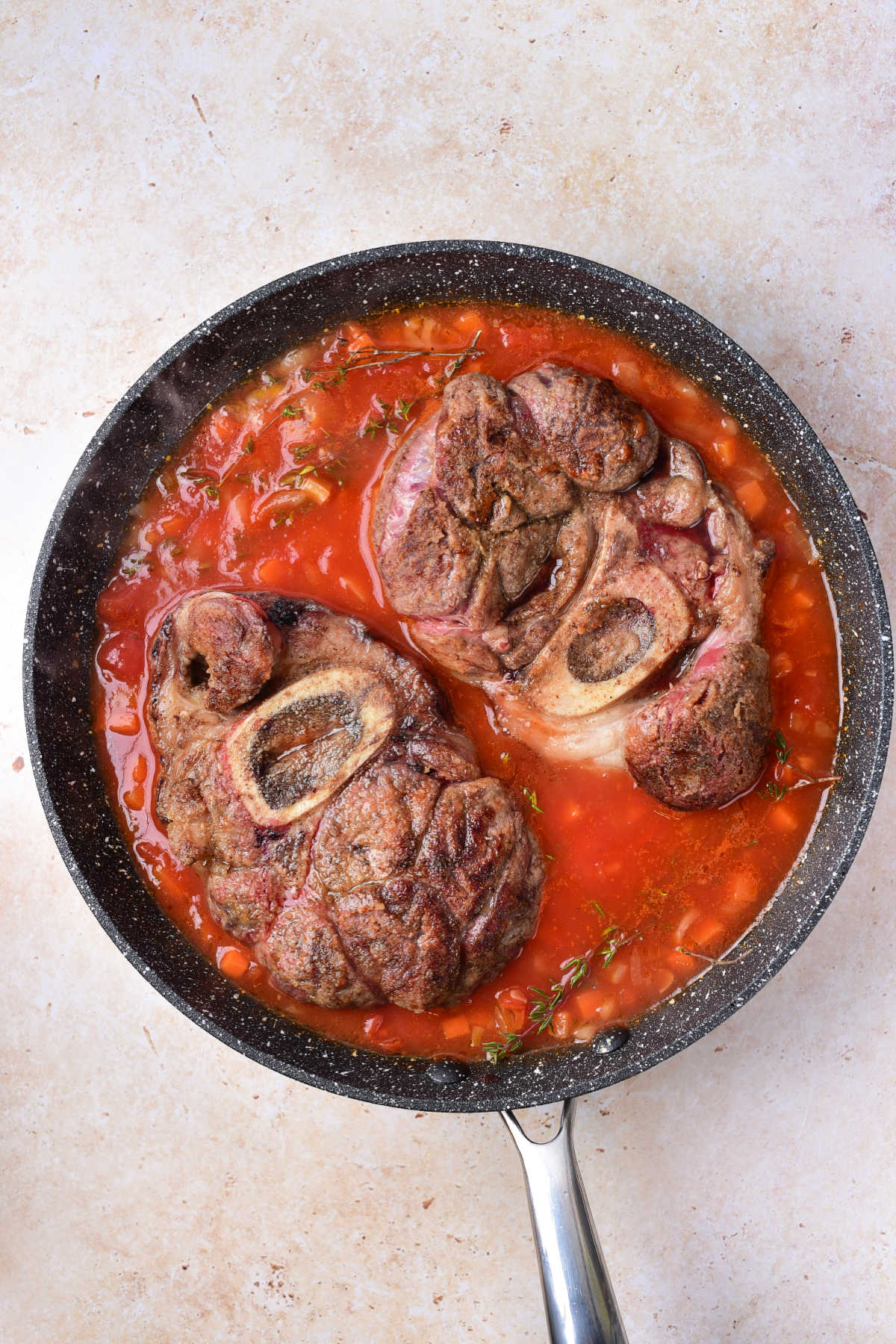
Place the shanks back into the pot. Add your stock until the liquid reaches about halfway up the sides of the meat. Cover tightly. You have two options for the final cook:
- Stovetop: Keep the pot on the lowest heat setting, maintaining a very gentle simmer.
- Oven: Place the covered pot in a preheated oven at 300°F (150°C). The oven provides a more consistent, ambient heat that reduces the risk of burning the bottom of the pot.
4. Verification of Doneness
Cooking time typically ranges from 2.5 to 4 hours. The meat is ready when it is "fork-tender"—meaning you can easily pull it apart with minimal resistance. If the meat offers resistance, continue cooking. It is better to over-cook by 20 minutes than to under-cook by 10.
Comparison of Cooking Methods
| Method | Temperature | Texture Result | Best Used For |
|---|---|---|---|
| Dutch Oven (Braise) | 300°F (150°C) | Fork-tender, moist | Traditional recipes, Osso Buco |
| Slow Cooker | Low Setting | Very soft, fall-apart | Hands-off convenience |
| Pressure Cooker | High Pressure | Tender, slightly fibrous | Expedited cooking (60-90 min) |
Common Mistakes and Troubleshooting
- The "Rubbery" Result: This almost always indicates that the meat was cooked at too high a temperature or for too short a time. The collagen has heated up but has not had sufficient time to convert to gelatin. The only remedy is to add more liquid and continue simmering.
- Excessive Grease: Because beef shank contains marrow and connective tissue, the rendered fat can make the sauce feel oily. The simplest way to manage this is to cook the dish a day in advance. Refrigerate the pot overnight; the fat will solidify on the surface, allowing you to lift it off easily before reheating.
- Loss of Bone Marrow: To keep the marrow inside the bone during cooking, avoid boiling the liquid. A hard boil causes agitation that can displace the marrow. Always aim for a gentle bubble.
Frequently Asked Questions
Why does my beef shank fall apart into strings? This is a sign that the meat has been cooked well past the point of tenderness. While still edible, it lacks the structural integrity expected in presentation-heavy dishes. This often happens if the heat is too high during the final hour of cooking. Use a lower setting to maintain texture.
Can I cook beef shank without browning it first? Technically, yes, but you will lose a significant amount of depth in the flavor of your final sauce. Browning creates the flavor compounds necessary for a rich, complex gravy. If you are short on time, browning is the one step you should not skip.
How do I know if the shank is high quality? Look for a high meat-to-bone ratio and a vibrant, deep red color. Ensure there is a visible layer of white connective tissue throughout the muscle; this is essential for the braising process. If the shank is too lean, it will dry out during the long cooking time.
Should I remove the bone before serving? This depends on the dish. In traditional Osso Buco, the bone is part of the presentation. In stews or shredded beef recipes, you should remove the bone once the meat is tender, as it will naturally separate from the protein.
Is it safe to consume the marrow? Yes, the marrow is considered a delicacy. During the slow-cooking process, it becomes rich and buttery. It can be served alongside the meat or stirred into the braising liquid to add body and richness to the sauce.
Next Steps for the Home Cook
To refine your technique, start by preparing a traditional red-wine braised shank. Once you are comfortable with the timing and the visual cues of doneness, begin experimenting with different braising liquids. Substitute red wine with dark stout beer or apple cider for a different flavor profile, or introduce different aromatics like star anise or ginger for a fusion-style approach. By mastering the fundamental braising method, you gain the ability to turn one of the most affordable and tough cuts of meat into a centerpiece meal.
Image Gallery
Select an image to open it in a new tab.



Simon Caldwell
Enterprise Technology and Systems Editor
