
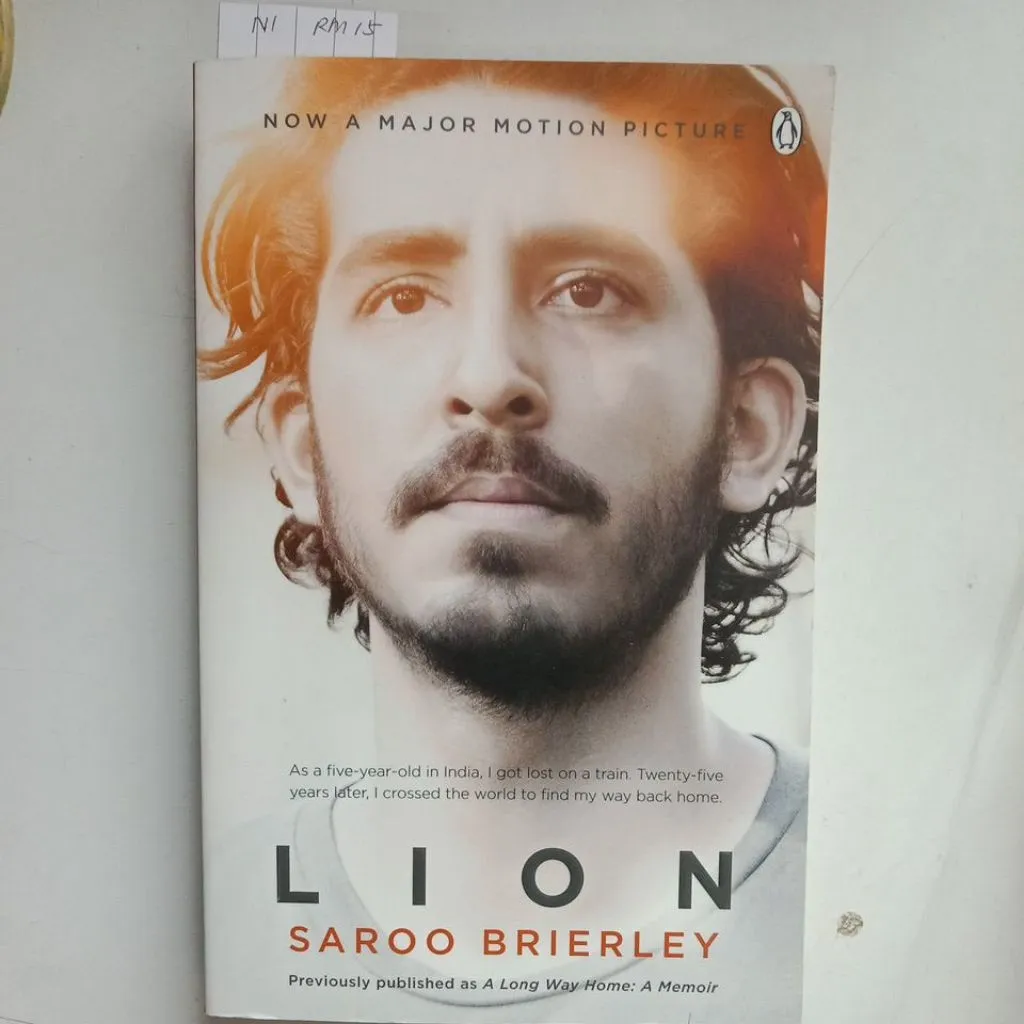
The biographical drama Lion (2016) serves as a profound case study on the nature of childhood trauma and the fallibility of episodic memory. By documenting Saroo Brierley’s accidental displacement in India and his eventual use of satellite technology to find his birth home, the film illustrates how sensory triggers, fragmented recollections, and the persistence of the subconscious interact to shape an individual’s identity and sense of belonging.
The Phenomenon of Fragmented Childhood Recollections
Saroo Brierley’s journey, as depicted in the film, begins with the sudden, disorienting experience of being separated from his family at the age of five. This event constitutes a significant disruption in the continuity of his development. In psychological terms, childhood memories formed during high-stress or traumatic events are often encoded differently than everyday occurrences.
For the young Saroo, the world was a collection of immediate sensory inputs: the sound of a train, the sight of a specific water tower, and the texture of the platform where he spent his days. Because he lacked the cognitive framework of a five-year-old to understand geography or urban logistics, these memories remained "stuck" in a state of suspended animation. He did not possess a linear map of his hometown; instead, he held a gallery of isolated impressions.
When the film transitions to Saroo as an adult living in Australia, the audience sees how these fragmented memories are triggered. This process, often referred to as "reminiscence bumping" or sensory reactivation, is not a clean, chronological playback of history. Instead, it is chaotic. A specific scent, a taste of Indian sweets, or a visual landmark can force a sudden, visceral resurfacing of the past. Lion excels in portraying this not as a neat flashback, but as an intrusive psychological force that disrupts Saroo’s current reality.
The Role of Sensory Triggers in Long-Term Memory Retrieval
Memory is rarely an exact mirror of the past; it is a reconstruction. In Lion, the director uses visual and auditory cues to demonstrate the "Proustian effect," where an sensory stimulus triggers a flood of involuntary memories.
When Saroo encounters jalebis—a treat he remembers from his childhood—the connection is immediate and overpowering. This is a scientific reality of the human brain: the olfactory and gustatory bulbs are closely linked to the amygdala and the hippocampus, the regions of the brain responsible for emotion and episodic memory. For Saroo, the memories were not lost; they were simply inaccessible until the correct environmental key was presented.
The film highlights several layers of memory retrieval:
- Implicit Memory: The instinctual knowledge of his mother’s face and the environment of his village, which remained subconscious throughout his life in Tasmania.
- Episodic Memory: The specific events of the train ride and his time in the streets of Kolkata, which Saroo initially struggles to organize logically.
- Reconstructed Memory: As Saroo begins his search, he is forced to fill in the gaps of his childhood recollections with Google Earth data, effectively merging digital technology with his internal, emotional map.
Bridging the Gap: Technology as a Cognitive Aid
The most technically significant aspect of Lion is the use of satellite imagery as a surrogate for spatial memory. In the absence of an address or the ability to name his village, Saroo Brierley relied on visual pattern recognition. This is a fascinating intersection of modern technology and human cognition.
Saroo spent years virtually traversing the rail lines of India. By manually following train tracks from Kolkata, he was effectively engaging in a process of visual priming. Every time he looked at a station or a town, he was testing his internal image against reality. This method relies on the "recognition over recall" principle in psychology. Saroo found he could not "recall" the name of his village, but he could "recognize" the geography of his home once the visual stimulus was provided.
This behavior highlights a crucial limitation of human memory: we are often better at identifying information when presented with cues than we are at retrieving that information from an empty slate. The satellite interface acted as an external hard drive for his memory, allowing him to bypass his lack of formal knowledge and reach into the deep, latent layers of his childhood perception.
The Psychological Cost of Searching for the Past
The process of memory retrieval in Lion is not merely an intellectual puzzle; it is an emotional burden. The film portrays the "search" as something that threatens to cannibalize Saroo's present life.
As he spends thousands of hours staring at a screen, his relationships with his adoptive parents and his partner begin to fray. This is a common phenomenon in individuals who experience "long-lost" or "reunion" trauma. The search for the past can lead to a state of dissociation from the present. Saroo’s obsession with memory is, in effect, a struggle to define his dual identity. He is both the boy from the train and the man from Australia, and reconciling these two figures requires him to constantly validate his memories against physical proof.
The film makes it clear that for Saroo, memory was not just a historical record; it was a ghost. Until he could verify the location of his childhood home, he felt that a part of his existence remained unanchored.
Comparative Analysis: Memory in Cinema vs. Reality
While Lion is a dramatization, it captures the essential tension between the subjective nature of memory and the objective reality of the world. The following table highlights the differences between how memory is often portrayed in film versus the reality of how Saroo Brierley experienced his search.
| Feature | Portrayal in Lion | Reality of Memory Processing |
|---|---|---|
| Recollection Speed | Often instant and emotional. | Typically slow, requiring extensive priming. |
| Clarity | Crystal clear, high-definition. | Usually fuzzy, blurred, or subject to bias. |
| Accuracy | Seen as a reliable source of truth. | Prone to "filling in the gaps" (confabulation). |
| External Aid | Essential for validation (Google Earth). | Often necessary to anchor subjective feelings. |
| Emotional Impact | High, causing isolation. | Consistent with "searcher's fatigue." |
Practical Guidance: Managing Traumatic Memory
For those who have experienced childhood displacement or are undergoing a similar search for their origins, the film serves as a cautionary and encouraging narrative. Seeking answers about one's past requires significant emotional preparation.
- Documenting Fragments: Keep a journal of sensory details—no matter how small. Smells, colors, or sounds can be essential keys when using maps or search tools.
- Managing Expectations: Understand that memories of trauma are rarely linear. Do not become discouraged if the search takes years; the brain needs time to process the transition from a long-repressed state to active recall.
- Balancing Present and Past: It is vital to maintain connections to current support systems. The search for the past should not replace the life one has built in the present.
- Utilizing Professional Support: Engaging with a therapist who specializes in adoption, displacement, or trauma can help manage the intense emotions that surface during the process of reclaiming one's history.
Frequently Asked Questions
Why did Saroo Brierley struggle to remember the name of his village? Saroo was only five years old when he was separated. At that age, children rarely possess the spatial or linguistic awareness to understand regional geography. Furthermore, the trauma of the separation caused the event to be encoded as an emotional experience rather than a documented historical one.
Is Google Earth a reliable tool for lost-person searches? Google Earth is highly effective for geographical verification, but it is not a primary search tool for individuals. Saroo’s success was unique because he had a visual, photographic memory of his environment, which he could match against the satellite imagery. Without that specific, latent visual memory, the task would have been exponentially more difficult.
What is the "Proustian Effect" mentioned in relation to the film? The Proustian effect is the phenomenon where a sensory cue, such as a specific smell or taste, triggers a powerful, involuntary memory. In the film, tasting jalebis serves as the bridge that connects the adult Saroo to his life in India.
How accurate is the film regarding Saroo's memory? While the film is a dramatized adaptation of the book A Long Way Home, it remains faithful to the core emotional experience of Saroo Brierley. The process of using satellite technology to find his home is documented fact, and the film effectively captures the psychological toll that the search exerted on his daily life.
Can repressed memories be trusted? Scientific consensus suggests that memories are reconstructive rather than archival. While the underlying emotion of a memory is often accurate, specific details like names, dates, or sequences of events can be altered by the brain over time. It is always recommended to verify "recovered" memories with physical evidence whenever possible.
Next Steps for Personal Investigation
If you are exploring your own history or searching for roots obscured by time and trauma, the primary recommendation is to prioritize objective validation. Start by gathering physical artifacts—photographs, old letters, or legal documents—that can serve as "ground truth" to support the subjective impressions stored in your memory. As Saroo Brierley proved, modern technology can be a powerful tool for bridging the gap between who you were as a child and who you are today, but it is the persistence in verifying those memories that ultimately leads to the truth.

Image Gallery
Select an image to open it in a new tab.



Simon Caldwell
Enterprise Technology and Systems Editor
