When Was Laura Ingalls Wilder Alive? Exact Dates, Timeline, and Historical Era
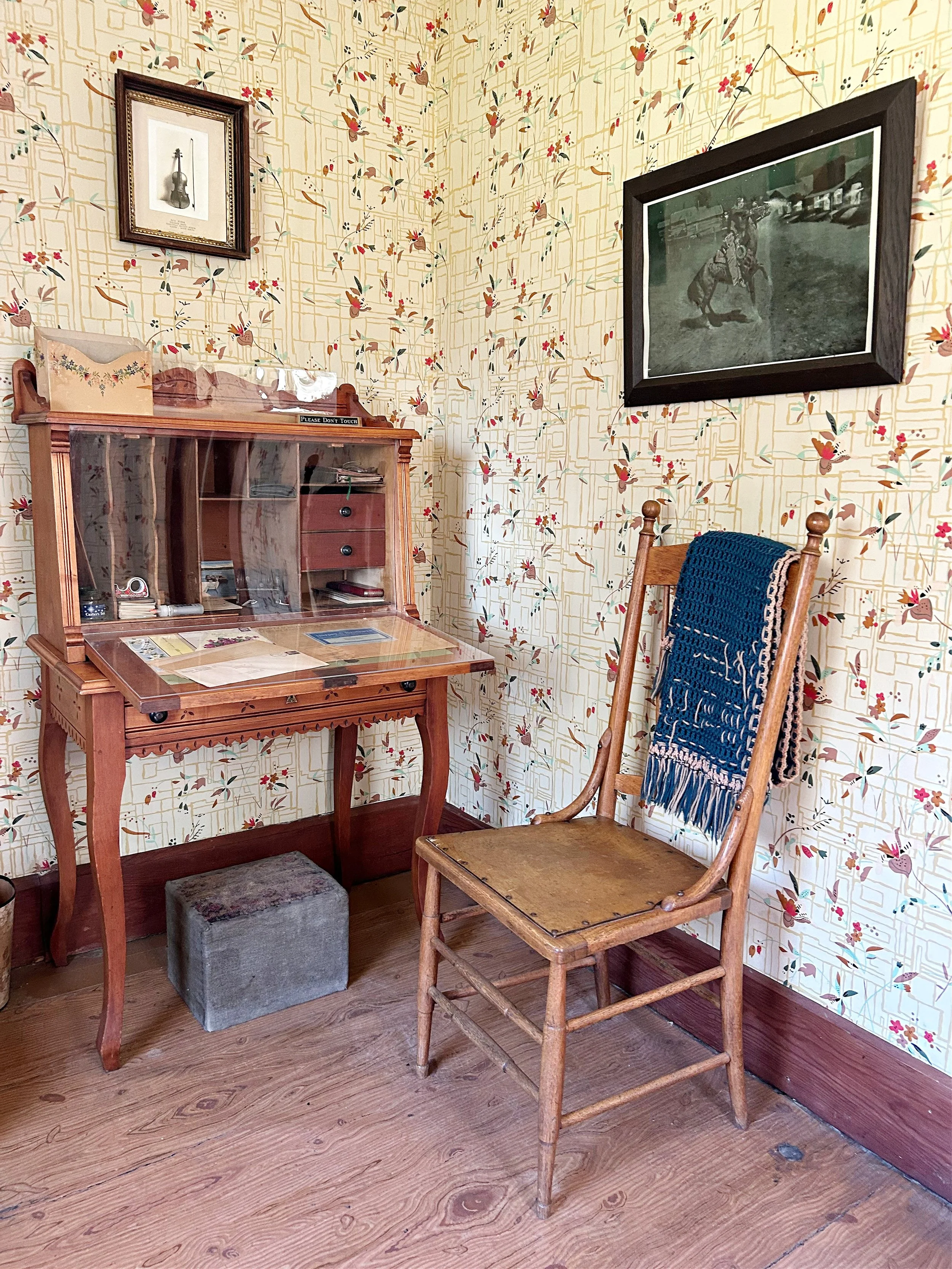
Laura Ingalls Wilder was alive from February 7, 1867, to February 10, 1957. Born in Pepin, Wisconsin, just after the American Civil War, she lived for 90 years and 3 days before passing away at her home in Mansfield, Missouri. Her life spanned the transition from covered wagons to jet aircraft.
Life Dates and Core Biography
Laura Elizabeth Ingalls was born in a log cabin in the Big Woods of Wisconsin near Pepin. She lived through almost a century of profound transformation in American history, bridging the pioneer era of horse-drawn transportation and homesteading with the modern era of commercial aviation and atomic power.
When evaluating when Laura Ingalls Wilder was alive, it helps to break down her life into two main phases: her early years as a pioneer girl and young schoolteacher on the Western frontier, and her later years as an agricultural journalist, author, and public figure living in the Missouri Ozarks.
- 1867: Born in Pepin, Wisconsin
- 1869–1879: Pioneer travels across WI, KS, MN, IA
- 1879–1894: Frontier years in De Smet, SD (Married Almanzo Wilder in 1885)
- 1894: Settled at Rocky Ridge Farm in Mansfield, MO
- 1932: Published "Little House in the Big Woods" (Age 65)
- 1957: Passed away in Mansfield, MO (Age 90)
Her total lifespan was 90 years, 3 days (or 32,875 days). Because her childhood experiences became the source material for the beloved nine-book Little House series, readers often associate her primarily with the 1870s and 1880s. However, she spent more than six decades of her life living in the 20th century.
Chronological Timeline of Laura Ingalls Wilder’s Life
The table below outlines the primary locations, dates, and historical milestones of Laura Ingalls Wilder's life from her birth in 1867 to her passing in 1957.
| Year / Range | Age Range | Primary Location | Key Life Milestones & Historical Events |
|---|---|---|---|
| 1867 | Birth | Pepin, Wisconsin | Born February 7 to Charles Philip Ingalls and Caroline Lake Quiner. |
| 1869–1870 | 2–3 | Independence, Kansas | Family settled on the Osage Diminished Reserve (Little House on the Prairie era). |
| 1871–1874 | 4–7 | Pepin, Wisconsin | Family returned to the Big Woods of Wisconsin. |
| 1874–1876 | 7–9 | Walnut Grove, Minnesota | Lived in a dugout on Plum Creek; experienced the grasshopper plagues. |
| 1876–1877 | 9–10 | Burr Oak, Iowa | Family helped manage the Masters Hotel following financial hardship. |
| 1877–1879 | 10–12 | Walnut Grove, Minnesota | Returned to Walnut Grove; worked as a seamstress and attended school. |
| 1879–1894 | 12–27 | De Smet, South Dakota | Survived the Hard Winter of 1880–1881; began teaching (1882); married Almanzo Wilder (1885); birth of daughter Rose (1886). |
| 1894–1957 | 27–90 | Mansfield, Missouri | Purchased Rocky Ridge Farm; wrote column for Missouri Ruralist; published Little House books (1932–1943); died February 10, 1957. |

Historical Eras Witnessed During Her 90-Year Lifespan
Laura Ingalls Wilder lived through some of the most dramatic technological, political, and social changes in modern history. Understanding the backdrop of her lifespan provides essential context for both her personal resilience and her literary perspective.
- 1867: Reconstruction Era Begins
- 1870s: Western Expansion & Frontier Homesteading
- 1890s: End of the Frontier & Gilded Age
- 1914: World War I Breaks Out
- 1929: Great Depression & Dust Bowl Era
- 1932: First "Little House" Book Published
- 1945: World War II Ends / Atomic Age Begins
- 1957: Early Space Age (Sputik launched later that year)
The Post-Civil War and Reconstruction Era (1867–1877)
Laura was born during Andrew Johnson's presidency, less than two years after the conclusion of the American Civil War and the ratification of the Thirteenth Amendment. Her parents, Charles and Caroline Ingalls, were part of a post-war westward migration encouraged by federal legislation such as the Homestead Act of 1862. Her early childhood took place against the backdrop of frontier expansion, Native American displacement, and the rapid growth of transcontinental rail lines.
The Gilded Age and Frontier Closing (1878–1890s)
During her teenage years in Dakota Territory, the West underwent intensive settlement. Laura experienced the hardships of early prairie farming, including devastating blizzard seasons, crop failures, prairie fires, and economic recessions. In 1890, the United States Census Bureau officially declared the American frontier closed, marking the end of the homesteading era that defined her youth.
Industrialization and World Wars (1900–1945)
After settling in Mansfield, Missouri, in 1894, Laura witnessed the widespread adoption of electricity, indoor plumbing, automobiles, telephones, radio, and aviation. She lived through both World War I and World War II, along with the Great Depression of the 1930s. It was during the Great Depression that she turned to writing long-form autobiographical fiction to preserve her memories and generate income during economic hardship.
The Post-War and Early Cold War Era (1945–1957)
In her final decade, Laura Ingalls Wilder lived through the birth of television, the expansion of commercial airline travel, and the start of the Cold War. When she died in 1957, the world had transitioned into the Atomic Age, only months before the launch of Sputnik inaugurated the Space Age—a stark contrast to the horse-drawn wagons of her youth.
Geographic Movements and Life Phases
The places where Laura Ingalls Wilder lived directly map to the titles and settings of her books. Her life can be understood through five key geographical phases.
- Pepin, WI (1867)
- Independence, KS (1869)
- Walnut Grove, MN (1874)
- De Smet, SD (1879)
- Mansfield, MO (1894–1957)
1. Pepin, Wisconsin (1867–1869, 1871–1874)
Born in Pepin County, Wisconsin, Laura spent her early years in a dense hardwood forest setting. This period forms the basis for her first published book, Little House in the Big Woods (1932). The family moved away briefly to Kansas before returning to Wisconsin for a few years due to land rights issues in Indian Territory.
2. Independence, Kansas (1869–1870)
In 1869, Charles Ingalls moved his family to the Osage Diminished Reserve near Independence, Kansas. This location served as the setting for Little House on the Prairie (1935). Because the land remained federal tribal property at the time, squatters and settlers were eventually ordered off the land by federal authorities, forcing the family to return to Wisconsin.
3. Walnut Grove, Minnesota, and Burr Oak, Iowa (1874–1879)
The Ingalls family relocated to Southwestern Minnesota, settling along Plum Creek near Walnut Grove. There, they lived in a sod dugout before building a frame house. The family endured severe grasshopper infestations (rocky mountain locust swarms) that destroyed their crops for consecutive years. This period inspired On the Banks of Plum Creek (1937). A brief period in Burr Oak, Iowa, operating a hotel followed before they returned to Walnut Grove.
4. De Smet, South Dakota (1879–1894)
In 1879, Charles Ingalls took a job with the Chicago and North Western Railroad, moving the family to Kingsbury County in Dakota Territory. Laura spent her adolescence in De Smet, attending school, working as a seamstress, and earning her teaching certificate at age 15.
She married Almanzo James Wilder (1857–1949) on August 25, 1885. Their early married life was marked by extreme hardship, including:
- The loss of their infant son in 1889.
- A bout of diphtheria that left Almanzo partially paralyzed.
- The complete destruction of their home by fire.
- Severe drought causing total crop failures.
5. Mansfield, Missouri (1894–1957)
Seeking a milder climate and a fresh economic start, Laura, Almanzo, and their seven-year-old daughter Rose moved to the Missouri Ozarks in 1894. Using their remaining savings, they purchased 40 acres of undeveloped land, which they named Rocky Ridge Farm.
Over the next several decades, they expanded the land to over 200 acres, built a custom stone-and-timber home, and established a prosperous dairy, poultry, and apple operation. Laura lived at Rocky Ridge Farm for 63 years until her death in 1957.
Writing Career: When Did She Write Her Books?
A common misconception is that Laura Ingalls Wilder wrote her books while young. In reality, her career as a published book author did not begin until she was 65 years old.
- 1911 (Age 44): Begins writing for "Missouri Ruralist"
- 1930 (Age 63): Completes "Pioneer Girl" manuscript
- 1932 (Age 65): Publishes "Little House in the Big Woods"
- 1935 (Age 68): Publishes "Little House on the Prairie"
- 1943 (Age 76): Publishes "The First Four Years" draft completed / Series wraps
- 1957 (Age 90): Passes away in Mansfield, MO
Early Journalism Work (1911–1920s)
Laura began her professional writing career around 1911 by submitting articles to regional agricultural papers. She became a regular columnist and editor for the Missouri Ruralist, writing about farm management, home economy, poultry raising, and rural community life. Her daughter, Rose Wilder Lane (1886–1968), had already established herself as a successful journalist and novelist in San Francisco and New York, encouraging her mother to expand her writing.
The Little House Publication Dates
Following the stock market crash of 1929, which wiped out much of the Wilders' retirement savings, Laura compiled her childhood memories into an unpublished autobiography titled Pioneer Girl. After revisions with editing assistance from Rose, trade publisher Harper & Brothers accepted an adapted juvenile version.
The publication timeline for the primary series includes:
- Little House in the Big Woods (1932) — Written at age 64–65.
- Farmer Boy (1933) — Based on Almanzo’s childhood in Upstate New York.
- Little House on the Prairie (1935) — Depicting life in Kansas.
- On the Banks of Plum Creek (1937) — Newbery Honor recipient.
- By the Shores of Silver Lake (1939) — Newbery Honor recipient.
- The Long Winter (1940) — Newbery Honor recipient.
- Little Town on the Prairie (1941) — Newbery Honor recipient.
- These Happy Golden Years (1943) — Newbery Honor recipient.
- The First Four Years (1971) — Published posthumously from her draft notes.
Key Family Relationships and Influences
Understanding when Laura Ingalls Wilder was alive requires examining the people who shared her lifetime and influenced her historical records.
- Charles & Caroline Ingalls (Parents: 1836–1924)
- LAURA INGALLS WILDER (1867–1957)
- Almanzo James Wilder (Husband: 1857–1949)
- Rose Wilder Lane (Daughter: 1886–1968)
- LAURA INGALLS WILDER (1867–1957)
Charles and Caroline Ingalls
- Charles Philip Ingalls ("Pa"): 1836–1902. Charles was an avid woodsman, carpenter, and pioneer whose desire for westward expansion shaped Laura's early movements.
- Caroline Lake Quiner Ingalls ("Ma"): 1839–1924. Caroline was a former schoolteacher who emphasized formal education, proper decorum, and stability amidst constant relocation.
Siblings
- Mary Amelia Ingalls: 1865–1928. Laura's older sister lost her sight at age 14 due to stroke or viral encephalitis. She attended the Iowa College for the Blind in Vinton, Iowa.
- Caroline Celestia Ingalls ("Carrie"): 1870–1946. Laura's younger sister worked as a newspaper publisher and compositor in South Dakota.
- Charles Frederick Ingalls ("Freddie"): 1875–1876. Died in infancy at nine months old.
- Grace Pearl Ingalls: 1877–1941. Laura's youngest sister, who lived adult life in South Dakota.
Almanzo James Wilder and Rose Wilder Lane
- Almanzo James Wilder: February 13, 1857 – October 23, 1949. Married Laura in 1885. He lived to age 92, passing away eight years before Laura.
- Rose Wilder Lane: December 5, 1886 – November 1, 1968. Rose became a major American political theorist, journalist, and novelist. She worked closely with her mother to structure, edit, and market the Little House manuscript series.
Preservation and Historical Sites Today
For researchers, students, and readers looking to explore Laura Ingalls Wilder's legacy, multiple historic sites preserve the locations where she lived.
- Pepin, WI: Laura Ingalls Wilder Museum & Wayside Cabin
- Independence, KS: Little House on the Prairie Museum
- Walnut Grove, MN: Laura Ingalls Wilder Museum & Plum Creek Site
- Burr Oak, IA: Laura Ingalls Wilder Historic Home & Museum
- De Smet, SD: Historic Homes, Surveyors' House, & Schoolhouse
- Mansfield, MO: Laura Ingalls Wilder Historic Home & Museum (Rocky Ridge Farm)
- Mansfield, Missouri: The Laura Ingalls Wilder Historic Home & Museum contains the original farm house, written manuscripts, the Pa's fiddle artifact, and personal possessions.
- De Smet, South Dakota: Offers guided tours of the Surveyor’s House where the family lived during the winter of 1879–1880, as well as the house Charles Ingalls built on Third Street.
- Pepin, Wisconsin: Features a replica of the original log cabin at the Little House Wayside site along Highway 35.
- Walnut Grove, Minnesota: Home to the Laura Ingalls Wilder Museum and the nearby site of the original dugout along Plum Creek.
Frequently Asked Questions
What exact day was Laura Ingalls Wilder born and when did she die?
Laura Ingalls Wilder was born on February 7, 1867, and died on February 10, 1957.
How old was Laura Ingalls Wilder when she died?
She was 90 years old. She passed away three days after celebrating her 90th birthday at her home in Mansfield, Missouri.
How old was Laura when she wrote her first book?
She published her first book, Little House in the Big Woods, in 1932 at the age of 65. She had previously worked as a journalist and newspaper columnist during her 40s and 50s.
Was Laura Ingalls Wilder alive during World War II?
Yes. Laura was 72 years old when World War II began in Europe in 1939 and 78 years old when it ended in 1945. She wrote several of her Little House books during the war years.
Did Laura Ingalls Wilder live in the 20th century?
Yes. Although her famous books focus primarily on the late 19th century (1870s–1890s), she lived 57 years of her 90-year life in the 20th century (from 1900 to 1957).
Summary and Next Steps
Laura Ingalls Wilder lived from February 7, 1867, to February 10, 1957. Her 90-year life bridged the era of Western pioneer expansion and the mid-20th-century modern world.
If you are researching her life or planning a historical study, consider these practical actions:
- Explore Primary Manuscripts: Review the original annotated transcripts in Pioneer Girl: The Annotated Autobiography published by the South Dakota Historical Society Press for direct comparisons between historical facts and her fiction books.
- Visit Historic Archives: Consult verified records from the Library of Congress or state historical societies in Missouri, South Dakota, and Minnesota for digitized land deeds, census records, and historical photography.
- Plan a Tour: Visit the Laura Ingalls Wilder Historic Home & Museum in Mansfield, Missouri, to view her original hand-written pencil drafts, furniture, and personal items preserved in their original state.
Image Gallery
Select an image to open it in a new tab.


Mateo Castillo
Decentralized Finance and E-Payments Strategist
