The History of Briggs & Stratton: A Century of Small Engine Innovation
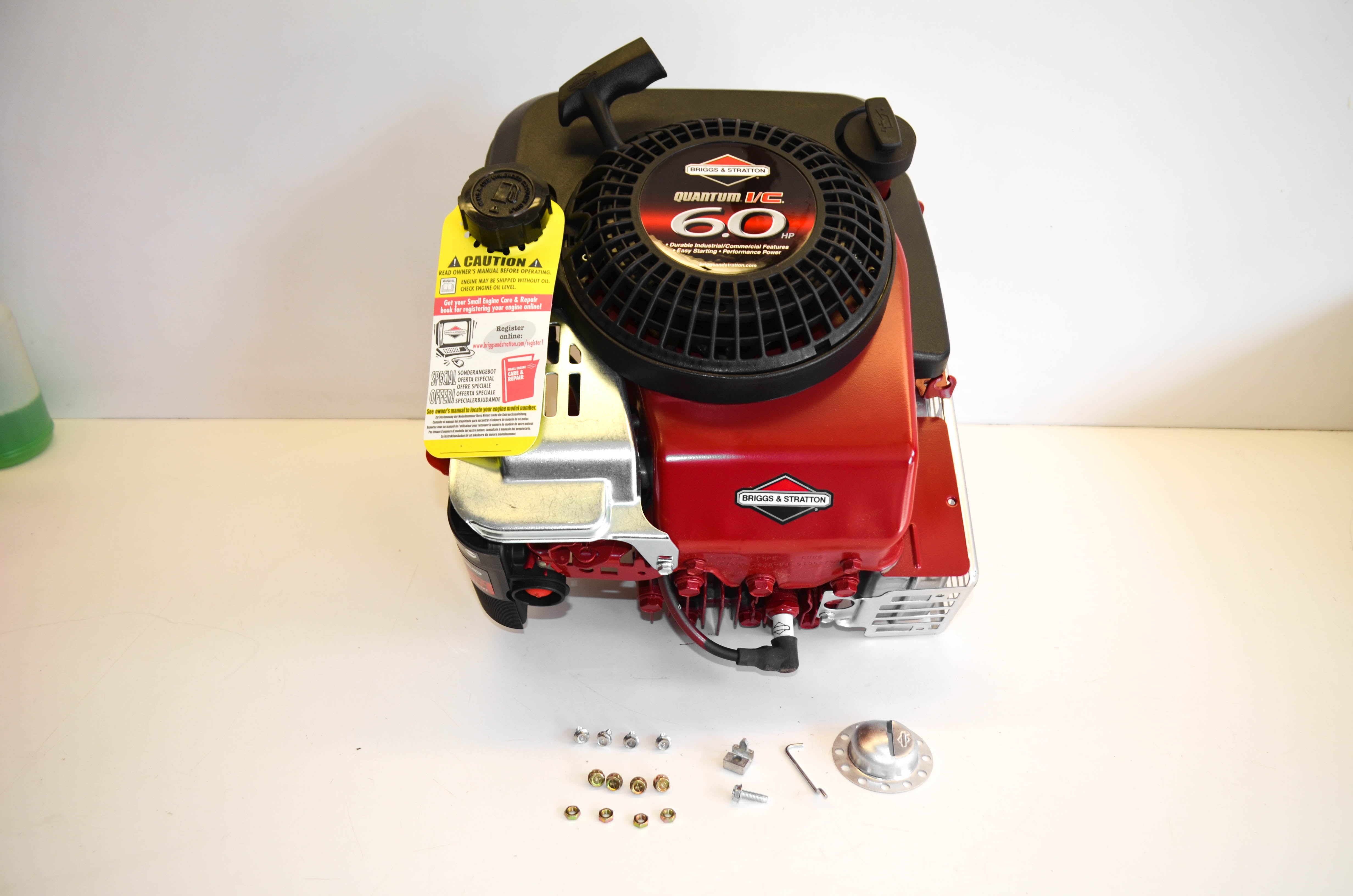
The history of Briggs & Stratton spans over a century of American engineering, beginning in 1908 as a partnership between Stephen Briggs and Harold Stratton. From revolutionizing the lawn and garden industry with the first lightweight aluminum engine in 1953 to its 2020 restructuring under KPS Capital Partners, the company remains a dominant force in global power equipment.
The Milwaukee Origins: 1908–1919
The story of Briggs & Stratton did not begin with the engines that would eventually make the brand a household name. Instead, it began with a failed attempt at an automobile. In 1908, Stephen Foster Briggs, an inventor and recent graduate of South Dakota State College, and Harold M. Stratton, a successful grain merchant, formed an informal partnership in Milwaukee, Wisconsin.
Their initial venture was the "Briggs & Stratton Flyer," a six-wheel vehicle intended to be an affordable transportation solution. While the car itself did not achieve commercial success, the components Briggs developed for it—specifically switches and ignitions—caught the attention of the burgeoning automotive industry. By 1910, the company incorporated and shifted its focus to manufacturing electrical components for car manufacturers like Ford, Dodge, and Hudson.
By the mid-1910s, Briggs & Stratton had become a major supplier of automotive locks and ignition switches. This success provided the capital necessary for their next major pivot. In 1919, the company acquired the "Motor Wheel" from the A.O. Smith Company. This was a small, gasoline-powered wheel designed to be attached to a bicycle to provide propulsion. This acquisition marked the company’s definitive entry into the world of internal combustion engines.
Pivoting to the Power of the Engine: The 1920s and 1930s
The Motor Wheel was a catalyst for innovation. While the device itself was niche, the engine powering it—the Model "P"—represented the birth of the Briggs & Stratton small engine legacy. Engineers realized that the demand for stationary power was growing, especially in rural areas where electricity was not yet ubiquitous.
Throughout the 1920s, Briggs & Stratton developed stationary engines to power washing machines, garden tractors, and water pumps. The introduction of the Model "Q" engine in the early 1920s was a milestone, as it was one of the first small engines to be mass-produced with a focus on reliability and ease of use.
The Great Depression of the 1930s proved to be a test of the company's resilience. While many manufacturers shuttered, Briggs & Stratton survived by diversifying. They continued to produce automotive locks—a segment they dominated for decades—while refining their engine designs. In 1931, the company introduced the "Basco" line of engines, which were used in everything from military equipment to farm machinery. By the end of the decade, the company had established itself as the premier manufacturer of air-cooled, four-cycle gasoline engines.

World War II and the Shift to Defense
During World War II, Briggs & Stratton, like many American industrial giants, pivoted entirely to support the Allied war effort. Their manufacturing facilities were converted to produce a wide array of military hardware, including generators, auxiliary power units for aircraft, and components for tanks and trucks.
The "military-standard" engines produced during this era were required to operate in extreme environments, from the humid jungles of the Pacific to the freezing winters of Europe. This period of intense production and rigorous testing led to significant advancements in engine durability and cooling systems. The company earned multiple "Army-Navy E Awards" for excellence in production, a testament to its role as the "arsenal of democracy."
When the war ended in 1945, the company was uniquely positioned to capitalize on the post-war economic boom. The returning soldiers were moving to the suburbs, creating a massive new market: the residential lawn and garden sector.
The Aluminum Revolution: 1953 and the Modern Era
If one single event defines the modern history of Briggs & Stratton, it is the introduction of the lightweight aluminum engine in 1953. Prior to this, most small engines were made of heavy cast iron, which made power equipment cumbersome and expensive to ship.
The 1953 breakthrough involved a high-pressure die-casting process that allowed for the mass production of aluminum engine blocks. These engines were significantly lighter, dissipated heat more efficiently, and were much cheaper to manufacture than their cast-iron predecessors. This innovation lowered the barrier to entry for homeowners, making the rotary lawn mower an affordable and essential tool for the American middle class.
In the 1960s, the company followed up this success with the "Easy-Spin" starting system, which utilized a unique cam design to reduce the effort required to pull the starter cord. This made power equipment accessible to a broader range of users, further cementing the brand's dominance in the suburban landscape.
Diversification, Global Expansion, and Acquisitions
As the 20th century progressed, Briggs & Stratton faced increasing competition from international manufacturers, particularly from Japan. To maintain its market share, the company began a strategy of vertical integration and brand acquisition.
Between the 1980s and early 2000s, Briggs & Stratton acquired several iconic names in the power equipment industry:
- Snapper: Known for high-quality rear-engine riders and walk-behind mowers.
- Simplicity: A premium brand specializing in lawn and garden tractors.
- Ferris: A leader in commercial-grade zero-turn mowers with advanced suspension systems.
- Victa: An Australian lawn mower icon.
- Allmand: A manufacturer of light towers and mobile industrial equipment.
These acquisitions allowed Briggs & Stratton to move beyond being "just an engine company" to becoming a full-service manufacturer of outdoor power equipment. However, the costs associated with these acquisitions, combined with shifting consumer preferences and the rise of battery-powered tools, began to strain the company’s financials by the 2010s.
Financial Rebirth: The 2020 Restructuring
By 2020, a combination of factors—including high debt loads, a decline in the traditional gas-mower market, and the economic disruptions of the COVID-19 pandemic—pushed the 112-year-old company into a corner. On July 20, 2020, Briggs & Stratton filed for Chapter 11 bankruptcy protection.
This was not the end of the company, but a planned restructuring. KPS Capital Partners, a private equity firm known for revitalizing industrial companies, acquired the assets of Briggs & Stratton for approximately $550 million. Under the ownership of KPS, the company emerged from bankruptcy as a private entity with a significantly reduced debt load and a renewed focus on innovation.
The restructuring led to a more streamlined organization. The company began investing heavily in its commercial divisions and, most notably, in electrification. While internal combustion engines remained the core business, the leadership recognized that the future of the industry was changing.
The Future of Power: Electrification and 2026 Status
As of 2026, Briggs & Stratton has successfully transitioned from a legacy engine manufacturer to a modern power solutions provider. The company’s "Vanguard" brand has become the spearhead for this transformation. Vanguard, originally the name for the company’s commercial-grade gasoline engines, now encompasses a sophisticated line of modular lithium-ion battery packs.
These battery systems are designed for the same rugged, commercial applications that once relied solely on gasoline. From electric mini-excavators to autonomous commercial mowers, the Vanguard battery technology has allowed Briggs & Stratton to remain relevant in a world increasingly focused on carbon neutrality and noise reduction.
Furthermore, the company has integrated advanced digital tools, such as the "InfoHub" fleet management system, which uses IoT (Internet of Things) technology to track equipment health and performance in real-time. This pivot toward "Power as a Service" marks a significant departure from the mechanical simplicity of the 1908 switches, yet it remains true to Stephen Briggs’ original spirit of invention.
Key Milestones in Briggs & Stratton History
| Year | Milestone | Impact on Industry |
|---|---|---|
| 1908 | Founding in Milwaukee | Established a hub for American small engine manufacturing. |
| 1919 | Acquisition of A.O. Smith Motor Wheel | Transitioned the company from auto parts to small engines. |
| 1953 | First Lightweight Aluminum Engine | Made lawn mowers affordable and portable for the mass market. |
| 1961 | Introduction of Easy-Spin Starting | Revolutionized user accessibility for pull-start equipment. |
| 2004 | Acquisition of Simplicity/Snapper | Expanded the brand from an engine supplier to a full equipment OEM. |
| 2020 | Acquisition by KPS Capital Partners | Saved the company from liquidation and provided capital for electrification. |
| 2026 | Vanguard Battery Dominance | Established the company as a leader in commercial-grade electric power. |
Frequently Asked Questions
Did Briggs & Stratton ever make cars?
Yes, in its earliest years, the company produced the Briggs & Stratton Flyer. Often cited as the world’s least expensive car at the time, it was essentially a wooden buckboard on four wheels with a fifth "motor wheel" providing power. While not a commercial success as a vehicle, it proved the viability of small, air-cooled engines for personal use and led the company toward its true calling in engine manufacturing.
Why did Briggs & Stratton file for bankruptcy in 2020?
The 2020 Chapter 11 filing was the result of several converging pressures. The company was carrying over $900 million in debt, much of it from past acquisitions and pension obligations. Additionally, a series of weak gardening seasons and the rapid rise of battery-electric competitors from brands like EGO and Greenworks eroded their market share in the residential sector. The bankruptcy allowed the company to shed debt and find a new owner in KPS Capital Partners.
Who owns Briggs & Stratton today?
As of 2026, Briggs & Stratton is a private company owned by KPS Capital Partners. Unlike its previous status as a publicly traded company on the NYSE (under the ticker BGG), it now operates with private equity backing, which has allowed it to focus on long-term R&D in electrification and commercial power solutions without the quarterly pressure of public shareholders.
Are Briggs & Stratton engines still made in the USA?
While Briggs & Stratton is a global company with manufacturing facilities in several countries, it maintains a significant manufacturing presence in the United States. Following the 2020 restructuring, the company consolidated much of its production. States like Missouri and Georgia continue to house major production and distribution facilities, though some components and specific engine lines are produced in overseas partnerships to remain competitive in global markets.
What is the "Vanguard" brand?
Vanguard is the premium, commercial-grade sub-brand of Briggs & Stratton. Originally launched to compete with high-end Japanese engines in the construction and landscaping industries, it has evolved into the company’s technology incubator. Today, Vanguard is best known for its commercial lithium-ion battery systems and high-efficiency EFI (Electronic Fuel Injection) engines.
Practical Recommendations for Equipment Owners
For those who own equipment powered by Briggs & Stratton engines—whether a vintage cast-iron model or a modern Vanguard-powered commercial unit—the key to longevity is consistent maintenance.
- Fuel Management: Modern ethanol-blended gasoline can degrade plastic and rubber components in as little as 30 days. Always use a fuel stabilizer or, ideally, ethanol-free gasoline for small engines.
- Oil Specifications: Use the correct viscosity as recommended by the manufacturer. While 30W was the standard for decades, many modern OHV (Overhead Valve) engines benefit from synthetic 5W-30 to ensure proper lubrication during cold starts.
- Genuine Parts: When performing repairs, prioritize OEM (Original Equipment Manufacturer) parts. The tolerances in Briggs & Stratton carburetors and ignition systems are specific; third-party "knock-off" parts often lead to poor fuel economy and difficult starting.
- Electrification Transition: If you are a commercial operator, evaluate the total cost of ownership (TCO) for the newer Vanguard battery-powered units. In many jurisdictions, the reduction in maintenance and fuel costs, combined with local noise ordinances, makes the switch to electric more profitable over a three-year window.
Image Gallery
Select an image to open it in a new tab.


Vivian Cho
Executive IT and Emerging Technologies Reporter
