How to File a Washington Workers’ Compensation Claim: A Comprehensive 2026 Guide
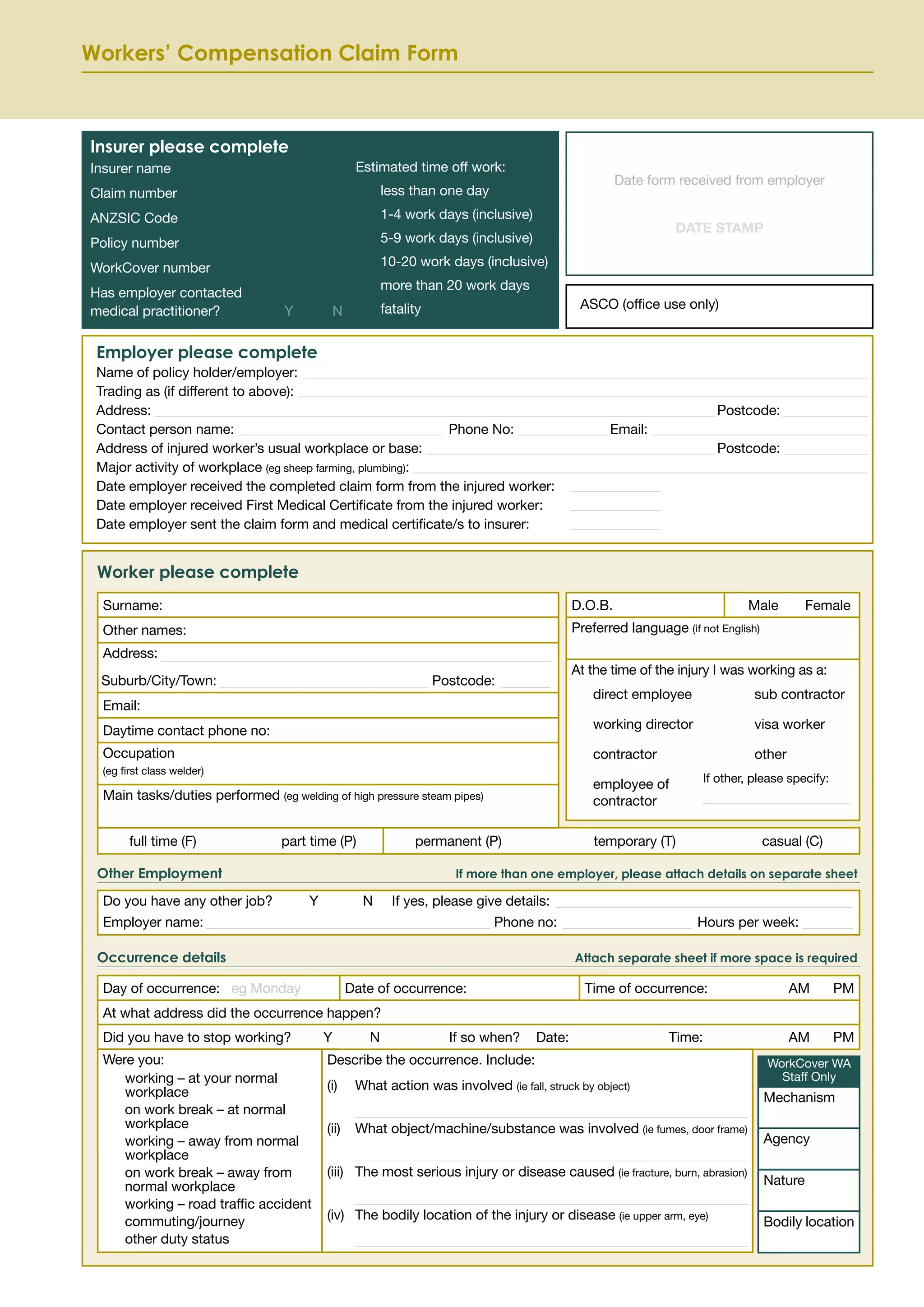
To file a Washington workers’ compensation claim in 2026, you must first seek medical attention and inform the provider the injury is work-related. You can then file the Report of Accident (ROA) online via the L&I FileFast portal, by calling 1-877-561-3453, or by completing the paperwork at your doctor’s office.
Navigating the Washington State workers' compensation system can be a daunting task, especially while recovering from an injury or illness. Unlike many other states where private insurance companies handle claims, Washington operates primarily through a centralized state-managed system. Understanding the nuances of the Department of Labor & Industries (L&I) is essential for ensuring you receive the medical coverage and wage replacement benefits you are entitled to under the law.
This guide provides a detailed roadmap for filing a claim in 2026, covering everything from immediate post-injury actions to long-term benefit management.
Understanding the Washington State Workers' Compensation System
The Washington workers' compensation system is often referred to as "no-fault" insurance. This means that in most cases, an injured worker is entitled to benefits regardless of who caused the accident, provided the injury occurred during the course of employment. In exchange for this guaranteed coverage, workers generally give up the right to sue their employers for personal injury damages.
In 2026, the system remains bifurcated into two primary categories:
- The State Fund: Most Washington employers pay premiums into a state-managed pool. The Department of Labor & Industries (L&I) acts as the insurer, making decisions on claims and paying out benefits directly.
- Self-Insured Employers: Large corporations that meet specific financial requirements are permitted to "self-insure." These companies (or their third-party administrators) manage their own claims and pay benefits directly, though they must still follow L&I regulations and are overseen by the department.
Determining which system your employer uses is the first step in the filing process, as it dictates where you send your paperwork and who you communicate with regarding your recovery.
Immediate Actions After a Workplace Injury
The moments following a workplace injury are critical for both your health and the success of your future claim. Delaying action can lead to complications in the medical record or even the denial of the claim by L&I or a self-insured employer.
Report the Incident to Your Employer
As soon as an injury occurs, or as soon as you become aware of a work-related illness, you must notify your supervisor. While a verbal report is a start, a written report is significantly more effective for documentation purposes. In 2026, many employers use digital incident reporting software; ensure you receive a copy or a confirmation number for your report.
Seek Medical Treatment Immediately
Your health is the priority. You have the right to choose your initial healthcare provider. In Washington, for the first visit, you can go to any emergency room, urgent care, or qualified doctor. However, for ongoing care, the provider must be part of the L&I Medical Network. When you arrive, tell the receptionist and the provider immediately that your visit is for a "work-related injury." This triggers the use of specific forms and prevents the provider from billing your private health insurance.
The Role of the Attending Physician (AP)
Your doctor—known in the L&I system as the Attending Physician (AP)—is the most important figure in your claim. They are responsible for certifying that your injury was caused by your work, outlining your physical restrictions, and determining when you are fit to return to work. Choosing a doctor who is experienced with the L&I system can significantly reduce administrative friction.

Step-by-Step Guide to Filing Your Claim
Once the initial medical emergency is addressed, the formal filing process begins. There are three primary ways to initiate a claim for workers' compensation in Washington.
1. Filing Online (FileFast)
The most efficient method in 2026 is using the L&I FileFast system. This digital portal allows you to submit your Report of Accident (ROA) directly to the department.
- Pros: Faster processing, immediate confirmation number, and the ability to track status online.
- Process: Navigate to the official L&I website and select the FileFast option. You will fill out your portion of the accident report, and the system will prompt your doctor and employer to complete their respective sections.
2. Filing by Phone
If you do not have reliable internet access or prefer speaking with a representative, you can file by calling 1-877-561-3453. L&I staff will interview you and complete the ROA over the phone. This method is available in multiple languages to accommodate Washington's diverse workforce.
3. Filing at the Doctor's Office
Most healthcare providers in Washington have paper or electronic versions of the Report of Accident. If you file at the office, the doctor completes their medical assessment section, and you complete the worker's section. The office then faxes or electronically submits the form to L&I. While convenient, always ask for a copy of the completed form for your records.
Necessary Information and Documentation
To ensure your claim is processed without delays, have the following information ready before you begin the filing process:
- Personal Information: Full name, social security number, contact information, and birthdate.
- Employer Information: Company name, location, and a supervisor’s contact name.
- Accident Details: The exact date, time, and location of the incident. Be prepared to describe what you were doing and how the injury occurred.
- Witnesses: Names and contact info for anyone who saw the accident.
- Medical Details: Name of the facility where you were treated and the name of the treating physician.
Expert Tip: Use precise language. Instead of saying "my back hurts," say "I felt a sharp pop in my lower back while lifting a 50-pound crate on Tuesday morning." Specificity helps the L&I claims adjuster link the medical condition to the workplace event.
Timelines and Deadlines for Filing
The Washington Industrial Insurance Act sets strict statutes of limitations for filing claims. Failure to meet these deadlines usually results in a permanent loss of the right to benefits.
- For Industrial Accidents: You must file your claim within one year of the date of the accident.
- For Occupational Diseases: These are conditions that develop over time (like carpal tunnel or lung disease). You must file within two years of the date you received written notice from a doctor that the condition exists and is work-related.
While the law provides these windows, you should ideally file within days. Employers are more likely to contest claims that are filed weeks or months after the alleged incident.
Comparison: State Fund vs. Self-Insured Claims
| Feature | State Fund (L&I) | Self-Insured Employer |
|---|---|---|
| Who Manages the Claim? | L&I Claims Manager | The Employer or a Third-Party Admin (TPA) |
| Who Pays Benefits? | L&I (State Treasury) | The Employer directly |
| Medical Network | Must use L&I Medical Network | Must use L&I Medical Network |
| Dispute Resolution | Handled by L&I | Initially handled by TPA; overseen by L&I |
| Paperwork | Report of Accident (ROA) | SIF-2 (Self-Insured Accident Report) |
What Happens After You File?
After the ROA is submitted, L&I or the self-insured employer will assign a Claim Number. This number is your "ID" for everything related to your injury. Provide it to your pharmacist, physical therapist, and any specialists you see.
The Decision Process
An L&I claims manager (or a self-insured administrator) will review the facts. They look for three things:
- Was there an "injury" or "occupational disease" as defined by law?
- Did it happen while the worker was "on the job"?
- Is there a "causal relationship" between the work and the medical condition (certified by a doctor)?
You will receive a formal "Order and Notice" in the mail stating whether the claim is allowed or rejected. If it is rejected, you have 60 days from the date you received the order to file a written protest or appeal.
Types of Benefits Available in 2026
If your claim is allowed, you may be eligible for several types of benefits designed to facilitate your recovery and financial stability.
- Medical Benefits: L&I pays for all proper and necessary medical treatment related to your injury. This includes doctor visits, surgery, prescriptions, and medical equipment. There are no deductibles or co-pays for the worker.
- Time-Loss Compensation: If your doctor certifies that you cannot work because of your injury, you receive partial wage replacement. In 2026, this is typically between 60% and 75% of your gross wages, subject to state maximums.
- Vocational Rehabilitation: If you cannot return to your previous job due to permanent restrictions, you may be eligible for retraining or job placement services.
- Permanent Partial Disability (PPD): If you recover but have a permanent loss of bodily function (e.g., loss of range of motion in a shoulder), you may receive a one-time monetary award.
Common Challenges and Troubleshooting
Even a valid claim can run into hurdles. One of the most common issues is the Independent Medical Examination (IME). L&I or the employer may require you to see a doctor of their choosing for a "second opinion." These exams are often used to argue that you are fixed or that your problems are due to "pre-existing conditions."
If your claim is stalled, check your MyL&I portal. Often, claims are delayed simply because a doctor failed to submit a "Physician’s Initial Report" or the employer failed to verify your wages. Promptly responding to L&I requests for information is the best way to keep a claim moving.
Professional Advice Limitation
This article provides general information about the Washington State workers' compensation process and does not constitute legal advice. Laws and regulations regarding L&I claims are subject to change. If you are facing a claim denial, complex legal issues, or a significant disability, you should consult with a qualified attorney licensed in Washington State who specializes in workers' compensation (Industrial Insurance).
Frequently Asked Questions
Can I be fired for filing a workers' comp claim in Washington?
No. Washington law (RCW 51.48.025) prohibits employers from discriminating or retaliating against workers for filing a claim or seeking benefits. If you believe you were terminated because of your claim, you can file a separate complaint with L&I. However, an employer can terminate you for unrelated reasons, such as business layoffs or pre-existing performance issues, even while a claim is open.
Do I have to see the company doctor?
No. In Washington, you have the right to choose your initial treating physician. While your employer may suggest a specific clinic or "company doctor," you are not legally required to use them for your ongoing care. You must, however, ensure that your chosen doctor is part of the L&I Medical Network to ensure your bills are paid.
What if my injury was my own fault?
Because Washington is a "no-fault" state, you are generally covered even if you made a mistake that led to the injury. The only major exceptions are injuries caused by "deliberate intention" (self-harm) or injuries that occurred while you were engaged in a fight where you were the primary aggressor.
How much does it cost to file a claim?
There is no cost to the worker to file a workers' compensation claim. Filing fees, administrative costs, and initial medical evaluations are covered by the system. If you choose to hire an attorney to help with an appeal, their fees are typically taken as a percentage of the back-benefits they recover for you, regulated by state law.
How long does it take for L&I to approve a claim?
Once L&I receives the Report of Accident from both you and your doctor, they typically make a decision within 2 to 4 weeks. However, complex cases involving occupational diseases or disputed facts can take longer. Using the online FileFast system generally results in the quickest decision turnaround.
Practical Next Action
If you have been injured today, your immediate next action is to visit an urgent care or emergency room and explicitly state, "I was injured at work." Ensure the provider completes their portion of the Report of Accident before you leave, and keep the "Claim Number" they provide in a safe place. Once home, log into the L&I website to verify that your portion of the claim is fully submitted.
Image Gallery
Select an image to open it in a new tab.

Celine Dubois
Contemporary Living and Global Arts Columnist
