How ADN to MSN Programs Online Work: A Comprehensive Guide to Accelerated Nursing Education
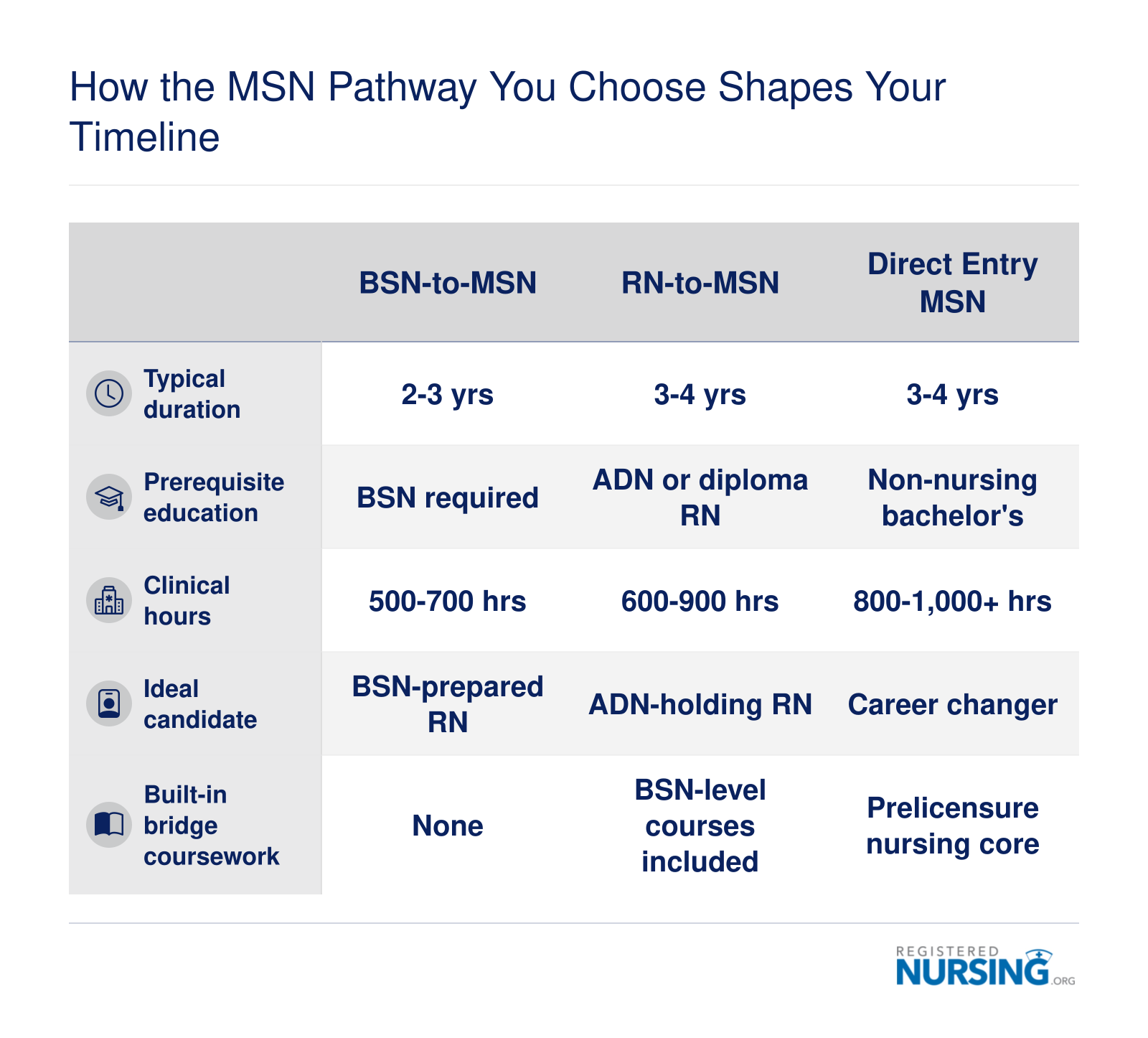
Online ADN to MSN programs work by providing a streamlined educational pathway for Registered Nurses (RNs) with an Associate Degree in Nursing to earn a Master of Science in Nursing without completing a separate Bachelor’s degree. These programs integrate essential baccalaureate-level coursework with graduate-level specialty training through asynchronous digital platforms and local clinical placements.
For many Registered Nurses, the traditional path of returning to school for a Bachelor of Science in Nursing (BSN) and then later applying for a Master of Science in Nursing (MSN) feels redundant and time-consuming. In 2026, the healthcare landscape demands highly specialized practitioners, making the ADN to MSN bridge program one of the most efficient ways to achieve advanced practice status or leadership roles. These programs are designed specifically for the working professional, leveraging existing clinical experience to accelerate the transition from technical nursing to advanced theory and practice.
The Structural Mechanics of an Online ADN to MSN Program
The fundamental "how" of an online ADN to MSN program lies in its structural efficiency. Instead of viewing the BSN and MSN as two distinct silos, these programs treat nursing education as a continuum.
The Bridge Phase
The first phase of any ADN to MSN program is often referred to as the "bridge" or "transition" phase. Since an Associate Degree in Nursing focuses heavily on clinical skills and bedside care, it often lacks the broader theoretical components of a BSN, such as community health, nursing research, and leadership.
During the bridge phase, students typically complete three to five "bridge courses." These are upper-division undergraduate classes that satisfy the core competencies required for graduate study. In most cases, students do not receive a standalone BSN degree during this process, though some programs offer a "stop-out" option where the BSN is awarded midway through.
The Graduate Core
Once the bridge requirements are met, the student moves directly into the MSN core curriculum. This phase is identical to what a traditional MSN student (one who already has a BSN) would experience. It covers high-level nursing concepts including:
- Advanced Pathophysiology: A deep dive into disease processes across the lifespan.
- Advanced Pharmacology: Complex drug interactions, pharmacokinetics, and prescribing logic.
- Health Policy and Advocacy: Understanding the legislative side of healthcare and how to influence system-wide change.
- Nursing Informatics: Using data and technology to improve patient outcomes.
The Specialty Track
The final phase of the program is the specialization. Whether a student wants to become a Family Nurse Practitioner (FNP), a Nurse Educator, or a Nurse Administrator, this is where the coursework becomes highly specific to their career goals. For clinical tracks, this phase is heavily supplemented by hands-on clinical hours.
How the Online Learning Component Functions
In 2026, the technology supporting online nursing education has evolved significantly, moving far beyond simple video lectures and discussion boards.
Learning Management Systems (LMS)
Most universities utilize platforms like Canvas or Blackboard to host their ADN to MSN programs. These systems act as a virtual classroom where students access syllabi, submit assignments, and interact with faculty. In an asynchronous format—which is the most common for online nursing programs—students can log in at any time to complete their work, provided they meet weekly deadlines. This flexibility is what allows working RNs to maintain full-time employment while pursuing their masters.
Virtual Simulations and Labs
One of the most innovative ways these programs work is through virtual simulation. To prepare students for real-world clinicals, online programs often use high-fidelity virtual simulations where students must assess "digital patients," make diagnostic decisions, and create care plans. These simulations provide a safe environment to practice critical thinking before entering a physical hospital setting.
Proctored Exams
To maintain academic integrity and meet accreditation standards, online programs require proctored examinations. This usually involves software that monitors the student via webcam and locks down their computer browser to prevent unauthorized assistance during tests. This ensures that the rigor of the online MSN is equivalent to its on-campus counterpart.
Navigating the Clinical Requirement
A common misconception is that an "online" MSN means the entire degree is completed behind a computer screen. This is not the case. For a degree to lead to licensure (especially for Nurse Practitioners), a specific number of clinical hours must be completed in person.
Finding a Preceptor and Site
In most online ADN to MSN programs, the responsibility for finding a clinical site and a preceptor (a qualified professional who supervises the student) often falls on the student. However, many reputable schools now offer clinical placement services or "success coaches" who assist in identifying approved facilities in the student’s local area.
Clinical Hour Requirements
The number of hours required varies by specialty. For example:
- Nurse Practitioner tracks: Typically require 500 to 700 clinical hours.
- Nursing Education tracks: May require 150 to 300 hours focused on teaching and curriculum development.
- Leadership/Administration tracks: Often involve a "practicum" or "capstone project" rather than direct patient care hours.
These hours are generally completed in a "hands-on" capacity at hospitals, private practices, or community clinics. Students must document their hours and meet specific learning objectives, which are then verified by both their preceptor and their university faculty.
Admissions and Prerequisites
Because these programs are accelerated, the admissions process is rigorous. Schools want to ensure that an applicant has the foundational knowledge and the professional discipline to handle graduate-level work without the traditional BSN intermediary.
Core Requirements
To be eligible for an online ADN to MSN program, applicants generally need:
- An Active RN License: You must be a Registered Nurse in good standing in the state where you will perform your clinicals.
- An ADN from an Accredited Institution: Your associate degree must be from a school accredited by a recognized body like the Accreditation Commission for Education in Nursing (ACEN).
- Minimum GPA: Most programs require a cumulative GPA of 3.0 or higher.
- Clinical Experience: While some "direct entry" programs exist, most ADN to MSN tracks prefer or require at least one to two years of experience as a working RN.
Prerequisite Coursework
Even with an ADN, students may need to complete specific "gen-ed" prerequisites before beginning the bridge phase. These often include Statistics, Microbiology, and Anatomy & Physiology I & II. If these were not part of the original associate degree curriculum, they must be completed at a community college or through the university's undergraduate division first.
Comparing the Pathways: ADN to MSN vs. Traditional Routes
Choosing the right path depends on your ultimate career goals and how quickly you want to reach them. The following table illustrates the differences between the accelerated bridge and the traditional step-by-step approach.
| Feature | Traditional Route (ADN -> BSN -> MSN) | Online ADN to MSN Bridge |
|---|---|---|
| Total Time | 4 - 6 Years | 2.5 - 4 Years |
| Degrees Earned | Both BSN and MSN | Usually just MSN (varies by school) |
| Course Load | Sequential (Complete BSN first) | Integrated (Bridge directly to MSN) |
| Cost Efficiency | Lower per credit, but more credits total | Higher per credit, but fewer total credits |
| Ideal For | Nurses who want the BSN credential early | Nurses focused on advanced practice roles |
| Flexibility | Moderate (often involves two applications) | High (single application and streamlined) |
Financial Considerations and ROI in 2026
The cost of an online ADN to MSN program can range from $25,000 to over $65,000, depending on whether the institution is public or private. While the upfront cost is significant, the return on investment (ROI) is generally high.
According to the Bureau of Labor Statistics, the demand for advanced practice nurses continues to grow much faster than the average for all occupations. By moving directly to an MSN, RNs can see a significant salary increase—often $30,000 to $50,000 more per year—much sooner than if they had taken the traditional route.
In 2026, many employers also offer tuition reimbursement programs specifically for bridge degrees, as they benefit from having more highly educated staff for Magnet status requirements and improved patient outcomes.
Accreditation: The Non-Negotiable Standard
When researching how these programs work, the most critical factor to verify is accreditation. If a program is not properly accredited, you may be ineligible for federal financial aid, and more importantly, you may not be allowed to sit for national certification exams.
There are two primary accrediting bodies for nursing education in the United States:
- CCNE (Commission on Collegiate Nursing Education): This is the most common accreditor for baccalaureate and graduate nursing programs.
- ACEN (Accreditation Commission for Education in Nursing): This body accredits all levels of nursing education, from certificates to doctoral degrees.
Before enrolling, verify the program's status on the official CCNE website. An accredited program ensures that the curriculum meets the national standards for nursing education and that your degree will be respected by employers and licensing boards.
Frequently Asked Questions
Can I work full-time while enrolled in an online ADN to MSN program?
Yes, the majority of students in these programs work as full-time RNs. The asynchronous nature of the coursework allows for studying during night shifts, weekends, or days off. However, you may need to reduce your hours during the final clinical phases, as the practicum requirements can be as demanding as a part-time job.
Do I have to go to campus at all?
Many programs are "100% online," meaning all didactic coursework is digital. However, some programs are "hybrid," requiring one or two short on-campus intensives (often 2-3 days) for hands-on skills assessments or networking. Always check the specific residency requirements of the school you are considering.
Is an online MSN degree respected by employers?
In 2026, there is virtually no distinction between an MSN earned online and one earned on-campus, provided the school is accredited. In fact, most diplomas do not specify that the degree was earned online. Employers value the clinical experience and the successful completion of the national certification exam above the mode of delivery.
What happens if I decide to stop after the bridge phase?
This depends on the program. Some programs are designed such that you earn your BSN after the first 12-18 months. In these "step-out" programs, you can leave with your BSN if your plans change. Others are "integrated," meaning you do not earn any degree until the entire MSN curriculum is finished. If you think you might need to stop early, look specifically for a program that awards the BSN mid-way.
How long does it take to finish?
On average, a full-time student can complete an ADN to MSN program in 2.5 to 3 years. Part-time students may take 4 to 5 years. The bridge phase usually takes 2-3 semesters, followed by 4-6 semesters of graduate-level work.
Final Recommendations for Aspiring MSN Students
For RNs ready to advance their careers, the ADN to MSN pathway is a powerful tool for professional growth. To succeed, you should first identify your desired specialty, as this will dictate which programs are the best fit. Once you have a shortlist, verify their accreditation status and inquire about their clinical placement support.
Given the intensity of graduate-level study, it is also advisable to speak with your current employer about flexible scheduling or tuition assistance. By bypassing the traditional BSN-only step, you are not just saving time; you are positioning yourself at the forefront of the modern healthcare workforce where advanced clinical judgment and leadership are more valuable than ever.
Image Gallery
Select an image to open it in a new tab.
Lars Thomsen
Global Labor Markets and Economic Strategy Editor
