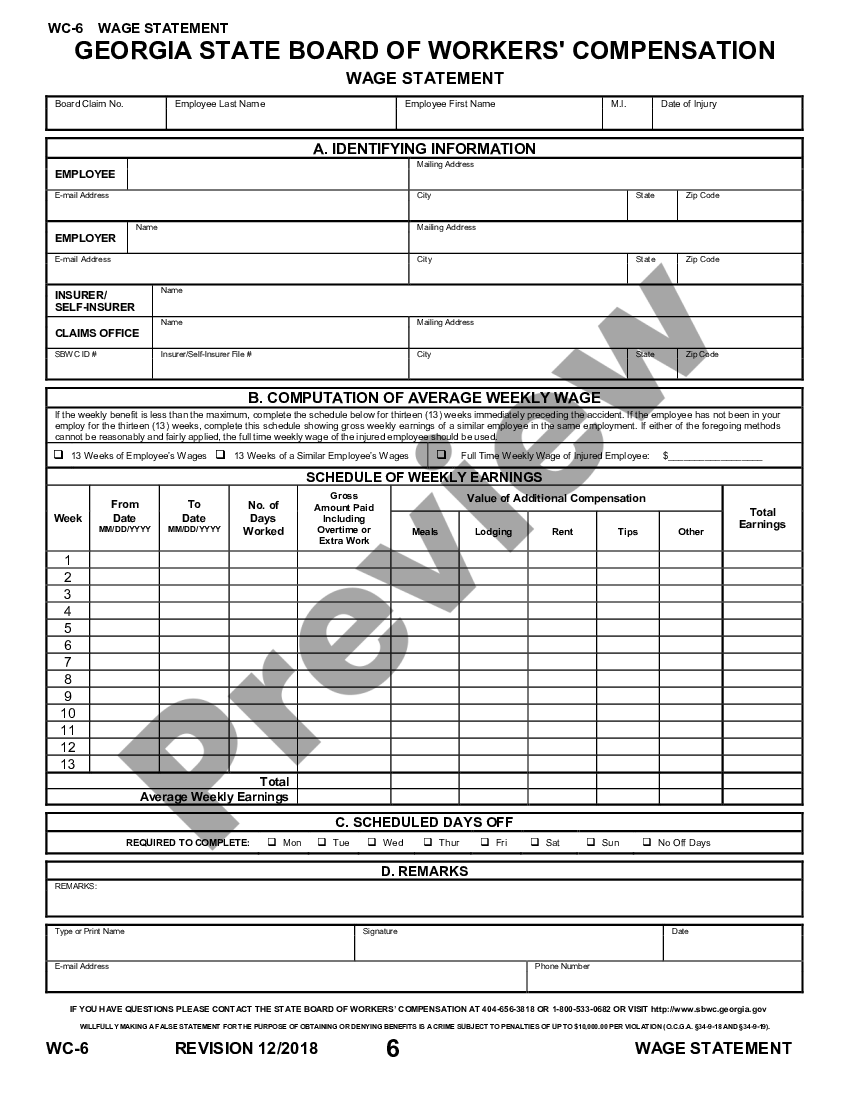
Georgia workers' compensation codes are four-digit numeric identifiers used by insurance carriers to categorize businesses based on the specific workplace risks associated with their industry and employee duties. These codes, established by the National Council on Compensation Insurance (NCCI), are the primary factor in determining the base premium rates an employer pays for workers' compensation insurance.
In the state of Georgia, managing workers' compensation insurance is a mandatory requirement for most employers with three or more employees. Central to this management is the "class code" system. As of 2026, Georgia continues to utilize the standardized system maintained by the National Council on Compensation Insurance (NCCI) to ensure uniformity and fairness in how insurance premiums are calculated.
Misunderstanding these codes can lead to significant financial consequences, including overpaying for insurance premiums or facing steep penalties and back-payments following a mandatory annual audit. This guide provides a comprehensive breakdown of how Georgia workers' compensation codes function, how they are assigned, and why they are critical to your business operations.
What are Georgia Workers' Compensation Codes?
Workers’ compensation class codes—often referred to simply as "class codes"—are part of a massive taxonomy of work activities. There are over 700 individual codes used across various industries in Georgia. Each code represents a specific level of risk. For example, a roofing contractor faces significantly higher physical risks than a receptionist; therefore, the class code for roofing carries a much higher premium rate than the code for clerical work.
The system is designed to pool similar risks together. By grouping all "Electrical Wiring" businesses under one code and all "Accounting Firms" under another, insurance companies can analyze historical injury data to predict the likelihood and cost of future claims. This data-driven approach allows the Georgia State Board of Workers' Compensation (SBWC) and the Georgia Office of Commissioner of Insurance to approve actuarially sound rates that protect both the insurer's solvency and the employer's right to fair pricing.
The Role of the NCCI in Georgia
Georgia is an "NCCI state." This means that the state government has designated the NCCI as its official rating organization. The NCCI performs several critical functions that impact Georgia business owners:
- Data Collection: They collect data on workplace injuries and payroll across the state.
- Rate Recommendations: They suggest "voluntary loss costs" to the state insurance commissioner.
- Class Code Maintenance: They define the scope of what each four-digit code covers, ensuring that a "carpentry" code in 2026 covers the same activities whether the business is in Savannah or Atlanta.
- Experience Rating: They calculate the "Experience Rating Modifier" (E-Mod) for individual businesses that qualify based on their size and claims history.
How Classification Codes Impact Your Premiums
To understand the importance of these codes, one must understand the basic formula for calculating a workers’ compensation premium in Georgia:
(Annual Payroll / 100) × Class Code Rate × Experience Modifier = Estimated Annual Premium
In this formula, the Class Code Rate is the price per $100 of payroll. If a high-risk code like 5506 (Street or Road Construction) has a rate of $10.00, and a low-risk code like 8810 (Clerical) has a rate of $0.20, the difference in cost for the employer is massive.
Using the wrong code doesn't just change your bill; it changes your legal standing. If you categorize a tree trimmer as a clerical worker to save money, it is considered workers' compensation premium fraud, which is a serious offense in Georgia.

Common Georgia Workers' Compensation Codes
While there are hundreds of codes, several frequently appear in the Georgia labor market. The following table highlights some of the most common class codes utilized in 2026 across various sectors including construction, professional services, and retail.
| NCCI Code | Industry/Category | General Description |
|---|---|---|
| 8810 | Clerical Office Employees | Staff performing strictly office or drafting duties with no operational exposure. |
| 8742 | Salespersons - Outside | Employees engaged in sales or drafting away from the employer’s premises. |
| 8871 | Telecommuter Employees | Clerical employees who work exclusively from a home-based office. |
| 9012 | Property Management | Building or mobile home park operators, including maintenance and leasing. |
| 8017 | Retail Stores (NOC) | General retail category for "Not Otherwise Classified" store operations. |
| 7219 | Trucking: Local/Long Haul | Hauling of goods, including drivers, helpers, and terminal employees. |
| 5403 | Carpentry (NOC) | General carpentry work including framing and interior trim. |
| 9082 | Restaurants | Traditional restaurant staff, including servers, cooks, and busers. |
| 8380 | Automobile Service/Repair | Mechanics and technicians in garages or gas stations. |
| 5645 | Residential Construction | Carpentry specifically for detached one- or two-family dwellings. |
The Governing Classification Principle
One of the most complex aspects of Georgia workers' compensation is the "Governing Classification" rule. Many business owners mistakenly believe they can split an employee's payroll between several different codes based on what they did that day. Generally, this is not allowed.
Under NCCI rules, the business is classified as a whole based on its primary operation. If you run a furniture manufacturing plant, all employees (with a few exceptions) are classified under the manufacturing code—even the janitors and the warehouse staff. The risk of the manufacturing environment is considered to extend to everyone on the premises.
The Governing Classification is the code that represents the largest amount of payroll for the business, excluding "Standard Exceptions."
Standard Exceptions: 8810, 8742, and 8871
Standard Exceptions are the only categories where payroll is routinely "split" from the governing class. These codes apply to roles that are so common across all industries and carry such a distinct (and usually low) risk profile that they are treated separately.
- 8810 (Clerical Office Employees): To qualify, the employee must work in a physical area separated from the operative hazards of the business (like a separate office or floor). If a clerical worker frequently walks onto a construction site or a factory floor, they may lose this classification.
- 8742 (Salespersons – Outside): This applies to staff who spend the majority of their time on the road, visiting clients, and not delivering goods.
- 8871 (Clerical Telecommuter): As of 2026, this is one of the most used codes in Georgia. It covers employees who work from home. The risk profile is lower than a traditional office because there is no commute-related risk (in some contexts) and no shared office premises liability.
Industry-Specific Code Nuances in Georgia
Construction and Contracting
In Georgia, the construction industry has more flexibility regarding "Separation of Payroll." Unlike a manufacturing plant, a construction company can often split a single employee's payroll between two different codes (e.g., Carpentry and Electrical) if and only if the employer maintains contemporaneous, verifiable records of the hours spent on each task. If you do not keep detailed daily logs, the insurance auditor will default all of that employee's payroll to the highest-rated (most expensive) class code.
Agriculture and Landscaping
Georgia's large agricultural sector often uses codes like 0005 (Nursery/Tree Farm) or 0042 (Landscaping). It is vital to distinguish between a nursery that grows plants and a landscaping company that installs them. Landscaping often carries a higher rate due to the use of heavy machinery and the risks of working on varying terrains.
Healthcare and Social Assistance
With the growth of home healthcare in Georgia, code 8835 (Home Health Care - Professional Staff) and 8824 (Health Care Facilities - All Employees) are common. The distinction here often depends on the level of medical care provided and the environment in which that care is administered.
The Annual Audit and Misclassification Risks
Every workers’ compensation policy in Georgia is "auditable." At the end of the policy term, the insurance company will send an auditor to review your payroll records, 941 tax filings, and job descriptions.
The Consequences of Incorrect Codes
- Large Premium Bills: If an auditor discovers you used code 8810 for employees who were actually doing warehouse work (code 8018), they will reclassify the payroll and send you a "bill for the difference." This often results in a massive, unexpected expense.
- Canceled Coverage: If the misclassification is viewed as intentional, the carrier may cancel your policy, making it very difficult to find affordable coverage in the "voluntary market." You might be forced into the Georgia Workers' Compensation Assigned Risk Pool, where rates are significantly higher.
- Legal Liability: Under O.C.G.A. § 34-9-21, failure to properly insure your employees can lead to civil penalties ranging from $500 to $5,000 per violation, and potentially criminal charges for willful non-compliance.
How to Verify and Dispute Class Codes
If you believe your business is classified under the wrong Georgia workers' compensation code, you have several avenues for recourse.
- Consult the NCCI Scopes Manual: This is the definitive "dictionary" of class codes. While the full manual requires a subscription, your insurance agent should have access to it and can provide you with the specific definition of your assigned codes.
- Request a Loss Control Visit: Most insurance carriers offer loss control services. An expert can visit your job site, observe the work being done, and help ensure the codes match the actual physical risks.
- Formal Dispute: If you disagree with an auditor’s findings, you can file a dispute with the insurance company's internal audit department. If that fails, you can escalate the matter to the Georgia Insurance and Safety Fire Commissioner's Office or the NCCI’s dispute resolution board.
Impact on Business Costs in 2026
In 2026, Georgia remains a competitive state for workers' compensation. However, rising healthcare costs and changes in workplace dynamics (such as the continued rise of hybrid work) mean that class code accuracy is more important than ever.
Insurers are becoming increasingly precise. For instance, the distinction between a "Clerical Office" worker (8810) and a "Clerical Telecommuter" (8871) can lead to a 10-15% difference in the base rate depending on the carrier’s filed plans. Small businesses in Georgia should review their classifications at least 90 days before their policy renewal date to ensure they are not being overcharged for risks that no longer exist in their current operations.
Frequently Asked Questions
Can an employee have more than one class code?
Generally, no. In most industries, an employee’s entire payroll is assigned to the "Governing Classification." The primary exception is the construction industry, where payroll can be split between different operational codes if the employer keeps meticulous, daily records of the time spent on each specific task. Standard exception codes (8810, 8742) are also used to split payroll for administrative staff.
What is the most expensive workers' comp code in Georgia?
High-risk codes like 5506 (Street or Road Construction) or 6045 (Levee or Dam Construction) typically carry the highest rates. These codes involve heavy machinery, heights, or significant environmental hazards. Rates for these codes can be 50 to 100 times higher than the rate for a clerical office worker.
How do I find my current workers' comp codes?
Your current codes are listed on the "Declarations Page" of your workers' compensation insurance policy. They will be listed as four-digit numbers next to the estimated payroll for the year. If you cannot find your policy, you can contact your insurance agent or check your most recent annual audit report.
Do I need workers' comp codes for 1099 contractors?
In Georgia, if a 1099 contractor does not have their own workers' compensation insurance, they may be legally considered your employee for the purposes of workers' comp. In this case, you must assign them a class code and pay a premium on the labor portion of their contract. Many Georgia businesses require "Certificates of Insurance" from subcontractors to avoid this additional cost.
What is a "NOC" code?
"NOC" stands for Not Otherwise Classified. These are catch-all codes for businesses that don't fit into a specific niche. For example, "Store: Retail NOC" (8017) is used for various retail shops that don't have a dedicated code like a grocery store or a clothing boutique.
Practical Recommendation for Georgia Employers
To ensure your business is correctly classified in 2026, perform a self-audit of your employee job descriptions. Match these descriptions against the NCCI Scopes Manual definitions. If your business has evolved—for example, if you moved from on-site retail to primarily e-commerce—your class codes should reflect that change.
Always maintain clear separation between office staff and operational staff. If your "office manager" also occasionally operates a forklift, you must classify them under the higher-risk warehouse code. Transparency during the year is far less expensive than a surprise bill from a Georgia insurance auditor at the end of the year.
Image Gallery
Select an image to open it in a new tab.

Celine Dubois
Contemporary Living and Global Arts Columnist
