Understanding the 1099 Contractor Tax Form: A Complete Guide to Independent Contractor Taxes
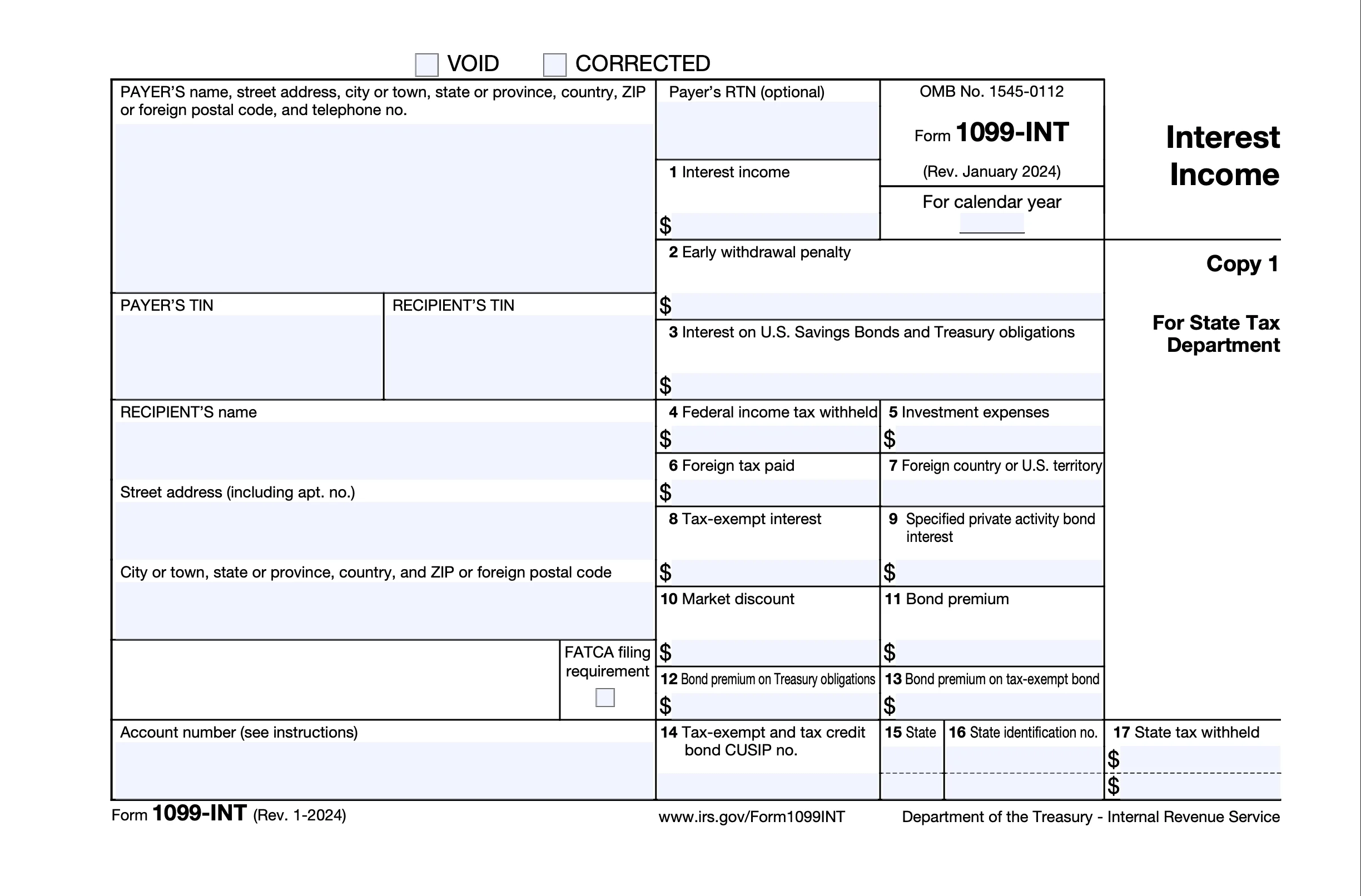
A 1099 contractor tax form is an official IRS information return used to report payments made to independent contractors, freelancers, and self-employed sole proprietors. Unlike W-2 employees, 1099 contractors do not have income or payroll taxes automatically withheld from their paychecks, making them responsible for reporting total earnings, calculating self-employment taxes, and remitting quarterly estimated tax payments directly to the Internal Revenue Service (IRS).
What Is a 1099 Contractor Tax Form?
In the United States tax system, the term "1099" refers to a series of information return forms used by businesses and financial institutions to report non-wage income paid to individuals or non-corporate entities. When people refer to the "1099 contractor tax form," they are primarily describing the tax documentation that self-employed workers, freelancers, gig workers, and consultants receive from clients who paid them for services during the calendar year.
Because independent contractors are considered self-employed business entities rather than employees, clients do not withhold federal income tax, Social Security tax, or Medicare tax from their compensation. Instead, businesses record payment totals throughout the calendar year and send Copy B of the relevant 1099 form to the contractor by early mandatory deadlines, while submitting Copy A to the IRS. This reporting system ensures that the IRS has an independent paper trail of all non-wage income issued across the economy.
Key Differences Between Form W-2 and Form 1099
Understanding the structural difference between a W-2 worker and a 1099 contractor is critical for proper tax compliance and financial planning.
- Employment Relationship: A Form W-2 is issued to traditional employees who work under the direct control and instruction of an employer. A Form 1099 is issued to independent business owners or sole proprietors retained to deliver specific results without operational oversight regarding how the work is performed.
- Tax Withholding: Employers handle tax withholding on behalf of W-2 employees, remitting federal, state, and local income taxes alongside employee payroll contributions each pay period. Clients issuing 1099 forms pay the full gross agreed compensation without making any tax deductions.
- FICA Contribution split: For W-2 employees, the employer pays half of the standard FICA taxes (7.65% total for Social Security and Medicare), while withholding the remaining 7.65% from the employee's gross pay. Independent contractors receiving 1099 forms are classified as both employer and employee for tax purposes, meaning they must pay the full 15.3% self-employment tax rate on net earnings.
- Benefits and Protections: W-2 employees are generally eligible for statutory protections and employer-funded benefits, such as unemployment insurance, workers' compensation coverage, health insurance options, and minimum wage protections. Independent contractors do not receive employee benefits and must fund their own insurance, retirement savings, and paid time off.
The Key Types of 1099 Forms for Independent Contractors
The IRS uses several distinct forms within the 1099 family to capture different categories of payments. Independent contractors typically encounter three specific forms during tax filing season.
1099 Information Returns for Business:
- Form 1099-NEC: Nonemployee Comp, Direct Services (Box 1 reporting)
- Form 1099-MISC: Rent, Royalties, Legal Fees, Prize Payments
- Form 1099-K: Payment Card & Third-Party Apps (Stripe, PayPal)
1. Form 1099-NEC (Nonemployee Compensation)
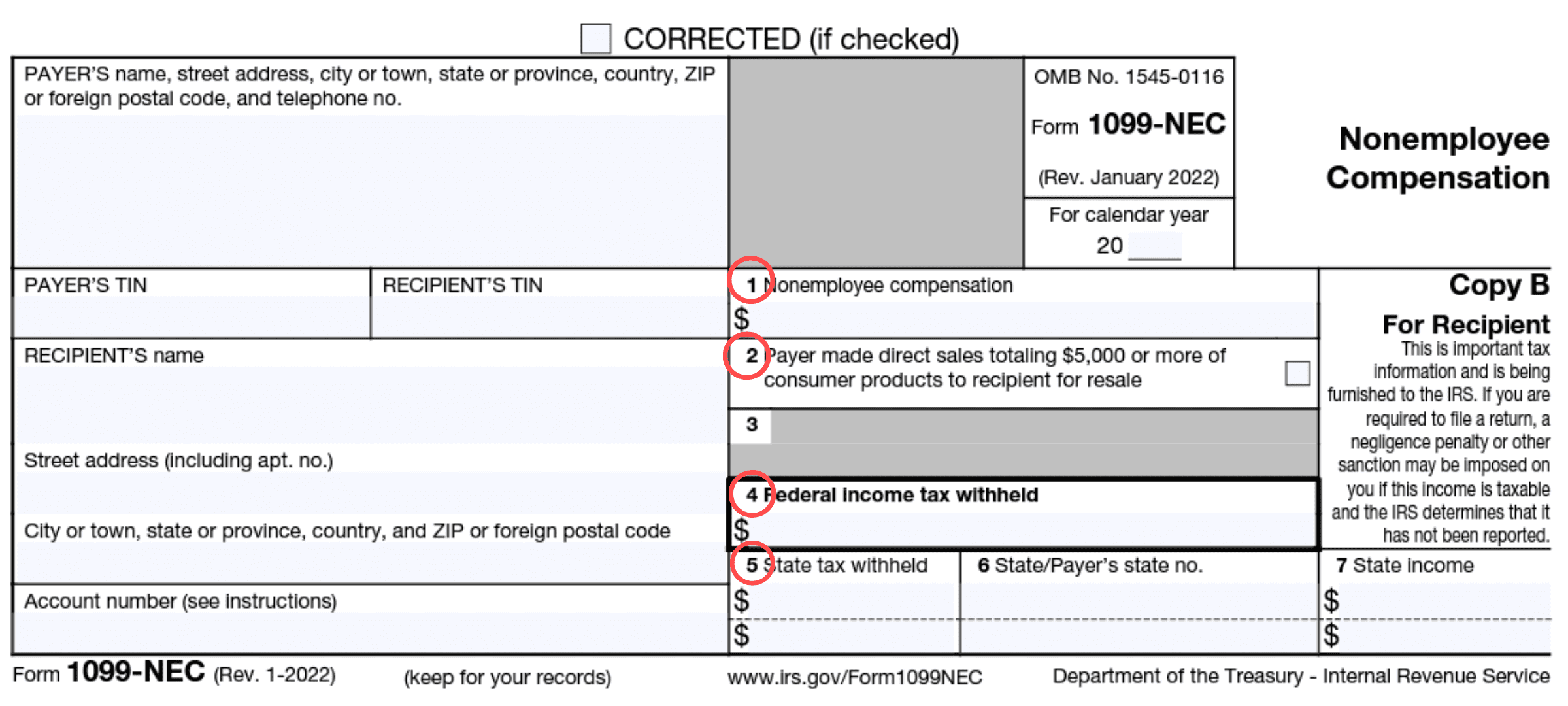
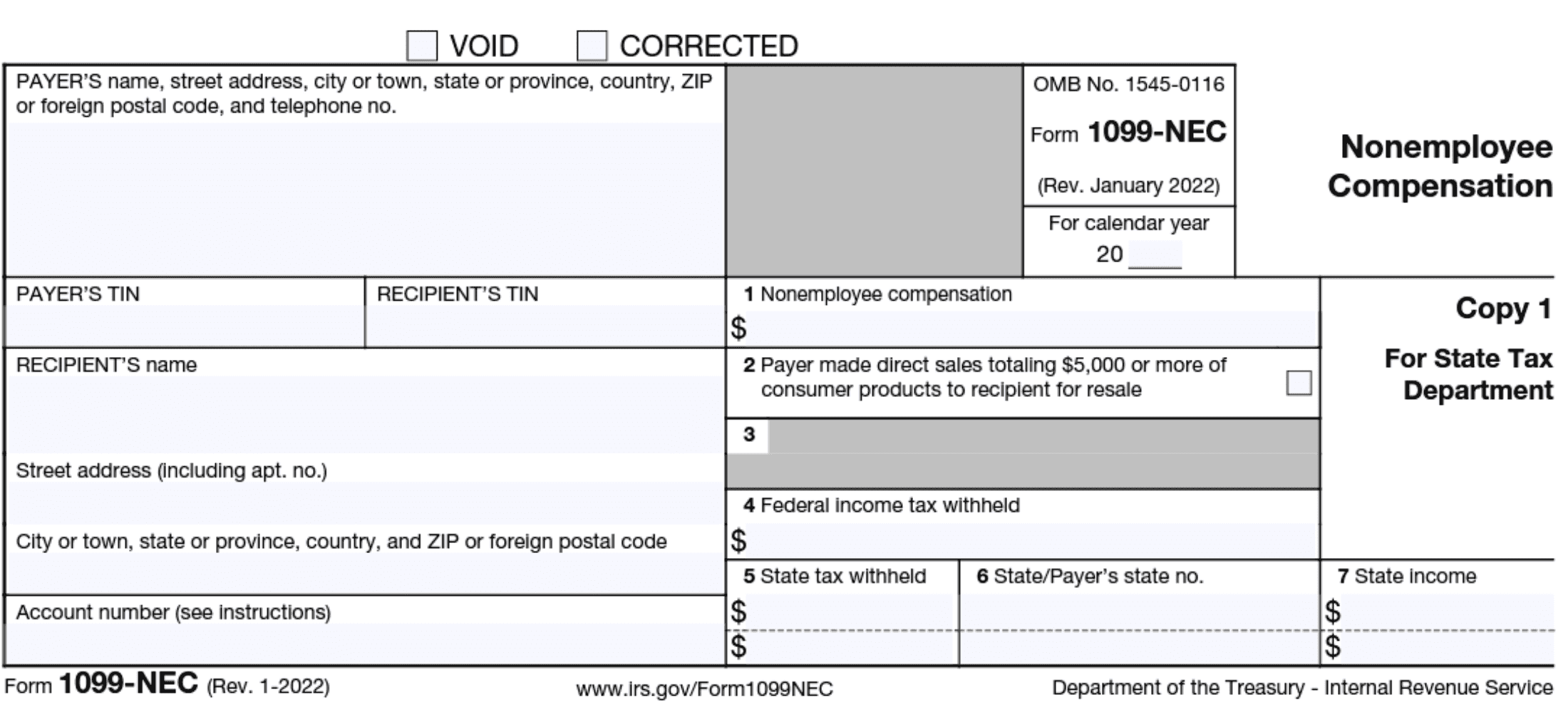
Form 1099-NEC is the primary tax form used to report direct compensation paid to self-employed individuals for professional services. Prior to the 2020 tax year, nonemployee compensation was reported in Box 7 of Form 1099-MISC. The IRS reintroduced Form 1099-NEC to separate trade and service payments from other miscellaneous payments, simplifying reporting deadlines for businesses.
Businesses must issue a 1099-NEC to any non-corporate service provider (such as a freelance designer, legal consultant, IT professional, or subcontractor) who was paid $600 or more in cash, check, or direct bank transfer for work performed in the course of the client's trade or business. Detailed instructions and box definitions are maintained on the official IRS Form 1099-NEC overview.
2. Form 1099-MISC (Miscellaneous Information)
While Form 1099-NEC handles direct trade or professional service compensation, Form 1099-MISC is utilized for other business-related payments. Independent contractors and small business owners may receive a Form 1099-MISC if they receive:
- Rent payments for office space or equipment (Box 1)
- Royalties totaling $10 or more (Box 2)
- Other income payments, prizes, or awards (Box 3)
- Gross proceeds paid to an attorney in connection with legal settlements (Box 10)
If an independent contractor rents out property or receives licensing royalties alongside their service offerings, they may receive both Form 1099-NEC and Form 1099-MISC from the same client.
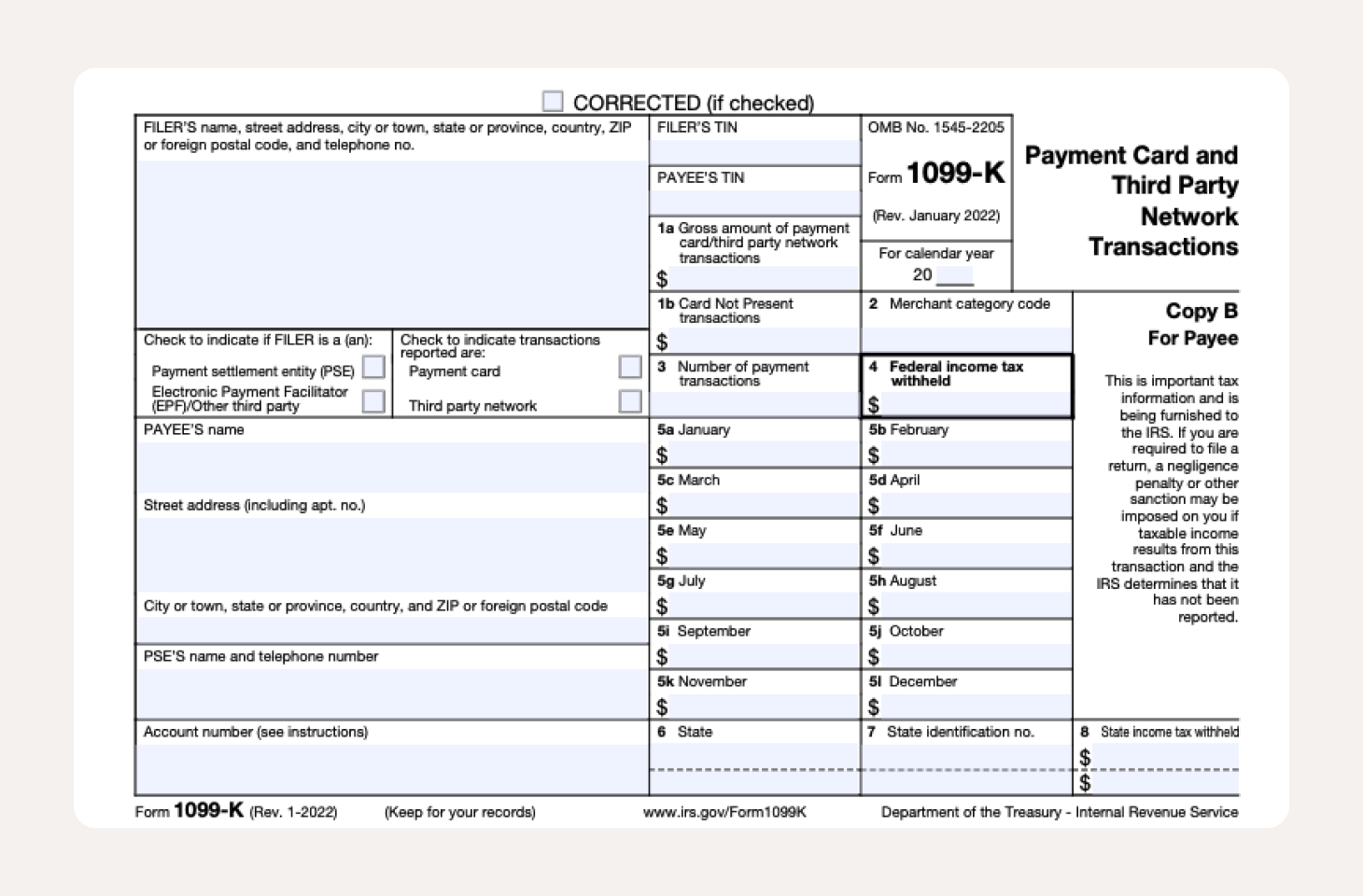
3. Form 1099-K (Payment Card and Third Party Network Transactions)
Form 1099-K reports payment transactions processed through credit card processors, payment gateways, and third-party settlement organizations (such as Stripe, PayPal, Square, or online marketplace platforms).
If a client pays an independent contractor using a credit card, debit card, or qualified third-party payment processor, that transaction is categorized under payment card settlement rules. To prevent double-counting of income, merchant processors issue Form 1099-K to report gross payment volume, while clients paying via those processors are generally exempted from filing a duplicate Form 1099-NEC for those specific card-settled payments. Contractors must reconcile their total revenue records to avoid reporting the same income twice when receiving both platform statements and direct 1099 filings.

Deadlines and Reporting Thresholds
Businesses and contractors must navigate specific statutory thresholds and calendar deadlines to maintain tax compliance.
| Tax Form | Standard Threshold | Information Reported | Issuer Filing Deadline (to IRS/Recipient) |
|---|---|---|---|
| Form 1099-NEC | $600 or more per client per year | Nonemployee compensation for services | January 31 |
| Form 1099-MISC | $600 (Rents/Other) or $10 (Royalties) | Rent, royalties, prizes, and gross legal proceeds | January 31 (to recipient); Feb 28/March 31 (IRS) |
| Form 1099-K | Applies per IRS annual transition guidelines | Electronic payment card & app transactions | January 31 (to recipient); Feb 28/March 31 (IRS) |
| Form W-2 | Any wages subject to income or FICA tax | Employee wage and tax withholding statement | January 31 |
The $600 Threshold Myth vs. Taxable Income Realities
A common point of confusion among new freelancers and independent contractors is the $600 reporting threshold. Businesses are only legally required to issue a Form 1099-NEC if they pay a contractor $600 or more during the tax year. However, this threshold applies only to the payer's filing obligation, not to the contractor's tax liability.
Under federal tax law, self-employed individuals must report all gross earnings generated from business activities on their income tax returns, even if an individual client paid them less than $600 and never issued a 1099 form. If a contractor earns $400 from one client, $300 from another, and $250 from a third, no single client is required to issue a 1099-NEC, but the contractor is legally obligated to report the total $950 gross income to the IRS.
Form W-9: The Foundation of 1099 Reporting
Before a business can issue payments or generate a Form 1099-NEC at year-end, it must collect tax identification data from the independent contractor using Form W-9 (Request for Taxpayer Identification Number and Certification).
Form W-9 Workflow Step:
- Client hires Contractor
- Contractor fills out Form W-9 (Provides Legal Name, Address, TIN)
- Client processes payments
- Client uses W-9 data to generate 1099
The W-9 form establishes your official tax identity and classification. The technical specifications and downloadable documents can be reviewed directly via the IRS Form W-9 portal.
Key Information Required on Form W-9:
- Legal Name and Business Name: Your personal legal name as recognized by the IRS, along with your Doing Business As (DBA) or entity name if operating through a Sole Proprietorship, LLC, Partnership, or Corporation.
- Federal Tax Classification: Checking the appropriate box (Individual/Sole Proprietor, Single-Member LLC, C Corporation, S Corporation, or Partnership).
- Taxpayer Identification Number (TIN): Either your Social Security Number (SSN) or an Employer Identification Number (EIN).
- Certification and Signature: Signing under penalty of perjury that the TIN provided is correct and that you are not subject to backup withholding.
Protecting Your Privacy: SSN vs. EIN
If you operate as an individual sole proprietor without a formal business entity, your default TIN is your Social Security Number. However, providing your SSN on W-9 forms to multiple clients increases your exposure to potential identity theft.
To safeguard personal personal data, self-employed contractors can apply for a free Employer Identification Number (EIN) directly from the IRS website. An EIN functions as a federal business tax ID number, allowing contractors to complete W-9 forms and receive 1099 forms without disclosing their personal Social Security Number to clients.
Backup Withholding Risks
If a contractor fails to provide a correct TIN or fails to return a completed Form W-9 upon request, the client is legally required to institute backup withholding. Under current federal rules, backup withholding mandates that the client immediately deduct a flat 24% tax rate from all payments made to the contractor and remit those funds directly to the IRS. Resolving backup withholding issues requires filing corrective tax documentation directly with the IRS to claim withheld credit.
How Independent Contractors File Taxes on 1099 Income
Filing taxes as an independent contractor involves a multi-step process that combines federal income tax reporting, self-employment tax calculations, and deductible business expense adjustments.
1099 Tax Calculation Flow:
- Gross 1099 Income
- Less: Deductible Business Expenses
- Net Profit (Schedule C Line 31)
- Self-Employment Tax (15.3% via Schedule SE)
- Ordinary Income Tax (Form 1040 Tax Brackets)
- Total Federal Tax Liability
1. Step One: Aggregating Gross Receipts
When preparing an annual tax return, contractors gather all 1099-NEC, 1099-MISC, and 1099-K forms received from clients and payment processors. They must also add any cash, bank transfer, or invoice income for which no 1099 form was issued. This combined figure represents total gross receipts.
2. Step Two: Completing Schedule C (Profit or Loss From Business)
Independent contractors record their total gross receipts on Form 1040 Schedule C. Schedule C allows self-employed individuals to subtract allowable ordinary and necessary business expenses from their gross income, establishing their net profit (or net loss).
For precise guidance on deductible categories and reporting lines, consult the official IRS Schedule C documentation.
The mathematical calculation on Schedule C follows this structure:
$$\text{Gross Receipts} - \text{Total Allowable Business Expenses} = \text{Net Business Income (Profit)}$$
Net profit from Line 31 of Schedule C flows directly into main tax calculations on Form 1040 and Schedule SE. If business expenses exceed gross revenue, the resulting net loss can, subject to tax rules, offset other income streams on the return.
3. Step Three: Calculating Self-Employment Tax (Schedule SE)
Unlike W-2 wages where Medicare and Social Security taxes are split between employer and worker, 1099 contractors pay the entire self-employment tax burden themselves using Schedule SE.
The standard self-employment tax rate is 15.3%, which breaks down as follows:
- 12.4% for Social Security (covers net income up to the annual Social Security wage base limit).
- 2.9% for Medicare (applies to all net self-employment earnings, with an additional 0.9% Medicare surcharge applying to high earners exceeding specific income thresholds).
Self-employment tax is calculated on 92.35% of net earnings from self-employment (achieved by multiplying net profit by 0.9235 before applying the 15.3% tax rate). For detailed calculation parameters and annual wage caps, refer to the IRS Self-Employment Tax guide.
Tax Deduction Benefit: The IRS allows self-employed contractors to deduct half of their total self-employment tax (the 7.65% employer-equivalent portion) as an above-the-line adjustment to income on Form 1040 Schedule 1. This adjustment reduces overall adjusted gross income (AGI) subject to income tax.
4. Step Four: Understanding Quarterly Estimated Payments (Form 1040-ES)
Because taxes are not withheld from 1099 payments throughout the year, the U.S. tax system operates on a pay-as-you-go basis. If a contractor expects to owe $1,000 or more in federal tax for the year after subtracting credits and withholdings, they are required to make estimated quarterly tax payments.
These payments cover both expected federal income tax and self-employment tax obligations using IRS Form 1040-ES vouchers or via IRS Direct Pay online portals.
Standard estimated payment quarterly deadlines typically follow this calendar schedule:
- First Quarter (Jan 1 – March 31): Due April 15
- Second Quarter (April 1 – May 31): Due June 15
- Third Quarter (June 1 – August 31): Due September 15
- Fourth Quarter (Sept 1 – Dec 31): Due January 15 of the following tax year
Failing to make quarterly estimated payments or underpaying relative to total annual liability can result in IRS underpayment penalties and interest charges added to the year-end tax bill.
Maximizing Allowable Tax Deductions for 1099 Contractors
One of the most significant financial advantages of operating as a 1099 independent contractor is the ability to write off qualified business expenses, which directly reduces net taxable income.
Key 1099 Business Expense Deductions:
- Home Office: Direct square foot allocation
- Vehicle/Travel: Standard rate or actual expenses
- Health Ins.: 100% premium adjustment
- Section 199A: Up to 20% QBI income deduction
1. Home Office Deduction
If a contractor uses a dedicated portion of their home exclusively and regularly as their principal place of business, they can claim the home office deduction.
- Simplified Option: Allows a flat deduction of $5 per square foot of qualified home space up to a maximum of 300 square feet (maximum $1,500 deduction).
- Actual Expenses Method: Calculates the percentage of total square footage used for business and deducts that equivalent proportion of housing expenses, including mortgage interest or rent, utilities, home insurance, and general property maintenance.
2. Vehicle and Transportation Expenses
When using a vehicle for business purposes (excluding standard personal commuting from home to a primary office location), contractors can deduct transportation costs using one of two methods:
- Standard Mileage Rate: Multiplying the number of business miles driven during the tax year by the annual IRS standard mileage rate. Detailed logs documenting date, mileage, destination, and business purpose must be maintained.
- Actual Expense Method: Tracking total operational costs including gas, oil changes, vehicle repairs, insurance, lease payments, and depreciation, multiplied by the percentage of total miles driven for business.
3. Professional Services, Software, and Equipment
Contractors can fully deduct expenses directly connected to business operation, including:
- Software subscriptions, web hosting, and domain fees
- Computers, mobile devices, monitors, and office furniture (deducted immediately via Section 179 or depreciated)
- Professional insurance policies (liability, errors & omissions)
- Subcontractor expenses paid to other freelancers
- Marketing, online advertising, domain hosting, and business cards
4. Self-Employed Health Insurance Deduction
Independent contractors who pay for their own medical, dental, and long-term care insurance premiums for themselves, their spouse, and dependents can take an above-the-line deduction for 100% of these premium costs on Form 1040 Schedule 1. This deduction is allowed provided the contractor was not eligible to participate in an employer-subsidized health plan maintained by their spouse's employer.
5. Qualified Business Income (QBI) Deduction (Section 199A)
Established under the Tax Cuts and Jobs Act, the Qualified Business Income (QBI) deduction allows eligible self-employed individuals and sole proprietors to deduct up to 20% of their net qualified business income from their taxable income calculations. Income thresholds and phase-outs apply depending on tax filing status and whether the business is classified as a Specified Service Trade or Business (SSTB), such as law, health, or consulting practices.
Common 1099 Tax Pitfalls and Troubleshooting
Navigating 1099 taxes requires proactive recordkeeping. Independent contractors frequently encounter specific compliance challenges that require prompt corrective action.
| Common 1099 Issue | Action / Resolution Strategy |
|---|---|
| Missing 1099 Form | Report actual income from bank records anyway; contact client to verify TIN/mailing address. |
| Incorrect 1099 Amount | Request corrected 1099 from client immediately; do not alter reported amount on return manually. |
| Misclassification | File Form SS-8 with IRS for status review; file Form 8919 to pay uncollected FICA taxes. |
What to Do If You Don't Receive a 1099 Form
If a client fails to send you a Form 1099-NEC by the end of January, do not delay filing your tax return.
- Review your own accounting books, invoicing software, and bank deposit records to calculate total payments received from that client.
- Include those earnings in your gross receipts on Schedule C Line 1.
- Contact the client to confirm whether they generated the form and verify that your mailing address or email on file is correct.
The IRS compares 1099 copy databases against individual income reporting. If your reported gross receipts on Schedule C exceed the sum of your 1099 forms on file, the IRS accepts the return without issue. Problematic audits occur primarily when reported income is lower than the amounts indicated on forms submitted by your clients.
Resolving Discrepancies on Form 1099
If a client sends a 1099 form that lists a higher amount than you actually received, do not ignore the mismatch.
- Contact the payer's finance department immediately and request a corrected Form 1099 (which will have the "CORRECTED" checkbox marked at the top).
- If the payer refuses or is unresponsive, report the full 1099 amount on Schedule C gross revenue and create a offsetting expense deduction line item titled "1099 Payer Reporting Adjustment" with supporting documentation attached to account for the variance.
Managing Worker Misclassification Issues
Employers sometimes misclassify traditional workers as 1099 independent contractors to avoid paying payroll taxes, workers' compensation insurance, and benefit costs.
If an employer controls your work hours, dictates exact daily procedures, provides your equipment, and restricts you from taking outside clients, you may legally meet the definition of an employee under common-law rules. Workers who suspect misclassification can file IRS Form SS-8 (Determination of Worker Status) to request an official evaluation from the IRS. If classified as an employee, the worker can file Form 8919 (Uncollected Social Security and Medicare Tax on Wages) to pay only their standard employee portion of FICA tax rather than the full 15.3% self-employment rate.
Frequently Asked Questions About 1099 Contractor Tax Forms
Do I need to report income if I didn't receive a 1099 form?
Yes. Federal income tax regulations require you to report all taxable income earned during the year regardless of whether a Form 1099 was generated or delivered. The $600 threshold is an issuing requirement for payers, not an income exemption rule for taxpayers.
What is the primary difference between Form 1099-NEC and Form 1099-MISC?
Form 1099-NEC is dedicated exclusively to reporting nonemployee compensation for independent services performed by self-employed workers. Form 1099-MISC is reserved for other non-service business payments, such as commercial property rents, royalties, prize awards, and legal settlement proceeds.
How much money should a 1099 contractor set aside for taxes?
As a general benchmark, independent contractors should reserve 25% to 30% of their net business income (gross income minus allowable business expenses) in a dedicated bank account to cover combined federal self-employment taxes, federal income taxes, and state/local income taxes.
Can a worker receive both a W-2 and a 1099-NEC from the same company in one year?
Yes, under specific operational conditions. If an individual works as a regular salaried or hourly employee for a company, but also performs entirely separate, distinct specialized services outside their employee job scope as an independent vendor, the company may issue a W-2 for employment wages and a 1099-NEC for independent service fees. However, such scenarios trigger intense IRS scrutiny to ensure normal employee tasks were not improperly reclassified as contractor tasks.
What is the self-employment tax rate for 1099 income?
The self-employment tax rate is 15.3%, which consists of 12.4% for Social Security taxes up to the annual social security wage base ceiling, and 2.9% for Medicare taxes. Self-employment tax is calculated on net earnings reported on Schedule C via Schedule SE.
Strategic Next Steps for Managing 1099 Taxes
To manage 1099 tax obligations smoothly and minimize liabilities:
- Establish Dedicated Financial Accounts: Separate personal funds from business operations by establishing a dedicated business bank account and business credit card to track all business revenue and deductible expenses.
- Maintain Ongoing Accounting Records: Utilize professional accounting software or maintain digital ledger files to record income invoices and store digital receipts for expenses as they occur, avoiding tax season record-reconstruction stress.
- Calculate and Pay Estimated Taxes Quarterly: Calculate estimated taxes quarterly based on current net earnings using IRS Form 1040-ES worksheets to avoid underpayment penalties at year-end.
- File W-9 Forms Promptly: Apply for a federal Employer Identification Number (EIN) to protect your Social Security Number on W-9 forms provided to clients.
- Consult Qualified Tax Professionals: Partner with a Certified Public Accountant (CPA) or Enrolled Agent (EA) who specializes in self-employment tax law to optimize tax deductions, verify compliance, and structure business operations efficiently.
Disclaimer: This article provides general educational information regarding U.S. federal tax rules for independent contractors. Tax laws change, and individual financial situations vary. Consult a certified public accountant (CPA) or qualified tax professional for personalized advice regarding your specific tax liabilities.
Image Gallery
Select an image to open it in a new tab.

Omar Farooq
EdTech Innovation and Virtual Pedagogy Journalist
