Paul Gilbert Guitar Player Profile: Technical Mastery and the Evolution of Modern Shred

Paul Gilbert is a world-renowned American virtuoso guitarist celebrated for his impeccable alternate picking, rhythmic precision, and melodic sensibility. As of 2026, he remains a definitive figure in both the heavy metal and hard rock genres, recognized for his work with Racer X and Mr. Big, as well as a prolific solo career and a global reputation as a premier music educator.
The Genesis of a Virtuoso: Early Years and Racer X
Paul Gilbert’s journey into the pantheon of guitar greats began in the early 1980s. Unlike many of his contemporaries who relied on natural talent alone, Gilbert was known for a disciplined, almost scientific approach to the instrument. His "big break" came via Mike Varney’s Shrapnel Records, a label that became the epicenter of the 1980s shred movement.
By the age of 18, Gilbert was already a sensation. He formed Racer X, a band that took the speed of Judas Priest and combined it with the neoclassical precision of Yngwie Malmsteen, but with a distinct emphasis on synchronized, dual-guitar harmonies. The interplay between Gilbert and fellow guitarist Bruce Bouillet on albums like Street Lethal (1986) and Second Heat (1987) set a new gold standard for technical proficiency.
During this era, Gilbert established the hallmark of his style: alternate picking. While many "shredders" of the time leaned heavily on legato (hammer-ons and pull-offs) or sweep picking to achieve speed, Gilbert’s notes were articulated individually with the plectrum. This gave his playing a percussive, high-definition quality that cut through dense mixes and influenced a generation of players including Buckethead and John Petrucci.
The Mr. Big Era: Commercial Success and Songcraft
In 1988, Gilbert transitioned from the underground shred scene to the global stage by forming Mr. Big with bassist Billy Sheehan, vocalist Eric Martin, and drummer Pat Torpey. This move was critical in demonstrating Gilbert's versatility. While Racer X was about high-octane technicality, Mr. Big focused on vocal-driven hard rock with sophisticated arrangements.
The band’s 1991 album, Lean Into It, featured the massive hit "To Be With You," which showcased Gilbert’s ability to play for the song. However, the technical fireworks remained present in tracks like "Addicted to That Rush," where he and Sheehan performed complex unison lines. It was also during this period that Gilbert famously used a power drill with guitar picks attached to the end to perform rapid-fire sequences, a move that became an iconic piece of 1990s rock history.
By 2026, the legacy of Mr. Big has been cemented by their "The Big Finish" world tour, which celebrated the band's history and paid tribute to the late Pat Torpey. Gilbert’s role in the band evolved from the "young gun" to a seasoned veteran who balanced raw speed with soulful, blues-inflected phrasing.

Technical Breakdown: The Gilbert Style
To understand Paul Gilbert as a player, one must analyze the specific mechanical innovations he brought to the electric guitar. His technique is a blend of physical discipline and creative problem-solving.
The Mechanics of Alternate Picking
Gilbert is often cited as the "King of Alternate Picking." His technique involves a strict down-up-down-up movement of the pick, regardless of string changes. This requires immense synchronization between the left and right hands. His "inside" and "outside" picking patterns are staples of instructional curricula. By picking every note, he achieves a "staccato" effect that makes complex runs sound incredibly clear and rhythmic.
String Skipping
Perhaps Gilbert’s most significant contribution to lead guitar vocabulary is his use of string skipping. Instead of playing scales linearly across adjacent strings, he often skips a string (e.g., moving from the E string to the D string). This creates wide-interval leaps that sound more like a piano or a horn section than a traditional guitar. This technique allows him to outline arpeggios without the "blurred" sound often associated with sweep picking.
The "Vocal" Approach and Slide Guitar
In the latter half of his career, specifically from 2010 to 2026, Gilbert shifted his focus from "shredding" to "singing" through the guitar. On albums like The Dio Album (2023), he used the guitar to replicate the vocal melodies and nuances of legendary singers. This involved a heavy reliance on his "slide" playing and a more expressive vibrato. By mimicking the human voice, Gilbert moved away from the "typewriter" style of shredding toward a more emotional and melodic delivery.
Paul Gilbert Signature Gear and Specifications
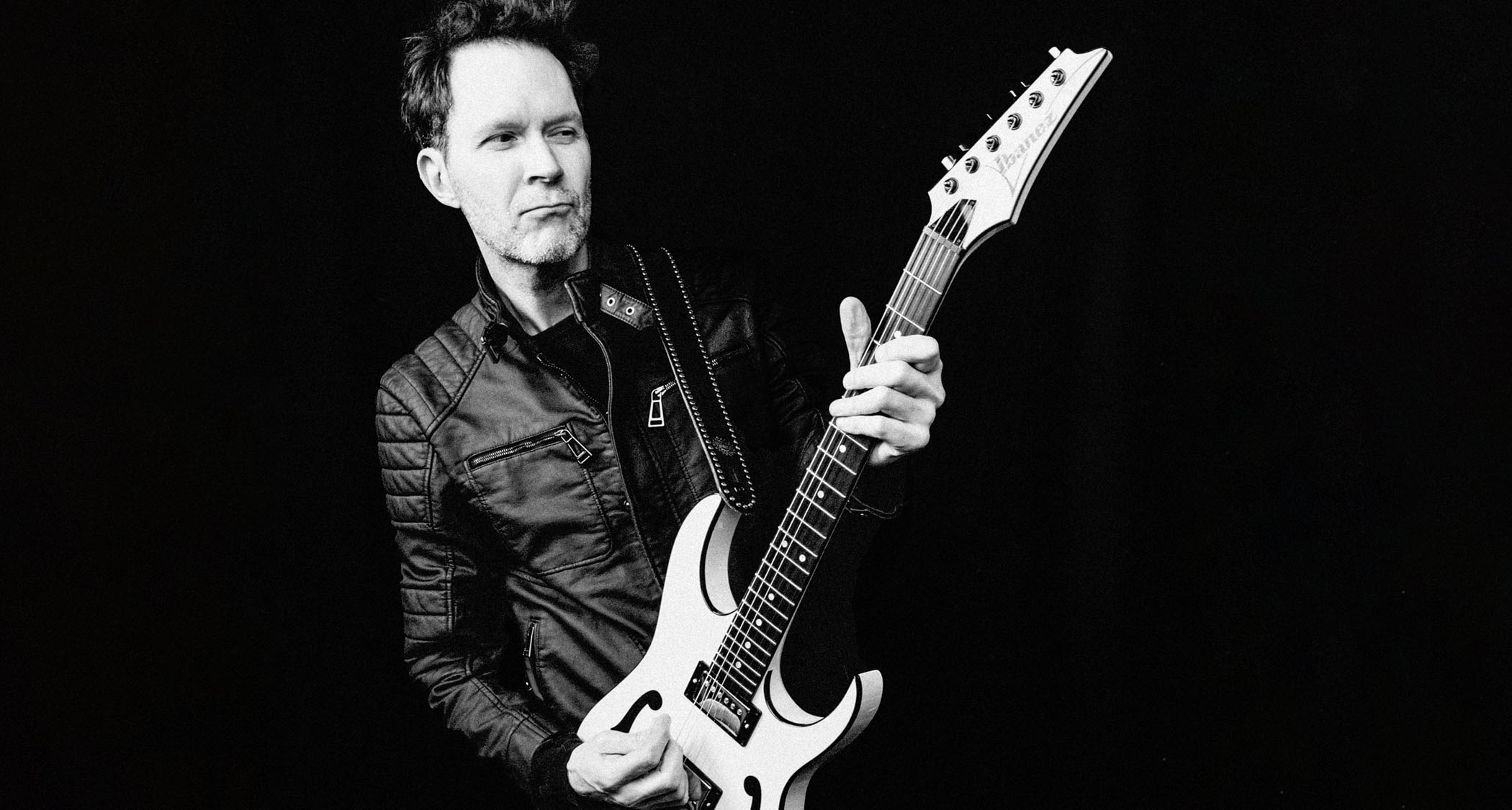
Gilbert’s long-standing relationship with Ibanez Guitars has resulted in some of the most recognizable signature instruments in the industry. His gear choices reflect his need for ergonomic efficiency and high-output clarity.
| Feature | Ibanez PGM Series (Classic) | Ibanez Fireman (Modern) |
|---|---|---|
| Body Shape | RG Style with painted F-holes | Reverse Iceman (Fireman) |
| Neck Wood | Maple/Walnut 5-piece | 3-piece Mahogany/Maple |
| Pickups | DiMarzio PAF Pro / PG-13 | DiMarzio Injector / Area 67 |
| Bridge | Fixed or Edge Tremolo | Fixed Tight-Tune Bridge |
| Scale Length | 25.5 inches | 24.75 inches |
| Tonal Profile | Bright, sharp, high-gain | Warm, mid-focused, vintage-vibe |
The Shift to the Fireman
The "Fireman" shape was a result of Gilbert flipping an Ibanez Iceman upside down in Photoshop and realizing it offered better access to higher frets and a unique aesthetic. In 2026, the Fireman remains his primary instrument, often equipped with his signature DiMarzio PG-13 mini-humbuckers, which offer a balance between the "snap" of a single-coil and the "meat" of a full humbucker.
Amplification and Pedals
Gilbert’s pedalboard philosophy is built on "stacking" gain rather than relying on a single high-gain channel. Key components include:
- JHS PG-14: His signature distortion pedal designed to emulate the "pushed" sound of a stadium amplifier.
- TC Electronic MojoMojo: A low-gain overdrive used to add texture and sustain.
- Catalinbread Sabbra Cadabra: Used for his more "doom" or classic rock-inspired tones.
Educational Legacy: The "Small Parts" Philosophy
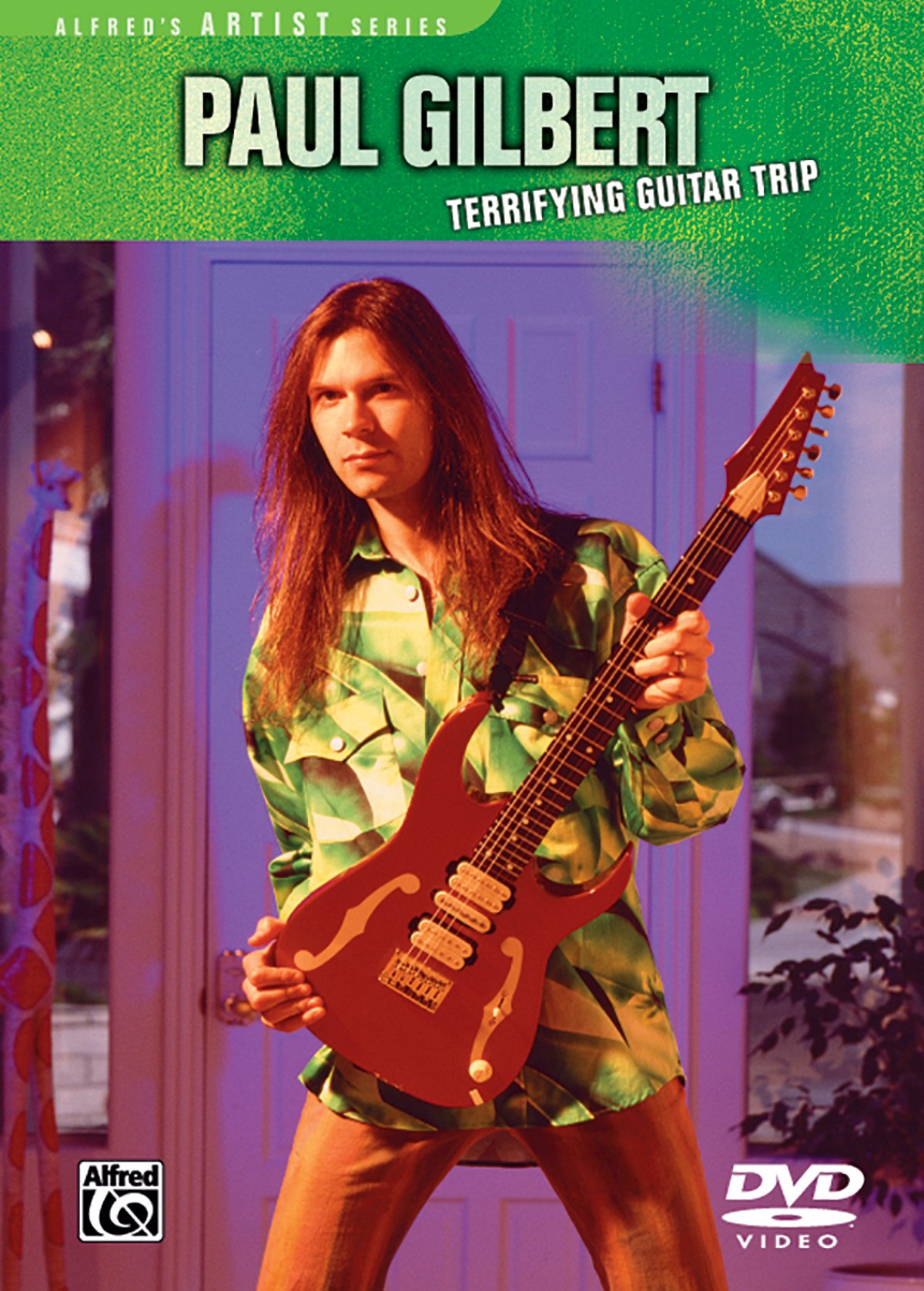
Paul Gilbert is arguably as famous for his teaching as he is for his playing. His 1988 instructional video, Intense Rock, remains a foundational text for aspiring virtuosos. In the 2020s, he has reached a global audience through his online school at ArtistWorks.
His core teaching philosophy revolves around "Small Parts." He encourages students to break down complex riffs into the smallest possible rhythmic and mechanical components. By mastering a three-note sequence perfectly, the student can then "link" those sequences into a longer run.
He also emphasizes rhythmic awareness. Unlike many technical players who focus solely on speed, Gilbert insists that every note must land precisely on a subdivision of the beat. This "drummer-like" approach to the guitar is what gives his fast playing its irresistible "groove."
Navigating Challenges: Hearing Health and Adaptation
A significant aspect of Gilbert’s profile in 2026 is his advocacy for hearing protection. After years of performing in front of loud amplifiers, Gilbert developed significant hearing loss and tinnitus. Rather than retiring, he adapted. He transitioned to using high-fidelity in-ear monitors and frequently wears large, isolating headphones on stage.
This shift impacted his tone. Because he can no longer hear high frequencies as clearly, his modern tone is often "darker" or more mid-range heavy, designed to help him "feel" the notes. This adaptation has not hindered his performance; rather, it has added a unique tonal character to his 2020s discography.
Recommended Listening for the Paul Gilbert Profile
To truly understand the evolution of Paul Gilbert, one must listen to a cross-section of his work that spans four decades:
- Racer X - Street Lethal (1986): The blueprint for high-speed alternate picking and neoclassical shred.
- Mr. Big - Lean Into It (1991): The perfect blend of technical guitar work and pop sensibility.
- Paul Gilbert - Get Out of My Yard (2006): His first all-instrumental solo album, showcasing his peak technical form.
- Paul Gilbert - I Can Fly (2014): Highlights his lyrical playing and sophisticated harmonic choices.
- Paul Gilbert - The Dio Album (2023): A masterclass in using the guitar as a vocal instrument.
Frequently Asked Questions
What pick does Paul Gilbert use?
Paul Gilbert primarily uses Tortex .60mm picks (orange). Despite his high-speed playing, he prefers a relatively thin pick because it offers more flexibility and a snappier "click" on the strings, which aids in note definition during fast alternate picking sequences.
Why does Paul Gilbert wear headphones on stage?
Gilbert wears headphones to protect his remaining hearing and to provide a clear monitor mix. Due to decades of exposure to high decibel levels, he has significant hearing loss. The headphones allow him to hear himself and his bandmates at a safe, controlled volume.
How does he achieve his incredibly wide fretboard stretches?
Gilbert has physically large hands and long fingers, which naturally assist with wide intervals. However, he also utilizes a "thumb-behind-the-neck" classical position when performing large reaches, allowing his fingers to spread more effectively across the fretboard.
Is Paul Gilbert still touring in 2026?
Yes, Paul Gilbert continues to be active in 2026. While Mr. Big has concluded major "farewell" activities, Gilbert remains a staple of the G3 tours, solo clinic tours, and specialized guitar camps (such as the Great Guitar Escape), where he teaches and performs for intimate audiences.
What is the "Gilbert Lick"?
The "Gilbert Lick" is a specific six-note sequence (typically played as sextuplets) that involves a combination of alternate picking and a single hammer-on/pull-off. It is designed to be played rapidly across multiple octaves and is a staple of 1980s shred vocabulary.
Final Recommendation for Aspiring Players
If you are looking to emulate Paul Gilbert’s style in 2026, the most effective path is to focus on synchronization over speed. Start with a metronome at a slow tempo and ensure that your picking hand and fretting hand are moving in perfect unison. Aspiring players should explore his ArtistWorks Guitar School for direct feedback, as Gilbert’s modern approach emphasizes the "vocal" quality of the instrument—reminding us that while speed is impressive, melody is what makes music timeless.
Image Gallery
Select an image to open it in a new tab.




Zara El-Hashem
Sociocultural Dynamics and Academics Writer
