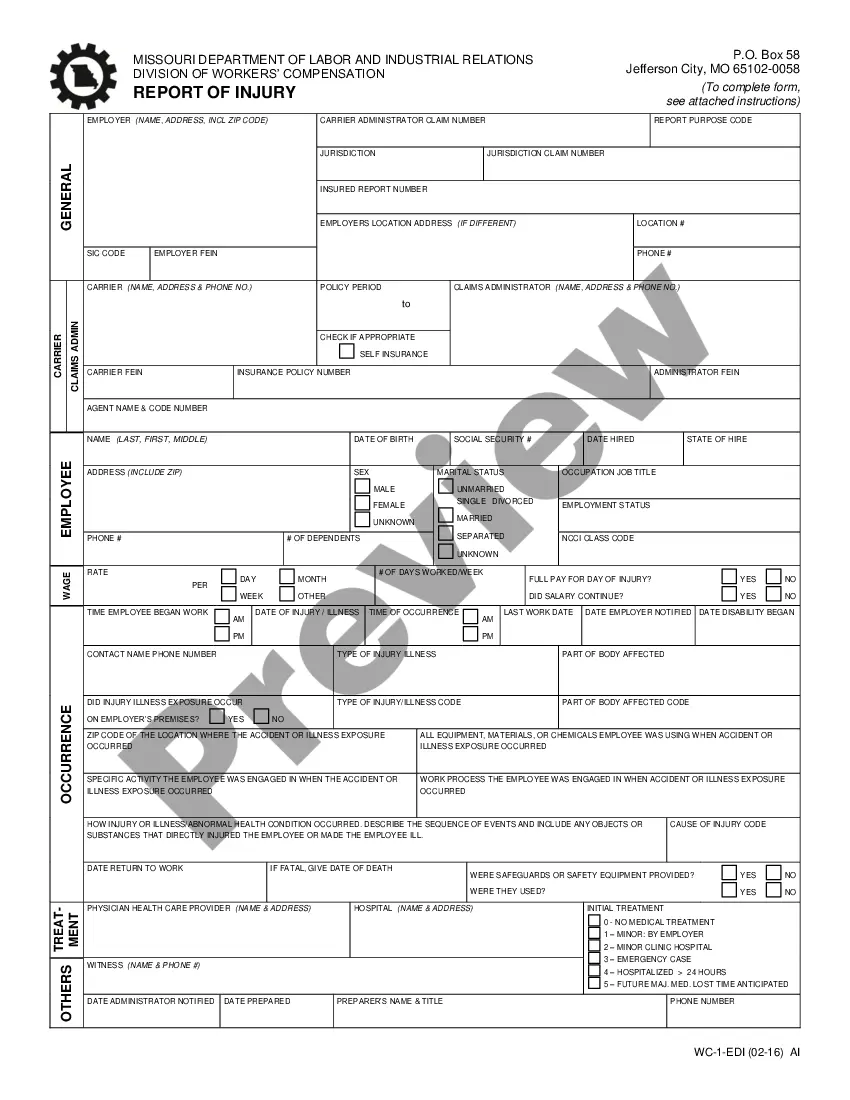
The workers' compensation medical report form is a legal and clinical document used to record a physician's findings regarding a work-related injury. It serves as the primary evidence for determining an employee's eligibility for benefits, including medical treatment authorization, disability payments, and permanent impairment ratings, while documenting the worker’s recovery progress and ability to return to work.
The Essential Role of the Medical Report in Workers’ Compensation
In the workers' compensation system, medical evidence is the foundation upon which every claim is built. Unlike a standard clinical visit note, a workers' compensation medical report is a dual-purpose document: it is both a roadmap for the patient's healthcare and a legal instrument used by insurance adjusters, attorneys, and administrative law judges to make financial and legal determinations.
As of 2026, the integration of digital health records and standardized reporting has streamlined this process, yet the core requirement remains the same. The physician must provide a clear, evidence-based link between the patient’s workplace activities and the resulting medical condition—a concept known as medical causation. Without a properly completed medical report form, an insurance carrier cannot legally justify the payment of lost wages or the approval of expensive procedures like surgeries or advanced imaging.
The form acts as a communication bridge between several stakeholders:
- The Physician: Communicates the diagnosis and the necessity of treatment.
- The Insurance Adjuster: Uses the report to calculate "Temporary Disability" (TD) payments.
- The Employer: References the "Work Status" section to determine if they can provide "Modified Duty" or if the worker must remain off-site.
- The Injured Worker: Gains a formal record of their physical limitations and recovery expectations.
Types of Medical Reports and Their Specific Functions
There is no single "form" that covers an entire claim. Instead, a series of reports are generated throughout the life of a case, each serving a distinct phase of the recovery and legal process.
1. The Doctor’s First Report of Occupational Injury or Illness
This is the most critical document in the early stages of a claim. Typically filed within five days of the initial examination, this report establishes the "baseline" for the injury. It includes the history of the accident as described by the patient, the physician’s initial diagnosis, and an opinion on whether the injury was "AOE/COE" (Arising Out of Employment and occurring in the Course of Employment).
2. Primary Treating Physician (PTP) Progress Reports
Once a claim is accepted, the PTP must submit regular progress reports (often referred to as PR-2 forms in some jurisdictions). These are usually required every 45 days or whenever there is a significant change in the patient’s condition or work status. These reports ensure that the insurance carrier is kept updated on the patient’s improvement and whether the current treatment plan is effective.
3. Permanent and Stationary (P&S) or MMI Reports
When a patient reaches a point where their condition is not expected to improve significantly even with further medical treatment, they are declared "Permanent and Stationary" (P&S) or to have reached "Maximum Medical Improvement" (MMI). The resulting report is often 10 to 50 pages long and includes a "Permanent Impairment Rating" based on the AMA Guides to the Evaluation of Permanent Impairment. This rating is converted into a dollar value for a final settlement.
4. Independent Medical Examination (IME) or QME Reports
If there is a dispute between the worker and the insurance company regarding the primary doctor’s findings, a third-party physician—an Independent Medical Examiner (IME) or a Qualified Medical Evaluator (QME)—will perform a one-time evaluation and issue a comprehensive report to resolve the conflict.

Key Components of a Standardized Medical Report Form
While specific form numbers vary by state (such as the C-4 in New York or the PR series in California), the internal structure of these reports follows the SOAP (Subjective, Objective, Assessment, Plan) format, adapted for legal scrutiny.
Subjective Complaints
In this section, the physician records the patient's self-reported symptoms. This includes the location of pain, its intensity (often on a 1–10 scale), and how the symptoms interfere with daily living and job duties. Accuracy here is vital, as inconsistencies between the subjective report and objective findings can lead to a claim being flagged for potential fraud or exaggeration.
Objective Findings
This is the physical evidence observed by the doctor. It includes range-of-motion measurements, neurological testing (reflexes, sensation), and results from diagnostic tests like X-rays, MRIs, or Electromyography (EMG). In 2026, many forms allow for the direct attachment of digital imaging metadata to verify the authenticity of the findings.
Assessment and Diagnosis
The physician provides a formal ICD-10 (or the newer ICD-11, depending on the facility's adoption) diagnosis code. Crucially, the assessment must address "apportionment"—determining if the current disability is 100% due to the work injury or if pre-existing conditions (like degenerative disc disease) contribute to the symptoms.
The Treatment Plan
This section outlines the road ahead. It specifies medications, physical therapy frequency, referrals to specialists, and any proposed surgical interventions. In the workers' comp world, the treatment plan must usually adhere to state-mandated Medical Treatment Utilization Schedule (MTUS) or Official Disability Guidelines (ODG).
Work Status and Functional Limitations
Perhaps the most scrutinized section by employers, this details exactly what the worker can and cannot do. Examples include:
- No lifting over 10 pounds.
- No repetitive bending or twisting.
- Must be allowed to sit or stand as needed.
- Total Disability: The worker is unable to perform any work-related activities.
Comparison of Common Workers' Compensation Report Types
| Report Type | Timing of Submission | Primary Purpose | Impact on Benefits |
|---|---|---|---|
| First Report (Initial) | Within 5–7 days of first visit | Establishes claim validity and causation | Triggers initial medical and wage benefits |
| Progress Report | Every 45 days or status change | Updates recovery status and treatment | Maintains ongoing disability payments |
| MMI / P&S Report | When recovery plateaus | Determines final impairment rating | Ends temporary disability; starts permanent disability |
| Med-Legal (IME/QME) | Upon dispute or legal request | Resolves conflicts in medical evidence | Used as evidence in court or for settlement |
The Submission and Review Process: How the Form Moves
The lifecycle of a medical report form involves a complex chain of custody. In 2026, most of this occurs through Electronic Data Interchange (EDI), ensuring that reports move from the doctor’s office to the insurance carrier in near real-time.
- The Examination: The physician conducts the physical exam and interviews the patient.
- Transcription and Coding: The physician or a medical scribe completes the form, ensuring all legal "magic words" regarding causation and disability are included.
- Electronic Filing: The report is uploaded to the state’s workers' compensation board and simultaneously sent to the insurance claims adjuster.
- Adjuster Review: The adjuster reviews the "Work Status" to see if the worker is owed a check for that period. They also check the "Plan" to see if the requested physical therapy or medication is pre-authorized.
- Utilization Review (UR): If the doctor requests a specific procedure, the report is sent to a UR physician (a doctor hired by the insurance company) who determines if the request meets medical necessity guidelines.
- Integration into the Legal File: If the case goes before a judge, these reports are compiled into a medical "exhibit" that serves as the evidentiary basis for the judge’s decision.
Common Pitfalls and Challenges in Medical Reporting
Errors on a medical report form can cause significant delays in a worker's recovery and financial stability.
Vague Work Restrictions
If a doctor writes "light duty" without specifying what that means (e.g., how many pounds can be lifted), the employer may not be able to accommodate the worker. This leads to the worker being sent home, potentially without pay, while the adjuster waits for a "clarification" report.
Failure to Address Causation
If a physician fails to explicitly state that the injury was caused by work, the insurance company will likely issue a "Delay" or "Denial" letter. The adjuster cannot legally pay for a claim that hasn't been medically linked to the workplace.
Late Filing
Most jurisdictions have strict statutory deadlines for medical reports. If a doctor is chronically late in filing PR-2 progress reports, the insurance carrier may have the legal right to suspend disability payments until the report is received. This creates an "administrative gap" that can leave injured workers without income for weeks.
Missing Signature and Certification
A medical report is a legal declaration. In most states, it must be signed under penalty of perjury. A missing signature or an unauthorized electronic signature (that doesn't meet state security standards) can render the entire report inadmissible in a legal hearing.
Regulatory Compliance and 2026 Standards
As of 2026, workers' compensation medical reporting is heavily influenced by the CMS-1500 standards for billing and state-specific electronic filing mandates. The transition to ICD-11 has allowed for more granular reporting of work-related musculoskeletal disorders, reducing the ambiguity often found in older claims.
Furthermore, the Health Insurance Portability and Accountability Act (HIPAA) applies differently in workers' compensation. While medical privacy is protected, the "minimum necessary" rule allows the disclosure of medical records relevant to the work injury to the employer and insurance carrier without a separate authorization, as this information is essential for the administration of the claim.
Frequently Asked Questions
Can I see the medical report my doctor wrote?
Yes. Under patient rights laws and workers' compensation regulations, you are entitled to copies of all medical records pertaining to your claim. In 2026, most patients can access these through a secure patient portal provided by the physician’s office or the insurance company’s claims portal.
What happens if the doctor makes a mistake on the form?
If you notice a factual error (such as the wrong body part or an incorrect date of injury), you should contact the doctor’s office immediately to request an "amended report." It is much easier to fix an error through an amendment than to try and explain an inconsistency during a legal deposition later.
Does the employer get to see the whole report?
No. Employers are generally only entitled to the "Work Status" portion of the medical report, which details your functional limitations and whether you can return to work. They are usually not permitted to see your private medical history or detailed notes about your symptoms, though this can vary slightly by state jurisdiction.
Why did the insurance company deny my treatment if the doctor's report said it was necessary?
This usually happens through a process called Utilization Review (UR). Even if your treating doctor recommends a treatment, the insurance company's medical reviewer may determine that the request does not align with established clinical guidelines (like the ODG or MTUS). In such cases, the medical report serves as the basis for your appeal.
How does the form handle telehealth visits?
In 2026, telehealth is a standard component of workers' compensation. Medical report forms now include specific "place of service" codes for virtual visits. However, for a doctor to issue a "Permanent Impairment Rating," an in-person physical examination is almost always required to accurately measure range of motion and physical strength.
Recommendation for Injured Workers and Providers
For the injured worker, the best course of action is to review every "Work Status" note before leaving the doctor's office. Ensure the restrictions are clear and that the doctor has documented all your current symptoms. For healthcare providers, staying compliant with 2026 EDI (Electronic Data Interchange) standards is essential to ensure timely reimbursement and to avoid administrative penalties from state workers' compensation boards. Always use the most current version of your state's specific forms to prevent the insurance carrier from rejecting the report on a technicality.
Image Gallery
Select an image to open it in a new tab.
Lars Thomsen
Global Labor Markets and Economic Strategy Editor
