The Nationality and Heritage of Boris Karloff: A Complete Biographical Analysis

Boris Karloff was British. Born William Henry Pratt in Camberwell, London, on November 23, 1887, he remained a British subject throughout his entire life and never became a naturalized citizen of any other country. Although he spent decades living and working in Canada and the United States, his identity remained firmly rooted in his English upbringing.
The Early Life of William Henry Pratt in London
To understand the nationality of the man the world knew as Boris Karloff, one must first look at the upbringing of William Henry Pratt. Born into a family with deep ties to the British Empire, Pratt was the youngest of nine children. His father, Edward John Pratt, was a member of the Indian Civil Service, a prestigious administrative arm of the British government in India.
Growing up in Enfield, Middlesex, the young William was groomed for a career in the diplomatic service, following in the footsteps of his older brothers. He attended Enfield Grammar School and later Uppingham School and King's College London. However, the rigid expectations of a Victorian-era diplomatic career did not suit his temperament. His passion lay in the theater—a profession that was often looked down upon by his socially prominent family.
Despite the pressure to maintain the family’s tradition of government service, Pratt’s interest in acting grew during his time at university. This conflict between his family's expectations and his personal ambitions eventually led him to make a radical decision: he would leave England behind to seek his fortune in the New World, though he would carry his British identity with him for the next six decades.
Anglo-Indian Heritage: Exploring Karloff’s Ancestry
One of the most fascinating aspects of Boris Karloff's identity is his mixed heritage, which significantly influenced his physical appearance and, subsequently, the roles he was cast in. While he was a British national, his ancestry was Anglo-Indian.
Karloff’s mother, Eliza Sarah Millard, had Indian ancestry through her maternal grandmother. This lineage gave Karloff a naturally darker complexion than many of his British peers. In the early 20th century, this "exotic" look was often a double-edged sword in the entertainment industry. Early in his career, he frequently found himself cast as "ethnic" villains or characters of non-European descent because of his skin tone and features.
The Pratt family’s connection to India was not just ancestral but also professional. His great-uncle was Anna Leonowens, the famous governess whose experiences in the Siamese court inspired the story of The King and I. This background created a unique cultural tapestry; while Karloff was culturally and legally English, his physical presence suggested a broader, more global history. This intersection of British upbringing and Indian heritage allowed him to bring a unique depth to his performances, particularly in films like The Mask of Fu Manchu or The Mummy.
The Journey to North America: From Laborer to Stage Actor
In 1909, William Henry Pratt emigrated to Canada. He did not arrive as a star but as an immigrant seeking a new start. He spent several years working manual labor jobs—shoveling coal, working on farms, and clearing land—while attempting to break into local theater troupes. It was during this period in Canada that he adopted the stage name Boris Karloff.
The choice of the name has been the subject of much speculation. Karloff himself often claimed he chose "Karloff" from his mother's side of the family (though genealogical research has found little evidence of this) and "Boris" because it sounded foreign and memorable. The name served two purposes: it prevented his family from being "shamed" by his acting career and it created a mysterious persona that appealed to theatrical managers.
By the time he crossed the border into the United States in the late 1910s, he was an experienced traveling actor. Despite moving from Canada to the United States and eventually settling in Hollywood, Karloff never sought to change his nationality. He operated under various work visas and residency permits, maintaining his status as a British subject abroad.
Did Boris Karloff Ever Become a US Citizen?
A common question regarding Karloff’s biography is whether he eventually naturalized as a United States citizen. Despite living in the U.S. for the majority of his adult life—spanning from the silent film era through the golden age of television—Boris Karloff never became a U.S. citizen.
His refusal to naturalize was not an act of political protest, but rather a reflection of his deep-seated identity as an Englishman. He maintained a British passport throughout his life. This loyalty to his crown was common among many members of the "British Colony" in Hollywood, a group that included actors like C. Aubrey Smith, David Niven, and Ronald Colman. These actors lived in California but meticulously preserved their British customs, accents, and legal status.
Karloff’s status as a British subject had practical implications. During World War I, he attempted to enlist in the British Army but was rejected due to a heart murmur. During World War II, although he was too old for active combat, he participated in various relief efforts and was active in the Hollywood Victory Committee, supporting the Allied cause as a British national living in America.
Professional Impact: How Nationality Shaped His Career
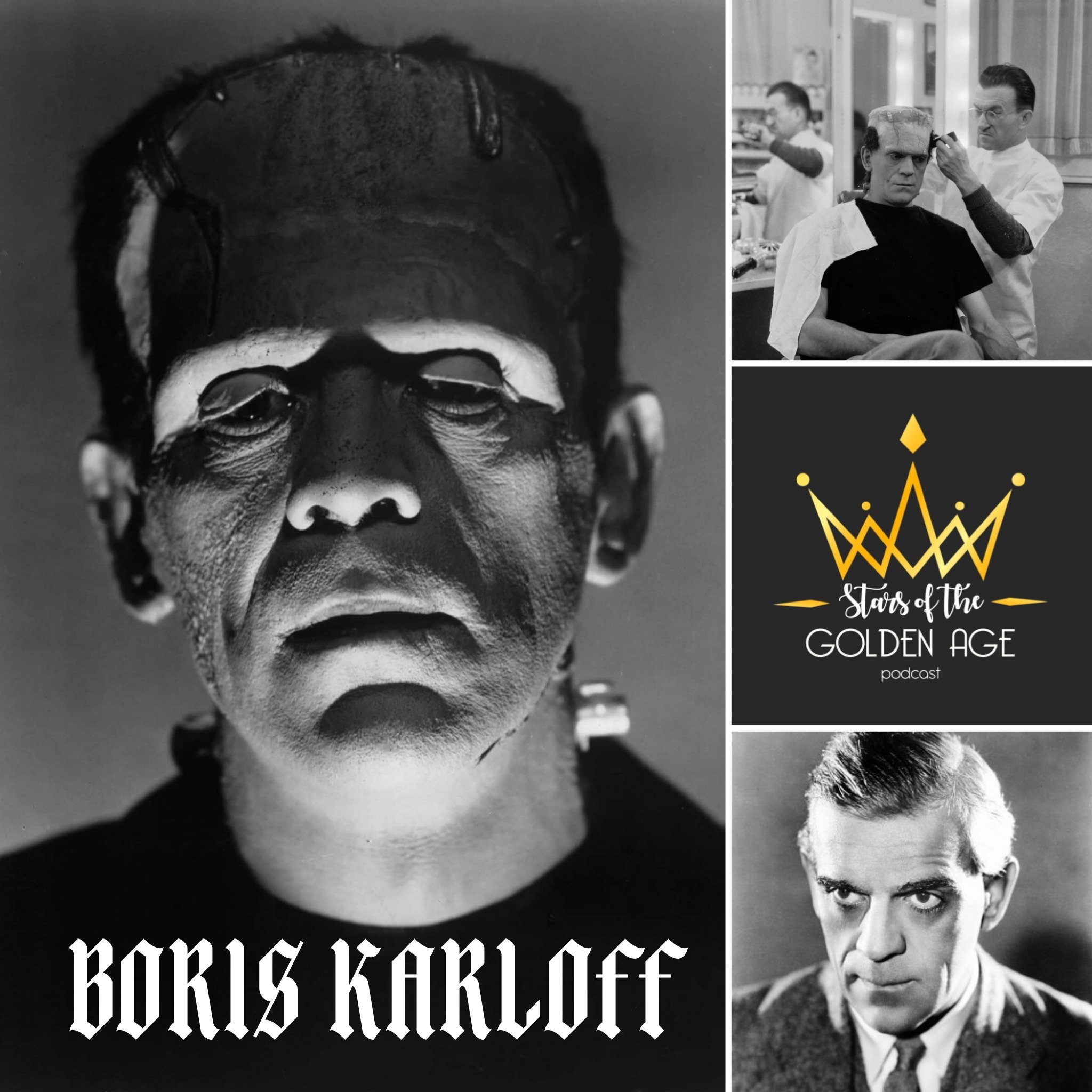
Karloff’s British identity was central to his professional persona. Even when playing the iconic Frankenstein's Monster, his preparation and discipline reflected his British theatrical training. Once talkies arrived, his "refined" English accent became one of his most powerful tools. It provided a stark, chilling contrast to the monstrous characters he often portrayed, adding a layer of intelligence and pathos that set him apart from other horror actors of the era.
In the 1930s and 40s, his nationality helped him navigate the studio system. He was seen as a "prestigious" import, even though he had spent his struggling years in the trenches of North American stock theater. His British manners and professionalism earned him the nickname "Dear Boris" among his colleagues.
The Significance of the "Exotic" Briton
Karloff’s unique blend of British speech and Anglo-Indian features allowed him to dominate a specific niche in Hollywood. He could play:
- The British Gentleman: Roles in mystery films where his accent lent authority.
- The Scientific Intellectual: Characters who were often European or British academics.
- The "Other": Characters like Imhotep in The Mummy, where his heritage and makeup combined to create something audiences found genuinely otherworldly.
Returning Home: The Final Years in England
After decades of stardom in Hollywood and New York (where he had a successful run on Broadway in Arsenic and Old Lace), Boris Karloff eventually decided to return to his roots. In the late 1950s, he began spending more time in England, eventually moving back permanently in the 1960s.
He settled in Kensington, London, and later in a cottage in Midhurst, Sussex. Even in his 70s and 80s, plagued by severe emphysema and arthritis, he continued to work, appearing in British television programs and horror films produced by UK-based companies. To the end, he was a fixture of the British acting community.
He passed away on February 2, 1969, at the King Edward VII Hospital in Midhurst. His death was mourned globally, but he was buried at the Guildford Crematorium in Godalming, Surrey—returning to the English soil he was born on, still a British citizen.
Summary of Biographical Identity
The following table outlines the key facts regarding Boris Karloff's nationality and life journey.
| Category | Details |
|---|---|
| Birth Name | William Henry Pratt |
| Legal Nationality | British (United Kingdom) |
| Birthplace | Camberwell, Surrey, England |
| Ancestry | Anglo-Indian (English and Indian heritage) |
| Countries of Residence | UK, Canada, USA |
| Naturalization Status | Never naturalized; remained a British subject |
| Primary Language | English (British Received Pronunciation) |
| Death Place | Midhurst, Sussex, England |
| Notable Honors | Two stars on the Hollywood Walk of Fame |
Frequently Asked Questions
Was Boris Karloff Russian?
No, Boris Karloff was not Russian. Because of his stage name, many people assumed he was of Slavic or Russian descent. However, he chose the name "Boris Karloff" specifically because it sounded exotic and helped him stand out in theatrical casting. He was born William Henry Pratt to British parents.
Did Boris Karloff have an accent?
Yes, Boris Karloff had a very distinct British accent. His voice was deep, cultured, and reflected his London upbringing and education at King's College. His precise articulation became one of his most recognizable trademarks, especially in his narration of How the Grinch Stole Christmas! (1966).
What was Boris Karloff's ethnicity?
Boris Karloff was of mixed ethnicity, specifically Anglo-Indian. His father’s family was British, while his mother’s side included Indian ancestry. Karloff was often open about his heritage, noting that his darker complexion required him to be careful about sun exposure to avoid becoming too dark for certain roles during the early part of his career.
Why did he move to Canada?
Karloff moved to Canada in 1909 to pursue a life away from the expectations of his family. He wanted to act, which his family disapproved of, and he hoped that the expanding frontier of Canada would offer him opportunities to work and eventually join a theater company, which he successfully did.
Did Boris Karloff ever live in India?
There is no historical record of Boris Karloff ever living in India. While his father and many of his siblings served in the Indian Civil Service or were born in India, Boris (as William) was born after his father had returned to England. His connection to India was purely through his family’s professional history and his maternal ancestry.
Is he related to any other famous actors?
While not directly related to contemporary stars, his great-aunt was Anna Leonowens, whose memoirs served as the basis for the musical The King and I. Within the horror genre, he was often closely associated with Bela Lugosi, though the two were colleagues and sometimes rivals, not relatives.
Legacy and Final Recommendation
Boris Karloff’s nationality was a fundamental part of his identity that he never sought to change. Despite achieving the "American Dream" of stardom and wealth in Hollywood, he remained a quintessential English gentleman. His story is a powerful example of how an actor can navigate different cultures while remaining loyal to their origins.
For those interested in exploring the life of Boris Karloff further, it is highly recommended to view his later interviews from the 1960s, conducted in the UK. In these recordings, his British identity is on full display, showcasing a man who was as comfortable in a quiet Sussex village as he was under the bright lights of a Hollywood studio. To truly appreciate his contribution to cinema, one should look past the "monster" and see the disciplined, British-trained professional who changed the face of horror forever.
Image Gallery
Select an image to open it in a new tab.



Akira Tanaka
International Academic Trends Correspondent
