What to Know About Indexed Universal Life Insurance Policy Reviews
When analyzing an indexed universal life (IUL) insurance policy review, you must look beyond the marketing projections and focus on the underlying mechanics: the cost of insurance (COI), the participation rates, and the guaranteed floor versus the illustrated cap. A comprehensive review should evaluate whether the policy’s cash value can realistically sustain its premium structure over decades, especially as the cost of insurance increases with the policyholder's age.
Indexed Universal Life (IUL) insurance remains one of the most complex financial products available in 2026. Because it combines a death benefit with a cash-value component linked to a market index, such as the S&P 500, it is often presented as the "best of both worlds"—the safety of a fixed policy with the upside potential of the stock market. However, the intricacies of these policies mean that a superficial review is often more dangerous than no review at all. Whether you are considering purchasing a new policy or auditing an existing one, understanding how to dissect a technical review is essential for long-term financial security.
The Core Components of an IUL Policy Review
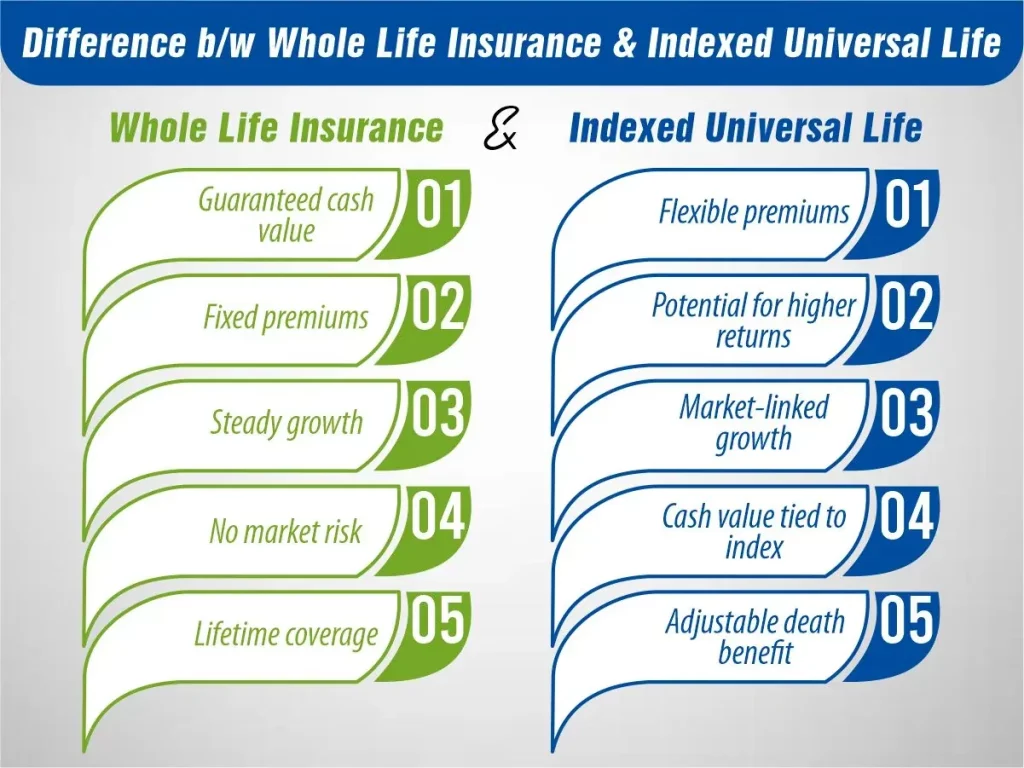
An objective review of an IUL policy must start with the fundamental mechanics of how the contract operates. Unlike whole life insurance, which offers a set premium and a guaranteed growth rate, IUL is flexible and transparent—but that transparency reveals many moving parts that can change at the insurance company's discretion.
The Indexing Strategy: Caps, Floors, and Participation Rates
The primary draw of an IUL is the index-linked growth. However, your cash value is not actually invested in the stock market; instead, the insurer uses a portion of your premium to purchase options on an index. A review must detail three critical "levers" that determine your interest credit:
- The Cap: This is the maximum interest rate the insurer will credit to your account during a specific period. If the cap is 9% and the S&P 500 returns 15%, you only receive 9%.
- The Floor: This is the minimum interest rate, typically 0%. It protects the policyholder from market losses, ensuring that even if the index drops by 20%, the cash value does not decrease due to market performance.
- The Participation Rate: This determines what percentage of the index’s gain is credited to the policy. If the index grows 10% and your participation rate is 80%, you receive 8% (assuming it is below the cap).
A high-quality review will examine the historical stability of these levers. It is common for insurers to launch a product with an attractive 11% cap, only to lower it to 8% a few years later. A review that only looks at current rates without checking the company's history of "resetting" caps is incomplete.
The Cost of Insurance (COI) and Hidden Fees
The most common reason IUL policies fail is the rising cost of insurance. In an IUL, the COI is "annually renewable," meaning it increases every year as the insured person gets older. In the early years, the cash value growth typically outpaces these costs. However, if market returns are low for several years while the policyholder is in their 70s or 80s, the COI can begin to "eat" the cash value.
A thorough policy review must include an expense analysis. This should account for:
- Premium Loads: The percentage taken off the top of every premium payment before it enters the cash value.
- Administrative Charges: Monthly flat fees for maintaining the policy.
- Surrender Charges: The penalties for canceling the policy early, which often last 10 to 15 years.
- Asset-Based Fees: Fees calculated as a percentage of the total cash value.
Navigating the Illusion of Illustrations
In the world of life insurance, an "illustration" is a projection of how a policy might perform over 40 or 50 years. As of 2026, regulations such as Actuarial Guideline 49 (AG 49) and its subsequent updates (AG 49A and 49B) have significantly curtailed how aggressively agents can project IUL returns.
The Realistic vs. Maximum Illustrated Rate
Prior to these regulations, it was common for reviews to show 7% or 8% annual returns indefinitely. Today, insurers are limited in their projections to prevent misleading consumers. When reading a review, you should look for a "sensitivity analysis." This is a section that shows what happens if the policy earns only 4% or 5% instead of the maximum allowed illustration.
If a policy requires a 7% return just to stay in force until age 100, that policy is "thinly funded" and carries a high risk of lapsing. A conservative review will prioritize policies that remain solvent even during "lost decades" of flat market performance.
The Impact of Policy Loans
Many IUL reviews focus on "tax-free retirement income" through policy loans. While loans can be tax-free under Internal Revenue Code Section 7702, they are not without risk. There are two main types of loans:
- Standard/Fixed Loans: You borrow against the cash value at a set interest rate.
- Variable/Participating Loans: The borrowed money remains "invested" in the index, and you pay a variable interest rate to the insurer.
Participating loans are high-risk/high-reward. If the index returns 8% and your loan interest is 5%, you make a 3% profit on money you’ve already borrowed. However, if the index returns 0% and the loan interest is 5%, you are losing 5% on that balance annually. Any review promising "guaranteed" income through variable loans should be viewed with extreme skepticism.
Evaluating the Insurance Carrier’s Financial Strength
An IUL policy is a long-term contract that may last 50 years or more. Therefore, the financial health of the insurance company is just as important as the product features. A review that focuses solely on the "bells and whistles" of the index strategy while ignoring the carrier’s balance sheet is a disservice to the reader.
You should verify the carrier's ratings from independent agencies. In 2026, these ratings remain the industry standard for assessing a company's ability to pay future claims:
- AM Best: Focuses specifically on the insurance industry’s ability to meet obligations.
- Standard & Poor’s (S&P): Provides a broad look at financial strength.
- Moody’s: Evaluates the creditworthiness and long-term risk of the carrier.
- Fitch Ratings: Offers another layer of scrutiny on the insurer’s capital reserves.
A carrier with a rating lower than "A" (Excellent) may be more likely to aggressively lower caps or raise internal fees to maintain their own profit margins during economic downturns.
Comparison of IUL Components in Policy Reviews
| Component | What to Look For | Why It Matters |
|---|---|---|
| Guaranteed Interest | The "Floor" (usually 0%–1%) | Ensures your account value won't drop due to market volatility. |
| Max Illustrated Rate | Compliance with AG 49B standards | Prevents unrealistic expectations of 8%+ annual returns. |
| Surrender Period | Duration (usually 10–15 years) | Dictates how long your capital is "locked up" before full access. |
| Volatility Control | Use of proprietary indices | These indices may have lower caps but more stable participation rates. |
| Death Benefit Option | Level (Option A) vs. Increasing (Option B) | Affects the COI; Increasing options provide more growth potential but higher costs. |
How to Spot a Biased or Incomplete Review
The internet is flooded with IUL reviews, many of which are written by agents looking to sell a specific product. To ensure you are getting an objective perspective, check for the following indicators of bias:
- The "Always Positive" Narrative: If a review only lists pros and none of the cons, it is a marketing piece, not a financial review. IULs have significant downsides, including complexity and the risk of rising costs.
- Lack of Specific Fee Disclosure: A real review will quantify the "premium load" and the "per unit" cost of insurance. If the review uses vague terms like "low cost," it is hiding the math.
- Ignoring the "No-Lapse" Guarantee: Some policies offer a secondary guarantee that keeps the policy in force even if the cash value hits zero (provided certain premiums are paid). A good review will explain whether this feature is included or available as a rider.
- No Mention of Alternatives: IUL is not right for everyone. A balanced review will mention when a client might be better served by a simple Term Life policy or a more stable Whole Life policy.
The Role of Volatility Control Indices in 2026
By 2026, many IUL products have moved away from simple S&P 500 indexing toward "Volatility Control" or "Proprietary" indices. These are managed indices designed to target a specific level of risk (e.g., a 5% volatility target).
When reviewing these indices, be aware that they often utilize "uncapped" strategies with high participation rates (sometimes over 100%). While this sounds appealing, the underlying index is engineered to grow more slowly than the raw market. A technical review should explain the "tracking error" and whether the back-tested data provided by the insurer is a realistic representation of future performance.
Practical Steps for Conducting Your Own Review
If you already own an IUL policy, you should conduct an annual "In-Force Illustration" review. This is not the same as the brochure you received when you bought the policy. An in-force illustration uses your actual current cash value and the actual current interest rates to project the future.
- Request an "In-Force Illustration" from the carrier: Ask them to project the policy to age 100 based on "current charges" and a conservative interest rate (e.g., 5%).
- Check the "Lapse Date": If the projection shows the policy lapsing at age 82, you need to increase your premiums now to avoid a massive spike in costs later.
- Audit the Loans: If you have an outstanding loan, check if the interest being charged is higher than the interest being credited. If it is, your loan is "cannibalizing" your death benefit.
- Evaluate the Index Selection: Most policies allow you to switch your index allocations once a year. If your current index is consistently hitting the cap while others are performing better, it might be time to reallocate.
Frequently Asked Questions
Is indexed universal life insurance a scam?
No, IUL is a legitimate life insurance product regulated by state insurance departments. However, it is frequently "mis-sold" by agents who over-promise market returns and under-explain the rising costs of insurance. It is a complex tool that requires active management and a clear understanding of the risks involved.
What is the average return on an IUL policy?
While insurers often illustrate 5% to 6%, the real-world "Internal Rate of Return" (IRR) is often lower once fees and COI are deducted. Most policyholders should expect a long-term net return of 3% to 5%, which is better than a savings account but typically lower than a direct investment in a diversified brokerage account.
Can the insurance company change my policy terms?
The insurer cannot change the "guaranteed" elements of the contract, such as the maximum COI or the minimum floor. However, they can and frequently do change the "non-guaranteed" elements, such as the current cap, participation rate, and current expenses. This is why regular reviews are essential.
What happens if I want to cancel my IUL policy?
If you cancel during the surrender period (usually the first 10–15 years), the insurer will deduct a surrender charge from your cash value. This charge can be significant, sometimes leaving the policyholder with nothing if they cancel in the first few years. After the surrender period, you can withdraw the "surrender value" tax-free up to the amount of premiums you paid (your "basis").
How does the 2026 tax environment affect IUL?
As of 2026, the tax advantages of life insurance (tax-deferred growth and tax-free death benefits) remain intact under Section 7702. For high-net-worth individuals, IUL remains a popular tool for "tax-bracket management," provided the policy is structured as a non-Modified Endowment Contract (non-MEC).
Final Recommendation
When reading indexed universal life insurance policy reviews, prioritize transparency over performance. A policy that offers a modest, stable cap and low internal fees is almost always superior to a policy with "teaser" rates and high hidden expenses. If you are evaluating a policy, always request a "zero-percent" illustration—this shows you exactly how long the policy will last if the market remains flat. If you cannot afford the premium required to keep the policy alive in a worst-case scenario, the product may not be the right fit for your financial plan.
Image Gallery
Select an image to open it in a new tab.


Ingrid Bjornson
Global Cyber Policy and Regulation Analyst
