
Russia-Moldova relations represent a complex intersection of post-Soviet geopolitics, energy dependency, regional security concerns, and competing integration trajectories. This diplomatic relationship involves continuous negotiations over trade, gas supplies, and the unresolved status of the breakaway Transnistria region, balancing between European integration objectives and historical ties to Moscow.
Historical Context and Post-Soviet Evolution
The diplomatic relationship between the Russian Federation and the Republic of Moldova is rooted in the dissolution of the Soviet Union. When Moldova declared independence in August 1991, it inherited economic structures, administrative frameworks, and energy pipelines tightly integrated with Moscow. However, the foundational years of the newly independent state were immediately complicated by ethnic and political friction, most notably the 1992 Transnistria War.
This conflict resulted in the establishment of the unrecognized Pridnestrovian Moldavian Republic (PMR) along Moldova's eastern border with Ukraine. A subsequent ceasefire agreement led to the deployment of a tripartite peacekeeping force consisting of Russian, Moldovan, and Transnistrian personnel, alongside an operational Russian military presence in the region. For over three decades, this unresolved territorial dispute has remained the central pillar around which Moscow-Chisinau relations revolve.
Throughout the 1990s and 2000s, diplomatic interactions fluctuated based on which political coalition held power in Chisinau. Administrations shifted between pro-Western reformist platforms and pro-Russian socialist configurations. These political oscillations directly influenced bilateral trade agreements, agricultural exports, and labor migration policies.
The Transnistrian Conflict and Regional Security
The status of Transnistria remains the most critical security challenge in Russia-Moldova relations. Moscow maintains approximately 1,500 troops in the region, officially designated as peacekeepers and guards for Soviet-era ammunition depots at Cobasna. Chisinau has repeatedly called for the complete withdrawal of Russian military forces and the transformation of the current peacekeeping mission into a civilian-led international mandate under the United Nations or the Organization for Security and Co-operation in Europe (OSCE).
Diplomatic efforts to resolve the conflict have primarily centered on the "5+2" negotiation format. This framework includes Moldova and Transnistria as parties to the conflict, Russia, Ukraine, and the OSCE as mediators, and the European Union and the United States as observers. However, diplomatic progress has stalled significantly, particularly following geopolitical shifts in Eastern Europe.
Key security friction points include:
- Military Presence: The continued deployment of Russian operational units without the formal consent of the Moldovan government.
- Passportization: The issuance of Russian passports to hundreds of thousands of residents in Transnistria.
- Freedom of Movement: Bureaucratic and security checkpoints managed by local Transnistrian authorities backed by Moscow.
- Geopolitical Alignment: Divergence over Moldova's pursuit of European Union integration versus Transnistria's stated goal of integration with the Russian Federation.
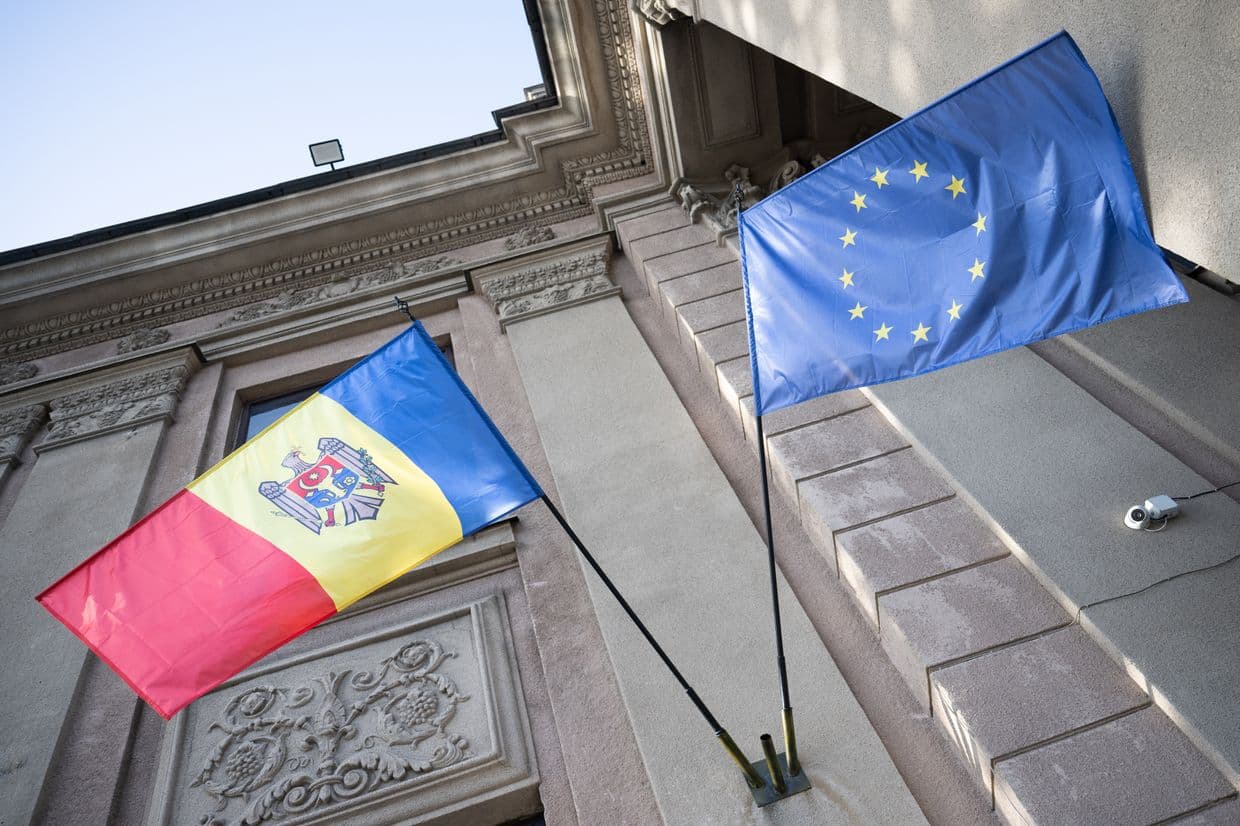
Energy Dependence and Economic Leverage
Economic ties, particularly energy supply and trade, have historically served as primary instruments of influence in bilateral relations. For decades, Moldova was almost entirely dependent on Russian natural gas supplied by the state-controlled energy giant Gazprom. This dependency created acute economic vulnerability, punctuated by recurring pricing disputes, debt renegotiations, and supply cuts.
The energy dynamic shifted substantially following Moldova's concerted efforts to diversify its supply routes. Interconnection projects, such as the Iași-Ungheni-Chișinău gas pipeline completed with European support, enabled Moldova to access alternative supplies from European markets. Additionally, Moldova achieved integration into the European Network of Transmission System Operators for Electricity (ENTSO-E), enhancing its grid stability independently of the eastern electricity network.
Trade relations have similarly transformed. While Moldovan agricultural products—such as wine, fruits, and vegetables—traditionally dominated the Russian market, political tensions frequently resulted in Russian embargoes and phytosanitary restrictions. Consequently, Moldovan producers redirected exports toward the European Union, which now accounts for the majority of Moldovan trade volume.
| Dimension | Historical Paradigm (1990s–2010s) | Current Dynamics (2026) |
|---|---|---|
| Primary Energy Source | 100% reliance on Gazprom gas | Diversified sourcing via EU interconnectors |
| Primary Export Market | Russian Federation and CIS markets | European Union member states |
| Transnistrian Status | Active 5+2 diplomatic negotiations | Stalled diplomatic tracks, security containment |
| Legal Framework | Bilateral cooperation agreements | European integration alignment (EU candidate status) |
Diplomatic Friction and Institutional Alignment
In recent years, diplomatic channels between Moscow and Chisinau have experienced severe contraction. Following Moldova's official granting of European Union candidate status in 2022 and subsequent legislative steps toward EU accession, political rhetoric from Moscow has frequently characterized Chisinau's policies as hostile and anti-Russian.
In response to alleged hybrid influence operations, cyber interference, and domestic political destabilization efforts, the Moldovan government has systematically dismantled or denounced numerous bilateral agreements with the Commonwealth of Independent States (CIS). Diplomatic staff reductions at the Russian Embassy in Chisinau have also been implemented to achieve parity in diplomatic representation and curtail intelligence activities.
Chisinau has increasingly utilized international judicial and diplomatic forums to condemn violations of its sovereignty, demanding the respect of its permanent neutrality status as enshrined in the Moldovan constitution. Conversely, Moscow maintains that Western actors are using Moldova as a geopolitical staging ground against Russian strategic interests in Eastern Europe.
Common Misconceptions and Complexities
Analyzing Russia-Moldova relations requires distinguishing between official state policy, economic realities, and public sentiment. Observers frequently encounter several persistent misconceptions:
- Monolithic Public Opinion: It is incorrect to assume that the Moldovan population holds a uniform view of Russia. Public opinion is nuanced, divided between demographic groups favoring traditional economic ties and those prioritizing institutional modernization through European integration.
- Total Economic Severance: While trade with Russia has plummeted, certain economic linkages remain, particularly regarding energy supplies routed through Transnistria for electricity generation consumed on the right bank of the Dniester River.
- Purely Domestic Conflict: The Transnistrian issue is frequently mischaracterized as a purely internal ethnic dispute, overlooking the direct financial, logistical, and military support provided by Moscow over decades.
Strategic Outlook and Practical Considerations
For analysts, policymakers, and international observers monitoring Eastern European security, the trajectory of Russia-Moldova relations depends on broader regional developments. The primary factors shaping the bilateral climate include:
- The Pace of EU Accession: Administrative reforms and judicial harmonization undertaken by Chisinau to meet European standards.
- Energy Security Resilience: The capacity of Moldovan state enterprises to maintain stable, non-Russian energy supplies through seasonal demand peaks.
- Border Security Management: Monitoring the security perimeter along the Moldovan-Ukrainian border, particularly concerning smuggling, migration, and illegal arms flows.
Stakeholders engaging with Moldovan economic or political sectors must account for regulatory divergence, ongoing compliance checks regarding international sanctions, and the operational risks associated with unresolved territorial conflicts in the immediate vicinity of European Union borders.
Image Gallery
Select an image to open it in a new tab.

Ingrid Bjornson
Global Cyber Policy and Regulation Analyst
